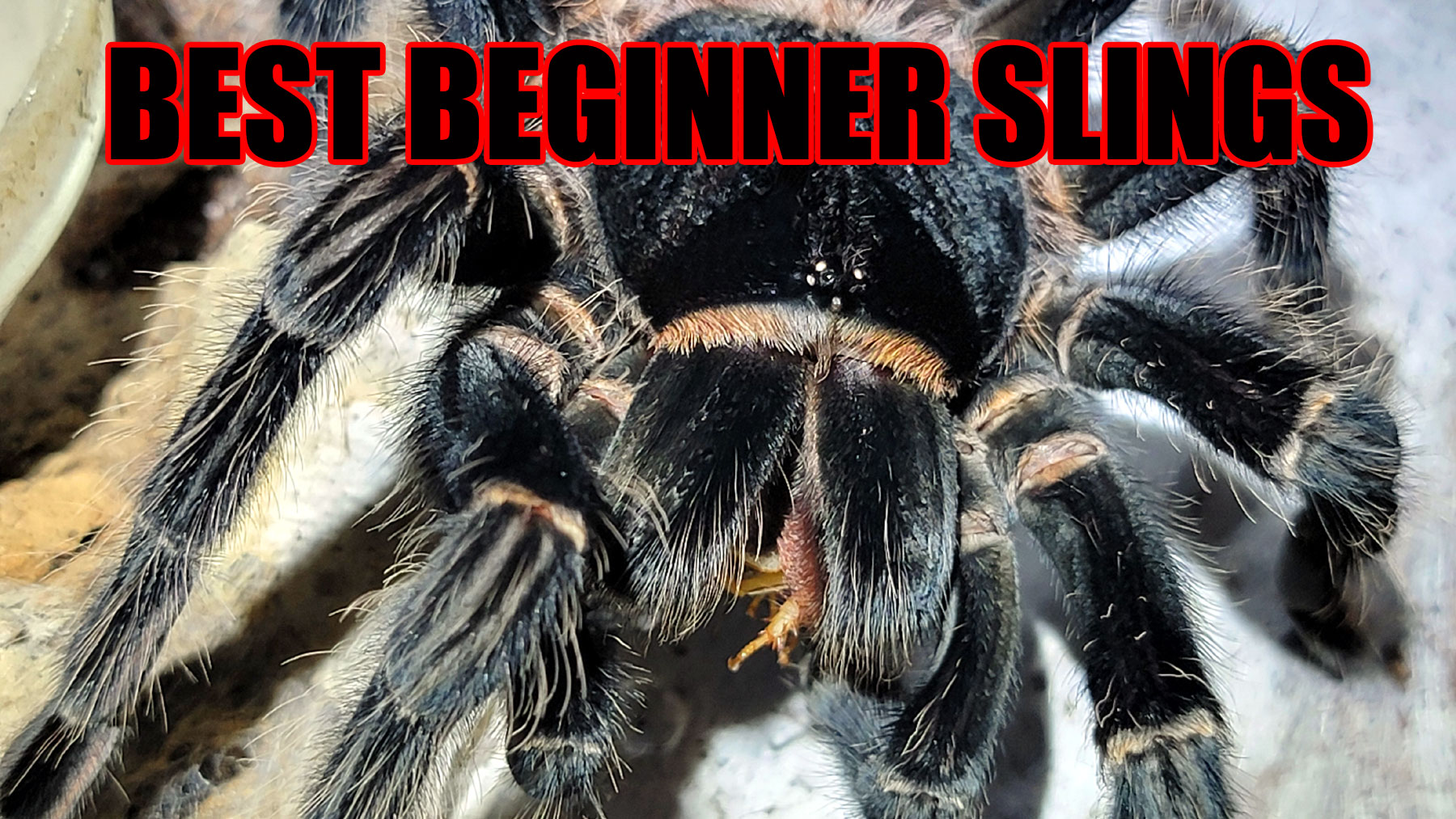
Many folks who are just getting interested in the tarantula hobby start by consulting the numerous “beginner tarantula” lists to select their first spiders. And those who do will often discover that the genera most recommended on these lists are the GAB species (Grammastola, Aphonopelma, Brachypelma). These species are recognized as being very hardy, long-lived spiders that are super easy to care for and that generally grow up to be docile adults. And, as these are New World species, one doesn’t have to worry about the potent venom.
However, after years of speaking with new keepers, I realized that most folks want to start with a larger specimen, like an adult. Although most of these species were readily available and inexpensively available in the pet trade as wild-caught adults several years ago, new restrictions have rightfully choked off the supply. This means that well-established juvenile or adult GAB species are very difficult to find and usually incredibly expensive when they are available.
When hobbyists realize this, they often turn their attention to captive-bred slings. However, this poses another problem.
As great as the GAB species are as first tarantulas, most are very slow growing, taking years to grow out of the sling stage. When you factor in that they start as super small (often ⅓” or .8 cm) and can be fairly expensive, these species become less attractive options for one looking to keep their first sling. Many folks purchase slings of these species, not realizing that it could be years before they have anything that resembles the gorgeous photos of adults they have fawned over.
And, let’s be honest: many keepers are freaked out by the idea of growing up a tarantula from a tiny spiderling.
New hobbyists are often told that, by starting with a sling of a certain species, they can “grow” in the hobby as the sling grows. This means that as the sling marches on through adulthood, the hobbyist can hone their skills at a measured pace before they are dealing with an adult spider.
This sounds great on paper, but for someone beginning with a tiny GAB sling, it doesn’t really work. These species take SO long to grow that many folks eventually find themselves keeping Old World spiders long before their sling reaches adulthood. Although they make great pets as adults, they aren’t always the best species for a keeper to raise as his/her first sling.
So, with hundreds of species, which ones are good first spiderlings for the first-time sling keeper? Well, read on for a list of tarantula species that would make excellent first attempts by keepers used to keeping babies. Not only have I raised multiples of each of the following species, but I’ve also heard from many keepers over the last several years that mirror my opinion of them as good first slings. If a keeper does their research (I’m including links to care videos for each of these species), they should have no trouble growing their first tiny spider up to a giant, hairy tarantula.
To create this list, I considered the following factors:
Availability and cost – It drives me nuts sometimes when folks are asking for recommendations for a starter sling, and someone chimes in with a spider that is new to the hobby, not readily available, and super expensive. The spiders on this list are quite prevalent in the hobby (at least in the US) and are usually under $50 as slings.
Hardiness – The spiders on this list are usually pretty forgiving when it comes to care and are quite hardy, even as slings. This means, no moisture dependency, good appetite and feeding response,
Growth Rate – The species on this list are all known to have fast growth rates overall, meaning that your sling will molt more often and often add a good amount of size with each molt. With these species, you will actually be able to “grow with the spider,” gaining more valuable experience with each molt.
Size of Sling – Most of the species on this list start as fairly large slings, which means it will be easier to spot them and to procure live prey for them
IMPORTANT NOTE: Although I’ve created a “Top 10” list with these species, feel free to begin with whichever species you feel comfortable with. I encourage you to read through the Pros and Cons and select the spider that works best for you. Now…onto the list!
Here are some of the species that I recommend, with Pros and Cons, to those looking to raise as their first slings.
10) Hapalopus formosus – “Pumpkin patch”
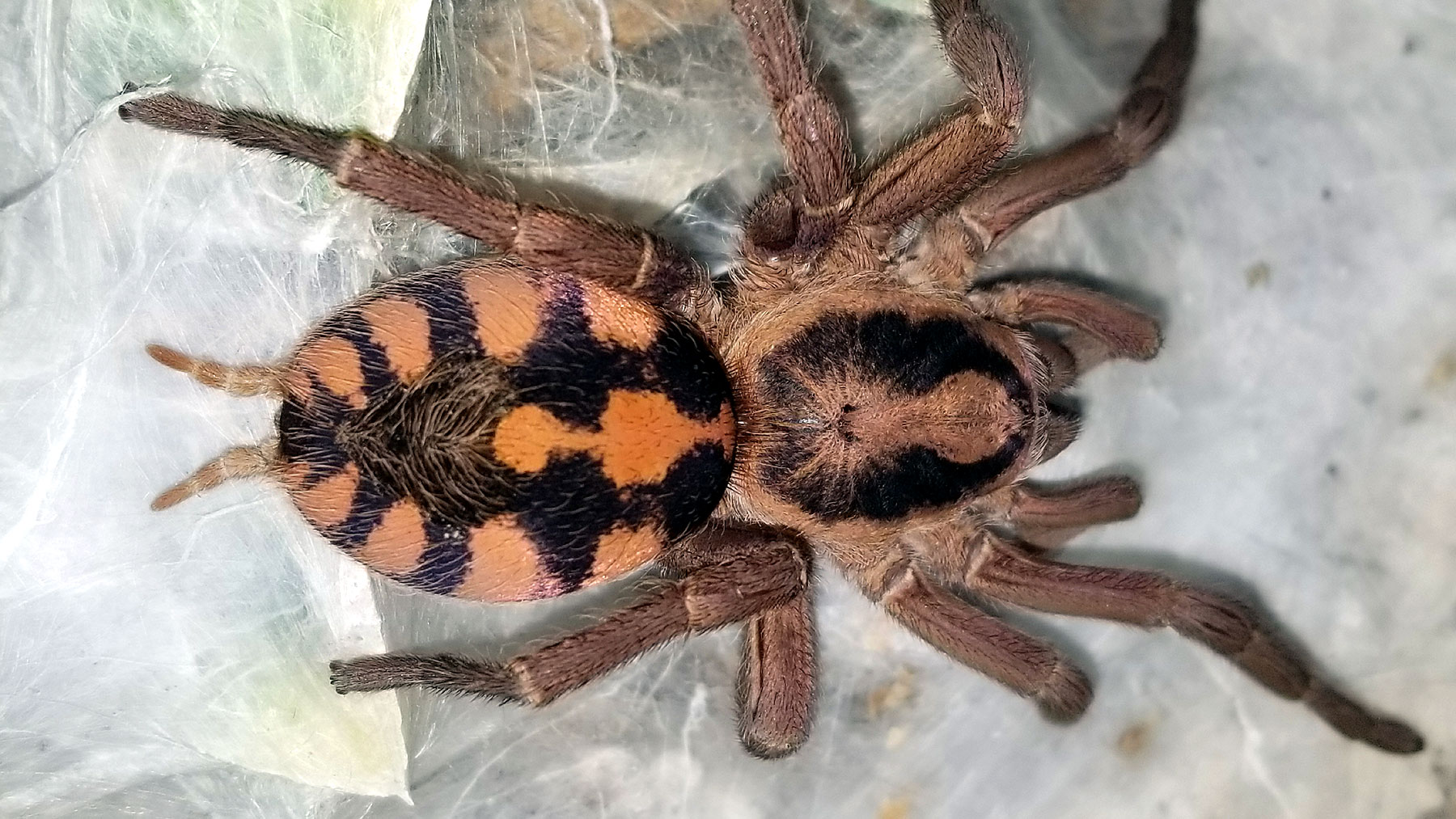
Here we have a photo of Betty White, my female H. formosus. This girl was one that I raised up from a sac I produced from her mother, Bea Arthur, back in 2017. I got her mother in a batch of .25” (.6 cm) slings, and at that time, they were the smallest spiders that I had ever kept. Still, I was delighted at how quickly they grew up, and it wasn’t long before I had a mature male and two adult females. I absolutely adore these spunky little spiders, and I know many folks who entered slin-keeping through this species. This was also the first species I ever successfully paired, which left me caring for over 100 of them at one point!
PROS
- Fairly inexpensive and readily available
- Fast growing
- Slings start with adult colors
- Great introduction to keeping dwarf species (People love the dwarfs, but unfortunately, their slings are super tiny.
CONS
- TINY as slings
- Escape artists as juveniles and adults. They may try to bolt out of their enclosures
- Shorter lived. I’ve heard of males maturing in under a year. Females, on the other hand, can live 7 to 10 years.
I’ve raised 11 H. formosus to adulthood over the years, and they are awesome spiders. Although this species will do some digging and web up the surface, mine were usually out and visible. Which is great, as they are incredibly unique-looking spiders. And with a maximum size of around 3.5-4” (9-10 cm), they are on the smaller side.
9) Nhandu tripepii – “Brazilian Giant Blond”
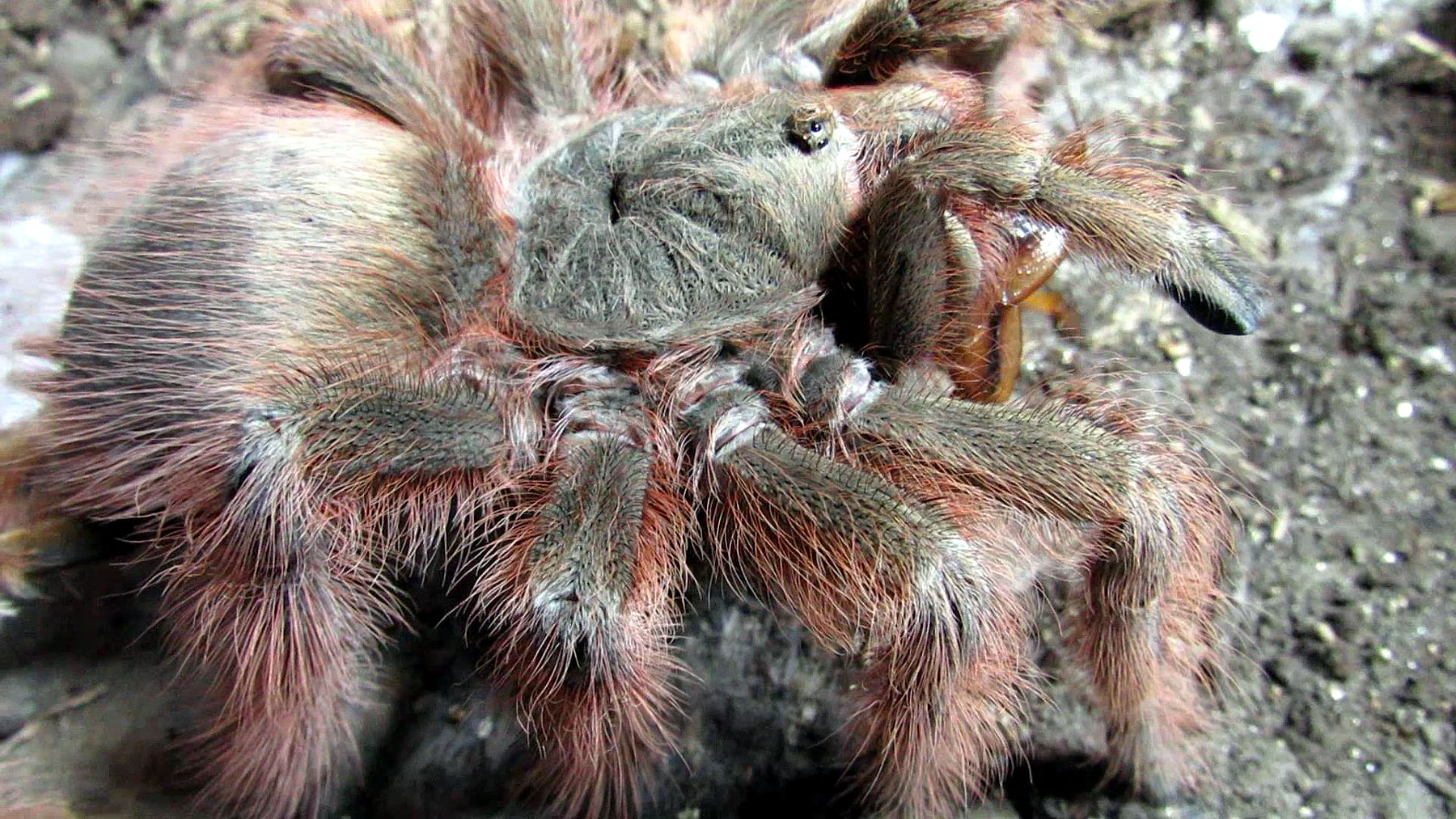
I got my first. N. tripepii way back in 2016 as a big, gorgeous adult female. This stunning ball of fluff quickly became a favorite in my collection. However, because I bought this one as an adult, I didn’t feel comfortable discussing her husbandry. So, I picked up five slings in the summer of 2020 with the intent of growing them up so that I could comment on their care. They are now young adults, and the photo above is of one of the females. This species has proven to be bulletproof in terms of care, being tolerant of drier conditions and growing VERY quickly. Although all four of my females have burrows, they are out in the open often. Just be aware that all five of mine went through a very skittish stage where they would bolt to their dens if disturbed. However, someone who
PROS
- Super hardy
- Fast-growing overall (3” or 7.6 cm) in the first year.
- Eat great, molt with frequency, and put on good size with each molt.
- Gorgeous as adults. Fluffy with an almost strawberry blond coloration
- Visible
- This is a larger spider as an adult, with females reaching 6-7” or 15-18 cm.
CONS
- Very small slings, under ⅓” .8 cm
- Can be VERY skittish as juveniles and adults. Although they’ll do some burrowing, if out in the open, they will sprint around the enclosure. This behavior could be off-putting to someone used to calmer species
Of all of the species on this list, the N. tripepii were probably the most skittish once they reached the juvenile stage. That said, a keeper who is confident in their rehousings and who gives them a setup that allows them to burrow should have little issue with them.
8) Lasiodora Parahybana – “Salmon birdeater“
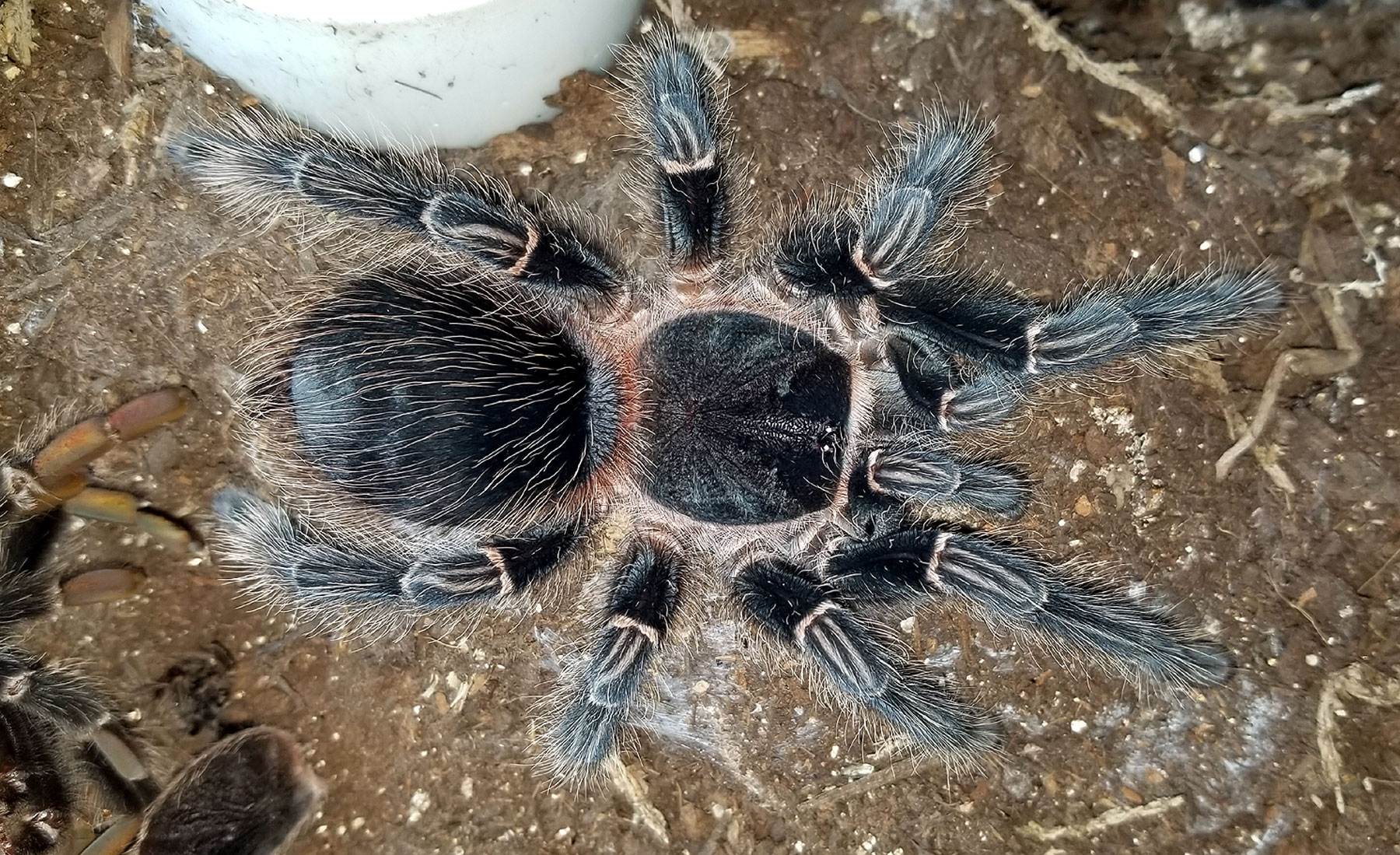
This is one of the species that not only makes most “best beginner tarantulas” lists, but is also a good one to raise up from a sling. I’ve kept three LPs over the years, two females and a male, and this species is one of the hardiest available. And, with females reaching a massive 10”+ (25.4 cm) in legspan, they can make an excellent display spider. Slings DO begin quite tiny, but tend to put on size quickly overall. Also, I have a theory that, because these are so readily available, many dealers have larger specimens. This means you can usually find larger, well-established 1” (5 cm) slings for a low price. In my experience, they pick up with the growth after they hit 1” or so, meaning it wouldn’t be long before you had a young adult on your hands.
PROS
- Super hardy and forgiving when it comes to husbandry
- Decent growth rate overall, with some specimens reaching 2-3” (5-7.6 cm) in a year
- Good feeding response, even as slings
- Very inexpensive and easy to come by
- Huge spiders (10”+ or 25.4 cm) that are usually on display
CONS
- Slings can start as super tiny at around .3” to .8 cm. As this species is normally readily available, I always encourage folks to start with a sling that is .75” or 2 cm in size, as they are less tiny and they seem to grow more quickly after the 1” mark.
- Speaking of growth rates, some grow super fast; others, not so much
- They get BIG, but it takes YEARS for them to reach 8”. For slower-growing specimens, it would be a good opportunity for a keeper to “grow” with the spider
This spider has long been a hobby staple and is adored by many in the hobby. My giant girl is currently around 10” in legspan, and she is one of my favorite spiders. And, as a fun fact, this was one of the first slings that I ever purchased and raised.
7) Ewok (formally Thrixopelma) pruriens – “Peruvian Green Velvet“
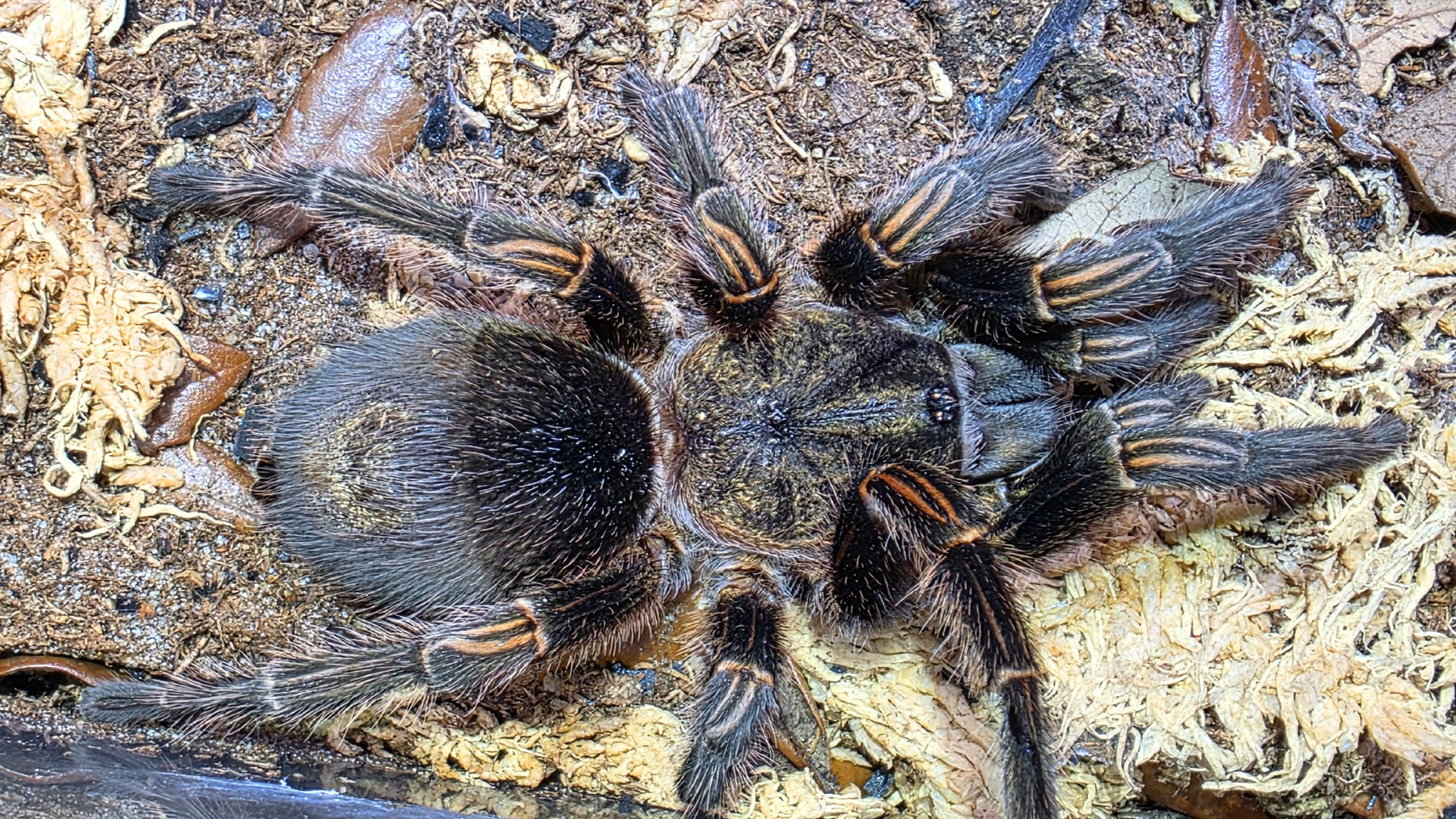
I got my first two tiny slings back in 2018 when they were labeled as “Theraphosinae sp. Piura. These spiders immediately impressed me with their excellent feeding responses, fast growth, and hardy dispositions. I got my next pleasant surprise when I discovered that this species sported some lovely green hues, a rare color for tarantulas. One of them matured into a beautiful green male and has since passed away from old age. The photo above features my stunning adult lady, who features metallic gold and green hues after a molt, as well as orange striping on her legs. I’m also currently raising three more juveniles. It should be noted that this species was originally identified as Thrixopelma pruriens before the name was recently changed to Ewok puriens.
PROS
- Readily available
- Not particularly expensive
- Medium growth, with specimens reaching 1.5-2” (3.8-5 cm) in a year
- Super hardy with easy care
- Stunning as adults; one of the few green tarantulas
CONS
- A bit more obscure than some of the species on this list
- Slings can start quite small, around .25” or .6 cm
I’ve found the E. pruriens to be a very calm and visible spider overall. They eat great, are easy to keep, and would be an excellent addition to any collection.
6) Phormictopus auratus – “Cuban Gold” or “Cuban Bronze”
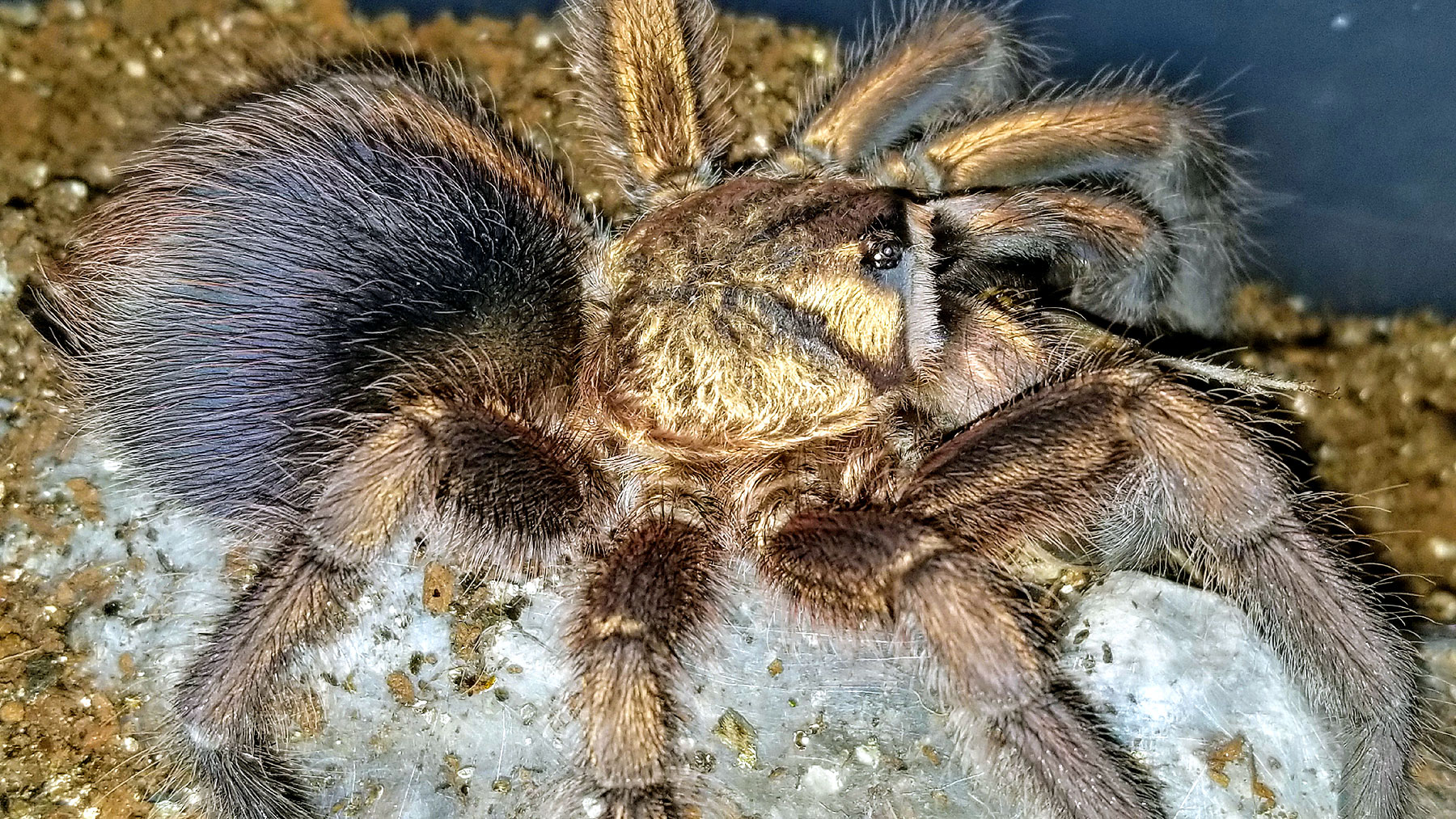
I struggled with this one, as I honestly think that many of the Phormictopus species would make great first slings. They are all generally awesome eaters, hardy, grow quickly, and put on a ton of size in their first year.
I finally settled on the Phormictopus auratus for a few reasons.
First off, although they are fast-growing overall, possibly reaching 2.5-3” (6 – 7.6 cm) in the first year, they are a bit slower-growing than other Phormictopus species. This would give a keeper more time to grow with the sling. They also tend to be less bold than other Phormics, with many of them doing some burrowing until they reach the young-adult stage. This generally results in less defensive behavior. And adults are beautiful, sporting brilliant metallic golds and bronzes. I have two adult females, and they’re both quite visible and make excellent showcase spiders.
PROS
- Slings are a bit larger
- Grow quickly overall
- More shy and less defensive than other Phormictopus species
- Adults are absolutely stunning
CONS
- They can be shy when they are younger, hiding in their burrows
- In my experience, and from talking to others, they can be a bit less ravenous when it comes to eating
- They can get quite big, with females reaching 7-8” or 18-20 cm
I currently have over a dozen species and regional variants of Phormictopus species, and I have never had any issues with any of them. Someone ready to work with a big, potentially ornery spider in the near future would have a blast growing up a sling of any Phormictopus species.
5) Pamphobeteus sp. Mascara – “Mascara Birdeater”
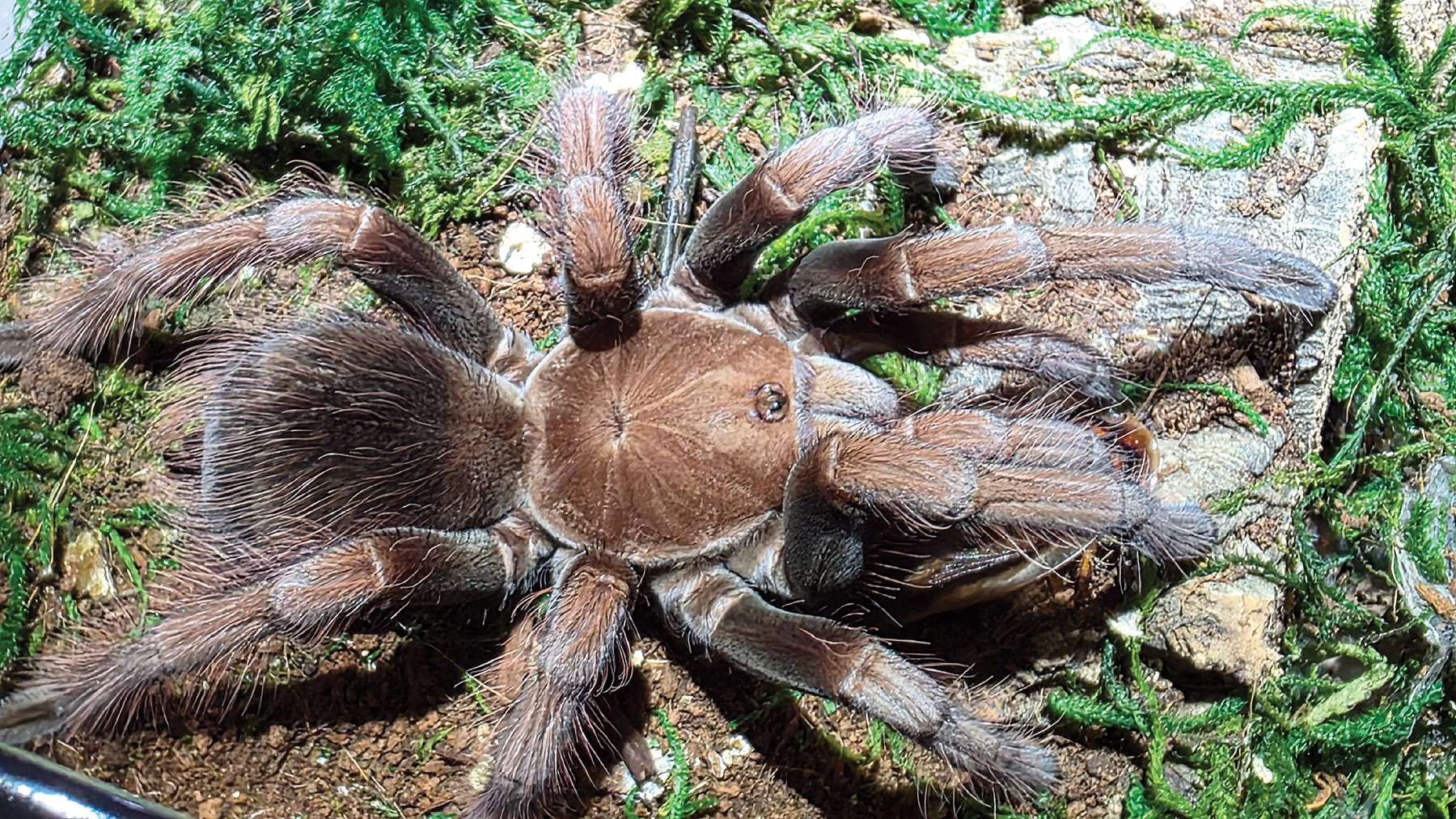
Honestly, you can’t talk about Phormictopus without also mentioning another large tropical genus, Pamphobeteus. Like the Phormics, pampho slings are all very easy to raise up and, as a bonus, start off quite large when babies. Unfortunately, spiders from this much-coveted genus can be quite expensive, making them a bit more of an investment for someone looking for their first sling. As a result, I’ve chosen the Pamphobeteus sp. Mascara, due to its availability and lower price point. I’m currently raising a young adult that I purchased back in April of 2023 as a 1.5” (3.8 cm sling). She is now around 5” (12.7 cm) and showing some adult colors. This spider has been a fantastic eater, a fast grower, and recently has been quite visible. And, due to availability, this Pampho tends to be less expensive than some other species on the market, like the P. antinous.
PROS
- Slings start large, so there are no itty-bitty babies here!
- They are vicious hunters
- They molt with regularity, put on a lot of size, and grow quickly.
- They can reach 4” or 10 cm in a year or so.
- They are very hardy spiders overall
CONS
- Although I’ve found slings on sale for $50, they can still be on the pricey side
- Adults are big, with females reaching 9” or 23 cm
- Pamphos can be skittish, with lots of bolting
I currently keep four species of Pamphobeteus, and I love them all. However, the Pamphobeteus sp. Mascara is a great one to start with for someone looking to keep their first sling or to grow up their first Pampho.
4) Tliltocatl vagans – “Mexican Redrump”
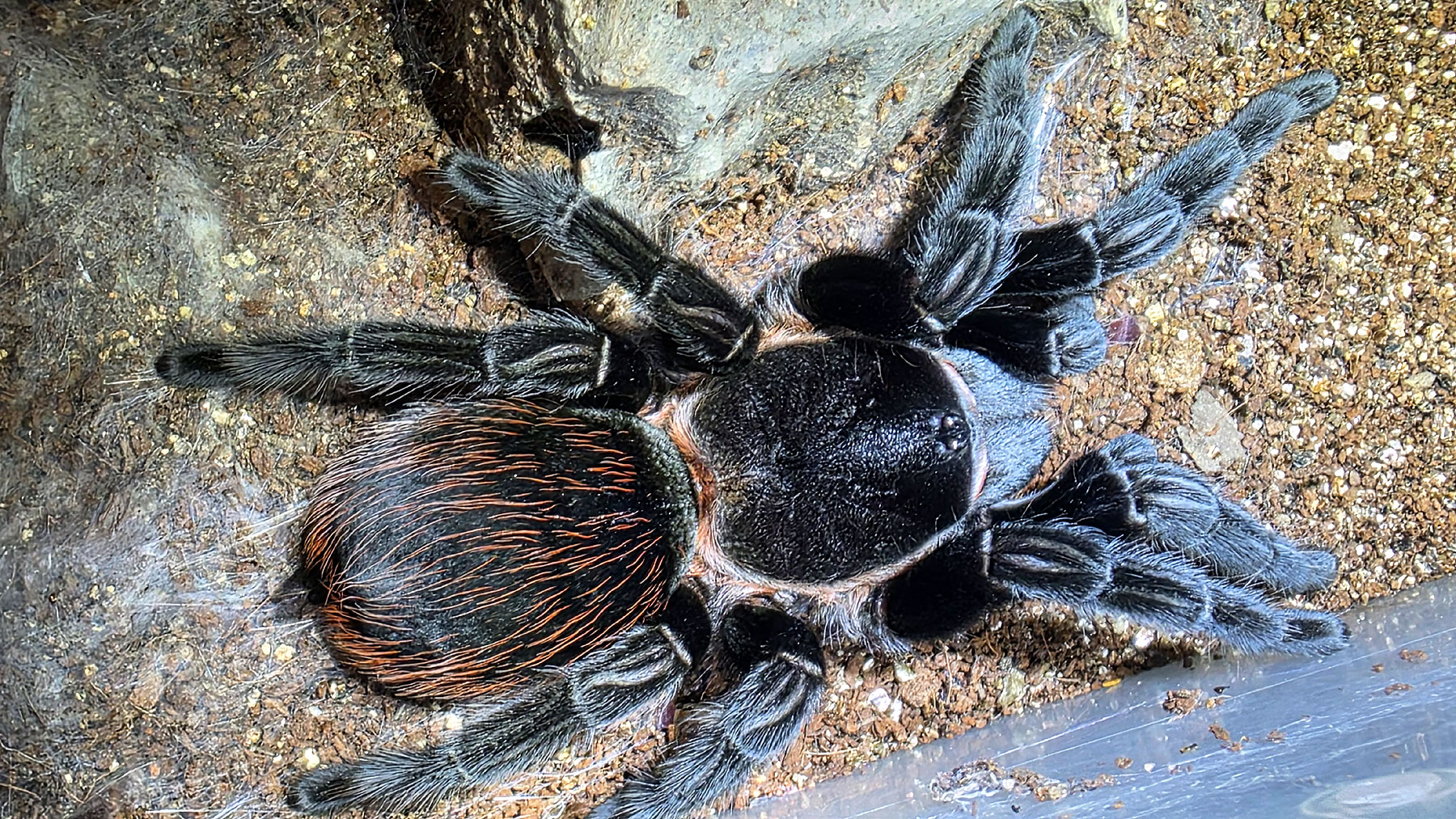
The T. vagans is a hobby classic and an excellent choice for someone looking to grow up a sling. For those new to the hobby, the T. vagans used to be in the genus Brachypelma, and as such, was often recommended for being the fastest-growing Brachy species. Although it has been moved to its own genus, it has continued to be popular and coveted for the same traits. Females reach an impressive 6.5 inches (16.5 cm) and sport jet black velvety legs and bright red abdomens, making them a fantastic showcase species. Sadly, this species has been particularly villainized in the hobby by unscrupulous influencers who post clickbait content, labeling them as “aggressive,” “dangerous,” and even “evil.” Although they can be a bit more skittish and quicker than some of the other beginner species, they are no more unmanageable than the super popular Chromatopelma cyaneopubescens or GBB.
PROS
- Usually cheap and available
- Medium to fast growth rate when compared to GAB species. Can hit 2” (5 cm) in a year, which is pretty fast
- Great feeding response
- Active and visible
- Very beautiful as adults
CONS
- Faster and more high-strung than some beginner species.
- Some can be defensive, although they are hardly the demons some would make them out to be
I currently have two females, an adult and a young adult, and they have been very easy spiders to raise and to manage. Although my young adult is the more skittish of the two, she would much rather bolt to her den than stand her ground when disturbed. My adult female sits right out in the open, is calm as can be, and makes a wonderful showcase tarantula.
3) Chromatopelma cyaneopubescens – “Greenbottle Blue” or “GBB”
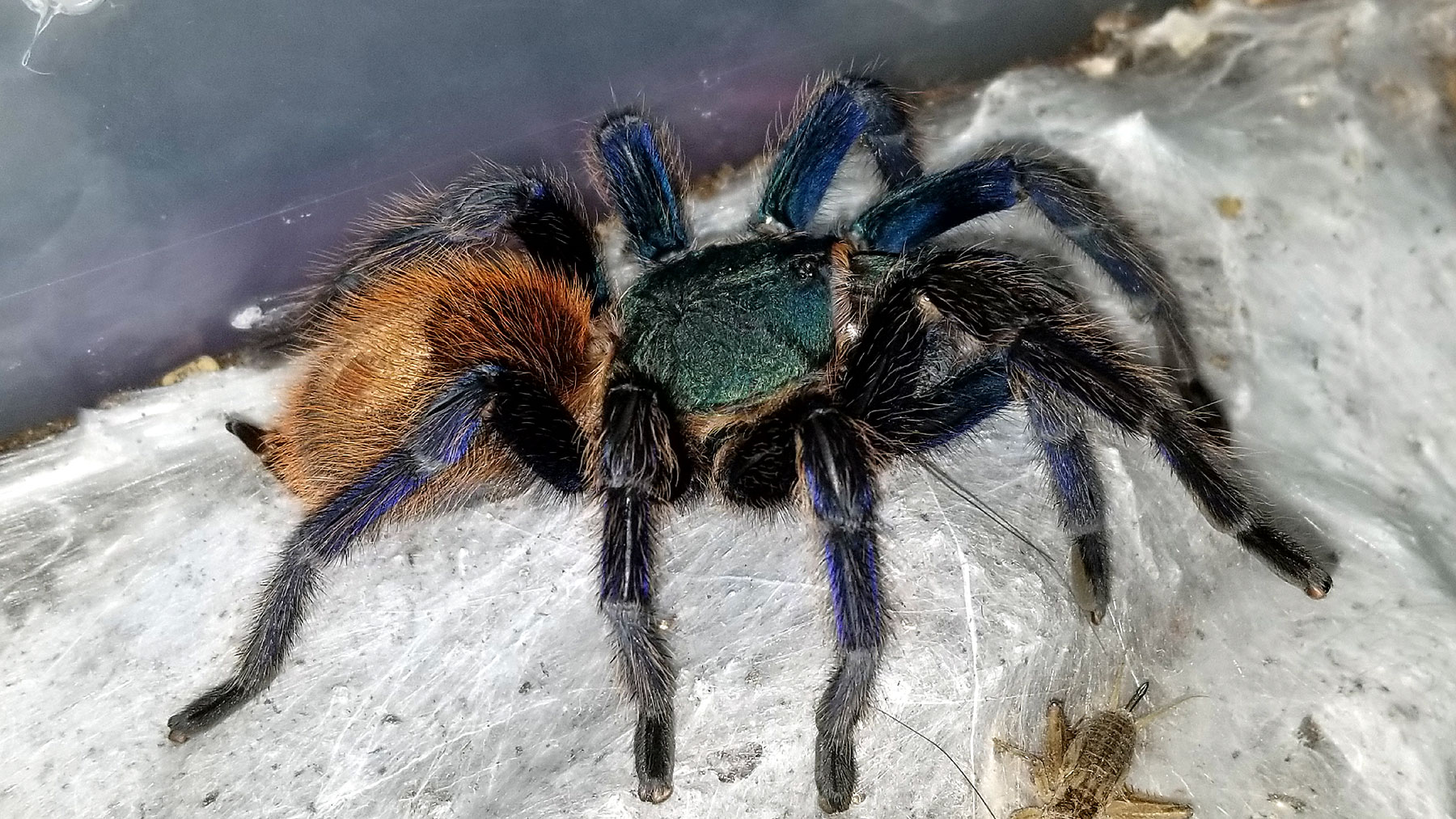
When I first got into the hobby, this species was one of the most sought-after in the hobby. Years later, it’s still one of the most popular pet tarantula species, being voted #2 in my list of the 13 best beginner species as chosen by keepers. The GBB is another hobby classic and one of the few blue tarantulas that are actually New World species. This tarantula is not only super hardy, being one of the few slings that thrives when kept on the drier side, but it’s also a great eater and a fairly fast grower. They are also stunning, no matter what life stage they are in, as slings, juveniles, and adults are equally beautiful. The GBB was actually the first sling species I ever raised. I ended up with two stunning females that lived for a decade before dying of old age. They really helped give me the confidence I needed to venture out into keeping more difficult slings.
PROS
- They are awesome hunters and eaters, tackling prey with gusto
- They grow at a medium rate, molting with regularity and putting on noticeable size with each molt
- They are very hardy and easy to keep, being one of the only species that can be kept drier as a sling
- stunning throughout all stages – the color changes it goes through as it matures from sling, to juvenile, to adult are just fantastic
- fast-growing, heavy webbing
CONS
- “Fast” when compared to the GAB species
- May kick hairs when disturbed
- Can be skittish and will use their speed when threatened.
The GBB has a lot going for it as a great sling for a keeper to start with. I’m currently raising my third from a sling, and she is now a young adult. I will always have this species in my collection.
2) Tliltocatl albopilosus – “The Curlyhair Tarantula”
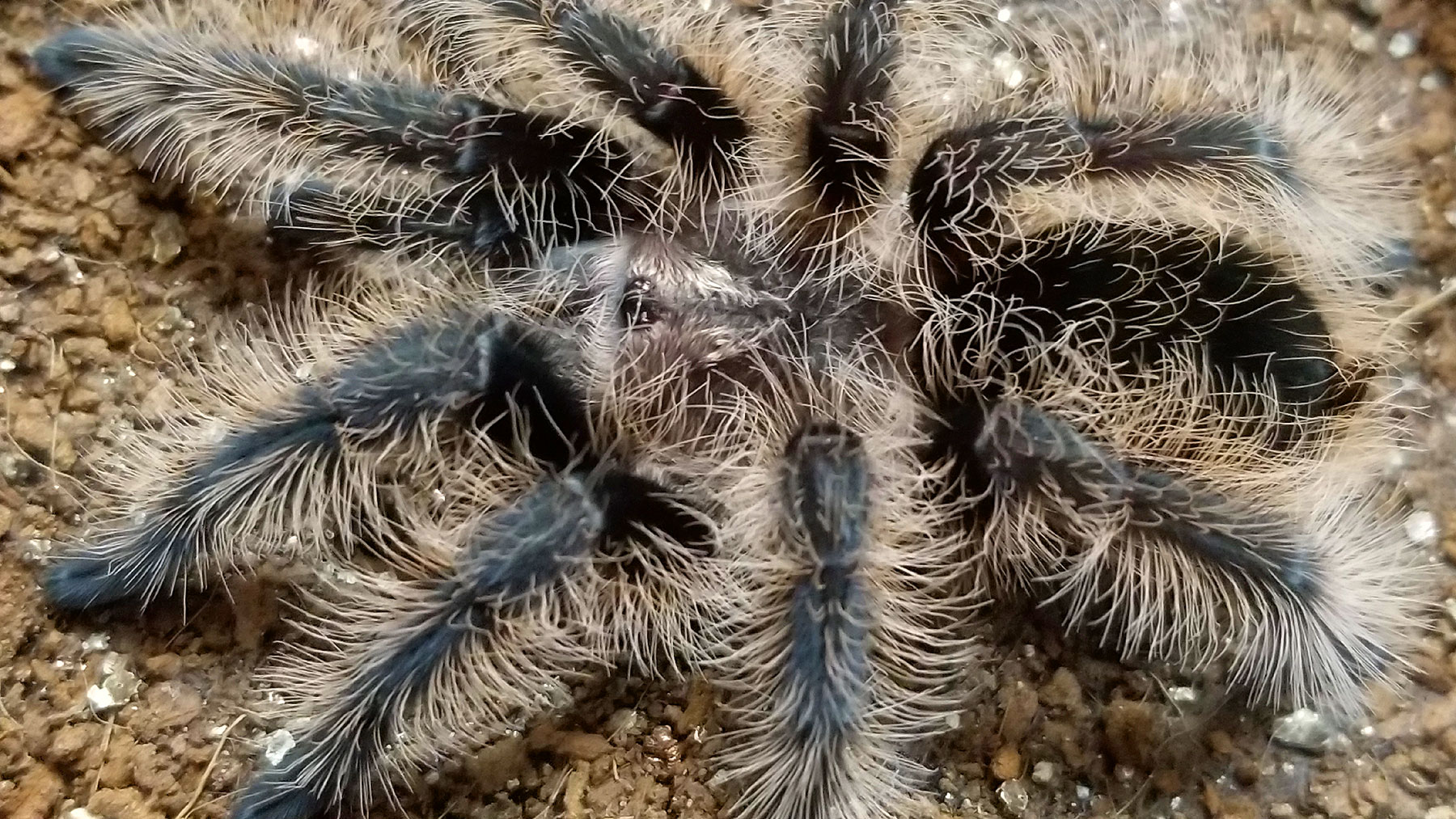
When I did my list of the Top 13 Best Beginner Species as chosen by hobbyists, this popular species coasted into the top spot with votes. And when I first published the podcast about the best species to keep for a first sling, many folks chimed in to bemoan this species’ omission from the list. Well, I plan to remedy that issue this time around! I have kept four of these over the years, and they are wonderful spiders that definitely deserve all of the praise they receive. The Curlyhair Tarantula has long been a hobby staple and has carried the mantle as the best beginner species. Once included in the genus Brachypelma, it had a reputation for being fairly fast-growing for a GAB species, with slings often reaching 2” or 5 cm in the first year. With their perpetual bad hair day of curly seta, they really are cuddly-looking spiders. Adults are usually quite docile and visible, making it an easy spider to keep.
PROS
- Eat great
- Grow fairly quickly
- VERY hardy
- Super available and inexpensive.
- Voted the #1 top “beginner species” by keepers
- Many call it an excellent beginner sling.
- Adorable spiders with calm dispositions as adults
CONS
- Growth rate may vary
- Slings can be quite tiny.
- Some adults are a bit more high-strung and skittish
Keepers have spoken, and you can’t argue with what they are saying. The T. albopilosus is an icon in the hobby, having the distinction of being chosen as BOTH a great beginner tarantula and a great first sling to raise. That said, it should be noted that there are currently two types of T. albopilosus offered in the hobby: the T. albopilosus “Nicaragua” and the T. albopilosus “Hobby Form” or “Honduran Curly Hair.” Some have noted that the “Nicaragua” sports much longer, wild curly hairs, and some report that this version can be more skittish. I’ve had both, and I haven’t seen much of a difference myself. My mature male “Nicaragua” was a bit skittish, but that can be expected from a mature male.
1) Acanthoscurria geniculata – “Brazilian Whiteknee”
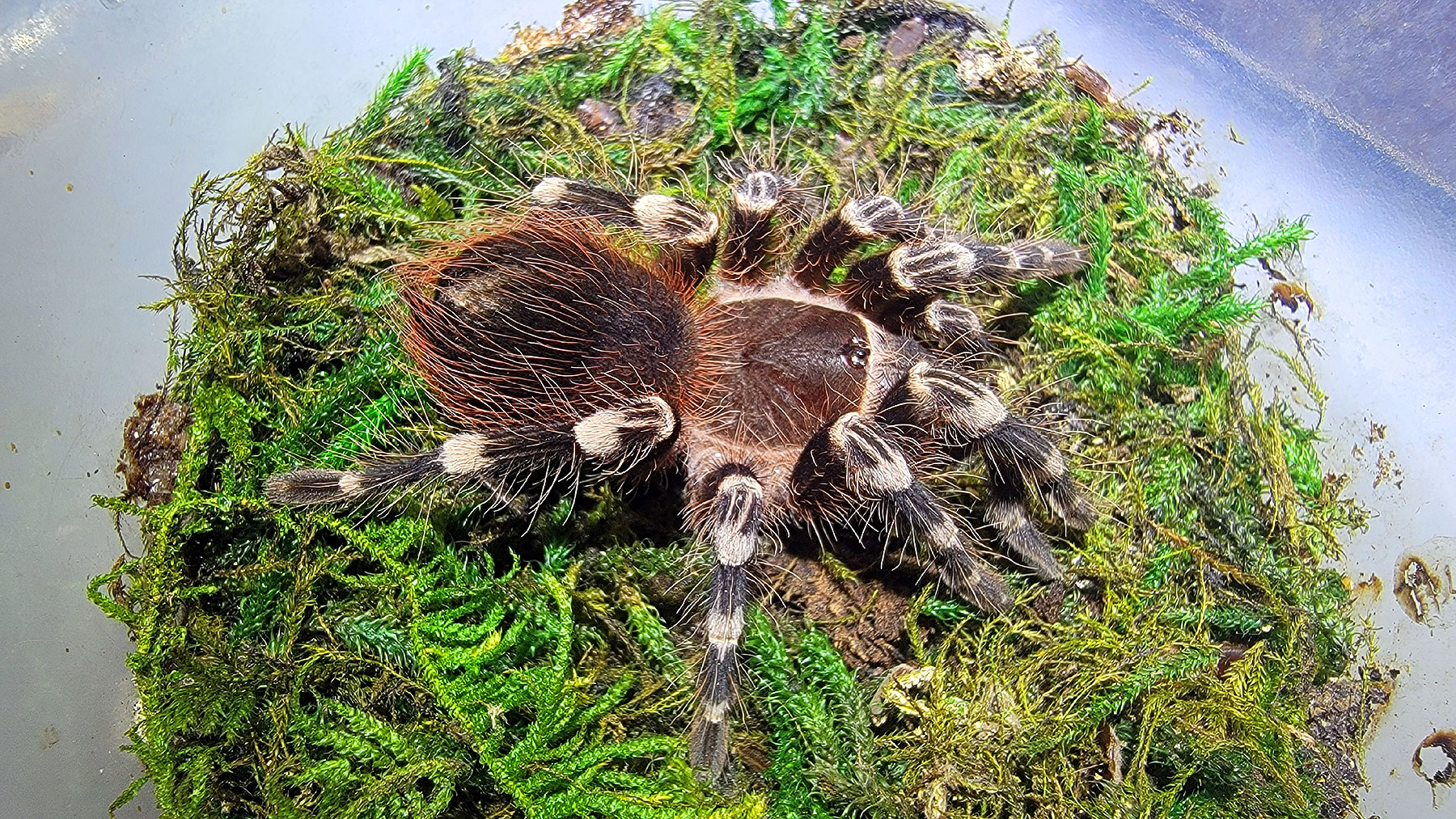
Speaking of hobby staples, this next species is another icon of the hobby. I’ve kept three of these tarantulas over the years, including a large male that matured out years ago. I currently have a large adult female and a young adult that I’m growing up. The A. geniculata continues to be one of the most popular tarantulas in the hobby, with many voting this species as the best so-called beginner species to grow up from a sling. In my list of top 13 beginner tarantulas as voted by hobbyists, the Brazilian Whiteknee was chosen as #9. Although this spider can have an awesome feeding response that some mistake for “aggression”, it brings many positive traits to the table when it comes to raising a first sling. They are great eaters, grow very quickly, are super hardy, and grow into stunning adults. They are also always on display, which makes them very desirable to folks who want to show off their animals.
PROS
- Eat great
- Grow quickly, molting frequently and putting on size
- VERY hardy,
- Super available and inexpensive.
- Voted 9th in “Best Beginner Species as Chosen by Keepers”
- Some call it the perfect beginner sling.
- Gorgeous spiders with the white striping and the reddish abdominal hair.
CONS
- Get big, with females reaching 8” or (20.3 cm)
- They can have voracious appetites and ravenous feeding responses. This can sometimes lead to them being branded as “aggressive”
- They can be a bit skittish
RATHER LISTEN? CLICK THE LINK BELOW TO HEAR THE PODCAST ON THIS TOPIC!
 Tom's Big Spiders