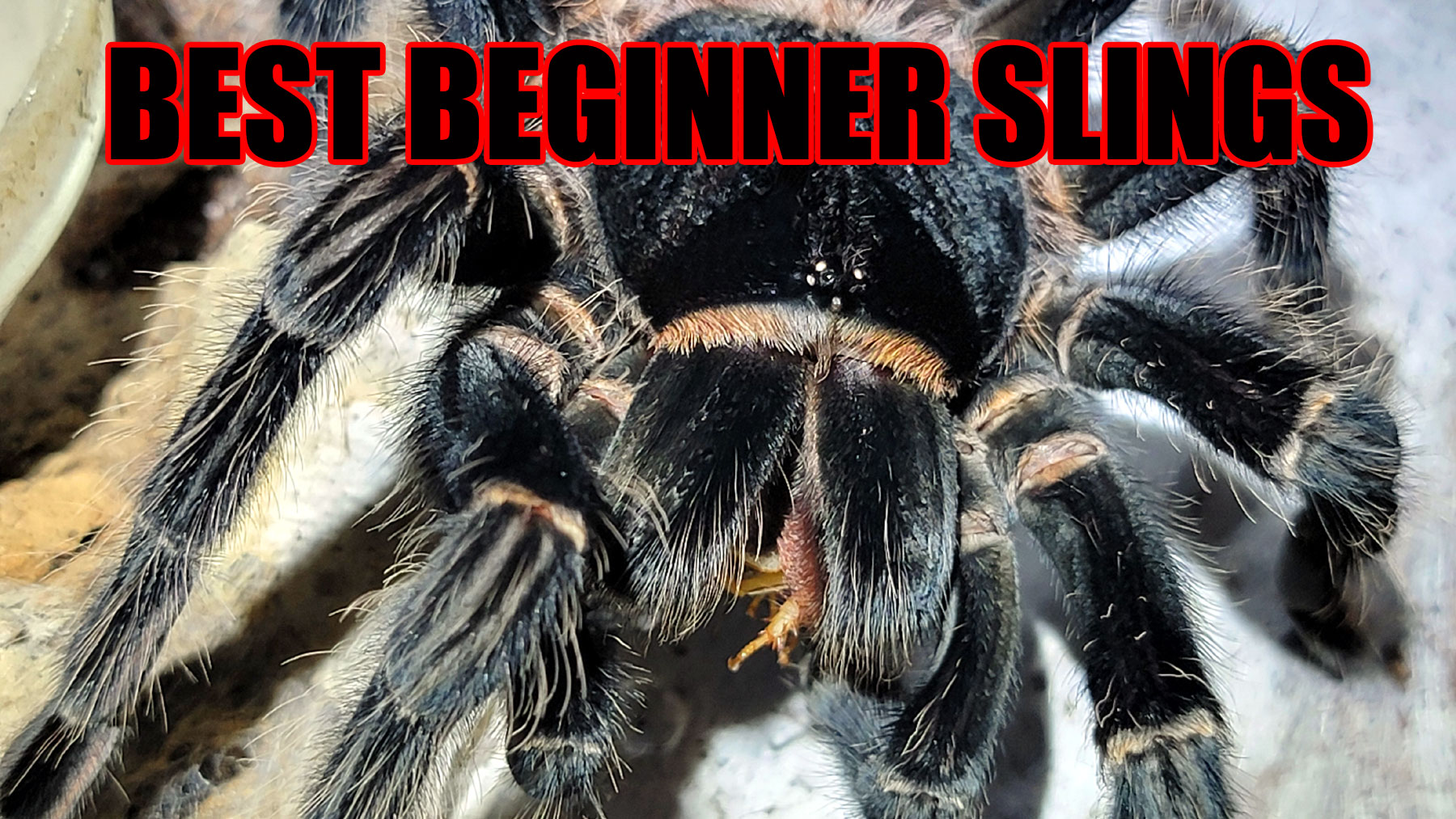
10 Great Tarantula Species to Raise as First ‘Slings

Many folks who are just getting interested in the tarantula hobby start by consulting the numerous “beginner tarantula” lists to select their first spiders. And those who do will often discover that the genera most recommended on these lists are the GAB species (Grammastola, Aphonopelma, Brachypelma). These species are recognized as being very hardy, long-lived spiders that are super easy to care for and that generally grow up to be docile adults. And, as these are New World species, one doesn’t have to worry about the potent venom.

However, after years of speaking with new keepers, I realized that most folks want to start with a larger specimen, like an adult. Although most of these species were readily available and inexpensively available in the pet trade as wild-caught adults several years ago, new restrictions have rightfully choked off the supply. This means that well-established juvenile or adult GAB species are very difficult to find and usually incredibly expensive when they are available.

When hobbyists realize this, they often turn their attention to captive-bred slings. However, this poses another problem. 

As great as the GAB species are as first tarantulas, most are very slow growing, taking years to grow out of the sling stage. When you factor in that they start as super small (often ⅓” or .8 cm) and can be fairly expensive, these species become less attractive options for one looking to keep their first sling. Many folks purchase slings of these species, not realizing that it could be years before they have anything that resembles the gorgeous photos of adults they have fawned over.

And, let’s be honest: many keepers are freaked out by the idea of growing up a tarantula from a tiny spiderling.

New hobbyists are often told that, by starting with a sling of a certain species, they can “grow” in the hobby as the sling grows. This means that as the sling marches on through adulthood, the hobbyist can hone their skills at a measured pace before they are dealing with an adult spider.

This sounds great on paper, but for someone beginning with a tiny GAB sling, it doesn’t really work. These species take SO long to grow that many folks eventually find themselves keeping Old World spiders long before their sling reaches adulthood. Although they make great pets as adults, they aren’t always the best species for a keeper to raise as his/her first sling.

So, with hundreds of species, which ones are good first spiderlings for the first-time sling keeper? Well, read on for a list of tarantula species that would make excellent first attempts by keepers used to keeping babies. Not only have I raised multiples of each of the following species, but I’ve also heard from many keepers over the last several years that mirror my opinion of them as good first slings. If a keeper does their research (I’m including links to care videos for each of these species), they should have no trouble growing their first tiny spider up to a giant, hairy tarantula.  

To create this list, I considered the following factors:

Availability and cost – It drives me nuts sometimes when folks are asking for recommendations for a starter sling, and someone chimes in with a spider that is new to the hobby, not readily available, and super expensive. The spiders on this list are quite prevalent in the hobby (at least in the US) and are usually under $50 as slings. 

Hardiness – The spiders on this list are usually pretty forgiving when it comes to care and are quite hardy, even as slings. This means, no moisture dependency, good appetite and feeding response, 

Growth Rate – The species on this list are all known to have fast growth rates overall, meaning that your sling will molt more often and often add a good amount of size with each molt. With these species, you will actually be able to “grow with the spider,” gaining more valuable experience with each molt.

Size of Sling – Most of the species on this list start as fairly large slings, which means it will be easier to spot them and to procure live prey for them

IMPORTANT NOTE: Although I’ve created a “Top 10” list with these species, feel free to begin with whichever species you feel comfortable with. I encourage you to read through the Pros and Cons and select the spider that works best for you. Now…onto the list! 

Here are some of the species that I recommend, with Pros and Cons, to those looking to raise as their first slings.

Continue reading

The Best Tarantula Species For Beginners Revisited (Video Version)

“What is the best tarantulas species for a beginner?”

I’ve spent a lot of time answering this question over the years, and for those just dipping their toe into this amazing hobby, it’s an excellent and important question to ask. Several years ago, I wrote my article “The Best Tarantula Species for Beginners” in which I detailed the species I thought make excellent first tarantulas for someone just starting out. In this first version, I included only species I kept and cared for so that I could share my own experiences and anecdotes on them.  To be truthful, my opinions on some of the species (I’m looking at you A. chalcodes, A. avicularia, and B. vagans!) have changed over the years, so I’ve continued to periodically revise the original text to jigger the order and to add new species deserving of the title. With the post nearing 50,000 views, it was important to me that it remain current and accurate.

Recently, I had someone ask me about whether or not an Acanthoscurria geniculata (Brazilian white knee) would make a good first tarantula. This individual had never owned a tarantula in her life, was a bit scared of spiders, and had just begun doing research on their husbandry. When I informed her that I love the species, but I definitely wouldn’t recommend it to someone with no experience, she seemed a bit taken aback. Her reply: “Oh, but I just watched a YouTube video where the guy said it’s a good beginner tarantula.”

I was a bit surprised, as I know the species is popular in the hobby, but its size, skittishness, and reputation for being a bit ornery would make it bit too much of a spider for most novices. I asked for a link to the video, and was floored to discover that there were quite a few spiders listed that could give newbies fits, including several very fast and nervous species.

Look, everyone is entitled to their own opinion, and that keeper is obviously free to post whatever he wants. In his defense, he did at least mention that the A. geniculata might be more on the intermediate side of things. I also know a couple keepers who started with this species and did fine, so it’s not outrageous to think that others might do the same. That said, after watching said video, I couldn’t help but feel like his list wasn’t composed with much thought or experience; instead, it seemed like he was trying to raise a couple eyebrows by making increasingly controversial choices with no real regard to standard or criteria. Also, instead of choosing species that would be appropriate for new keepers, he appeared to just be rattling off his favorite tarantulas.

In my opinion, a good “beginner” species should be a spider that can be kept by even the most green keeper without issue. I talk to a lot of folks who are either just starting out or who are doing their research in preparation for getting their first spider. Many are admitted arachnophobes who are hoping a tarantula might help them to quell their irrational fear. Some have never cared for an exotic pet before.  Then, there are the younger keepers, adolescents and teens still living a home with parents and siblings who are looking to get a cool new pet.

You’re really going to recommend a fast and feisty spider to these poor folks?

When making a list, it’s crucial to consider your potential audience. If you can’t picture a 12-year-old enthusiast or the older arachnophobe dealing with a certain species, then maybe it shouldn’t be on the list.

Does that mean that folks can’t start off with species considered to be more advanced? Of course not. It honestly depends on the individual and his or her personal skill set. I’ve heard many stories about keepers jumping in the deep end with baboon species and pokies successfully.  That being said, most folks just joining the hobby aren’t ready for that much spider.

And that’s where these lists become important…

So, with this video in mind, I decided that it was high time I made my own comprehensive YouTube video guide with an updated list of what I believe to be the top beginner tarantulas. I appreciate that my blog post on the subject may be a bit wordy and long-winded for some, and although I have husbandry videos for the species on that list, there was nothing with them all together. This new video would hopefully become a one-stop resource for those looking for information on where exactly to start in the hobby.

The Criteria

To create the following list, I first drew from my own experience and observations. I then reviewed several forum threads on good beginner Ts from three different message boards and recorded the species that came up the most.  I looked at three main criteria:

  1. Temperament – Although temperament can vary from specimen to specimen, there are some species that are generally considered to be more docile than others. As a result, I picked species that have a reputation for being calm and left off the faster, more skittish spiders.
  2. Ease of husbandry and Care – As many novices aren’t up to speed on husbandry, only spiders with easy care requirements were considered. The species on this list can all be kept at room temperature on dry substrate with water dishes and a hide. With the exception of the Avicularia, all of these can be kept in basic terrestrial set ups and do not have moisture requirements.
  3. Price and availability  Finally, most people just getting into the hobby don’t want to spend a lot on their spider, nor do they want to hunt high and low for a particular species. As a result, I tried to take availability into account.

It’s also important to mention that, although I don’t personally handle tarantulas for fun and I have written about the handling “controversy”, I know many folks who do. More importantly,  many of those I speak with that are new to the hobby think that handling is an essential part of keeping spiders and are therefore intent on handling their new pet.  As a result, I assume that whoever might read this list will likely be looking for some hands-on time with their tarantula. Although I mention handling in the video, I’m not encouraging it, but merely recognizing that it can and will happen. Remember, temperament varies from specimen to specimen, and just because a species has a reputation for being tractable doesn’t mean that your spider will tolerate handling.

As always, I encourage folks to go out and seek other keeper’s opinions. Although I feel strongly that my picks are good ones, they only represent one keeper’s perspective. If you have a question about a particular species, as always, don’t be afraid to ask someone who actually keeps that spider.

Now, on to the video!