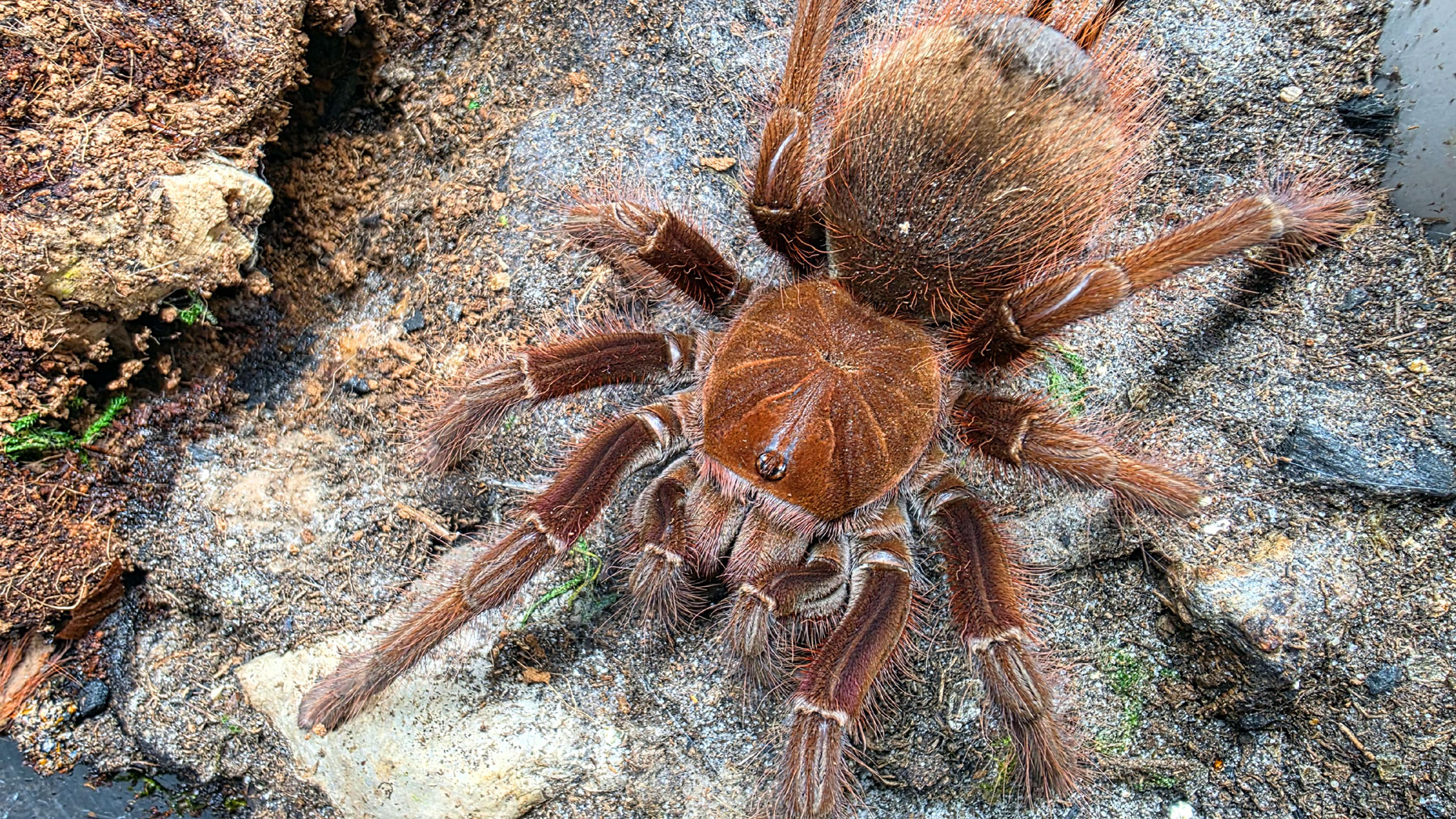
| Scientific Name | Theraphosa apophysis |
| Common Name | “Pinkfoot Goliath Birdeater” |
| Countries of Origin | Colombia, Venezuela, and Brazil |
| Arboreal/Terrestrial/Fossorial | Opportunistic burrower |
| Max Size | 10″ or more (25.5 cm) |
INTRODUCTION
When I first got into the hobby, I lived by the adage “bigger is better.” At that time, I figured that if you were going to keep large, hairy spiders, then you might as well keep the largest species available. Therefore, it wasn’t long before I discovered Theraphosa species and immediately became enamored with these true giants. Obviously, the legendary T. blondi or “Goliath Birdeater” was the first species that caught my eye. Unfortunately, not only was this species ridiculously difficult to come by, commanding exorbitant prices, but I also discovered that this species was supposedly difficult to keep due to its moisture requirements. I therefore settled on its cousin, the T. stirmi or Burgundy Goliath Birdeater, raising a young adult and two slings to adulthood. When, a few years later, T. blondi slings became available at an affordable price, I grabbed up two (now two 10” or 25.5 cm adults!). With two of the Theraphosa species under my belt, I kept a lookout for the third and lesser-known of these giants…the Theraphosa apophysis or “Pinkfoot Goliath Birdeater.”
After years of this species being on the top of my wishlist, I finally picked up two slings from Fear Not Tarantulas in June of 2020. At that time, they were each a leggy 1.25” or 6 cm. They are now both pushing a leggy 9” (23 cm) and have bloomed into stunning adult females. The T. apophysis still doesn’t command the same attention and popularity as its more heavy-bodied cousins, and I think that’s an absolute shame. For those looking for a giant, fast-growing, handsome spider, the T. apophysis might fit your tastes. Read on for a detailed description of how I kept these stunning giants!
Continue reading Tom's Big Spiders