When I first got heavy into the hobby, I was immediately attracted to tarantulas from the genus Poecilotheria. As a result, I skipped some of the “stepping stone” arboreal species that keepers usually start out with to prepare for these advanced Old World spiders. For years, most of the aboreals in my collection (with the exception of two Avicularia) were from this genus. As I acquired more and more pokies, I tended to ignore some of the other amazing arboreal tarantulas available in the hobby. It wasn’t until very recently that I decided it was high time I tried out some of the other genera of tree-dwelling tarantulas; namely Psalmopoeus and Tapinauchenius. As luck would have it, an order from Pet Center USA earned me a free P. cambridgei, or “Trinidad Chevron” sling, kicking off a newfound appreciation for these awesome spiders.
When I first received my P. cambridgei in early October 2015, it was about 1″ or so. I housed it in 32 oz deli container ventilated with three rings of holes around the top. I added about 3″ of moist substrate (a combination of topsoil and vermiculite), a piece of cork bark flat with plastic leaves hot glued to it, some sphagnum moss, and a small bottle cap for a water dish. As a sling, I kept part of the substrate moist (not wet) at all times. To do this, I would pour some water down one of the sides, allowing it to percolate through the substrate down to bottom. This kept the lower levels moist while the top dried out a bit. I also tried to keep the water bowl full at all times, although she would often web it up or fill it with substrate.
As with all of my tarantulas, the temperatures ranged from 70-75° in the wintertime, and 75-80° during the hot summer months. Even when the temps were a bit cooler, this T was still very active and continued to eat well.
As a sling, my cambridgei burrowed a bit into the substrate and webbed up behind its cork bark using substrate and sphagnum to make “dirt curtains”. By the time I finally rehoused it, it had webbed up the entire enclosure right to the top. It was very reclusive during this period, quickly bolting into its burrow whenever disturbed. Even as a sling, this spider was very fast, darting out of view in the blink of an eye.
TIP: Many folks hear the term “arboreal” and immediately expect their slings to hang up high on the cork bark. However, many arboreal spiderlings will start their lives on the ground, and some will even burrow a bit. If your Psalmopoeus species sling starts digging, rest assured; there is nothing wrong with it. They usually outgrow this behavior once they put on some size.
While a sling, I would feed it one small cricket twice a week. As it put on some size, reaching about 3″, I moved up to a large cricket once a week. This spider has been a ravenous eater, taking all prey items down with amazing speed and ferocity. It has been a very fast-growing species, having molted five times in 10 months and putting on an impressive amount of size with each molt. At the time of this writing, it is about 4.5″.
In April of 2016, it had outgrown its deli cup, and I rehoused it into a larger enclosure. I used a one-gallon Mainstay clear canister which I ventilated with dozens of holes and hot glued a water dish up in one of the corners. Although I started with the substrate moist, I let it dry out. During the summer months when it is quite humid, I leave it dry and keep the water dish full. In the winter months, when the furnace is running and the air is dry, I moisten it on occasion by pouring a bit of water down the side. As it has webbed quite a bit, I also dribble some water on the webbing when I feed it to give it a choice as to where to drink.
TIP: For some fast and feisty species, rehousings can be the source of a lot of anxiety. If ever an escape or bite is going to happen to the careful keeper, this is the time. For fast-growing species, like P. cambridgei, many folks choose to rehouse them into their adult enclosures much earlier than they would with other species. This limits the number of rehousings that the keeper has to perform.
When first relocated to this new enclosure, the cambridgei was quite shy, building a web and secreting itself behind the cork. Now that it has settled in, it sits right out in the open most of the time. Unlike some of my other skittish arboreals that will bolt to hide when disturbed, this one will boldly stay put.
After its next molt, I’ll be rehousing it into its adult enclosure. As this species can reach 7″, it will be getting an arboreal enclosure roughly 7 gallons or so.
The P. cambridgei is a beautiful, fast-growing arboreal species that makes a wonderful showcase spider. That said, they are very fast and many report that their specimens have quite the defensive attitudes. However, this speed and “attitude” make it a great stepping stone species to Poecilotheria without worry of the more potent venom of this Old World genus.
While looking for a unique arboreal species, I noticed that Tanya at Fear Not Tarantulas had some Avicularia juruensis slings for sale. Although I already had a couple of avics, including an A. versicolor and an A. metallica, for a while I really wasn’t too interested in getting any more. However, I had been on a bit of an arboreal tear the past couple months, and I was seeing this genus in a new light. I Googled some photos of adults and was immediately enamored with this fluffy little spider with the pink feet and golden bands that give it the common name “Yellow-Banded Pinktoe”. Excited to acquire a spider that I hadn’t heard much about, I picked up a 1.25″ sling in April of 2016.
This little guy/gal has definitely spurred a renewed interest in this genus.
Housing
For housing, I set my juruensis up in a 32 oz deli cup that I vented with three rows of holes along the top. I added about 2″ of slightly moist substrate to start (which I allowed to dry out), a mixture of topsoil and vermiculite. Coco fiber or peat would work just as well. I also included a piece of cork bark flat placed at an angle for hiding, a plastic plant, a pinch of sphagnum moss, and small bottle cap for a water dish.
TIP: To encourage webbing, it’s advisable to include plastic plants and foliage in order to provide the T with plenty of anchor points to attach it to. Cages barren of decorations tend to lead to less webbing and often unsettled avics.
After being introduced into its new home, my sling took residence between the top of the cork bark and cover of the container. There, it started webbing a bit of a silk “sock” to hide in, a sign that it was settling in well. Although it webbed a section of the cover closed, I could easily open the enclosure from the other side for maintenance and feeding without tearing up the web. Whenever disturbed, the tarantula would retreat to this web to hide.
TIP:Avicularia species love to make their homes in the highest corners of their enclosures. This can give keeper fits, as many use top-opening designs to house their animals. Although I use 32 oz deli cups, folks have become quite creative when setting up enclosures for their arboreal species. A quick Google search will bring up some great possibilities.
For prey, I have a red runner roach colony, and I always have the pinhead roaches on hand, so I started by feeding it these. I would drop in a couple twice a week or so and they’d be gone in a day.
It molted for the first time about a month after I got it, hiding out in its web hide for close to two weeks before taking its first meal. It molted again in September and once again took over a week before it ate its first post-molt meal. This species seems to take a bit longer in premolt, as well as some extra time to eat again after molting. It is about 1.75-2″ at the time of this writing. Now that it’s put on a bit of size, I’ve switched to medium crickets, which it has no trouble subduing. It’s been an excellent eater so far, and it has only refused food when in premolt.
Once it hits about 3″ or so, I will rehouse it into a 1 gallon clear plastic jugs I get at my local Walmart. They are crystal clear, easy to vent, and a great size for juvenile arboreal tarantulas. At that point, it will be getting one large cricket a week. When it inevitably outgrows that container, it will get rehoused into something around 5-7 gallons.
TIP: Now, most Avicularia will come out hunting at night and will have no issue locating prey on the ground. That said, I have kept a couple of specimens that seemed to be missing the prey that I dropped on the ground. When my Avicularia versicolor was a tiny sling, she would never venture on to the substrate to hunt (as evidenced by the fact that prey items I dropped in were still there days later). To make sure she ate, I would prekill a pinhead and place it in one end of her web sock. It got to the point that she’d wait at the opening for prey, and I could carefully use tweezers to drop live prey at the lip, and she’d snatch it right up. Now that she’s an adult, she hunts fine, and I haven’t had to continue bringing the food to her. So far, this has definitely not been an issue with the juruensis.
Temperature and humidity
A lot of care sheets talk about the high-humidity requirements of Avicularia species, encouraging keepers to keep them on moist substrate and to spray to keep moisture levels up. However, many keepers are now realizing that the majority of these species do better when kept mostly dry with good ventilation. For years, folks spoke about “SADS” or “Sudden Avic Death Syndrome”, a phenomenon where a seemingly healthy Avicularia species would suddenly die for no apparent reason. Many seasoned keepers now believe that the moist conditions encouraged by care sheets were the culprit, as the stuffy, stagnate cages proved to be death traps for these animals. This genus seems to thrive in a drier environment as long as fresh water is provided.
I keep my A. juruensis the same way I keep my other avics (A. versicolor, A. metallica, and A. sp. Amazonica); plenty of ventilation, dry substrate, and a full water dish. When I fill the water dishes, I overflow a bit, but I let it dry out in between. Once in a while, I’ll spritz some water on the side of the enclosure and webbing just in case it wants to grab a drink up high, but that’s only on occasion. It has done very well in this setup.
As for temperatures, my Ts are kept between 70-75° in the winter and 75-80° in the warmer summer months. When I first acquired it in April, the temps in my spider room were still on the low-end, and she ate and grew fine.
TIP: When in premolt, many avics will web themselves up in little “cocoons”, closing off both ends. If you see this behavior; don’t panic and don’t open up the web and try to push prey through! It just means that a molt is imminent. After it molts, the spider will stay in this web for a while; again, don’t tear down the web trying to get it out. It will emerge when it is ready.
Temperament-wise, this little guy/gal has been fairly calm. When disturbed, it scoots to its silk sock or behind the cork bark, but it doesn’t frantically bolt like other arboreal species I keep. Now that it’s larger, it also sits out in the open more often. Those who have kept this species usually describe them as calm.
The Avicularia juruensis is turning out to be a hardy, relatively fast-growing, and beautiful tarantula that would make an excellent addition to any collection.
* A WORD ABOUT MY HUSBANDRY NOTES: This article is not meant to be a “care sheet”, but rather an account of my observations as well as a description of what works for me. As always, I encourage folks to research all species thoroughly and seek multiple perspectives.
After several years of writing for Tom’s Big Spiders, I finally received my first piece of nasty correspondence. Honestly, the streak had to end eventually, as to date, 100% of my interactions with other keepers has been completely positive. These conversation are the single greatest perk of having the site and my YouTube channel.
However, after a rather stressful week, I sat down to answer some emails on Friday afternoon and got a bit of a surprise. I had a collection update from hobby friend (Hi, Dallas!), a question about a P. crassipes “goliath’s” odd eating behavior, a request for help by a fellow teacher whose class tarantula wasn’t doing well after a recent molt, and an email from a keeper to who needed help identifying the mislabeled T she bought from Petco.
And then, there was this little gem:
Name: [Redacted]
Email: [Redacted]
Website:
Comment: This is one of the worst care sheets I’ve read in my 18 years of breeding t’s! Humidity DOES matter! Heat DOES matter. Heat mats work well with burrowing t’s! As long as you use a probe to keep the heat set at about 80 and have deep enough material that they can pick a level they prefer. I’ve done no heat before and they will stress out if not kept properly. Won’t breed well either.
I currently own around 240 t’s and many have heat added to their tanks,via heat mats. Dry tanks = bad molts.
Time: September 30, 2016 at 3:03 pm
I’m assuming that the “care sheet” this person was referring to was my article “Humidity Temperature, and Tarantulas”, but this is only an educated guess. This is a blog I wrote a while back to help folks understand that they didn’t need to agonize over achieving the “ideal” temperature and humidity levels they encountered in care sheets. Since publishing this article, it’s been viewed over 6,000 times and has sparked numerous conversations with hobbyists who were worried about their temps.
Unfortunately, this email really rubbed me the wrong way for two reasons. First, it was rude. Maybe it’s because I’ve spent years trying to teach high school students to intelligently state and defend their positions (sorry, but “it sucks” is not a good argument…give me examples of why it sucks.), so it drives me insane when someone makes an curt, argumentative statement but does little to support it. If this guy had approached me politely with a “Hey, Tom, I completely disagree with this article, and this is why…” it could have turned into a fantastic discussion.
Second, and most importantly, it came off as another sterling example of an advanced keeper who seems to think his way of doing things is the gold standard. I’ve discussed with many folks the issue I have with seasoned keepers who pontificate on forums and Facebook and chastise any keeper who doesn’t follow their lead to the letter. Although I obviously give advice through Tom’s Big Spiders, I always endeavor to say my piece and let the keeper decide what to do with it. Even when someone chooses to not take my advice, I’ll continue to try to help them in any way I can.
If I’ve said it once, I’ve said it a million times: just because something works for you, doesn’t mean that it is the “only” way to correctly do things.
Now, maybe this guy is good dude who was having a bad day. It happens. I have all the respect in the world for someone with close to two decades of breeding experience. No joke. Who knows, I may even have some spiders this guy bred in my collection. However, just because you’ve done something for 18 years doesn’t mean that there aren’t other ways to do it.
Now here’s where things get a little interesting.
After emailing back to ask him to get clarification on which article he read before I replied, and getting no response, I decided to start writing my retort. Although I planned on working on my pet store article this weekend, I was instead wasting time responding to this email. Perhaps I became a bit too obsessive, but I take a lot of pride in presenting current and accurate information on my site, and I felt the need to thoroughly refute the statements made in that email.
Once I passed around 1,500 words or so, I decided that it would be a waste to just send this to someone who will likely not read it or not care. After all, if this individual really thought this information was that bad, why not post it in the comment section so it could be addressed publicly? I had always planned on revisiting the temperature and humidity article, and this could be an entertaining way to do so. I had also planned to start a feature where I print some questions I receive from keepers and the responses I give (as a lot of them are common and the answers could benefit others). This could be a fun way to kick that off.
Therefore, I’m presenting my response in this blog post. I’ve redacted the breeder’s name and email address, but the original message is being presented as I received it. Hopefully, this will again raise some awareness on this topic, as I still get several emails a month by folks who are stressed out because they can’t match the temps or humidity they found in a care sheet. Also, it will hopefully served to further clarify my thoughts on the topic.
Hello, [redacted]!
Unfortunately, you didn’t respond to my polite request for clarification, so I’m left to guess which article offended you so. I’m going to go out on a limb and guess it was “Humidity, Temperature, and Tarantulas.” First off, I’m not sure if it was the general theme of this article you took umbrage to, or just one of the statements I made within that caused you to fire off such a rude email.
It’s a shame you couldn’t have approached me in a more polite manner, as I usually enjoy mature discourse over some of the hobby’s controversial topics. I’ve had many polite and professional debates with both new and established keepers, and I always enjoy the opportunity to hear a different perspective as it relates to tarantula keeping. Heck, I even try to thoroughly present both arguments, even the ones I might disagree with, in my Tarantula Controversies articles. As you are obviously an experienced keeper with a vast amount of knowledge about tarantula keeping and breeding, we could have discussed the article maturely and productively.
Instead, I’m left with a hyperbolic and insulting statement backed with scarce supporting “evidence” that comes across more as a pot shot that a mature attempt to discuss differing opinions. With that in mind, please allow me to retort…
I think it’s important to consider that much of the information on my site and channel is targeted to those just getting started in the hobby. Although I enjoy traffic from some amazing advanced collectors who are looking for species info or for my “fun” opinion articles, I’m not currently giving breeding advice. In fact, I’ve stated many times that hobbyists looking to breed need to research elsewhere for their info for the time being. Besides, I’d like to think that most advance hobbyists don’t find it necessary to hunt online for basic husbandry info.
Being as seasoned as you are in the hobby, I’m certain you understand that keeping tarantulas as pets and breeding tarantulas are two VERY different situations. As a breeder, you will often have to try to emulate local temps and seasonal changes, or wet and dry seasons, as you try to stimulate breeding behavior in your tarantulas. That will require more careful creation and monitoring of your micro-climates and will likely necessitate the need for individual heat sources. In that case, heat mats or other heating devices might be needed to raise temperatures in single enclosures (instead of just heating the entire room).
However, this is something a breeder would worry about, not the average hobbyist.
Also, you make a point to mention your “18 years of breeding t’s [sic]”, likely as a way to tout your credentials as an expert in the hobby and someone who knows their stuff. I totally respect that; it’s folks like yourself that produce the captive-bred tarantulas we all buy. But again, let me point out that being a breeder, you likely have different goals and needs for your animals. For example, many breeders I’ve spoken to keep the temperatures in their T rooms higher than normal to stimulate faster growth in order to get breedable mature males and females faster.
Again, not something the average keeper will be worrying about.
I don’t know if you finished the article, but I actually concede these points at the end. To quote:
“Is there a time where more careful, species-specific micro-climates are necessary? Yes, as those looking to breed species, especially some of the more difficult ones, will look to recreate natural environmental triggers, like high temps, winter lows, or wet seasons to stimulate a mating response. In these cases, some careful management of their tarantulas’ micro-climates will be warranted.”
That said, although you may have to keep a certain species at 80 degrees for breeding purposes, that absolutely does NOT mean that this animal has to be kept this high for it to be healthy and stress-free. Most species do very well at room temp (and I did put a cutoff in the article so that folks know when their “room temperature” might be too cold.) and require no extra heat.
And where, exactly, did you come up with 80 degrees as the ideal? Am I to read this to mean that ALL tarantulas have to be kept at 80 degrees? Or is this just “burrowing species?” If so, I find that to be a pretty ridiculous notion. Sure, higher temps lead to faster metabolisms and faster growth rates. However, to insinuate that all tarantulas need temps in the 80s is just silly; they don’t. And this fact is not only evidenced by my personal collection of 140+ with 75+ species (not as impressive as yours, I concede, but a sizable sample nonetheless) but also as dozens if not hundreds of other keepers’ collections who frequent forums like Arachnoboards and the Tarantula Forum. Heck, on Arachnoboards, there was just a thread that addressed temps today with many hobbyists explaining to a new keeper that he shouldn’t worry about the temps in his home.
I don’t know how much interaction you have with other hobbyists, but the ideas presented in this article are by no means new or revolutionary. The majority of informed hobbyists now recognize that the bogus “ideal” humidity and temperatures listed on countless care sheets are useless. As we’ve kept these creatures and learned more about them, many are straying from obsessively monitoring temperatures and instead adhering to the “room temperature” rule. Basically, if you are comfortable, your T will be as well. You’ve found that 80 degrees works for you, and that’s great. I’ve found the 70-80 works for me. Is either one of us wrong? Nope. However, the fact that the spiders in my collection are thriving does prove that although temps in the 80s will work, they are by no means necessary.
The majority of species available come from areas that experience seasonal shifts that include temperature extremes as well as wet and dry seasons. We often look at one extreme (Wow, it’s 88º in June and July with 20 inches of rain!) and assign arbitrary ideal humidity and temperature requirements based off of this. The truth is, for many tarantulas, the optimal number is probably somewhere in the middle. Also, Ts that experience rainy seasons as well as droughts are obviously able to live in less than humid conditions.
Now, if your 80 degrees only pertains to burrowers, I have to ask which species are you referring to? I currently keep several fossorial species, including T. gigas, C. guanxiensis, C. dyscolus, C. lividum, P. muticus, M. balfouri, E. pachypus, O. philippinus, H. albostriatum, P. crassipes, and L. crotalus. Not one has heat, and all are currently eating, burrowing, and doing all of the things a seemingly content spider will do. It’s about 71º in my tarantula room now, and it will remain between 71 and about 75 throughout the winter. I should also add that several of the species listed above I raised from slings to adults in those exact same temperature ranges.
And what signs are you using to determine if the animal is stressed? Not eating? Odd behavior? Leaving its burrow? I often hear “stress” tossed around, but I’m very curious as to what indicators you are using.
It’s important for you to consider that many of the folks reading this article have just picked their first spider up at a local pet shop and are currently researching their new pet online. They are being exposed to a staggering amount of misinformation as well-meaning keepers and bloggers regurgitate bad husbandry advice, many just cutting and pasting info about animals they have never even kept. This causes panic, as this poor soul is now convinced her new G. pulchripes will die if not kept at exactly 82º and at 65% humidity.
I know…I’ve been there. When I first got my G. porteri in ’90s, I probably could have killed her by giving her a heat rock and spraying her constantly.
Do you seriously think folks that are picking up G. roseas or B. albopilosums at their local Petcrap store are going to buy complicated probes, rheostats, and heat mats? No. If they are sold anything, it’s going to be a cheap Zoo Med rheostat, and heat rock or heat lamp, and one of those useless hygrometer/thermometer combos. Having not used these devices before, they will then set up this useless heating system, stressing over an “ideal” temperature that they read in some care sheet they dragged up online or due to the poor advice of an ill-informed clerk. And in many cases, you know what happens next?
They end up with a dead spider.
I could honestly show you over a dozen emails, maybe more, from keepers who tried to heat their tarantula enclosures with mats, rocks, lamps, etc. and ended up with dead Ts. The fact is, most end up doing more harm than good when trying to heat these enclosures. You obviously have years of experience and know how to properly set up heat mats with rheostats as to pose no harm to your animals; the average keeper new to the hobby does NOT. And, please keep in mind that the majority of these folks are keeping Brachypelma, Grammostola, Aphonopelma, and other species that experience natural seasonal temperature shifts in the wild and do not, under most ordinary circumstances, require extra heat or humidity.
Furthermore, tarantulas, unlike reptiles, are notorious for gravitating toward, and parking themselves on, heat sources like mats and basking spots and not moving, even as they become overheated and eventually dehydrated. I literally just received an email less than two weeks ago by a keeper who was using an under-the-tank heat mat to warm up his B. vagans because he was told it had to be kept at 80°. He came home from work to find the spider in a death curl in the heated corner. Luckily, he rehydrated the T and removed the heater, and it survived.
Often, they do not.
And let’s examine your blanket “Dry tanks = bad molts” statement. Which species are you talking about here, all of them? C. cyaneopubescens? G. porteri? P. murinus? M. balfouri? Surely you’re not insinuating that all tarantulas, even arid species, require moist conditions…
How many keepers out there have unwittingly subjected their tarantulas to damp, stuffy, potentially deadly conditions as they over sprayed their animals in an attempt to keep the humidity unnecessarily high? As you know, too much moisture with not enough ventilation can lead to mold and other undesirables.
Might I also point out that in many cases, heating sources = dry cages. Obviously, any type of supplemental heat can dry an enclosure (and a spider) up, right? This means that someone who is heating their enclosure individually will now have to pay extra careful attention to make certain their T doesn’t dehydrate, especially if this is a moisture-dependent species (as many fossorial species are).
I understand and appreciate that using mat and heating cables is a popular way to heat and especially favored by many European collectors. However, not only can these setups be pricey, but it takes a lot of experimentation and finesse to use them appropriately and safely. Then you have to take into account that majority of folks getting into this hobby are starting with one of the “beginner species” that doesn’t require supplementary heat. I’ve had some folks contact me over the years, many from overseas, who unfortunately experience winter temps in their homes that are a bit too low for their spiders. In these instances, I’ve suggested a space heater or pointed them in the direction of articles/blog posts that explain how to safely use mats to heat their animals.
Also, I don’t believe I state in my article that heat DOESN’T matter or that humidity DOESN’T matter; no, the entire point is that folks shouldn’t obsess over these arbitrary ideal temperatures and humidity requirements named in many terrible online care sheets. If I believed that moisture and temperature wasn’t at all important, would I have spent so much time discussing both?
The whole impetus of this article was hearing from huge number of keepers who were causing themselves unneeded stress (and putting their spiders at risk) by desperately trying to maintain elevated temperature and humidity levels because of some care sheet they read.
I could see you getting upset if I said that temperature doesn’t matter at all, but I didn’t. In fact, I spent a chunk of the article clarifying “room temperature” and defining an acceptable range for most species.
I could see you getting upset if I said moisture doesn’t matter, but I didn’t. I spent some time talking about just HOW to keep moisture levels up for tarantulas that require it.
I could see you getting upset if I said that there are NEVER instances where supplemental heat is needed, but I didn’t. I actually recommend the use of space heaters and concede that mats can be used, but can be tricky to set up.
And, I could see you getting upset if I said that ALL species should be kept the same way, but I didn’t.
So, when you say that “This is one of the worst care sheets [you’ve] read in 18 years of breeding t’s [sic]”, I’m left to wonder if you just completely got hung up on one detail in it, perhaps the part about heat mats, and therefore missed the entire point of the piece. To be clear: I’m not telling people that temperature and humidity doesn’t matter. I’m telling them not to stress over arbitrary, often incorrect ideals.
I do thank you for emailing me (although I wish your phrasing was more constructive) as it seems to indicate that the message of this piece could be misinterpreted. Although the response to this article has been overwhelmingly positive, I could always tweak it to make sure that this doesn’t happen again. I would also like to personally thank you for your breeding projects and contributions to the hobby. Without folks like you, the hobby would progress in the way it has. Also, I will be using this email and my response as the subject of a blog post, as although our “debate” was lacking, it could create some positive and useful discourse with other keepers
I can remember getting my first two slings, a L. parahybana and a C. cyaneopubescens, several years ago. Although I had kept adult tarantulas before, these tiny little gals just seemed so tiny and fragile. I had spent hours researching the care, and had even spoken to a couple of keepers about them. I thought I had the correct setups, and my temperatures seemed okay, but I couldn’t shake the feeling that something with my husbandry was amiss and that I would inevitably end up with two dead slings.
Even folks who have kept larger specimens for years tend to experience more than their fair share of anxiety when they keep their first slings. Part of the problem is that much of what you read about sling care can conflict with what you read about their adult counterparts. For example, good husbandry information will tell you that the Brachypelma smithi is an arid species that requires dry substrate to be content. However, look up the care of a B. smithi sling, and you may find folks keeping them on damp substrate. Or, let’s consider the husbandry requirements for some arboreal species. Look up how to set up a Poeciotheria regalis, and you’ll be told a tall enclosure with a couple of inches of substrate and piece of cork bark flat for climbing. Pokie slings, however, will often burrow and stay beneath the ground until the reach the “juvenile” stage, so more substrate and less height might be prudent.
This conflicting, sometimes confusing, information can prove stressful to those new to the hobby (or even those used to Ts but raising slings for the first time). In the past several years, I’ve been contacted by many hobbyists new to keeping slings about my thoughts on their care. More than a few said that they wished there was a “standard of care” guide for those interested in raising slings for the first time.
Well, I definitely wouldn’t be presumptuous enough to label this attempt at a guide as the “standard”, but I will say that I’ve used the techniques, tricks, and information presented here to successfully raise healthy slings for years. I would definitely recommend that anyone attempting to raise a sling first look up the specific husbandry for the species they will be getting, and to use this FAQ as a springboard for further research. With that out of the way, let’s begin our rather lengthy tutorial on tarantula spiderlings.
Selecting the size of your sling
We’ve all been there. While shopping around for the tarantula species you’ve been eyeing, you find someone who has it for an impossibly good price. You can barely contain your excitement as you click on the photo to read the product description more closely to determine if there is a catch. As your eyes move from word to word, you find the little detail that makes your heart sink.
It’s not just a sling, it’s a small one. Really small.
1/4″ of spider.
Still the price is so good, you’re tempted to add it to your cart and pull the trigger. After all, there isn’t much difference between a 1″ sling and a 1/4″ sling, right?
Well, yes and no.
Baby tarantulas come with their own unique set of challenges, and the tiniest ones can be more challenging still. I usually encourage folks who are buying their first sling to try to get one at least .75″ or so, with spiderlings around 1″ being ideal. Slings of this size are usually better established and a bit more hardy than smaller ones, and it won’t be long until they reach the much less risky juvenile stage. As there will always be some anxiety involved when it comes to raising one’s first sling, a large specimen will bring a bit more piece of mind.
Besides being more fragile and susceptible to husbandry mistakes, spiders 1/4″ or less can be very difficult to see, as they often blend too well with the grains of the substrate. Factor in that many slings burrow, and you will likely spend several months staring at what seems like a plastic container of dirt. This can lead to the keeper constantly worrying that the animal has escaped or died. Also, slings of this size often must scavenge feed, or eat off of larger, previously-killed prey because most prey items offered on the market will be too large for them to take down. However, due to their minuscule size, it’s often impossible to tell whether they are feeding or not as even prey items that were fed upon may appear untouched. Finally, their tiny stature can make recognizing premolt more difficult.
Again, more stress.
Another important aspect to consider is the growth rate of the species. Many of the popular Grammostola, Brachypelma, and Aphonopelma species are very slow growers, especially as small slings. Not only can they take several months between molts, but the growth between molts, especially early on, can be negligible at best. Some of these species are also notorious for fasting, This means that if you purchase that the 1/4″ B. smithi sling you’re eyeing, it will likely be many years before you have an animal that looks like a big, hairy spider. If you’re the impatient sort, the wait can can be more than a bit frustrating.
Does this mean that someone shouldn’t attempt to raise a smaller sling as their first? Absolutely not. An informed hobbyist who is aware of the challenges they may face with a tiny sling may have no problem at all. Obviously, plenty of hobbyists have succeeded in raising the smallest of slings successfully. However, before you hit that buy button, you should be aware of some of the challenges you may face.
Tip: Occasionally, a dealer will indicate the “age” of the spider by using the term “instars”. An instar is the period between each of a tarantula’s molts, and it can be used to identify how far along a sling is in its life cycle. For example, a sling that has molted out of its “eggs with legs” stage (they essentially look like yellow spider eggs with legs when first “hatched”) would be considered “1st instar”. After its next molt, it would be “2nd instar” … and so on. Therefore, a “4th instar” specimen would be a fairly well-establish sling.
Your sling is on its way…now, what to put it in?
When you hit your local pet store to buy a new animal, you likely don’t have any issues finding an appropriate enclosure for it. After all, many of the creatures offered in the pet trade have been staples for years, and several companies have jumped into the lucrative pet industry with specialized enclosures. Buy a hamster? Get a hamster cage. Want some fish? Grab up that aquarium. Picking up that bearded dragon you’ve always wanted? Shell out for that awesome beardie set up kit.
Buy a baby tarantula on the other hand? Good luck.
The fact is, tarantulas are just starting to gain some mainstream popularity in the pet industry, and no one in the mainstream pet trade has, to my knowledge, produced an enclosure specifically for tarantulas, never mind a spiderling. And, as most pet store employees are woefully uneducated on proper tarantulas husbandry, if you do buy a cage from a pet store, you’re likely to come home with something that is inappropriate.
Tip: The popular all-purpose Critter Keeper cages are not appropriate for smaller slings. Although they make them in mini sizes that offer good dimensions for a baby spider, the vent slats in the lids are wide enough to permit a spiderling to escape.
So, what do you do?
The good news is, you may have the perfect sling enclosure in your home right now.
Most serious keepers agree that part of the fun of the hobby is finding new and interesting containers to use as cages. I’ve personally experimented with dozens of plastic bins, containers, and such as my collection has grown, and I can’t walk into the container section of Walmart without scouring the assortment of canisters for something that might work with my Ts.
The most commonly used and appropriate sling enclosure options are quite inexpensive and easily acquired at the local grocery store or online. Just a couple of dollars and ten minutes of time can yield you the perfect sling housing. Let’s take a look at the most widely used containers.
Plastic snap cap or “dram” bottles: Keepers have used these for years, and they are particularly handy for folks who find themselves with huge quantities of slings. They are transparent, secure, and come in an assortment of convenient sizes. To ventilate, use a thumb tack or needle to poke several small holes in the top (I usually put a couple dozen). The only downside is that they are very difficult to vent anywhere other than the top, which means no cross-ventilation. They are also not stackable, which can be a bit inconvenient for those with several slings who want to conserve space.
Plastic dram vials used to house small slings.
Plastic spice jars: These are becoming more popular due to their convenient sizing (small jars are great for the tiny slings) and availability. They come in the same general sizes as the dram bottles, but the softer plastic used makes them much easier to ventilate on the sides. Just heat up a needle on the stove top or use a thumb tack to make a few rings of holes around the top half-inch or so. Many folks have these already in their cabinets, so one can be emptied, cleaned thoroughly, and used in a pinch. They are also readily available online from places like Amazon. Even better, many have little hatches in the lids that make feeding very convenient; just pop the little tab, drop the feeder in, and close it back up. Done.
Tip: Spiders are escape artist and can slip through holes and crevices that seem impossibly small. When making your vent holes, always make sure that they are smaller than the carapace of the T. If you slip up and make a hole that you think might be too large, stick a piece of clear tape over it.
Plastic spice jars make wonderful sling enclosures.
Deli cups: Deli cups are an especially popular enclosure used by hobbyists to house their young spiders. They are very readily available, cheap, stackable, usually quite clear, and easily ventilated. Many keepers get them for free or for less than $1, and I’ve heard of more than a few stories of folks hitting the local deli for some soup or potato salad mostly for the cup. For those with large collections, you can buy them in batches of 50 for about $20. For those looking to house terrestrial slings, the 16 oz size is perfect, offering plenty of substrate depth for burrowers. As for arboreal or fossorial slings, the 32 oz version offers the extra height for climbers and substrate depth for diggers respectively.
Venting these is simple, as they are quite thin and the plastic easily perforated. Just heat up a nail on the stove top, grip it with pliers, and use it to make two or three rings of ventilation holes around the top. I usually space mine about 3/4″ inch apart in a 3/4-1″ band.
A couple of simple deli cups.
Tip: For tiny slings, try using the 2 oz plastic souffle cups. These are usually crystal clear, secure, and much smaller than their 16 oz counterparts. They can also be bought or procured from delis or restaurants.
Amac boxes: These have become very popular in the past couple years, especially for folks who are handy and have some tools. They are crystal clear, very secure, come in a number of sizes, and are easily found at stores like the Hobby Lobby or online at the Container Store. For slings the 2 5/16″ x 2 5/16″ x 4 3/16 size is perfect. The plastic is quite thick on these, so burning holes in can be a bit of an issue. Most folks choose to either drill a series of vent holes with a drill or use a dremel tool to cut a large round hole and add an aluminum mesh vent.
Amac boxes, if modified and vented, can make good sling enclosures.
Tip: If you’re using a new Amac box, try opening and closing it several times before you set if up for the spider. The tops can fit on quite tightly until they are loosened up a bit. This will make it much easier to open when you have your tarantula in it.
Three sling enclosures from Jamie’s tarantulas. I have a dozen of these, and I love them.
Setting up the enclosure
Now that you’ve got your enclosure ventilated and ready to go, how do you set it up? What other materials do you need? Personally, I find setting up enclosures to be one of the most enjoyable aspects of the hobby. That said, it’s important to remember that when slings are involved, the correct setup is paramount to the aesthetic of it. Let’s look at what you’ll need.
Substrate – There are many types of materials you can use for substrate, including coco coir, peat, and plain top soil. For a detailed description of the pros and cons of each, click the link to read “Choosing the Right Substrate for Your Tarantula“. Any of these, or a combination of them, work just fine, although the coco coir is quite popular with many hobbyists.
Water dish – For slings 1/2″ or larger, I strongly encourage the use of a water dish if one will fit (more on this in a bit). For deli cup enclosures, the small bottle caps from bottled water work great. If using a smaller enclosure, spraying or drizzling water on the substrate is always an option. Still some folks have gotten quite creative by using things like small single block Legos and golf Ts for water dishes. Don’t be afraid to experiment.
Cork bark – Spiderlings are nervous and reclusive creatures. After all, you have to figure that in the wild, the more they are seen, the better the chance they are preyed upon and eaten. Therefore, it’s always good to give them a place to hide. A small piece of cork bark can provide them with much appreciated cover and security.
Sphagnum moss – Sphagnum moss not only looks pretty in an enclosure, but it serves a couple valuable purposes. First, it holds moisture, so a keeper using spraying or dribbling to keep his pet hydrated will soak down the sphagnum to give the T a drink. Second, if cork bark isn’t available, it can serve as a makeshift hide for the slings, as many will crawl under it for cover.
Plastic/silk plant leaf – Again, another accessory that has more purpose than just the aesthetic. A plastic leaf can provide security for the tarantula as well as moisture. If you want to water your T but don’t have a water dish, spraying the plastic foliage is a great way to give your sling the opportunity to drink. For smaller enclosures, you can just lay the leaf on the substrate. For larger enclosures, most folks like to use hot glue to affix the leaves to the cork bark.
A piece of cork bark with a leaf hot glued onto it.
Now, unfortunately, some of the components will have to be purchased in “bulk”, as sphagnum moss is sold in bags and plastic leaves are usually plucked off of much larger plastic plants and vines. That said, this hobby is incredibly addictive, so just think of that bag and that plastic vine as a future investment.
Now that you have all of the components, here’s what you’ll need to do:
Make sure that you have enough ventilation in your enclosure. You can’t drill or burn holes once the tarantula is inside, so if you think you might need more, add them now. If possible, make sure you have good cross-ventilation by putting the vent holes on the sides and not the top.
Add the substrate. If housing a terrestrial sling, you’ll want to fill at least two-thirds of the enclosure with packed down substrate. Although slings are lighter and less prone to injury from falling, you want to makes sure the height from the substrate to the top of the enclosure isn’t too high. A fall from too high, especially onto something hard like cork bark or a dish, can be fatal to a T. Also, notice the key phrase “packed down”. There is no need to leave the soil loose and fluffy; they can easily dig through it if they want. For an arboreal species, you don’t have to use quite as much substrate, but you still want to include enough to allow for burrowing (an inch or so is usually sufficient).
Add a starter burrow or cork bark hide. Personally, I like to use a utility knife to trim the cork bark a bit so that it fits neatly into a corner. For terrestrials, I will also use the handle of a paint brush to create a starter burrow beneath it. Most slings will scramble beneath to hide once being housed. For arboreals, I lean piece against the side of the enclosure at an angle. Fossorial, or burrowing species, will usually only need a starter burrow down the side of the enclosure. I use a pencil or the back of a paintbrush to make the tunnel straight down, then I pack the substrate good and tight around it. When I slip the brush or pencil out, the hole that remains is perfect for a shy little sling.
If the leaf is not attached to the cork bark, add it now. In smaller setups, I’ve seen the leaf just planted in the substrate. This is fine, although if your little guy/gal is a digger, the fake foliage won’t stay up for long.
Place a few pinches of sphagnum moss around the den. Again, if you’re not able to include a hide, this is a great way to provide some security for your sling. If you go this route, create a starter burrow down the side of the enclosure for the sling.
Finally, add and fill the water dish. Nothing to this step; just push it down into a corner and fill it up with water. Viola…you’re done!
Tip: If using coco coir, especially damp, be sure to pack it down as tightly as you can. When it dries. coco fiber loses a lot of its volume. An enclosure with four inches of moist substrate to start will likely have only a couple of inches or so by the time it dries and settles.
Receiving and unpacking your sling
When slings arrive, they are usually safely cocooned in moist paper towel or tissue inside a plastic vial or, for the tiny ones, inside a piece of straw with paper plugs in each end. Because slings are very fragile and tiny, and it can be very difficult getting the paper towel lining out, extreme caution is needed when attempting to get the sling out of its travel packing and into its new home.
To remove the slings from the straws, simply pull the plug from both ends and set the straw in the enclosure. You can either let the sling come out on its own, or gently blow in one end to get it to come out.
For removing slings from the travel vials, I recommend using tweezers or tongs. Startled slings will sometimes bolt out, and you want to keep your finger away from them. Next, it’s time to carefully extract the packing material with the spider inside.
First, pull the paper plug covering the hole if there is one (sometimes folks just fold over the paper towel to cover the opening.
Next, get a grip on the edge of the towel while being very careful not to catch the spider or its legs.
Once you have a really good grip, you want to very carefully pull out the entire cylinder of lining material at the same time. If the towel doesn’t come out in one chunk but instead starts to form a cone-like shape as the layers stretch out STOP IMMEDIATELY. If you continue to pull the towel you can constrict the tarantula, crushing it. It’s best to stop trying to extract it and instead let it come out on its own at this point.
Once the paper towel or toilet paper is out, place it on the substrate and find the edge of the towel (it’s usually a flat piece rolled into a cylinder). Now, slowly start rolling it open. The unrolled paper towel can become quite long and cumbersome, so I will sometimes use scissors to carefully snip away sections of it as I unroll.
When the spider is exposed, use a paintbrush to carefully guide it off the towel, or leave the small piece of towel it’s standing on behind and remove it later when the sling is exploring. Either works.
The video below shows the process many times (skip to 4:15 for the actually rehousings). Again, the key is to take your time and work very carefully around the fragile T.
If it’s too difficult to safely remove the packing and the sling, and if the enclosure offers enough room, your best bet is to place the opened vial inside and to let the animal come out on its own. Most will venture out if left in over night. Some vendors actually recommend that you use this method to rehouse the sling.
Tip: If your sling’s legs are curled or if it looks lethargic when you receive it, try putting it in a small container with some moistened paper towel and setting it aside in a warm corner of your home. Travel can be very stressful for Ts, and if they were not properly hydrated before their trip and the weather is warm (or, if it was too close to a heat pack), they can become dehydrated. Sometimes a good drink is all they need to spruce back up. Also, after being shipped in very cold or very warm temps, I like to unpack mine and let them adjust to my home’s temps for an hour or so before rehousing.
How long should you wait to try feeding it?
A lot of vendors will ask that you wait to feed your new slings for a couple of days or so after receiving them to let them acclimate and settle in. That’s actually a very prudent practice. After spending hours being bounced around on planes and trucks, they are suddenly deposited into brand new and alien environments. One would think they might need some time to calm down and adjust.
I have to admit, however, that I try feeding most of mine the same night to get a small meal in them after their shipping ordeal. I’ve found that tarantulas are incredibly resilient, and most will eat that same night.
Keeping your slings hydrated
One of the reasons slings are more susceptible to dehydration is that they lack the waxy coating on their exoskeletons that their juvenile and adult counterparts have. This layer helps the tarantula retain moisture and protects it from drying out. Until this coating develops, usually after several molts, it is much easier for a sling to die from desiccation. Although the so-called arid species are much more resistant to dry conditions, the slings can still run the risk of drying out. This can be a particular danger in the winter time when furnaces and fireplaces are heating homes and severely drying out the air. It’s important that all slings, even those who supposedly thrive in dry conditions, stay hydrated.
But how to do it?
Start by using water dishes. I use water dishes in just about all of my sling enclosures that I can fit them in, and I strongly advocate that others use them as well. Unfortunately, there is a persistent rumor that says that tarantula slings can drown in water dishes. Well, long story short, that’s just not true (for a more in-depth explanation, please check out the article Tarantula Controversies – Should I Give My Tarantula a Water Dish). And the benefit they add by affording a source of drinking water and extra humidity make them invaluable, in my opinion. Many keepers will often overflow the water dishes to also give the spiders a moist spot of substrate as well.
As for what to use for water dishes, the lids for plastic water bottles work fantastically well. They are small, blend into the enclosure well, and can be recycled if they get soiled. For spiders less than .5″, I’ve heard of folks getting quite creative. Some examples are:
Golf tees – Chop off the spike to length, plant them in the substrate, and fill the top with water.
Legos – Apparently, the tiny round single-peg pieces make for good dishes!
Plastic pill capsules – You know those little plastic blister cards that you have to pop your pills out of? Well, some hobbyists carefully trim each of those little recessed disks off and use them as dishes.
The fact is, for a keeper who wants to make sure her slings have water at all times, there are many options.
A 32 oz deli cup arboreal setup with a bottle cap water dish.
Tip: It’s often easier to toss than to clean tiny water bowls, so it’s good to have many on hand, even with smaller collections. A good way to get a bunch quickly is to buy 12 packs of bottled water, either for personal consumption or to use for watering your spiders.
Another common way to provide moisture to slings is by spraying or misting. This is an age-old method that has probably been around as long as the hobby. It’s also fairly simple to do. Open the top, spray a few squirts on the side of the enclosure, the plastic foliage, and the corner of the substrate — done. Those who put sphagnum moss in their enclosures will also want to spray that down as well, as the moss will retain moisture for longer.
A spray bottle with an adjustable nozzle is a handy tool for misting, soaking substrate, and filling water dishes.
It’s important for keepers that use this method to come up with a regular schedule, as sprayed water can evaporate quickly leaving a small window for raised humidity and the availability of drinking water. In the warm summer months or during the winter when the furnace is running non stop, it may be necessary to spray more often. For those who choose this method, the trick is to add some water without saturating the entire enclosure. Enclosures that are too moist and stuffy can be a death trap for slings. It takes experimentation and practice, but it can be an effective water delivery system.
Tip: As an alternative to spraying and misting, some keepers will instead “make it rain”. Instead of just spritzing the inside of the enclosure, some will instead sprinkle water over all or part of the substrate to simulate a rain shower. The water is then allowed to soak into the substrate, keeping it moister and providing humidity for much longer. This can be done by poking holes in the top of a plastic water or juice bottle and using it as a watering jug.
Some keepers choose to keep all of their small slings on moist substrate. The theory here is that all slings, due to their lack of that waxy layer, can benefit from a moist environment. Whether it be a traditional moisture-loving species like H. gigas or an arid species like the G. rosea, keepers who favor this method make sure they all have a moist and warm home. Then, as the more arid species molt toward maturity and develop that protective coating, they allow the cages for those spiders to dry out.
Keeping all or just part of the substrate moist for all species means a more humid environment with less spraying. For keepers who are concerned about their Ts drying out, this leaves a much larger margin for error. If a keeper forgets to spray for a bit, the moisture that is slowly evaporating from the substrate can keep the humidity up so that the spider doesn’t become dehydrated.
My own practices
First off, almost all of my slings get water dishes. I’ve personally seen many of them drink, and I like the extra defense against dehydration they afford me. With most species, I will also overflow the dish, giving them a moist spot of substrate. For the two that don’t currently have them, I keep a portion of the substrate moistened and dribble water on the sphagnum and fake leaves for drinking once a week or so. As soon as these two are rehoused into larger enclosures, they will get dishes.
For my moisture-dependent species like O. violaceopes, H. gigas, T. stirmi, and C. lividum, I provide deep moist substrate, keeping the bottom layers moist at all times. To do this, I start with moist substrate in the enclosure, then I use the “rain” method (using a water bottle modified with several holes in the top to periodically simulate a rain shower) to re-wet it when it starts to dry out. I generally only have to do this a few times during the summer months, and once a month or so during the winter. Ideally, you want the water to filter down the sides and deep into the substrate to keep the bottom levels moist.
I’ve also found a way that works for me to keep the moisture in the enclosure up for arid species while avoiding overly moist enclosures. When I pack the substrate into a new sling enclosure, I start with an inch or two (depending on the depth of the container) of moist sub mixed with a bit of vermiculite. I pack this down well, then fill the cage up the rest of the way with dry sub. Next, I make a starter burrow down the side of the enclosure for the new occupant. This keeps the top level dry, and allows the sling to use its instinctual burrowing behavior to dig down and find the humidity level it needs.
I first tried this technique with an Aphonopelma anax sling that was not settling in well after a couple of months in my care. The poor sling cowered in the corner, did not dig, did not eat, and didn’t seem to be thriving like my other slings. Even when I moistened a corner, the sling didn’t show a preference for it.
One night, I made a little trench down the corner of its enclosure to the bottom and poured water in, allowing it to moisten just the lower 1/2″ of dirt or so. The next day, I was shocked to discover that the sling had dug all the way down to the bottom and constructed a burrow in just a few hours time. Encouraged by this development, I dropped a roach in to see if it would eat. Within five minutes time, it was enjoying the first meal it had eaten in my care.
I’ve used this technique with several slings now, and I’ve had Brachypelma, Grammostola, and Aphonopelma species burrow down to take advantage of a moister burrow. When I add water to the substrate, I use the back of a paint brush to create a series of furrows down the side of the enclosure, then I carefully pour water down the side and allow it to drain through to the bottom. In fact, this is the same technique I use to keep the substrate in my moisture dependent species’ enclosures damp.
Keepers should use their discretion to come up with a system that works for them. Many will employ all three methods — moist substrate, water dishes, and spraying — in various measures to ensure the best possible care. For example, one might give their sling a moist spot of substrate AND a water dish. Or, I’ve heard of folks that keep arboreal species giving them water dishes on the ground and an occasional spritz on the top of the enclosure to let them grab a drink up high. The trick is to make sure that your tarantula remains properly hydrated without creating dank and potentially dangerous conditions.
Tip: In the winter, the furnace and wood stoves can really take the moisture out of the air, leaving humidity levels in your home very low. One way to protect your slings’ enclosures from drying out too quickly is to make a “sling nursery”. To do this, take a large plastic container with a lid and vent it around the sides. Place folded paper towels on the bottom, and then a smaller open container of water inside it. Now, place your sling containers around this water container and put the lid on. The water in the center reservoir will evaporate out, keeping the humidity inside the nursery higher than the outside. This will keep the moisture from evaporating out of your sling cages too quickly, thus protecting your Ts.
An example of a sling nursery.
Temperatures
Many folks like to keep their slings at higher temperatures, whether it be to encourage growth or because they believe that they will suffer health issues if kept cooler. I’ve read many care sheets from hobbyists and dealers alike that indicate that tarantula spiderlings must be kept in the 80s due to their fragility and need for more heat than their adult counterparts.
There are a couple of issues with this. First, most species don’t come from regions where it is always 80° or higher all year round. They come from areas where the temperatures can fluctuate a great deal. Even many of the so-called tropical species experience weather in the 60s. Then, if you factor in their burrowing, which has them underground where temps can be much cooler, and you see how this sweet spot of 80° or higher is likely an arbitrary number.
It’s also important to consider that the higher the temperatures, the more likely the chances of the spiderling dehydrating. Hotter air can mean faster evaporation, which can lead to a desiccated tarantula. In this scenario, the warmer temps would warrant more spraying and more filling of the water bowls. Definitely something to keep in mind if you’re keeping slings at higher temps.
Many keepers new to slings will immediately panic if the temps drop into the 70s and resort to alternative heating methods, like heat mats, to jack up the “dangerously low” temps. Not only is this usually completely unnecessary, but it can be dangerous to the slings as well. It’s very difficult heating a tiny enclosure safely, as heat lamps and mats can quickly overheat and dry out an enclosure.
Here’s the deal; most slings will do just fine at room temperature. I’ve personally raised dozens of slings, and it rarely hits 80 in my tarantula room. Furthermore, in the winter, temperatures usually hover between 70-72° during the nights, with an occasional drop into the high 60s. I’ve had no issues with slings dying from the temps or with my growth rates. Most continue to molt and eat right through the winter, albeit at a slower rate than they do in the warm summer months.
Does this mean it’s wrong to keep them at higher temps? Absolutely not. If a keeper has a way to safely maintain higher and consistent temps with his slings, then he or she can certainly do so. Some folks actually have tarantula rooms that they can heat separately from the rest of their homes, often with a space heater regulated by a thermostat. This is a safe and effective way to elevate temperatures consistently, and these keepers then can enjoy faster spider growth.
However, it is not a necessity.
Plenty of folks keep their slings in a range between 68-75° with no issues or deaths. The majority of species do just fine. The nice thing about sling enclosures is that they are small, so if one room is a bit too chilly, it’s not too difficult to find a warm spot in the house and keep them there.
Although It’s also important to remember that keeping slings at room temperature will not cause adverse affects, it should be mentioned that sustained temperatures in the cooler range can lead to lower metabolisms. So tarantulas consistently kept in low temps may experience the following:
Slower growth rates
Decreased appetites
Seasonal fasting
Of course, all species of tarantulas experience seasonal shifts in the wild, so this would be quite natural for a good majority of them.
My animals are all kept 70-75° in the winter, and 75-80° in the summer months. On occasion, the temps may dip to 68 for a night or two in the winter, or rise to the mid 80s in the summer. However, these two extremes are quite rare. A nighttime drop in temperature is also quite natural and not an issue.
Tip: If the temps in your home are just too low and you need to use an extra heat source, do NOT try to heat sling enclosures individually. If possible, use a space heater to heat the entire room. They’re relatively inexpensive, reliable, and deliver even heat that can be controlled by built-in thermostats. If you can’t use a space heater, anther way to go is to use a heat mat with a rheostat to heat a larger enclosure, like a 10 gallon aquarium, to ensure even heat inside. Then you can just place the sling enclosures inside this larger heated one. Folks who use this method carefully monitor the temps inside and will use a rheostat with a thermometer attachment to make sure the interior temps stays consistent. Those who go this route will often include a large open bowl of water inside as well to keep the air from drying out. As the water in the bowl evaporates, it will keep the humidity inside this “incubator” up. A plastic cover with vent holes, not the common wire mesh ones sold at pet stores, will be needed for the large tank to maintain this micro-climate.
Feeding Tarantula Slings
Now that you have your enclosure all set up and your new little acquisition inside, it’s time for the next major cause of anxiety — feeding. Perhaps your sling is so small that you’re afraid that you can’t find prey small enough. Or, maybe you’re staring at your 1/2″ spider wondering if it can possibly subdue and eat the 1″ cricket you just purchased from the pet store. Or, you could be standing in the reptile aisle at the pet store trying to figure out which of the five varieties of prey insects for sale would be appropriate for your little ward. We’ll now tackle some of the common and stressful questions a new spiderling keeper may have.
What do I feed my sling? The answer to this may seem obvious at first, but there are a lot of feeders available and a lot of misinformation out there about which feeder insect is best for your tarantulas. The fact is, any and all of the commonly available feeder bugs can be an appropriate feeder for your new spider. Commonly used insects include crickets, mealworms, super worms, B. dubia roaches, and B. lateralis (“red runner”) roaches. All of these will make a great meal for your tarantula. (for a more in-depth examination of this topic, check out “Tarantula Feeding — What, When, and How Much to feed”). For those really tiny slings, flightless fruit flies is also an option.
I’ve heard folks argue that certain feeder bugs are more “nutritious” for spiders than others, but I honestly find this a bit silly. I have a hard time believing that scientists actually studied the ideal nutritional requirements of spiders — heck, they haven’t even properly identified most species yet. If you’re worried that your prey item might not be the healthiest alternative for your T, then feel free to mix it up with other bugs and give it a variety of feeders. I like to mix it up myself, using crickets, mealworms, dubias, red runners, and hissers at different times.
What size should I feed them? Let’s start by looking at the size of the sling you are trying to feed. Slings less than 1/3″ can be difficult to find suitable live prey for. One appropriate and readily available option is flightless fruit flies. They are about 1/16″ long and are usually sold in cultures that would feed a few of the tiniest slings for quite a while.
But what if you can’t find flightless fruit flies? Well, in the wild, most slings will resort to scavenge feeding, meaning they will feed off of larger prey that something else killed. The good new is, they will readily do this in captivity as well, meaning that feeding a tiny sling can be quite simple. Can’t find a small enough prey item? No problem! Just take a small cricket, roach, or meal worm, pre-kill it, and drop it in. If the items are overly large, you can use a knife to cut them up into smaller pieces. For example, a large cricket leg would be a great meal for a 1/3″ sling. Is it gross? Yes. But for smaller slings, it’s an easy and effective way to make sure that they feed (and, it’s a lot easier than dealing with the fruit flies!).
For larger slings, 1/2″ or larger, dubia or red runner nymphs or pinhead crickets work great. Personally, I use small red runners for my smallest slings, as they are quite small and run around, making for a tempting meal.
As how to gauge what size to feed, I’ve heard quite a few “rules of thumb” on how to select a prey item. For most tarantulas, it’s best to feed them items that are shorter than the total length of their bodies. The majority of species will have no problem subduing prey items this size, and you’ll run less of a risk of the animal getting spooked by the size of the prey. It also never hurts to start much smaller, then try increasing the size of the prey if need be. I will often start my slings on very tiny prey to make sure they get a couple of meals in them, then increase the size after a few feedings.
Tip: Are there species that buck this rule? Sure. I’ve noticed that Phormictopus, Pamphobeteus, Theraphosa, Hapalopus, and Poecilotheria species seem to have no difficulty hunting prey larger than their bodies. However, to start out, it’s always best to go smaller. Let the tarantulas get a few meals in them before experimenting with a larger size. Larger prey can spook some species and put them off feeding.
How much and how often should I feed? A huge debate currently wages on over what constitutes “power feeding” and whether or not it is harmful to the spider. I’m not going to wade into that here, but those interested in hearing my take on it can read the article “Power Feeding Tarantulas”.
In the wild, slings will eat whenever they can. After all, in this tiny stage, they are more vulnerable to weather and predation from other animals, so it behooves them to put on size as quickly as possible. In our homes, a similar situation applies because their fragility makes them more vulnerable to husbandry mistakes. As we’ve already determined that slings are a bit more delicate than their adult counterparts, many keepers choose to get them out of the “sling” stage as quickly as possible. If this is the route you want to take, then feeding them small meals 2 or even 3 times a week is a great way to go. With this schedule, some of the faster-growing species like Lasiodora parahybana, the GBB, Hapalopus sp. Colombia large, and Phormictopus cancerides will be safely in the juvenile stage in no time.
Just keep in mind that if you choose to practice a more ambitious feeding schedule, you’ll want to make sure you have warmer temps to support it. Temps in the low high 60s to low 70s will slow a tarantulas metabolism, often affecting appetite and growth rate. Ideally, you’d want temps in the mid 70s or more for such an aggressive feeding schedule. Also, some species, like those in the genera Grammostola and Brachypelma, might not take that many meals regardless.
Most keepers that feed this often only do so until the tarantula hits about 1.5-2″ or so. At that point, they will shift to a once a week or even a bi-weekly schedule. The idea is to get the spider out of the delicate sling stage quickly, not to rush it to maturity.
Do I have to feed my tarantula that often? The fact is, Ts have evolved to go without food for long stretches without experiencing ill effects. In the wild, some species likely go weeks or even months without food. Now, does that mean you should withhold food from your animal for that duration? No. But it does mean that they do not need to be fed as often as other pets. Many hobbyists feed their slings once a week or bi-weekly, and their animals are quite healthy. Also, if you’re feeding your specimen prey on the larger side, you might want to consider feeding less often. A keeper can use her discretion to come up with a feeding schedule that works for her.
What happens if it doesn’t eat?
Now, on occasion a sling may not eat. Although this may be cause for alarm, it is often a normal behavior. Here are some reasons why a sling might not eat.
It hasn’t settled in. Although most tarantulas will eat soon after a rehousing, some take time to adjust to their new homes. If your sling is cowering in a corner with its legs pulled up over its body, it might be too stressed to eat. Give it time to burrow or web and you’ll likely have better luck.
It’s fasting. Many species, including Aphonopelmas, Brachypelmas, and Grammostolas will fast when their instinct or internal clocks tell them the cooler winter months have begun. When this happens, there is nothing you can do but make sure they have fresh water and try offering them something once a week or so to gauge their appetite.
It’s in premolt. When tarantulas have eaten enough to trigger the beginning of the molting process, most will stop eating. If they’ve been eating great only to suddenly show no interest in food, especially if their abdomens are plump, dark, and/or shiny, then a molt is likely imminent. Make sure that they have water and keep a corner of the substrate moist and wait for the molt. After the molt, be sure to give them several days to a week to harden up before offering food again.
They are intimidated by the size of the prey. Occasionally, small slings can be spooked by the live prey you drop in. When this happens, the tarantula can throw up its first two pairs of walking legs in a threat pose or even run and hide from the prey. If you suspect this is the issue, it’s best to try feeding it something smaller. Or, offer it pre-killed prey to see if it will eat.
They don’t like the particular prey item being offered. Although most tarantulas seem to eat crickets no problem, I’ve had some specimens that wouldn’t touch other prey items like roaches or mealworms. If your T isn’t eating what you’re offering, try switching up the type of feeder you give it.
The conditions aren’t right. If your spiderling is still not eating and you’ve ruled out the other possibilities, then it’s possible that the setup conditions aren’t right for it. You should ask yourself the following:
Is it too hot? Too cold?
Does it have a hide?
Is the setup correct?
Is it too moist or dry?
If you’re still not sure what the issue is, try asking a more seasoned keeper for a second opinion. Sometimes it just takes a second set of “eyes” to figure out a possible issue.
Maintenance for Slings
Because they are so small, maintenance for slings is usually quite simple. Here’s the simple routine I practice and recommend. For each feeding, do a quick spot check that includes the following:
Check for boluses — These are the little white, jagged, crusty remnants of the tarantula’s last meal; the compacted, desiccated remains of its prey. For slings, boluses can be quite tiny and difficult to spot. However, many specimens will stack all of their boluses in a particular corner or in their water dishes. When you can find them, use a pair of tongs or plastic spoon to remove them. They are relatively harmless in most cases, but if they get wet, they can be a source of mold and can attract gnats.
Two boluses – look for the little whitish and crusty balls left behind after a T eats.
Clean and fill the water dish — Tarantulas are notorious for sullying their water dishes, so although filling them with clean water might be easy, keeping them clean is another story. Some use them as toilets and some seem to think that they are dumpsters. Others just appear to enjoy heaping mounds of substrate in an on top of them. When dropping in a feeder, make sure that the bowl is full and, if need be, pluck it out to clean or replace it.
Remove any molts (only if possible) — If your spider has molted recently, and you have easy access to the molt, you can carefully pluck it out. Be careful removing it, however, as they are often caught up and webbing and can pull a lot of substrate and webbing out with them. DO NOT try to pull it out if the freshly-molted spider is still sitting on it; this will disturb and possibly injure the animal. Also, if the molt is in a burrow or stuck in the webbing, as might be the case with an Avicularia species, leave it for the time being. Contrary to popular belief, there is no rush in getting the shed out. In fact, some fossorial species work the pieces of their molts into the walls of their dens. In these instances, you may never see a molt. Don’t worry; they pose no danger to the spider, and they will not rot or mold.
Premolt and Molting
In order to grow, tarantulas must periodically shed their old exoskeletons. Once the molting process is triggered, the tarantula will enter premolt. During this time, the spider may display the following signs:
1. The tarantula stops eating — This is probably the most obvious and common sign. You’ve been feeding your specimen regularly for several weeks, and suddenly it stops eating. Most species will stop feeding during their premolt period (although there are exceptions) as they prepare their bodies for the arduous process.
2. The tarantula has a fat shiny abdomen — Most tarantulas ready for premolt will sport nice, plump abdomens up to 1.5 times the size of their carapace (or even larger for an over-stuffed specimen). If your tarantula has a nice, bulbous booty, and she has stopped eating, chances are she’s in premolt. As the flesh around the area stretches, the abdomen may also appear to be shiny.
The shininess is often more evident in slings than their older, much hairier counterparts. My little G. pulchripes, G. rosea, and L. parahybana slings all get “shiny hineys” whenever they are entering premolt. My P. cancerides slings and juveniles look like little grapes ready to pop when they are in premolt.
G. rosea sling in premolt. Notice the large, shiny, and dark abdomen.
3. The tarantula’s abdomen and overall color darken — As the new exoskeleton forms under the old one, the spider will often darken up a bit. This is particularly evident on the abdomen where new hairs can be seen through the stretched skin here. Many of my slings will have a dark spot on their abdomens when in premolt, and it will continue to grow the closer they get to the actual molt.
4. The tarantula becomes slower and more lethargic — Not all of the indicators are physical; an observant keeper should notice some behavioral changes as well. Besides not eating, most of my tarantulas that are in premolt become less active and often more secretive. Keep an eye on your tarantula, and along with the physical signs listed above, look for a change in behavior. Some of my most hyper species become noticeably sluggish when they are in premolt. For example, my GBBs tend to be fast little buggers who are constantly moving around their enclosures. However, when in premolt, they often become much more sedentary, sitting in one spot and often tucking themselves away behind their cork bark. Speaking of secretive…
5. The tarantulas has buried itself in its den — Many tarantulas will retreat to their burrows and close of the entrances when entering a premolt period. My LP slings, M. balfouri slings, and G. pulchripes slings all bury themselves before a molt. Some things to consider if your T buries itself due to premolt.
They are not in danger.
They will not suffocate.
They have not been buried alive.
They do not need to be rescued.
The tarantula is just looking for some privacy and security during this vulnerable period. The tarantula will reopen its den once is has molted and hardened up. DO NOT freak out and try to dig the poor creature out; you only run the risk of distressing the animal and possibly interrupting its molt.
6. The tarantula has constructed a hammock-like web “mat” in its enclosure — This web is referred to as a “molt mat”, and it is where the tarantula will flip over on its back when it molts. You may catch your premolt T laying layer after layer of web in a small area, and some of the new world species will actually kick hairs on the web as a form of protection. If you see this behavior, it means that your tarantula is about to molt very soon, usually within a day. For arboreal species, they will sometime build elevated “hammocks” off the ground for their molt mats or seal themselves in their funnel webs. This behavior serves the same purpose.
When you think that your tarantula is in premolt, make sure it has a full water dish, moisten a corner (if the substrate isn’t damp already), and wait it out. If your spider is refusing food, wait a week before trying again, and don’t leave the food in overnight as a cricket can actually attack and kill a molting T.
If you ever find your spider on its back, DO NOT touch it. It is molting and needs to be left alone to finish the process in peace. Never poke, prod, spray or blow on it, and NEVER try to flip it over. Interrupting the process can injure or kill the tarantula.
Once the tarantulas completes the molt, it will need several days to harden back up. During this time, the fangs are still soft, so it will be unable to hunt and eat. Do not offer food for at least four days to a week to make sure that it is fully ready to eat.
How often do they molt?
It honestly depends on a lot of factors, including:
The species — Some species are much faster growers than others.
The size of the specimen — The larger tarantulas get, the more time you can expect between molts.
The feeding schedule — Spiders fed more often will likely molt more often.
Temperatures — Higher temps speed up the spider’s metabolism, leading to a faster growth rate.
For many slings, expect a molt every six weeks to two months or so. Again, this is just a very rough estimate; some may molt faster and some might molt much more slowly.
How long will it take my tiny sling to look like an adult?
This question comes up quite a bit as it requires a fair measure of patience to raise a tarantula from a spiderling to an adult. It is also an incredibly rewarding experience to raise one of these animals to maturity. However, for those who want a big hairy spider to show off, the wait can be difficult. Unfortunately, the only truthful answer to that question is, “It depends.”
First off, different species grow at different rates. I have a Brachypelma albopilosum sling that has grown approximately 1/2″ in almost two years time. On the other hand, I have a Theraphosa stirmi that went from a 1.5″ sling to a 7.5″ adult in roughly the same amount of time. Truth is, some species can mature in just over a year, and others can take several years to reach maturity.
There are so many other factors that can contribute to a tarantulas growth rate like the specimen’s genetics, the temperatures it’s kept at, and the feeding schedule. In reality, there are just so many variables, that it’s difficult to make generalizations. If you’re truly curious as to how long it will take for your particular specimen to mature, speak to some keepers who have raised the species and ask about their experience with it.
Finally, some behaviors you may observe
Finally, I offer a brief FAQ featuring some of the common questions new sling keepers have asked me about.
Why is my tarantula climbing the walls? Tarantulas can take some time to acclimate to their new surroundings, and many will take to exploring their new environments upon being rehoused. This can often lead to climbing or hiding up in the top corner of an enclosure. If the tarantula is terrestrial or fossorial, it should eventually come down. If it doesn’t, then there is a possibility that the substrate is too moist or, in some cases, too fluffy.
My sling is burrowing … is there something wrong with it? Easiest question to answer ever. NO. Seriously, this one gets asked all the time, as burrowing slings can really cause those new to the hobby serious anxiety. Burrowing is a very natural behavior for most species of slings as, in the wild, it behooves them to stay out of sight. Burrows can also protect them from inclement weather conditions. Many slings will spend several molts underground, only to eventually emerge after they’ve put on some size.
Tip: If your tarantula burrows, don’t dig it up or shove prey down the den opening; drop the prey on the surface and let the spider find it. You don’t have to worry about the tarantula not knowing the cricket is up there; they are adept at sensing the slightest vibrations from above. If they are hungry, they will come up and eat. If you’re still concerned that your T might have missed the meal, leave a pre-killed item at the mouth of the den.
My sling has covered up/webbed up its burrow … is it okay? When a tarantula webs up or buries the opening of its burrow, it is not in any danger. In fact, that is your spider’s way of basically saying “do not disturb.” For many species, this means they are entering the premolt stage and want security and privacy for their molt. For some, like Aphonopelma species, it may mean that they are secreting themselves away for the cold winter months. This is natural behavior and unless it has been a very extended period of time (I’m talking a month or more here for slings), keepers should never dig them up.
Why is my tarantula hanging out over the water dish? Most likely because it’s too dry. When a tarantula camps out over its water dish, it’s a sign that it’s craving moisture. Whether it be because the animal is in premolt or the humidity is dangerously low your home, action is needed. Your best bet is to moisten down a portion of the substrate with water to give your T more moisture and humidity.
What are these strange white dots on the walls and/or in the water dish? If they are hard and smear when wet, then congrats…you’ve just seen your first spider poop! This is a common question, as most of us probably didn’t give much thought to what tarantulas turds would look like. When they deposit them into a water dish, they can look like tiny little white stones, which can really be disconcerting to some folks.
My sling isn’t webbing … is there something wrong with it? Some species will blanket their enclosures with thick white webbing. Others will produce barely any. If you have what is considered a heavy-webbing species (P. murinus, GBB, A. versicolor, etc.) that isn’t webbing, it just might not be settled in yet. Some species take longer than others to get started, and it can take a spider several weeks or more to lay down the thick webbing that you see in photos. And, there’s always the oddball who may never web. It usually doesn’t meant that there is anything wrong with the animal.
As time has passed, I’m still finding myself completely captivated by the feedings.
At first, I watched my slings eat with equal measures of apprehension (I couldn’t help but to worry that one would attack another) and fascination (They WEREN’T attacking…they were getting along just fine!). Years of keeping tarantulas had me hardwired to think that any spider-to-spider contact would inevitably result in only one fat spider. And, having personally observed thousands of feedings, I had a great appreciation of just how powerful a tarantula’s feeding response could be. I’ve seen spiders launch themselves at the slightest vibration on their substrate. How would they be able to override their hard-wired prey response in time to recognize the difference between prey and a hungry sibling?
However, now that we’re deep into month two, it appears that my fears are completely unfounded. I’ve now witnessed about a dozen feedings, and there hasn’t been any friction. The most “contentious” episode I witnessed involved two sling that were feeding on the same piece of roach. After a short tug-of-war over the carcass, they both broke pieces off, then calmly sat and ate their meals. Many times, I’ve caught up to five, legs intertwined, peaceably feasting on the same prey animal. It’s something I wouldn’t have believed if I didn’t see it myself.
These little guys are eating machines!
One thing that has truly impressed and surprised me is just how much these little guys and gals have been eating. I’ve been offering them three pre-killed red runner roaches or crickets three times a week. Although I’ve tried introducing live prey into the enclosure in the form of red runner roaches, they’ve shown no interest in them. If I drop a prekilled roach or crickets in front of the burrow entrances however, they are usually on it within the hour. I know that, in the wild, the mothers prekill prey and leave it for their spiderlings to eat, so I’m left to wonder if this is an instinctual behavior for them.
Although the three times a week feeding is obviously an ambitious schedule, I wanted to make sure that the slings were well fed to prevent any possible cannibalism. It was also a bit difficult to discern at first what size and portions to offer nine .75″ slings. I began by offering one large roach, which they decimated in less than an hour. I then started giving them two. Both were gone the next morning. For the past couple weeks, I’ve been giving them three, and that seems like it will work for the time being. However, they’ve all just molted, so I’m assuming that I might have to increase the amount I give them soon.
It should be mentioned that it’s been a rather warm summer, and temps in the tarantula room have routinely been hitting 80° and slightly above, so this might have jacked up the little guys’ metabolisms. That said, the last three specimens I kept and that were in separate enclosures didn’t eat well even during the hot summer months, so I have to consider that the appetites might be partially due to the group dynamic. Unfortunately, all I can do is speculate.
My first scare…
As I’ve had the fear of cannibalism in the back of my mind, I’ve been pretty obsessive about counting the slings every time they are all out. Well, starting two weeks ago, I was only able to count eight at any given time. At first I just suspected that one was always hiding in a burrow, which made it appear that there were only eight. However, as more time passed and I failed to ever catch all nine out, I worried that the ninth had possibly died. I honestly didn’t suspect cannibalism, as I had never witnessed any friction between the slings. I did, however, worry that there might have just been a weak sling that wasn’t destined to make it.
Well, shortly after posting a YouTube update on the communal and mentioning that I was missing one, I caught all of the slings out and about again. This time, I there were clearly nine present. Apparently, they were all still doing just fine.
All nine balfouri slings out and about
Introducing, the “spider pile”
Another unique behavior I’ve witnessed is something I’ve been referring to as the “spider pile”. Many times when the slings emerge to sit on the surface, they huddle together into one large tangle of bodies and limbs. It’s really something to see, and I was fortunate enough to catch one of these events in the video below (it’s after the footage showing all nine of the slings).
Now, they don’t always assemble into a spider pile when they are out; often, they all just sit next to each other along the wall on the top edge of the webbing. I’m not sure what purpose this behavior serves, but I’ll definitely look forward to seeing if it continues as they mature.
Takeaways
With some of these latest developments, I feel comfortable answering a couple of the questions on my list.
Will the slings all gravitate to one burrow?An enthusiastic YES for this.
Do they really eat together and without friction?Although I’ll continue to monitor the interactions as they mature, I’m comfortable in saying that YES, the slings do eat together without conflict or issues. I’ve personally witnessed a dozen feedings and I’ve seen no aggression between the slings.
Is their any difference in behavior in M. balfouri slings kept communally as apposed to kept individually (I raised three from slings previously)
Will their ability to get along change as they mature?
Do M. balfouri slings kept communally eat more and grow fast than those kept alone?Right now, the answer appears to be a YES. The new slings have already molted at least twice in my care, and they have been eating as much as I’ll give them. This is in sharp contrast to the first three I kept that were very finicky and sheepish eaters.
As always, I will continue to make updates and post whenever something interesting occurs!
Now that the nine M. balfouri slings were housed in their new enclosure, it was time to let them settle in and to observe their behaviors. Although I had read plenty of accounts that should have assured me the risk for casualties was minimal, I still worried that that the tiny little slings would somehow turn on each other as they staked out territory and fed. After hearing for years how cannibalistic tarantulas were, it was very difficult for me to subdue the nagging feeling that this wasn’t going to work out.
However, I would soon learn that my fears were completely unfounded.
Within 24 hours, I started to see signs that my new wards would indeed be able to live peaceably. The following details my observations over the first week, including any details I thought were important or interesting.
DAY ONE: The evening they arrived, I decided to offer food right away. For the first meal, I dropped in 10 tiny B. lateralis pinhead roaches. I won’t lie; when I woke up the next morning, I rushed down to check on the communal partially expecting to find signs of spiderling cannibalization. Instead, I discovered that the little ones had been busy the night before, and fine curtains of webbing now covered some of the den entrances and cork bark.
Even cooler, four of the slings were bustling in and out of one burrow opening. Despite having shot off in several directions upon being housed, it seemed that the slings really had started to gravitate to the same den.
I also watched nervously as two slings encountered each other in another corner of the enclosure. At first, I was convinced that the larger of the slings was going to attack and kill the smaller. As they met, he froze, then reached out carefully with his first set of walking legs, almost as spiders do when they sense a prey item nearby. However, the other sling quickly reciprocated by putting out his fist sets of the legs. The two entwined for a bit, much in the same way males and females do when mating, as they continued to feel each other out. Then, about a minute later, they both walked off in different directions.
No attacks.
No bites.
No devoured sling.
I was amazed by the encounter; it appeared that they could differentiate between one of their own species and a prey item. There was no friction whatsoever. After watching many spiders reflexively pounce on anything that moved in their enclosures, I couldn’t help but to feel a bit mind-blown by this development.
As for feeding, I wasn’t sure if any of the roaches were devoured, and there still appeared to be several of them running around the enclosure. The slings either didn’t notice or didn’t care as they continued working on their den. I decided to give it another day to see if I could catch one or more feeding.
DAY TWO: Having seen a few of the roaches I dropped in still roaming around without a care in the world. I worried that some of the slings might not be eating. Remembering that the M. balfouri mothers often kill prey for their young, I killed a large cricket, mashed it up a bit, and dropped it in front of the den entrances. My hope was that I could catch some of this group feeding I had read about.
I popped in to check on the little guys before bed, and was floored by what I saw. Several of the slings were feeding on the cricket at the same time. Even more interesting, there was no fighting or friction between the feasting tarantulas. They very calmly approached the cricket, tore off a chunk of meat, and simply ate their meals.
I also observed that at least FIVE of the slings now occupied the same burrow. They really were purposely gravitating to the same burrow despite having enough space to stake out their own homes. This was true communal behavior I was witnessing, not just a bunch of spiders sharing space because they were forced to.
DAY THREE: I crept down late at night to see what my communal was up to (darned insomnia), and I discovered that all nine slings were apparently sharing the same den. For a full five minutes, I watched as they moved in, out, and around the single den entrance with at least four of the slings laying down webbing. They weren’t just living together; it appeared that they were cooperating with each other to build their home. AMAZING.
DAY FOUR: Failing to capture the group feeding on film the first time, I dropped another cricket in on the third night hoping that I might be able to get the next meal on video. I awoke early the next morning to discover several of them eating off of the same cricket. Like a buffoon, I sat their ogling this for bit before remembering to record it. By the time I grabbed my phone, a couple of the spiderlings had toddled off. Still, I managed to catch a few of them eating in the video below. Again, there were no spats or fighting to speak of, and the slings obviously recognized the difference between the prey and the other spiders.
DAY SEVEN: It’s official: all of the slings have adopted the center den as their home, and all are living communally in a single den. The amount of webbing in this area has increased with all lending a hand (or their webbing) to the construction. There are now several entrances including the main one, and the slings spend much of their day going in and out of them.
So, I can cross one of my questions off my list.
Will the slings all gravitate to one burrow?
Yes, they sure will…and cooperate to build it apparently.
Having raised three M. balfouri slings to adulthood that were kept alone, I do have a couple observations:
I’ve noticed that these slings are out in the open MUCH more than my specimens kept separately ever were. Although I’d catch mine out and about every so often, they were very skittish and would spend the majority of their time hidden in their burrows. Perhaps my communal subjects will display more of that secretive behavior as they become more mature, but so far they seem to be much bolder than my last specimens. Could this be because they feel more secure when kept communally? I’m not sure.
My first batch of slings were very finicky eaters, often going weeks without eating and often refusing prey one week only to indulge the next. They would also be intimidated by normal sized prey items, and I’d have to feed them crickets that were smaller than what I would usually feed slings that size. As a result, they grew slowly often taking several months between molts. These new slings, however, have been eating like machines. I drop a cricket in and they are on it in minutes. Now I’m wondering if these slings will eat more and grow faster in the communal setting.
With these latest developments, I would have to revise my list of question I wanted to answer.
Will the slings all gravitate to one burrow?An enthusiastic YES for this.
Do they really eat together and without friction? (I want to catch more feedings)
Is their any difference in behavior in M. balfouri slings kept communally as apposed to kept individually (I raised three from slings previously)
Will their ability to get along change as they mature?
Do M. balfouri slings kept communally eat more and grow fast than those kept alone?
As I move ahead, I’ll look to answer these questions and will post updates whenever I observe, photograph, or film something of interest!
Next up…M. Balfouri Communal Project Part 4: How Many M. Balfouri Slings Does It Take to Eat a Large Roach?
The Communal Project series will document my setup of a Moncentropus balfouri communal, starting with the planning and acquisition of both the enclosure and tarantulas and continuing through as they mature. This is the second installment in the series; the first part is “Communal Project Part 1: An Enclosure by Brooklyn Bugs.”
After a couple of years of research and daydreaming, I will finally be setting up my first communal.
I’ve been fascinated by communals since I first saw photos of H. incei setup on a forum several years ago. I had always known tarantulas to be cannibalistic, so I was intrigued by the idea that a group could live together harmoniously without it turning into a survival of the fattest bloodbath. Since then, I’ve read articles and blogs, watched YouTube videos, and even spoken to a couple keepers who have tried it. I’ve researched the many species said to tolerate a communal living situation, including Poecilotheria species, Heterothele villosella, Neoholothele incei, Pterinochilus murinus, and of course, the Monocentropus balfouri.
Although all of these species have demonstrated the ability to co-habitate with other members of their species without immediately resorting to cannibalism, the level of true “communalism” can vary greatly. Every keeper would love to witness a true tarantula community where members actually benefit from living in close proximity to each other, possibly hunting and even eating together. But the fact is, many of these species are forced to live closely together in the wild due habitat constraints; they don’t naturally prefer it. Therefore, when they are forced to live together in an enclosure, the relationship between the inhabitants more closely resembles a fragile tolerance than a strong communal bond.
As a result, many keepers who have tried to keep communals have found the need to abort the projects upon discovering that their ten lithe specimens had suddenly become five portly ones. With many of the communal setups, cannibalism is a constant threat, and the thought of needlessly loosing often expensive Ts is enough of a deterrent for many keepers. Personally speaking, I love my spiders and pride myself on not having many deaths in my collection. The possibility that by creating a communal I might putting a group at risk of unnecessary death was a tough concept for me to get by.
One species has always stood out for me in the communal list…
One of the species that seemed to demonstrate some legitimate communal tendencies was the Monocentropus balfouri. I had discovered early on that this beautiful tarantula had some of the strongest motherly instincts of any species, and a quick Google search of “M. balfouri mother with slings” brings up some amazing photos of this maternal spider seemingly nurturing its young. This is an animal that keepers have witnessed killing prey to feed its spiderlings, as well as standing guard over them like a protective parent. Hobbyists that have kept this species communally report slings huddling together in the same burrow, even when given space, and feeding on the same prey…together. I have read several accounts by folks who have set up more than one balfouri in an enclosure, and it seems that it doesn’t matter the size of the specimens that are introduced together, they all live quite harmoniously.
After reading several accounts by keepers who had tried communal setups, it seemed that the chance of casualties was low…ridiculously low. I only found one instance where one of a group of about a dozen disappeared, but there was nothing to indicate it didn’t just die a natural death (and not at the fangs of one of its cage mates). Even more promising were the many photos of juveniles and adults living and even feeding together peaceably.
It seemed like if I was going to attempt a communal setup, M. balfouri would be the species to do it with. However, although the prices on these gorgeous Ts have continued to drop over the years, they still run about $60 or so for slings. It would be quite an investment to get one of these going, especially if I wanted to start with more than just a handful. For a little while, it seemed like it would remain a bit of a pipe dream.
Enter Tanya from Fear Not Tarantulas
After my last fantastic experience buying from Fear Not Tarantulas, I got to chatting with Tanya about spiders, the blog, and her breeding projects. It’s been fantastic conversing with someone who is not only knowledgeable, but also thoroughly entrenched in this amazing hobby. During one of our conversations she made an amazing offer; she would hook me up with enough M. balfouri slings to finally start that communal I had been pondering for years. To say I was ecstatic would be an understatement.
The original plan was to start with five or six specimens, so I had to go ahead and set up an enclosure that wouldn’t be too large for the .75-1″ slings, but that would also allow for plenty of room for growth (for more on the enclosure, click here!). Once the enclosure was ready, I gave Tanya the go ahead to ship my tarantulas. I had shared my photos and ideas for the design of the enclosure with Tanya, and when it arrived I explained that it was a little larger than my first idea, but I thought that it would work out well. After texting me with updates on the packing (as well as a photo of the A. amazonica I was was also getting), Tanya informed me that she was actually sending nine M. balfouri. NINE. I was absolutely floored. The extra space would definitely go to good use.
She shipped them promptly and they arrived expertly packed, labelled, and in fantastic shape. As a picture is worth 1000 words, I’m guessing that a video is worth even more. Below is the video of the unpacking along with the rehousing of the nine M. balfouri slings into their new homes (the rehousings start at about 3:32). I will admit to feeling just a bit of apprehension as I started loosing the slings into their new enclosure together. A part of me really worried that they might turn on each other or I might capture friction on camera.
It soon became apparent that my fears were unwarranted as the rehousing went off without a hitch and the nine little slings scuttled to the pre-formed burrows without a single incident of aggression. Even better, when I checked on them later in the day, a few of the slings had actually taken residence in the same burrow.
I’m finding the communal setup utterly fascinating, and I’ve been checking on them constantly to see how they are getting along. So far, so good. As these little guys continue to make this new enclosure their home, I will continue with updates including my observations and video/notes on any behaviors of interest. A few questions I hope to answer are:
Will the slings all gravitate to one burrow?
Do they really eat together and without friction?
Is their any difference in behavior in M. balfouri slings kept communally as apposed to kept individually (I raised three from slings previously)
Will their ability to get along change as they mature.
Next up…M. Balfouri Communal Project Part 3: First Week’s Observations (and Video of Group Feeding!).
* A very special THANKS to Tanya at Fear Not Tarantulas who made this whole project possible!
Recently, I sat down to write an article about some of the divisive, hot-button topics that dog the tarantula hobby and often ensnare uninitiated keepers in heated debates. These are subjects that new hobbyists are often interested in learning about, but an internet search or an innocent forum query produces two equally heated and opposing answers. My hope with this feature is to present both sides of these gray-area arguments so that keepers can develop their own informed opinions and make equally informed decisions. For the second installment, I’ve decided to tackle the “explosive” topic of tarantula handling.
Background
I’ve mentioned many times in various posts and videos that when I bought my first tarantula 20 years ago, it was partially to get over my fear of spiders. I had arachnophobia since I could remember, and I was hoping that by keeping, observing, and eventually handling my new G. porteri, I could overcome what I perceived to be an irrational and embarrassing fear. I thought that by holding this animal without freaking out, I would prove to myself that I had finally overcome my phobia.
However, my fear of these animals, however ridiculous, proved a bit more difficult to conquer. After keeping this tarantula for about six years, my first attempt at handling her almost resulted in a bite (and in me passing out) as she attacked the brush I was trying to prod her with. Although I had read for years that “rosies” were a gentle species that enjoyed being handled, my inexperience with testing temperament coupled with my specimen’s excellent feeding response nearly resulted in both of us getting injured. After all, my reflex would have been to pull my hand away, likely launching my pet into the air and to her death.
So, for years I endured ribbing from friends and family who couldn’t understand why I kept an animal that I was afraid to handle. After all, wasn’t the point of keeping tarantulas to hold them?
It wasn’t until years later that I learned that the answer to this question is an emphatic NO.
Please take a moment to participate in the poll above. Thanks!
When I got serious into the hobby, I was actually surprised to discover the topic of handling was such a hot-button issue. I just assumed everyone held their tarantulas and that it was a big part of the hobby. However, after reading several message board debates on this topic, I soon learned that many saw handling as an outdated remnant of the hobby’s beginnings when the market was filled with mostly docile New World species. Many “serious” hobbyist were vehemently against this practice, labeling those who chose hands-on interactions with their pets as irresponsible and reckless. There was talk about stressing the animals, putting the keeper and animal at risk, and even more frightening, possibly putting the very hobby at risk if a bad bite should make it to the news. They argued that tarantulas should be treated the same way one might approach keeping tropical fish; you can look, but don’t touch.
Instead of folks being ridiculed for not having the courage to handle a big, hairy spider, people were being admonished for handling their animals.
Of course, not all agreed with this sentiment. There were those on the other side of the proverbial fence, seasoned keepers and newbies alike, who thought that this alarmist attitude was ridiculous. Many have reported years of handling experience without incident, and some ridicule the hobbyists who label the practice as potentially hobby-killing. These folks argue that, if done responsibly and intelligently, handling can harmless habit that only enhances a keeper’s enjoyment of his or her pets.
So, which side is correct? Should it be up to the keeper as to whether or not to engage in this seemingly harmless practice, or are those against it correct in labeling handling as a selfish, dangerous habit that puts the hobby at risk? As always, the answer is likely somewhere in the middle. Below are the arguments and counter arguments and how they usually break down. For clarity, stances supporting tarantula handling will be in GREEN; stances against will be in RED.
The Arguments
Handling is an archaic, outdated practice from a period when only docile New World’s were being kept. Those against handling are very quick to point out that when the hobby first began, the majority of the species available to the pet trade were docile New World’s like the G. rosea and the B. smithi. Although these species are able to bite, their venom is quite mild to humans, and the discomfort has been likened to a bee sting. Those who received a bite would likely only suffer from an hour or so of localized pain and would be no worse for wear the next day. It’s also important to remember that these giant hairy spiders were a bit of an exotic novelty back then, and very little was known about their temperaments and behavior. Many people treated them in the same way they would a gerbil, hamster, or other small, furry mammal. In short, folks back then really didn’t know any better.
Today, the hobby has changed drastically. No longer are the only tarantulas available relatively docile Grammastola and Brachypelma species. The hobby is now filled with larger, more aggressive New World tropical genera like Phormictopus and Pamphobeteus, as well as a plethora of Old World species. Many argue that the majority of the hundreds of species now available on the market are not appropriate for handling. Folks who are not aware of the temperament and venom potency differences between species could be setting themselves up for a world of hurt if they try to get some hands-on time with a large tropical or an ornery Old World. The majority of species now kept in the hobby should probably not be handled due to temperament and/or venom potency, and the ones that are tractable get nothing from it. Handling has no purpose in the hobby and serves only to put the keeper and the animal in unnecessary danger.
Handling has been practiced for decades without major incident. Sometimes when debating an issue, it’s best to look at it in a historical context. Since the beginnings of the hobby in the 1970s, folks have handled their spiders, and not once has a bite made it to national news to threaten the hobby. Even when the hobby exploded in the ’90s, with many new species being offered at pet stores and exotic pet expos, you never heard stories of unsuspecting keepers being ravaged by their animals. The fact is, many of those who keep tarantulas consider them pets. As such, it is quite natural that they should want to interact with them as closely as possible and, in some ways, show them physical affection by handling them. Although the alarmists may want to paint handling as a reckless and dangerous habit, it’s a common and age-old practice that has yet to lead to any hobby-threatening tragedies.
Handling of a G. rosea. Thanks to my friend, C.J. Peter for permission to use his photo!
In truth, tarantulas have been kept for decades, and in that time, many folks have handled without incident. Even as the number of species available in the hobby has swelled to hundreds and the number of people keeping these giant spiders has exploded, there’s yet to be a death or major incident reported. For those who keep and love these animals, handling can be a very natural an integral part of the hobby. To insinuate that someone who holds their T is being irresponsible is just silly.
Handling tarantulas causes them unnecessary stress and puts them at risk. In the wild, if a large animal suddenly grabs up a tarantula, that unfortunate spider is probably about to be made a meal. Tarantulas often live in hostile environments where they can be predated on by larger animals, including human beings. Anyone who has seen a startled T display the posture where it pulls all of its knees up over it body knows that they can, in the very least, experience stress. Although some spiders seem to cotton to handling, it must be jarring for them to be on substrate one minute then prodded onto a giant human hand another. Some can respond by hunkering down, sprinting away, or kicking hairs in defense; all behaviors that point to an unhappy spider. This can lead to escapes, a bite, or an injured or dead tarantula if it should fall. Folks in this camp believe that part of the responsibility of keeping these giant arachnids is to provide them with a safe, comfortable, stress-free environment. Handling only causes them unnecessary stress and risks triggering their survival instincts. It also increases the risk of escapes or injury from a fall or mishap.
If done correctly, handling causes no stress to the animal. Those who handle will often concede that just sticking your hand in and scooping up your pet is not the best way to go about it. When handling, it’s important to check your spider’s mood and temperament before putting your hand in, often by touching the back leg with something like the soft tip of a paintbrush. If the spider reacts favorable (or doesn’t react much at all) it is probably game for a bit of hands-on action. If it attacks the brush or kicks hair, you forgo handling, therefore sparing the tarantula unnecessary stress and yourself from a bite or a handful of hairs. It’s important to remember that these are animals that can be shipped cross-country in unfavorable climate conditions and emerge from their packages active and ready to eat. They have proven to be very capable of dealing with and bouncing back from stress.
Some folks who engage in this practice also express the belief that many tarantulas can become more comfortable with, and even enjoy, a keeper’s touch with with regular and systematic handling. Others even believe that tarantulas can learn to “trust” their keepers as long as a regular handling regiment is followed. As evidence, they are happy to share videos of them handling and petting their eight-legged friends, who seem perfectly relaxed. To these hobbyists, the idea of not handling your pet spiders is ridiculous, and those who decry it as harmful or reckless are equally as ridiculous.
However, not so fast…the thought of tarantulas enjoying close human contact is just absurd. Many who keep these amazing animals are certain that they are not hardwired to recognize and appreciate physical acts of affection, and they certainly can’t be trained or expected to learn new tricks. These are animals that don’t rely on intelligence or emotion, but instead operate on pure instinct. They definitely didn’t survive millions of years by cozying up to larger creatures for affection. This means that although you may enjoy holding your animal and stroking its abdomen or carapace, at the most your spider will be indifferent. It certainly isn’t going to enjoy the attention or reciprocate like your family dog might under the same circumstances. People on this side feel that if a spider allows you to handle it without incident, it doesn’t mean that it enjoys the interaction; no, it’s more likely that it is tolerating it. They are not a domestic animal like a dog or cat that has been evolved to adapt to close human interaction. They are wild animals that have existed and survived on hardwired primal instinct for millions of years. To these hobbyists, the mere suggestion that these arachnids could get any benefit from handling is simply ludicrous.
Some specimens are just really tame and tractable, so there’s no harm in handling them. There are many species of tarantulas that are recognized for having very docile temperaments and being okay for handling. If a keeper has a spider that she’s kept for a long period of time, observed its behavior, tested its temperament and handled in the past, what is the harm in it? Many folks, especially ones who use some of their spiders for demonstrations, have particular specimens that they handle frequently and without incident. It’s all about knowing your animals and recognizing their personalities.
C.J. Peter handling his G. porteri
These are wild animals and, as such, can be unpredictable.Some would say that tarantulas can be tame … until suddenly, they aren’t. There are plenty of stories out there from keepers who used to hold a particular specimen until it bolted or attacked, seemingly without warning. Sure, a tarantula may allow its keeper to handle it for a period of time, but all that means is that in those instances, it was tolerating the behavior. Have you ever accidentally blown on a T and seen its reaction? It doesn’t take much—an errant breath, a draft from a window, a slight jostle—to send a calm specimen into a frantic state. This makes them VERY unpredictable. There are also many stories of once docile Ts molting into nasty little monsters (and sometimes molting back to docile again). Their temperaments are NOT always predictable or consistent, and many will change as they age. Ts that tolerate handling one day could easily freak out the next.
Even if one were to get bit, no one has ever died from a tarantula bite, so the risk is minimal. Well, at least from a tarantula’s venom. Although there have been two cases in which a person has died from complications from a tarantula bite, both due to secondary infection, their venom is not lethal. The fact is, these aren’t venomous snakes or an animal that could kill you. A bite from one of these animals, particularly an Old World species, will lead to quite a bit of pain and discomfort, but there is no antivenin or hospital visit needed. Just a cursory look at the bite reports on Arachnoboards makes it very apparent anyone bitten walks away from the unpleasant experience. Those in this camp often complain that folks who describe them as potentially dangerous animals are grossly exaggerating.
Although not lethal, a bite can be debilitating … and could lead to a hobby ban. Now, obviously we’re talking about Old World bites here, and most people that choose to handle do so with more docile (and less potent) New World species. However, although most folks know better than to try to handle Old World tarantulas, a quick search on YouTube will reveal dozens of keepers who throw common sense to the wind to showoff their handling skills with these animal. These videos often have thousands of views and dozens of likes, and one can only assume that they could inspire copycats. Worse still, many new to the hobby don’t understand what differentiates New World and Old Word tarantulas and may emulate this type of handling without any idea of the danger they are putting themselves in.
Sure, a tarantula bite won’t kill you. That said, a bite from an Old World species can be much more than a simple inconvenience, and many bitten by these species end up in their local emergency rooms as they look for relief from the pain. And all it would take is one highly-publicized, sensationalized bite to make the press for folks to start asking why people are even allowed to keep venomous arachnids. It’s a fact that tarantula sales have already been banned in some countries and states for less. Tarantula keeping, although gaining popularity, is still a fringe hobby. If a legislator decides to push a ban on these “dangerous” bugs, there wouldn’t be much in the way of public opposition. Many feel that it’s hobbyist responsibility to maintain a hands-off relationship with their pets in order to minimize the chances that a bad bite could bring damaging publicity.
Handling for demonstrative purposes can be educational, help people get over their fear of these animals, and bring interest to the hobby. Some who keep tarantulas will put on demonstrations at elementary schools and expos, and usually a big part of these presentations involves the keeper handling a T or allowing others to handle it. If done properly and safely, those in attendance are in no danger as they get to experience these often demonized animals up close. It’s no secret that many people are both repulsed and fascinated by the idea of a giant hairy spider, so getting to experience one up close harmlessly being handled is a good way to stimulate that interest while assuaging some of that fear. Plenty of current hobbyists will tell of the first time they saw a tarantula up close or handled one during a presentation; in many cases, this interaction served as a catalyst for their interest in the hobby. The fact is, these types of presentations offer folks a chance to see these animals as the harmless, beautiful creatures they are and often lead to more of an appreciation and interest in the hobby.
The only purpose demonstration handling serves is to teach future hobbyists bad habits. For those who are against handling, these types of presentations are animal-centered freak shows that paint an inaccurate picture of what the hobby is about. If you were trying to generate an interest in the exotic fish hobby, for example, you certainly wouldn’t pass a poor fish around to be handled by dozens of gawkers. There are better ways to introduce folks to the hobby that don’t involve a practice that many hobbyists are vehemently against. Those against handling feel that people walk away from these demonstrations with the belief that handling is the norm and that all tarantulas will tolerate it. Because these are essentially wild animals with bites and urticating hairs that can make for a very unpleasant day, those being introduced to the hobby should be introduced to these animals as fascinating but deserving of respect, not as toys to be touched and played with.
Handling can be useful and necessary for maintenance. I include this one on the list as I’ve personally heard a few people explain that in order to perform maintenance in the most stress-free way, it is best for the keeper to remove the tarantula from its enclosure by hand. They argue that the use of tongs and plastic cups to poke, corral, and capture the spider only causes undue stress. If a keeper handles his/her spiders and gets them use to the process, it’s better to just pick them up and move them when doing cage transfers or cleaning. For these folks, years of experience has taught them to read subtle behavioral signs and to recognize when a tarantula might be tolerant of handling, and they feel comfortable using their hands and not a plastic cup to relocate their prized pets.
There is absolutely, positively NO need to pick up your tarantula for transfers and cleanings.There are many methods hobbyists use to safely transfer their pets, whether it be cupping, the bag method, or the bottle technique. Physically picking up the Ts to move them usually doesn’t come into the discussion. The vast majority of keepers would never consider using their hands for transfers. Although this may work for some of the more docile species, many collections consist of the more fast and feisty Old World tarantulas, and the general consensus is that these species should never be handled. Are you really going to pick up your OBT or Poecilotheria species to rehouse it? Besides, the logic behind a gentle cupping being more stressful than being picked up by a giant hand is suspect at best. A cup can be quickly placed over most tarantulas without them panicking, allowing the keeper to safely move his or her T anytime with minimal stress and danger to the keeper and animal. Using your hands? Not so much.. If the tarantula should bite or bolt, you could end up with an escaped or missing spider.
My $0.02
Let me start by saying that I truly feel that this is not a black and white issue and that both sides have very valid points. Do I appreciate why both sides are so passionate about their opinions on the subject? I sure do. From a personal standpoint, I do not hold my tarantulas. Although I’ve engaged in the practice in the past, and am pleased that I can cross “handle large hairy spider” off of my bucket list, the concept of getting hands on time with my Ts quickly lost much its novelty. Although I love my spiders and think of them as pets, I also perceive them as wild animals that really get nothing from close human contact. If I want to cuddle or pet something, I have four attention-thirsty dogs ready to take one for the team.
For me, it really comes down to risk vs. reward, both for me and the spider I try to hold. If I do hold my T and it goes well, I really don’t get much out of it except I can tell folks that I’ve handled a giant bug (and, admittedly, many folks would find that quite cool). And what would the spider get out of it? Absolutely nothing. At best, it tolerates its big, creepy keeper passing it back and forth between his sweaty hands for a few moments. The biggest issue for me is the safety of my animals. I know that if I get bit, my knee jerk reaction is going to be to quickly pull my hand away. This would likely result in me sending my tarantula airborne and possibly killing it. It’s a reflex that I can’t control, so no amount of preparation could ever prevent this from occurring if I were to be bitten. And, as much as I feel like I’m good at reading my tarantulas’ body language and behavior to assess their moods, I recognize that I could never be 100% sure that one wouldn’t bite me.
Then there’s the fact that the majority of my collection consists of large skittish New World tropical species and Old Words, so many of my animals would be hands-off anyway. I’m always in the habit of being careful to keep my hands away from some of my defensive baboons, so it just doesn’t even cross my mind anymore to pick up any of my specimens. For me, they are there to be admired, and I feel that by not handling, I’m putting the safety of my pets first.
All this said, does this mean that I look down on those who do choose to handle their pets?
Absolutely not.
I’ve been around the hobby long enough and met enough folks to appreciate the draw of handling and to recognize when it’s being done responsibly. And, having been around animals my entire life, I definitely agree that, to some degree, an observant keeper who is familiar with his spider’s behavior and mood is likely at little risk of being bit. I know many folks, many who are friend from the hobby, who keep these animals and really get enjoyment out of taking them out and spending a little hands on time with them. Considering in some countries, these gorgeous creatures are hunted, cooked, and eaten, a little time spent watching TV with a careful keeper doesn’t seem all that bad in comparison.
And if I’m being completely honest, I have a couple specimens that I’ve found to be so docile and, quite frankly, adorable that I am very tempted to hold them. Furthermore, although I’ve never taken my Euathlus sp. red and female B. albopilosum out specifically for handling, I may have had each in my hand more than once. Although it’s not something I would shoot a video on or encourage others to do, I certainly understand the attraction. If I didn’t have my dogs or some other cuddly domestic pet, perhaps I would feel a little different about handling.
Like all things in this amazing hobby, I think that education and preparation are key. Those looking to handle their tarantulas should make sure they are aware of the risks and research the correct and safest way to go about this activity. There are plenty of videos on YouTube that demonstrate how to correctly and safely go about holding a tarantula. A keeper who makes the correct preparations and handles their spider in a responsible manner should be posing very little risk to herself, the spider, or the hobby. That said, I do think that tarantulas should be kept out of the hands of friends and family as a bite could lead to a bad situation (and likely result in a lifelong fear of Ts for the victim).
The hobby, although bigger than ever, has been around for a long time. And in that time, many people have handled their pets with no serious consequences. Whether hobbyist agree on handling or not, it’s going to to continue to happen regardless of the protests and admonishments of those who see it as risky to the animals and the hobby. Regardless of which side of the fence you land on, when the topic inevitably comes up, healthy debate and informed discussion is much more effective and productive than admonishment or brow-beating.
Final Thoughts
Although I can see both sides of the handling argument, I stand firm that I see absolutely no reason for anyone to chance holding Old World species. I understand that some keepers handle their baboon and Poecilotheria species without incident, but I’ve also seen folks put their heads in crocodiles’ mouths and kiss king cobras. Just succeeding in doing something reckless and dangerous does not make it right. Furthermore, I think that folks that post videos of this type of activity are being incredibly irresponsible, as young or ill-informed keepers may be inspired to replicate this daredevil behavior. Even if you do have the world’s most docile OBT, let’s not mistakenly convince folks that this behavior is the norm and not a huge exception.
I DO believe that there is some merit to the idea that a publicized bite could lead to legislation restricting their sale. I live in Connecticut where it is already illegal for pet shops and expos to sell venomous inverts including tarantulas. After a horrible chimp attack in my state in 2009, legislators put forth a bill that would have banned just about ALL exotic pets. Although this bill ultimately failed, the fact that it managed to gain any traction at all is a scary reminder that to most folks at large, exotic animals like tarantulas shouldn’t be kept as pets. Sure, we as hobbyist might recognize that these animals are harmless overall, but the general public at large is not nearly as informed as we are.
As keepers, it is our responsibility to respect our animals and protect the hobby by not taking unnecessary and careless risks with them. However, whether or not handling is an “irresponsible behavior” really depends on the circumstances and the keeper.
What are your thoughts on handling? Feel free to chime in through the comment section below!
Special thanks the C.J. Peters for the excellent handling photos!
Back in August of 2014, I ordered a couple .75-1″ Hysterocrates gigas slings from Jamie’s tarantulas. At this time, I had been acquiring several baboon species, and I had become fascinated with the gigas since discovering YouTube footage of one seemingly diving into water and swimming. I had never heard of this behavior from a tarantula before, so I decided that I definitely needed one in my ever-expanding collection.
Upon receiving the two timid slings, I housed them in 32 oz Ziploc deli containers. The T. gigas is a fossorial species that loves to build intricate and extensive burrows, so the taller cups allowed for several inches of moist substrate for tunneling. Within a day of being introduced to their new homes, both of my slings burrowed straight to the bottom.
The first several months I kept my gigas slings, I rarely saw them. I keep a number of fossorial speices, and I usually have good luck catching them out and about in the morning when I come down for work and first turn on the lights. These guys, however, were much more reclusive and difficult to spot. Occasionally, I’d catch a glimpse of a back leg as one quickly slunk down into its burrow, but that was about it.
I did know that they were eating well. Twice a week or so, I would drop in a cricket, and it was almost always gone by morning. On the rare instance that the prey item was still there the next day, I would just assume the spider was in premolt and wait a week to try again. Due to the amount they were eating, I guessed that they had to have put on quite a bit of size during this period. However, the fleeting glimpses I was able to catch of them made it difficult to assess their size.
My H. gigas young adult retreating to her den. Check out those thick back legs…
For temperatures, they were kept 72-75° in the winter and 75-80° in the summer months. I didn’t notice any difference in how much they ate due to seasonal temperature changes. This is a species that does not tolerate dry conditions, so I made sure to keep the substrate moist by periodically pouring water in and letting it percolate down the sides of the enclosure. This helped to keep the lower levels of its den damp even as the top of the substrate dried out a bit. I also provided each with a small water dish (both were unceremoniously buried several times).
Definitely a fast-growing tarantula.
Finally, in March of 2015, about 7 months after I first acquired them, I opened one of the enclosures to find a gigas perched right on the surface. I was floored. My little sling was now easily a 3″ tarantula. I had heard that this species had a fast growth rate, but I wasn’t prepared to discover a spider this large. It was time for a rehousing.
The H. gigas is an Old World species recognized as having a nasty disposition and a potent bite, so I was particularly cautious when rehousing these two. They both proved to be a bit skittish, but I saw no defensive behavior from either. That said, tarantulas are known to experience temperament changes as they mature, so they could easily develop a bit more attitude in the future. Many keepers have reported that their specimens are quite defensive and willing to bite. Currently, both of my specimens are spending more time on the surface, and I usually catch them out in the mornings. If disturbed, they will immediately bolt back to their burrows (which made getting these photos a joy!).
My, H. gigas enclosure
Now that they are about 5″ each, they are housed in large Sterilite plastic containers with about 7″ of moist substrate and water bowls. Both dug to the bottom and have excavated huge burrows beneath the surface. I currently feed them each one large dubia roach once a week. After their next molts, I will likely rehouse them into their final enclosures, which will offer a bit more space and about 10″ of moist soil to dig in. I’m also still giving some thought to creating a custom enclosure for one that would allow for a deep water area in one end. It sure would be cool to observes some of that swimming behavior in person…
The H. gigas is readily available in the hobby with slings usually fetching about $15-20. For those interested in fast-growing Old World fossorial species, that price is an absolute steal. This is a beautiful and interesting species, if a bit shy, and a wonderful to addition to any baboon tarantulas enthusiast’s collection.
This is just going to be a very brief post to let those interested know that I now have a Facebook page for Tom’s Big Spiders. I’ve had a lot of folks ask if I was on Facebook, and although I’ve had a personal account for years, I rarely use it. However, after some encouragement from a couple hobbyist, I’ve decided to get the page I set up last year going. I will be posting articles from TBS and videos on my YouTube channel, as well as other less formal stuff.
Bear with me as I try to figure out how to use FB again…boy it’s been a while!




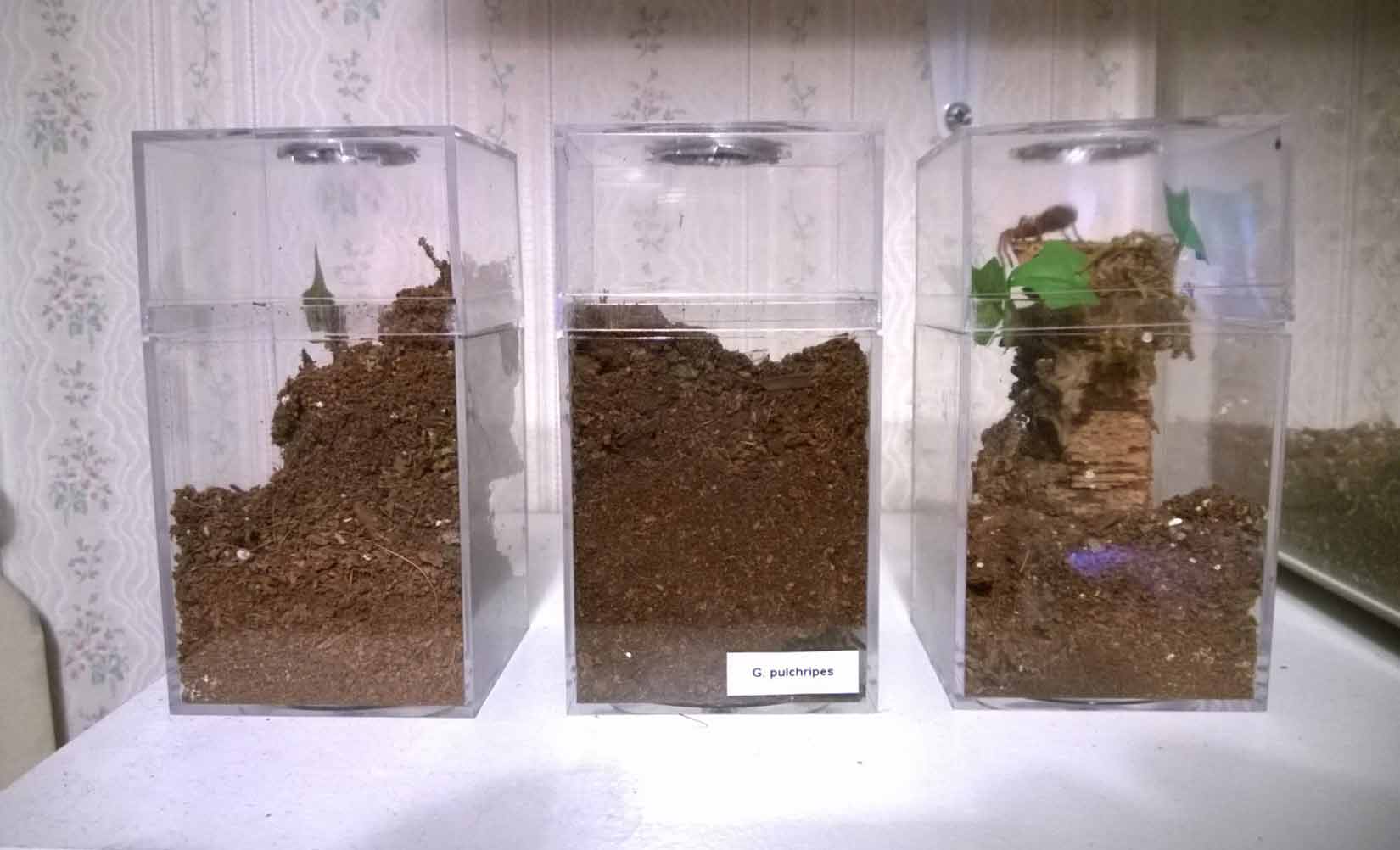


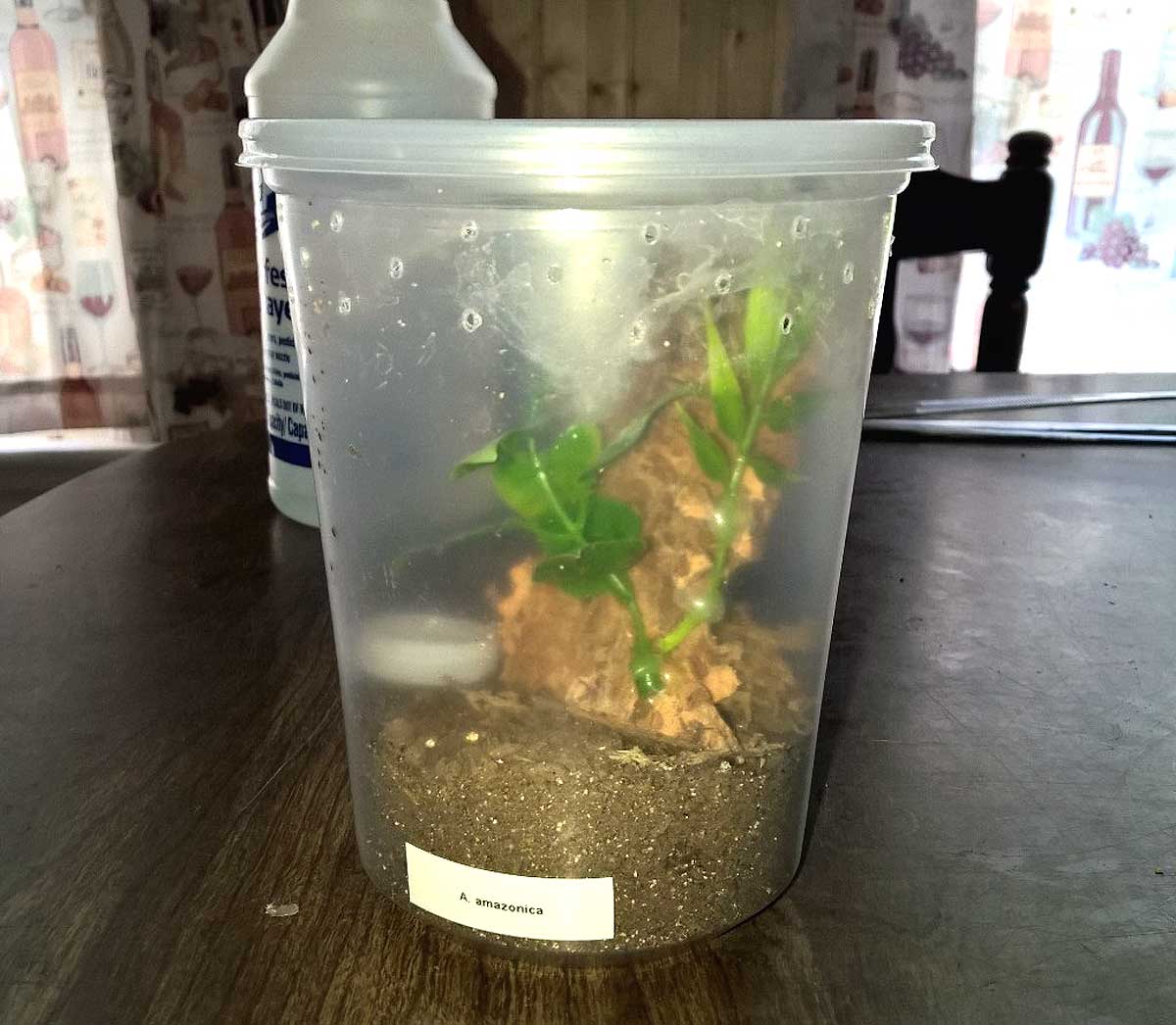


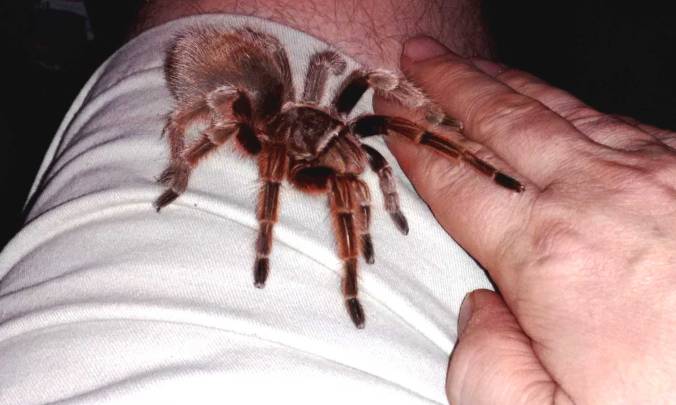


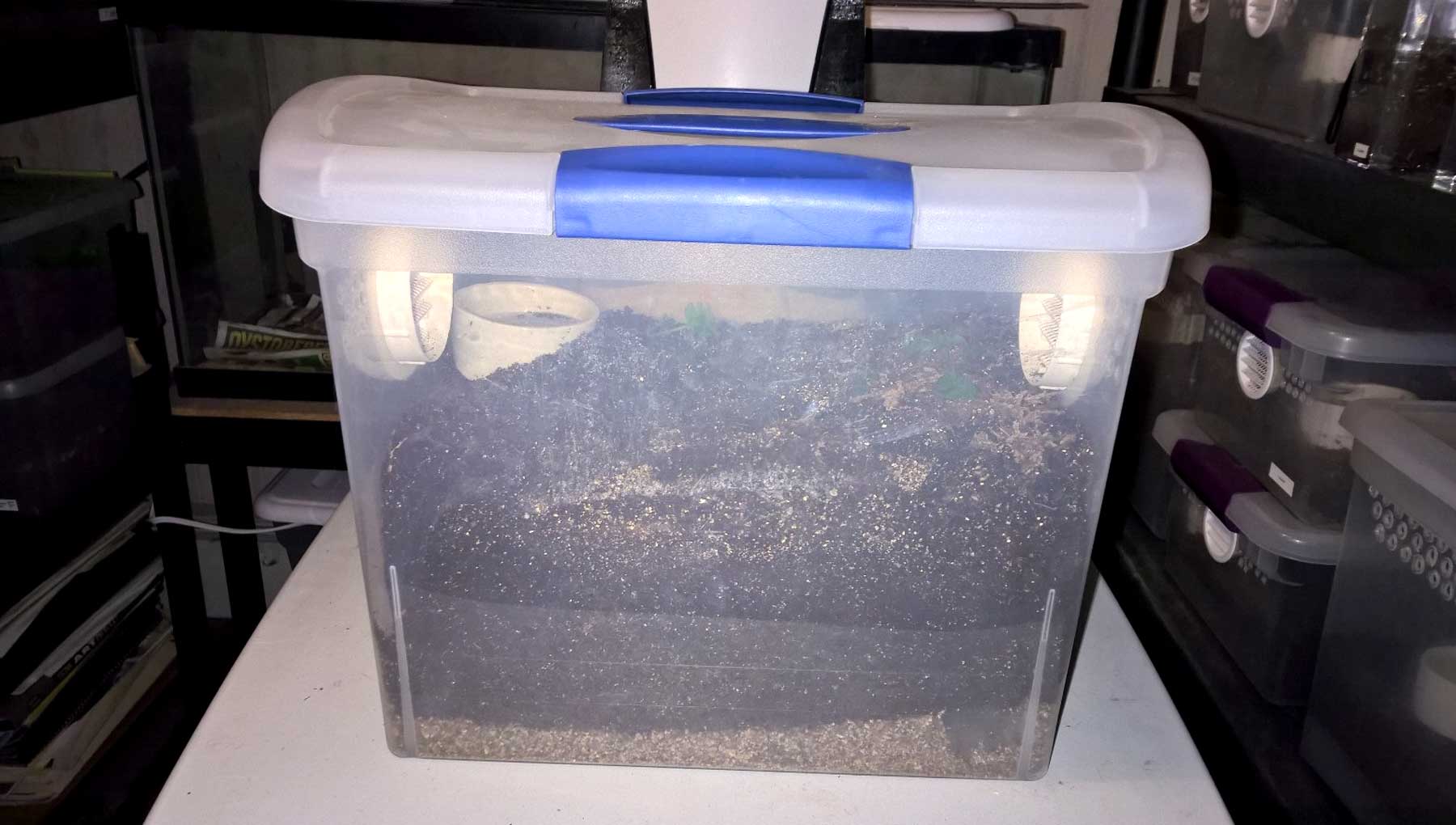

 Tom's Big Spiders