Tarantula Enclosures from Lorex Plastics … A Review

Gorgeous enclosures that wont break the bank

With several of my tarantulas reaching adult sizes, I found it was time to do some enclosure shopping. As I stated in an earlier blog, I use a variety of enclosures, including DIY and premium, professionally-made varieties. Premium enclosures can be costly, and when you have 50 or so Ts, you could end up spending more on the homes than you do on the animals. That said, I do have tarantulas that I consider worthy “showcase animals” that I like to show off to visitors. For these specimens, I don’t mind splurging for classier enclosures.

I had discovered Reptile-Enclosure.com last year while looking for large acrylic enclosures for my Ts. When I was first pricing cages on the site, I discovered the majority of the sizes were no longer in stock, and I wrongly assumed the company was no longer in business. In actuality, Reptile Enclosure.com is owned and run by Lorex Plastics Co, a plastics company that makes reptile and tarantula cages during the slow seasons. For those interested in these enclosures, this is something to keep in mind.

As luck would have it, I stumbled on Lorex’s eBay listing for two of their enclosures, and decided to check out the site again. I was ecstatic to discover that almost all of the sizes and types were in stock, and they were definitely still in business.

Lorex offers several types of enclosures, including arboreal and terrestrial varieties, as well as front-loading and hinged topped designs. For tarantulas, I specifically looked at the 3 mm Series, which includes convenient 2 gallon, 5 gallon, 7 gallon, and 12 gallon sizes.

I ordered three of the 5 gallon enclosures, which measure 17″ x 9″ h x 8″w and retail for $47.50 before shipping. Also, Lorex offers a 15% discount if you buy three or more cages of the same size, so I was afforded those savings as well. I phoned to ask a couple questions about my order, and spoke to Ed. Communication was excellent, and Ed was very friendly and helpful via phone and email.

My order was shipped promptly, and as Lorex is located just on the other side of my state, they arrived via UPS in a day. I always worry when I order acrylic cages, as I know how unforgiving the shipping process can be. However, my new enclosures were packed so well, nothing was going to harm them in transit. Each of the three cages was wrapped in five or six layers of bubble wrap, then individually boxed. These three boxes were then packed into another larger box for added protection. Wow.

One BIG box filled with three of Lorex's 5 gallon enclosures

One BIG box filled with three of Lorex’s 5 gallon enclosures
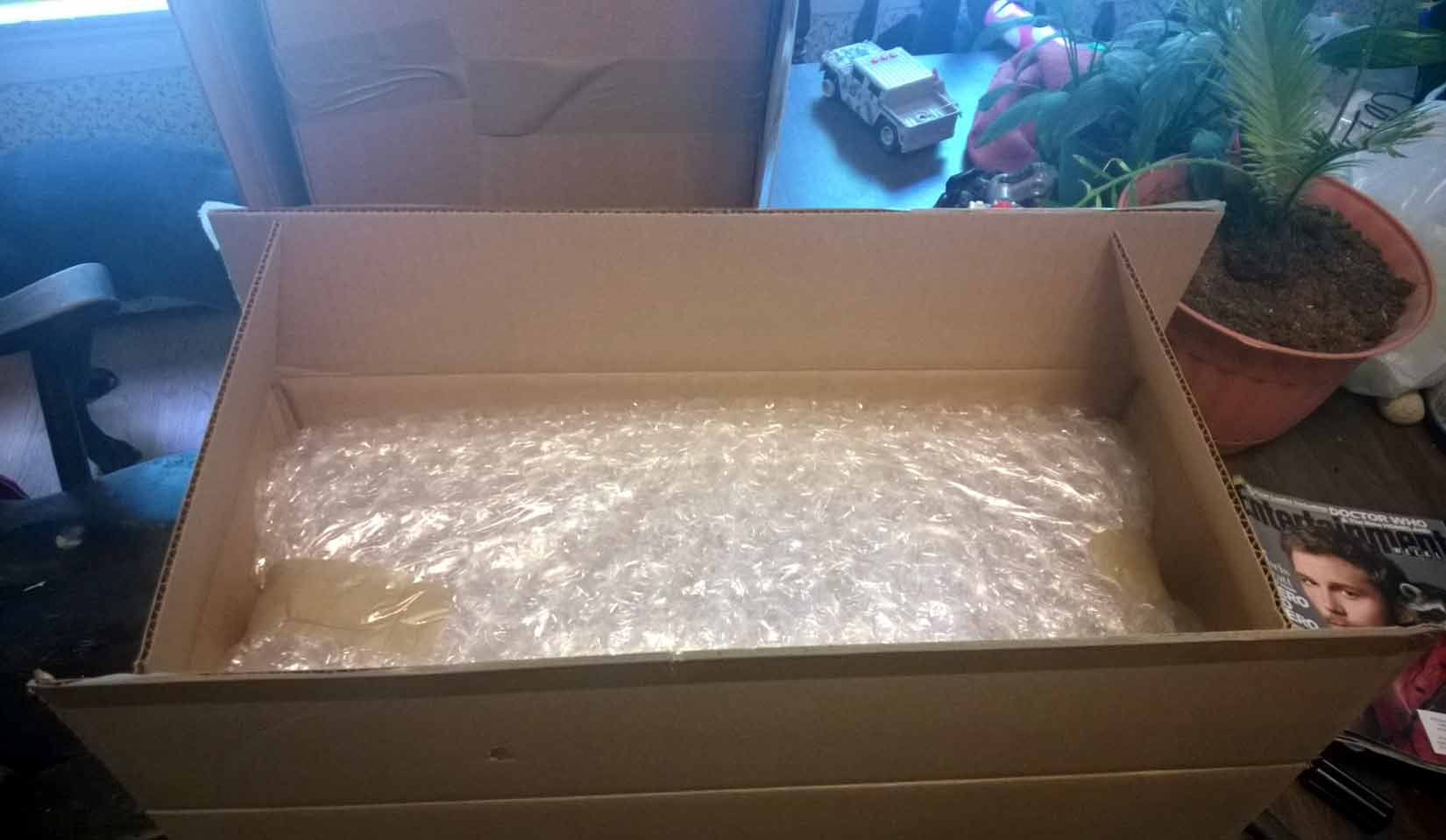
Each enclosure came wrapped in bubble wrap and in its own box.

Each enclosure came wrapped in bubble wrap and in its own box.

I was very pleased to discover that each enclosure was wrapped in 5-6 layers of bubble wrap.

I was very pleased to discover that each enclosure was wrapped in 5-6 layers of bubble wrap.

The cages themselves are well-constructed and just gorgeous. Each top-hinged door has a lip that overhangs the front and locks with a hasp. As these can be used for reptiles as well, they’ve been designed to have a 1/2″ of clearance beneath the bottom to allow for an under the tank heat mat (note: do not use heat mats for Ts). I love the look of the aluminum vents, although I’ll have to keep an eye on them as some terrestrial Ts have been known to chew through wire.

My only nit-picky issue is that the vents are not glued or otherwise permanently affixed to the cage, but this is a very small issue. I do love the position of the vents, as they allow for a deeper level of substrate than some of my other cages afford. The enclosures also feel very solid and sturdy, which is great.

5 gallon Lorex Acrylic Enclosure. Notice the lip and locking hasp.

5 gallon Lorex Acrylic Enclosure. Notice the lip and locking hasp.

I definitely recommend Lorex acrylic enclosures for anyone looking for a premium cage to display one or more of their prized tarantulas. They come in a number of convenient sizes, they are wonderfully constructed, and even with shipping, the prices are lower than other comparable acrylic enclosures sold elsewhere. Customer service was top notch, and Ed at Lorex was a pleasure to deal with. I’m already eyeing a couple of the 12-gallon versions for when my L. parahybana and P. antinous get a bit larger.

To check out these wonderful enclosures, click here!

My enclosure decorated and now the new home of my L. itabunae.

My enclosure decorated and now the new home of my L. itabunae.


P. antinous Pre and Post Molt Pics!

Wow…just WOW.

When I purchased my P. antinous a few months ago, it was partly because I had read that they were voracious eaters who made huge size gains between molts. As I have enjoyed watching my female ravage any prey items dropped into her cage, I already knew that she was a lively eater. But what would the next molt bring? Would she really make a huge size jump?

The answer is a big HECK YES.

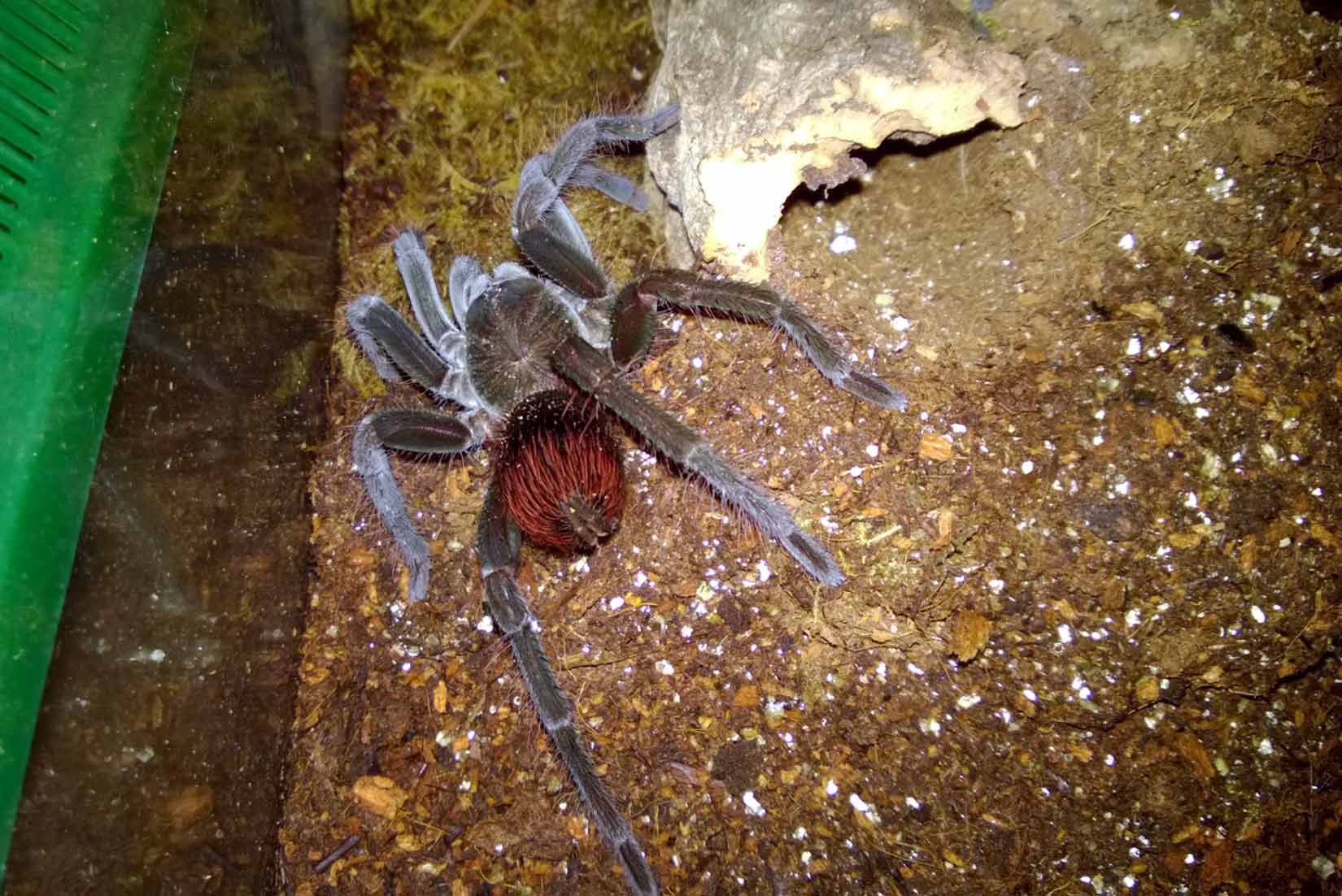
After a few week long pre-molt period, and another week in her den as her new exoskeleton hardened up, my P. antinous female finally reemerged this morning. To say the change in appearance and size is profound would be an understatement. Gone are the rusty red/brown tones she sported before entering promolt. She now sports the dark gray/blue colors that lend her the common name of Steely Blue.  Her abdomen is also covered with some very striking red hairs which prove a wonderful contrast to the rest of her body.

My 3.5" P. antinous female. (before a recent molt)

My 3.5″ P. antinous female. (before a recent molt)

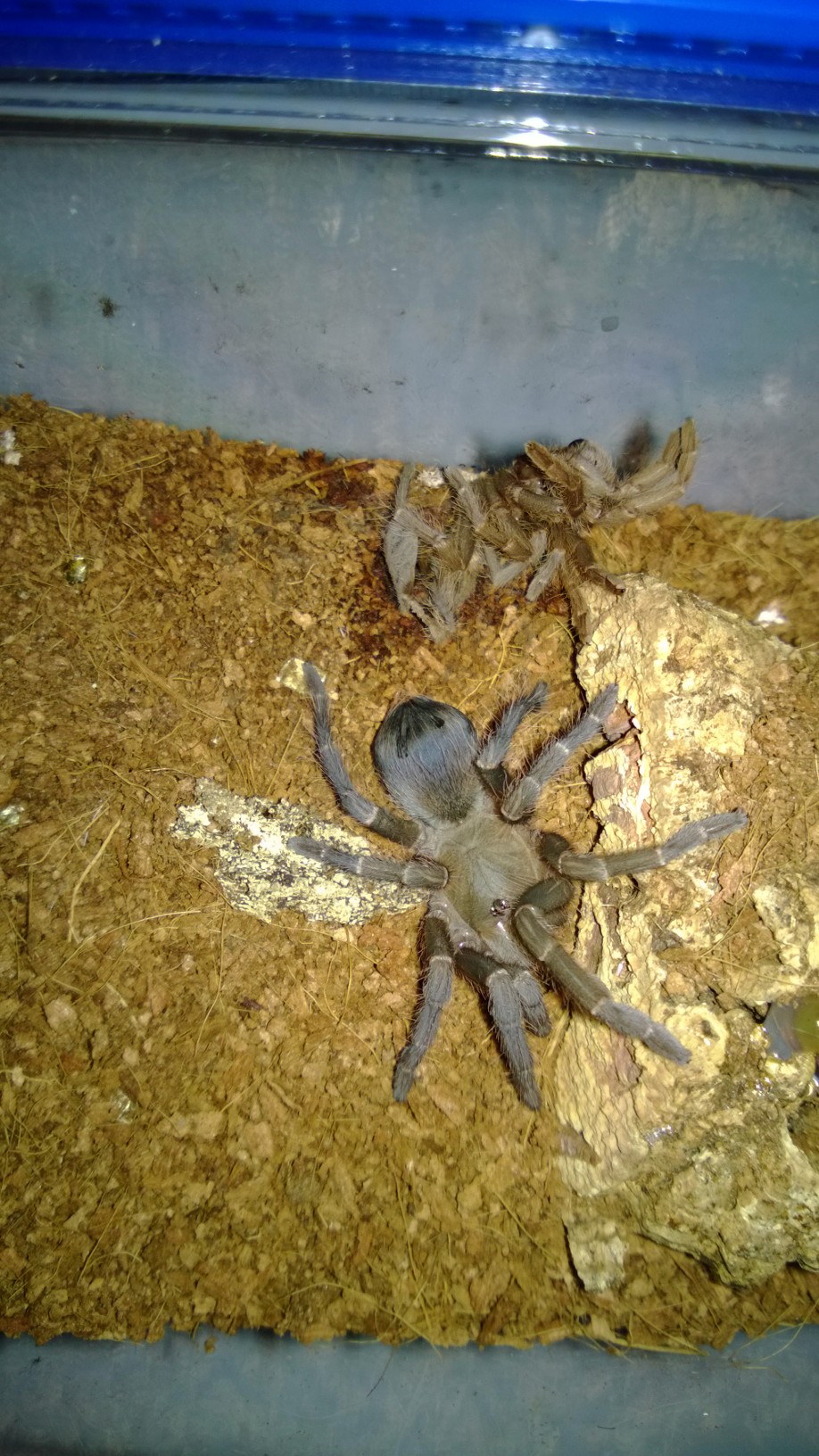
As for size, when I originally purchased this female, she was a hair over 3.5′. Although I haven’t been able to get an exact measurement yet, she is now definitely 5″ or more. The size change is astounding; the claims about huge size gains are not in the least exaggerated. She is gorgeously leggy and moves like lightning when disturbed.

My female P. antinous after her recent molt. She went from around 3.5" to about 5".

My female P. antinous after her recent molt. She went from around 3.5″ to about 5″.

She has already had her first post-molt meal, a large dubia roach, and I’m sure she’ll continue to be a great eater. Now that I’ve seen the growth for myself, I can’t wait to see what the next molt brings.


Custom Dubia Roach Enclosure and Care

Over the past six months, my tarantula collection had grown a great deal in both the quantity of Ts kept and the size of individual specimens. I now had several adult/sub-adult Ts that required larger prey items, and I was looking for an alternative to the crickets. I decided that it was now time for me to start raising my own food source. So, a couple months ago, I purchased my first dubia roach starter colony of 125+ roaches. After doing some online research on dubia husbandry and breeding in which I discovered dozens of enclosure designs and roach-chow recipes, I was ready to set up my own colony.

What follows is what I have come up with to house and feed my roaches. This is, by no means, the only way to do it, nor can I take credit for coming up with these designs or methods. This is, however, what is currently working for me.

Start with a 7 gallon Sterilite Stacker Tote

I picked up my 7 gallon Sterilite at my local Walmart. You can definitely use a larger size of container, and many do, but I needed something that would fit comfortably on a shelf that I already used. Although these containers are offered in clear plastic, you want something that blocks most of the light out (roaches, as you may know, are NOT fond of the light).

UPDATE 11/2016: My colony grew rather quickly, so I now use a 58-quart Sterilite container.

I found this to be a great size for my roach colony enclosure.

I found this to be a great size for my roach colony enclosure.

Add some ventilation.

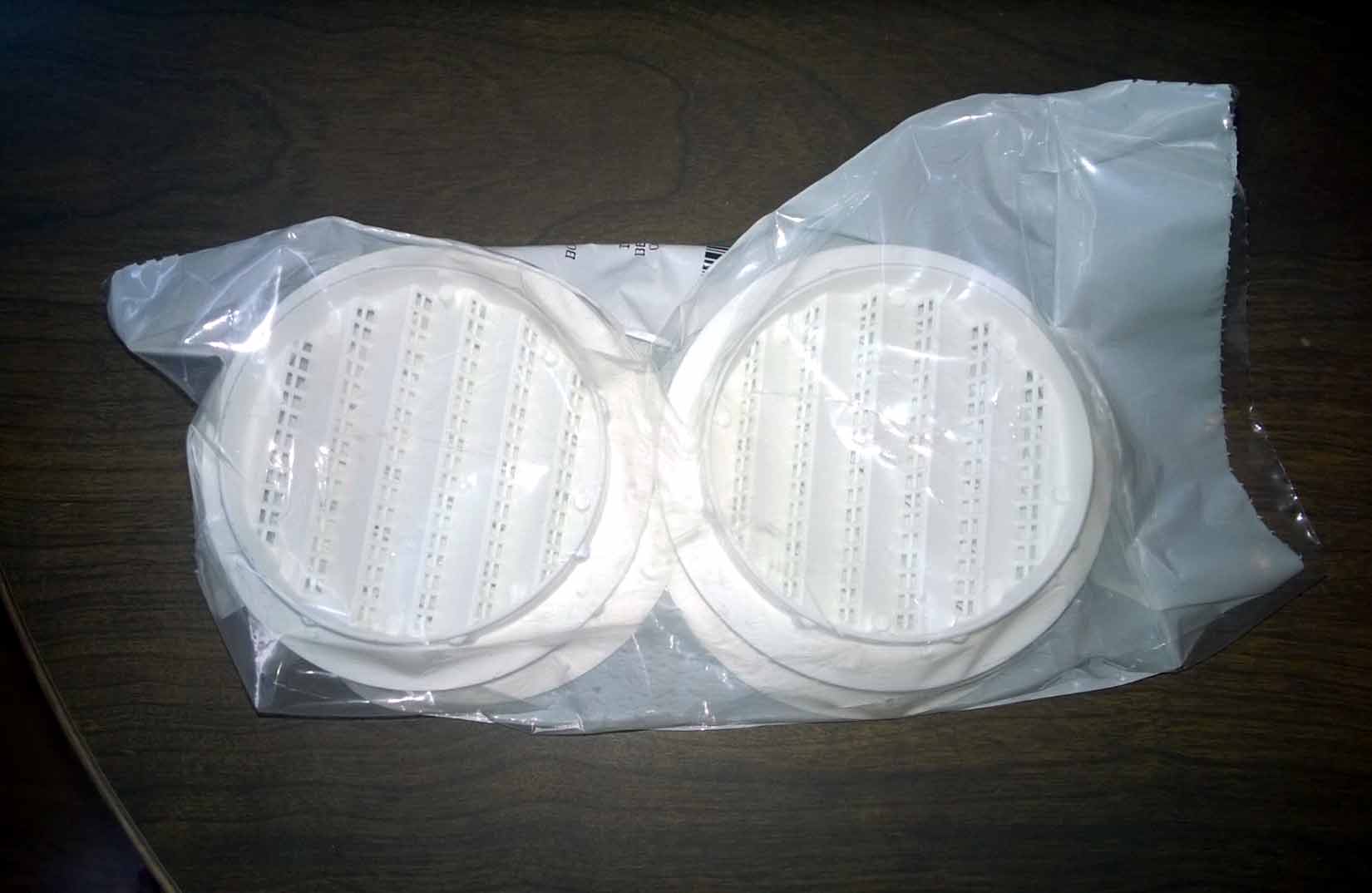
I always have some of these convenient plastic vents on hand from Round Vents , so I used them for my enclosure. These 3″ vents only run $1.32 each, and I find cutting two holes to install the vents MUCH easier and faster than drilling dozens of air holes. However, either way would work.

3" white plastic vents from Round Vents.

3″ white plastic vents from Round Vents.

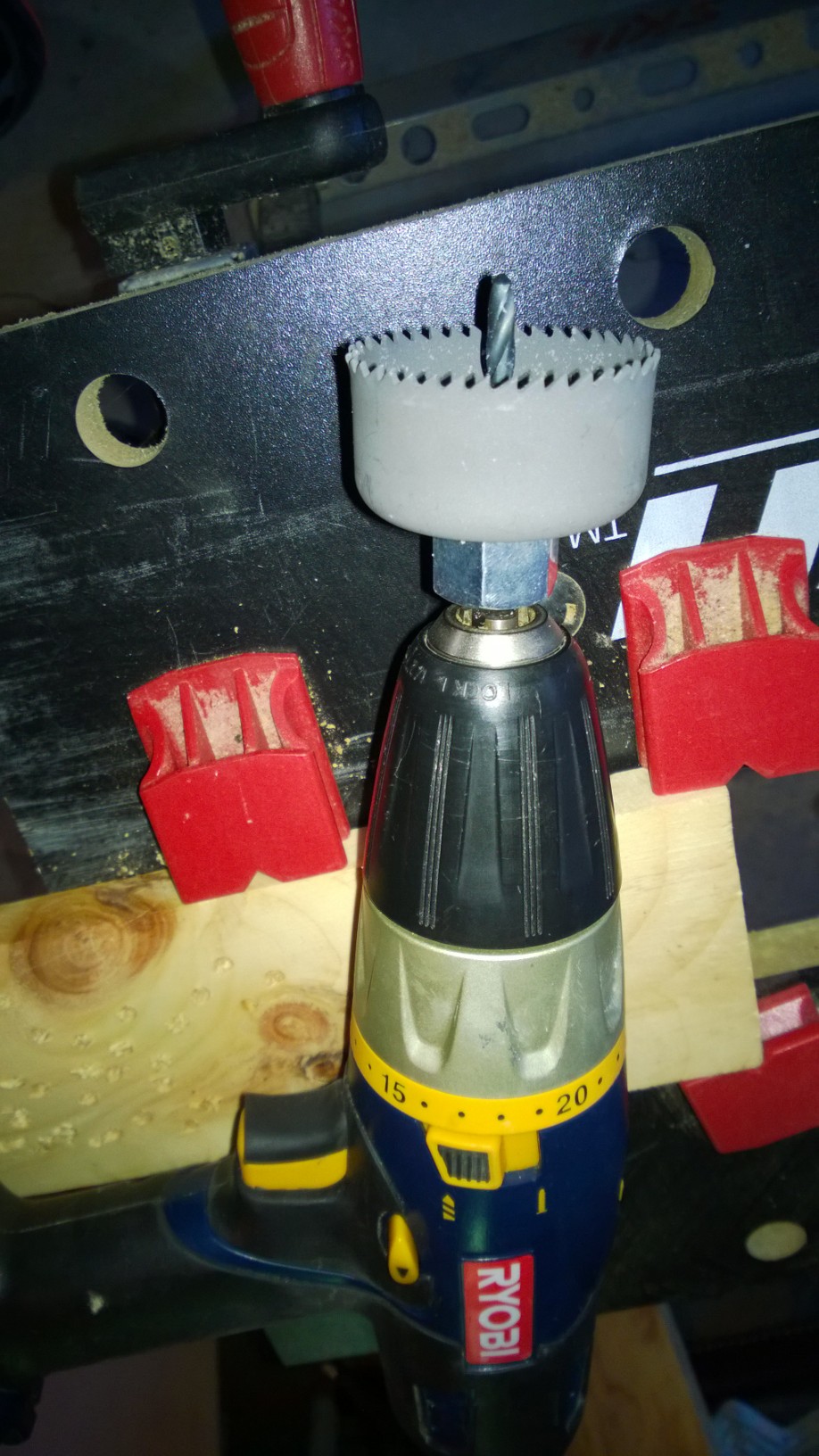
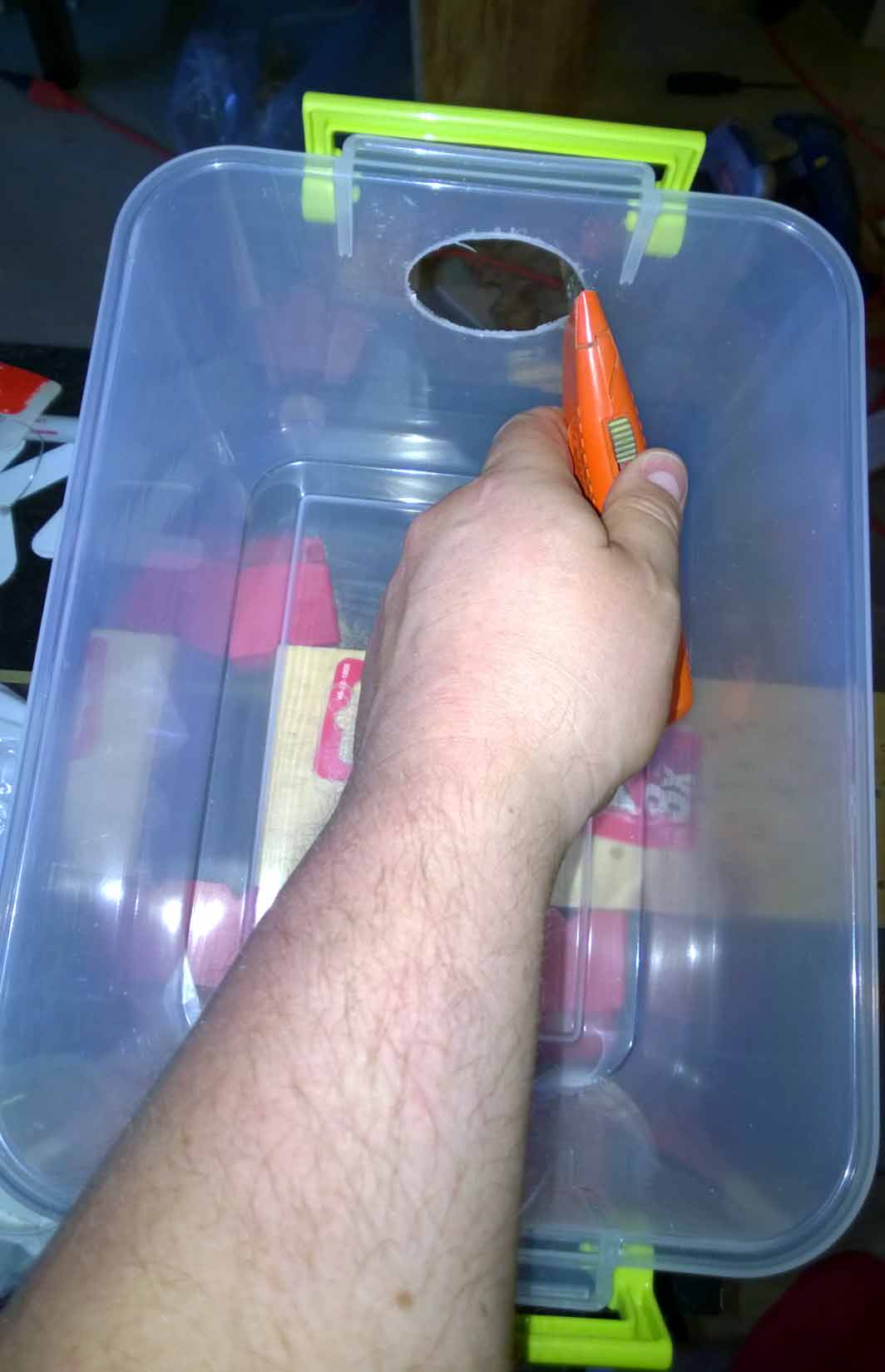
To install them, I just used a 3″ hole saw and my cordless drill to make a hole on either side of the container. I used hot glue around the edges then just popped them in. (Again, you can drill a series of holes, and it will serve the same purpose and cost a bit less).

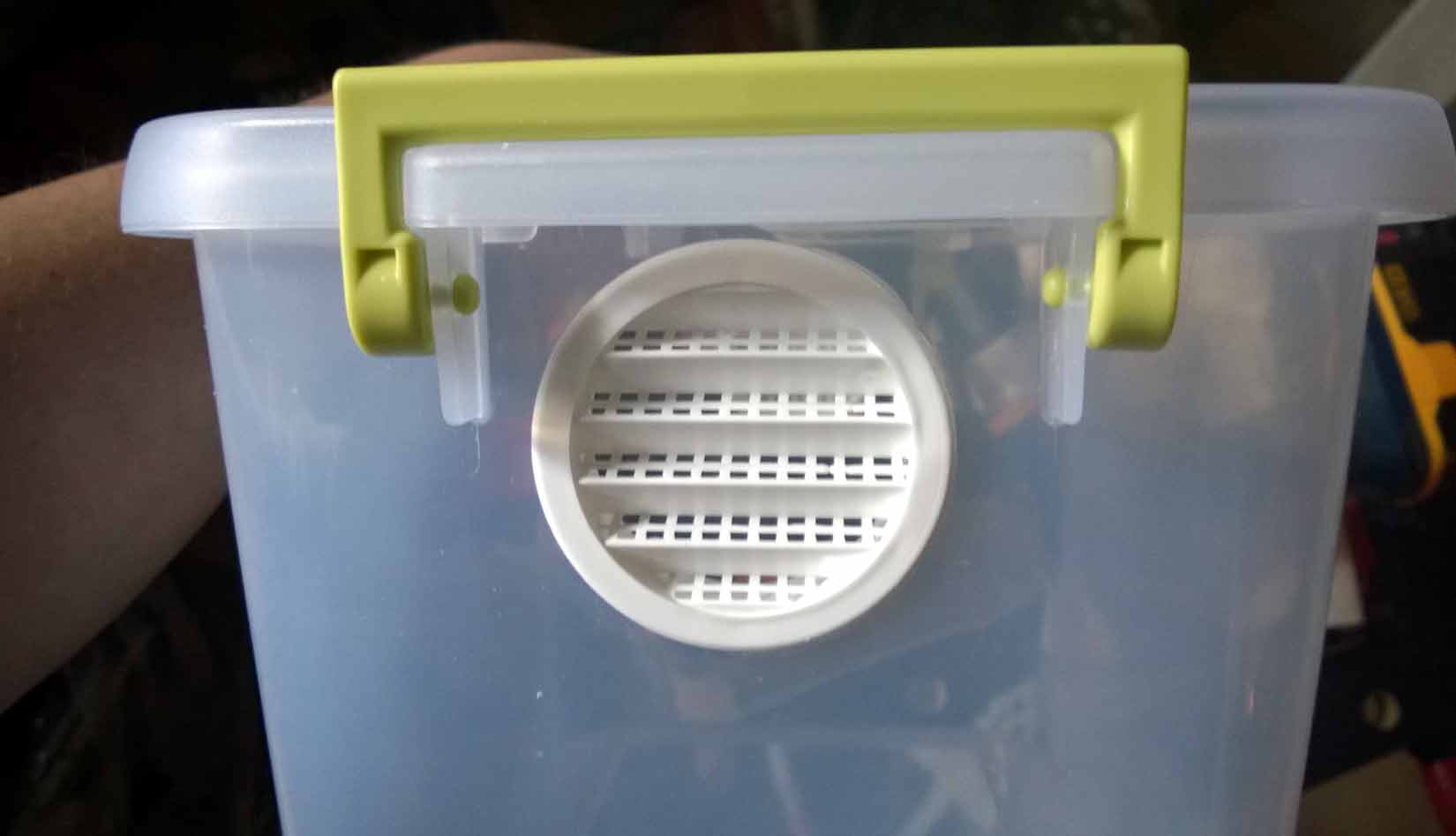
The vents have been installed on opposite end of the Sterilite enclosure. Vents should be closer to the top.

The vents have been installed on opposite end of the Sterilite enclosure. Vents should be close to the top.

Start saving those egg cartons!

You’ll need something inside the enclosure for the roaches to climb on and hide in. Cardboard egg cartons or egg trays work perfectly. If you have the forethought (and you eat a lot of eggs) save some of the ones you get when you buy eggs from your local grocer. You can also find them at tractor or farming supply stores. I bought mine at a local Agway. Many use the 6 x 6 egg trays, but for my smaller enclosure, the regular 2 x 6 egg cartons fit better. The larger trays can be purchased in bulk online.

Put these inside your enclosure for the roaches to climb on and hide in.

Put these inside your enclosure for the roaches to climb on and hide in.

 Roaches need food bowls, too.

It makes it MUCH easier to clean and feed your roaches if you supply food bowls. For mine, I used two Ziploc small square containers (5″x 5″), which I trimmed down with a pair of scissors to fit better and to add an entrance for the smaller roaches. One of these I fill with fresh organic fruit (nectarines, oranges, peaches, strawberries, grapes, apples, etc.). The other I fill with my homemade “roach chow”.

Two of these are supplied: one for fresh fruit and the other for the dry roach chow.

Two of these are supplied: one for fresh fruit and the other for the dry roach chow.

 Carefully fit everything into the enclosure.

On one end, stand up the egg cartons. I have two rows of five in mine, and the roaches seem to do fine. At the other end, place the two food bowls with the openings facing the egg cartons. When you get your roaches, carefully dump them on the egg cartons; they will quickly scramble down between them to hide.

The roaches will climb and hide in the egg cartons. The two food bowls contain fruit and roach chow.

The roaches will climb and hide in the egg cartons. The two food bowls contain fruit and roach chow.

A word about roach food.

It’s a fact: roaches will eat just about anything. As a result, there is no set, scientific diet for your feeder roaches. Do a quick search online, and you’ll find dozens, if not hundreds, of possible food choices. Moistened dog food, chicken mash, crushed cereal, organic tabbouleh…all are on the menu. While researching, I stumbled upon this cheap, simple recipe for “roach chow”, and so far it’s worked great. There are only two ingredients.

Flaked fish food.

Whole Oats

Goldfish flakes and whole oats combined and blended make great roach food.

Goldfish flakes and whole oats combined and blended make great roach food.

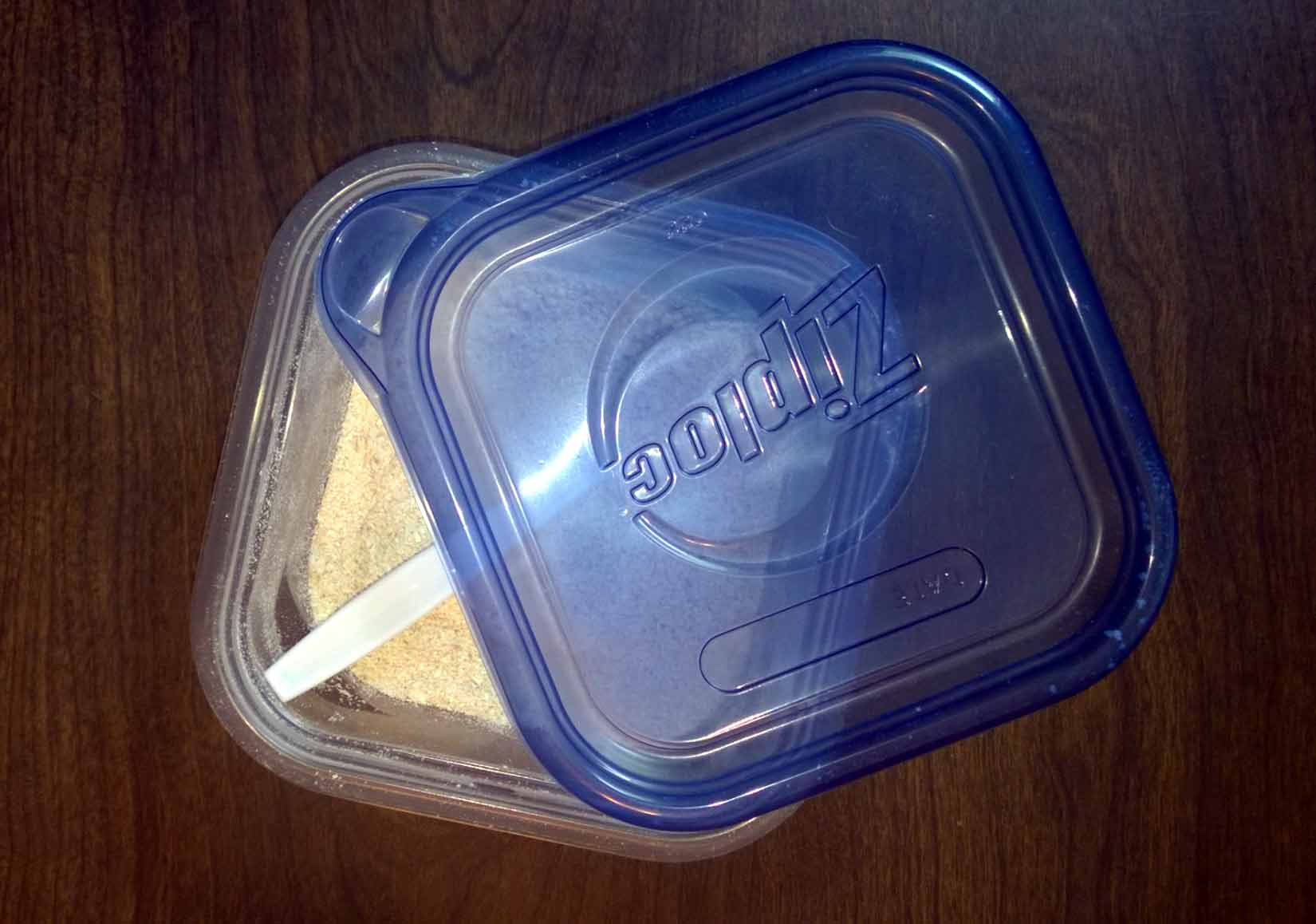
Just drop the oats and flakes in a blender (I do about 60/40 oats to flakes), blend to a powdery mash. Simple. I purchase large canisters of both, then blend up extra so that I always have it on hand. As both the flakes and oats can be purchased at Walmart for a few dollars, you can make enough food for months without hurting your wallet. I supplement the roach chow with fresh fruit to provide a more balanced diet. For water, I spray down one side of the enclosure just above the fruit dish every night, which has been fine and keeps things from getting too moist.

UPDATE 11/2016:  I have altered my roach chow recipe a bit. I now use oats, corn meal, and fish flakes in a 40/40/20 ratio or so. I drop these in a blender, grind them up good, then store them in an airtight container.

I also don’t offer fruit as often anymore, as it spoils very quickly (especially during the summer) and attracts fruit flies. I’ve switched to mostly carrots, potatoes, and some apples.

My container of "roach chow" (blended oats and fish flakes).

My container of “roach chow” (blended oats and fish flakes).

The hotter, the better.

If you want happy roaches and an ever-growing supply of feeders, you’d better be prepared to jack up those temperatures. Dubia thrive in warm environments. and you’ll need to keep them in the mid 80s to mid 90s if you’d like them to mate and reproduce. As these temps are too high for many T species, you will likely have to keep your feeders in a separate room. During the dog days of summer, I keep mine in my attic, where temps are almost always around 88-90 degrees.

UPDATE 11/2016: They do not need temps in the high 80s to low 90s to reproduce. Mine are kept much of the year in the 70s, and they still have young. That said, you get more offspring the warmer you keep them. If you can’t get your room temperatures up high enough to stimulate faster reproduction, you can use a heat mat on one side of the enclosure to raise temps inside. If you’re using a Sterilite bin, try mounting the heat mat on a wall, then position the cage next to it.

Keep in mind that high temperatures will cause fresh fruit to rot very quickly, so be sure to change the fruit bowl often to avoid fruit flies and decomposition.

In the winter months, they should really be kept 65-70 minimum. However, although this will be high enough to keep them alive, they will not be reproducing.

Cleaning is breeze.

My wife and I clean our colony every week, and we’ve found that it’s quite simple. Just lift out the egg cartons and place them in an empty cardboard box while you work. Remove the food dishes and any stragglers, then just dump the feces (which is tiny and dry) into the garbage. Use a damp cloth to clean up the bottom, dry it, then put everything back in. They are actually quite clean overall, and produce no real odor.

Simple and cheap!

So, there you have it. Again, this is not the only way to keep roaches, but this is how I’m currently keeping mine. It is also quite inexpensive to put together, costing around $20 for everything.  However, feel free to experiment or do whatever works for you. Dubia, generally speaking, are quite hardy and will adapt to other food sources or set ups.


Brachypelma Boehmei Molt

It’s been Tarantula Molt Central here, with 14 of my Ts molting in the past week (and several more in premolt). The 80º+ temps in my tarantula room have even my slowest growers sporting new skins, and it’s been amazing getting to watch several go though the long, exhausting process of molting.

Since getting my Brachypelma boehmei  (Mexican Fire Leg) in January of this year, I’ve been eagerly awaiting the first molt. The collector I bought it from admitted that the poor girl had taken a fall a few months before I purchased her, and although there was no visible damage, I worried that there might be something wrong internally. Still, for months, she ate like a champ, relentless chasing prey across her enclosure and quickly devouring her meals. When her pre-molt fasting began, I kept an eager eye out for the result.

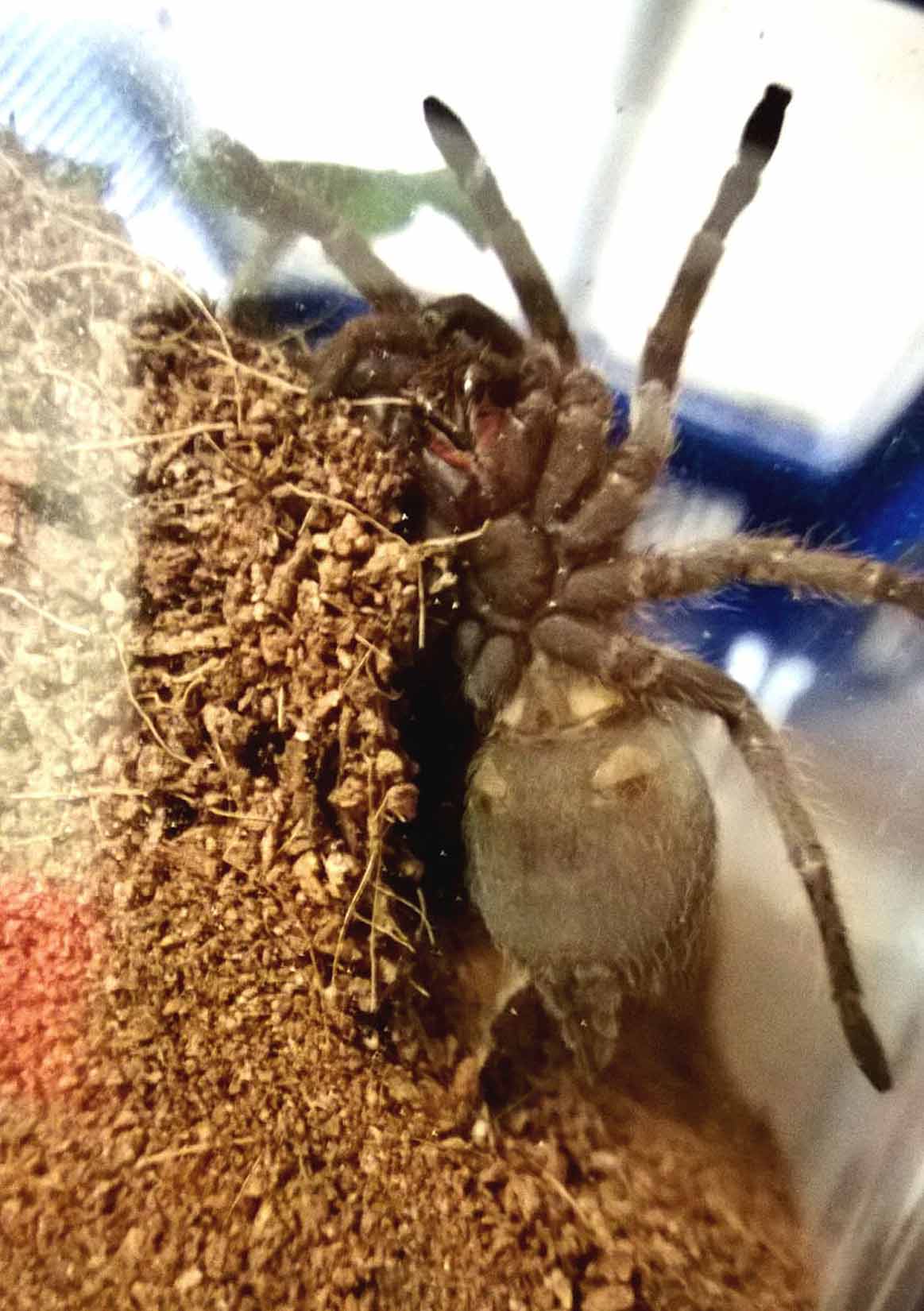
My B. boehmei on her back as she prepares for a molt. Many inexperienced keepers have thought their pets dead when they see them like this.

My B. boehmei on her back as she prepares for a molt. Many inexperienced keepers have thought their pets dead when they see them like this.

A week ago, I watched as she laid down a molting mat and flipped over to start the long process. Six hours later, she sported a new, much more vibrant skin suit…

…and a nasty-looking bald spot on her abdomen. Apparently my fears about her fall having internal consequences weren’t unfounded (although it could be a coincidence). The spot is a pale orange in color and about 6mm across. It definitely looks as if there was some damage in this area, as the edges are uneven and a bit crusty, leading to the imperfect molt.

My B. boehmei in the act of molting (the exuvia is on the left, the T on the right)

My B. boehmei in the act of molting (the exuvia is on the left, the T on the right)

My B. boehmei sporting a new suit.

My B. boehmei sporting a new suit.

I held my breath as I waited to see if she would pull through, or if this defect would prove life-threatening. So far, so good. Although the spot looks nasty, she is moving around fine and seems to be hardening up nicely. I will be careful when feeding her to be sure that she doesn’t get too distended, which could put too much pressure on this potentially weak spot in her abdomen.

The bald spot on the abdomen, I'm guessing, is from an internal injury caused by a fall.

The bald spot on the abdomen, I’m guessing, is from an internal injury caused by a fall.

Hopefully, my girl’s next molt, which I suspect wont come for several months, will go smoothly and she’ll lose this nasty patch. I plan on trying to feed her soon, and I will post how it goes.

Fingers crossed…

Peekaboo…My O. philippinus Makes a Cameo!

Well, look who popped out to say hello!

Okay, I know I already posted a short video featuring this same O. philippinus (Philippine Tangerine) in the process of dragging a cricket into its den, but this time I caught the entire “hunt.” Even better, my juvenile O. philippinus actually completely emerged from its den for a few seconds.

Now, I’m fortunate in that my other O. philippinus constructed a den down the side of its enclosure, so I get to see him all of the time. Still, for this other specimen who usually comes out only at night when I’m in bed, this was pretty special.

Note: This species requires moist substrate, so I periodically moisten the coco fiber to keep it comfortable. The majority of of the water percolates through the substrate, keeping the lower levels (where its den is) moist. The water on the side evaporates before morning. I had applied water shortly before this video was shot.

Do-It-Yourself Sterilite Tarantula Enclosures

Part of the fun of keeping tarantulas, in my opinion, is the endless search for the perfect “found enclosure.” Sure, there are many gorgeous and professionally-designed cages to choose from, and they make lovely displays for any showcase Ts that you are particularly fond of. However, those with large collections can find housing all of their beloved spiders in these top-of-the-line terrariums much too expensive. That’s why many enthusiasts haunt their local WalMarts, Targets, craft stores, and Family Dollar’s looking for various canisters and containers that can be used “off label” as make-shift tarantula cages.

Sterilite has produced dozens of types of plastic storage containers over the years, and their products have long been used by budget-conscious T enthusiasts hoping to keep costs down as their collections expand. They offer containers in a ridiculous number of sizes, making them ideal for any larger T. And with prices often as low as $1.99 for smaller sizes, they won’t hurt the wallet as much.

I recently discovered their series of lockable and stackable storage containers, and was delighted to learn that they come in a number of convenient sizes. Instead of just drilling holes this time, which definitely works but is tedious and, in my opinion, not as attractive, I decided to use vents. The following is a little step-by-step tutorial for those interested.

NOTE: I know that some folks will argue that drilling holes is a bit cheaper (the vents I’m using her will run you an extra $1.90 or so per cage) or more attractive. Still, I like the look of these, and I find the vents less tedious to install. I also have plenty of enclosures with drilled or melted air holes, so I have NO problem with these.

MATERIALS

1. Buy the Sterilite Containers.

Here are several sizes of storage boxed (as well as a plastic canister that I will modify later). These are wonderful, as they stack quite nicely, saving space.

Here are several sizes of storage boxes (as well as a plastic canister that I will modify later). These are wonderful, as they stack quite nicely, saving space. I purchased these at WalMart, but they can also be found in Target (although their selection hasn’t been as good).

2. Get Some Aquarium-safe silicone.

Next, you will need aquarium silicone, which dries non-toxic. For those with hot glue guns, those will work as well.

Next, you will need aquarium silicone, which dries non-toxic. For those with hot glue guns, those will work as well. I allow three days for a full cure.

3. Get 2″ round plastic vents.

I purchase these at  roundvents.com. I like the plastic ones, as I worry that a large T could chew through the wire ones.

Vents of this type can be found through several online vendors. I purchased these at roundvents.com. I like the plastic ones, as I worry that a large T could chew through the wire ones.

4. Grab a 2″ Black & Decker (cheap!) hole saw.

To drill the holes, you will need a 2" hole saw. If you don't have one, Black & Decker makes a cheap set that includes the 2" saw for under $10.

To drill the holes, you will need a 2″ hole saw. If you don’t have one, Black & Decker makes a cheap set that includes the 2″ saw for under $10. I found this one at my local WalMart.

5. Clamp the container down before drilling.

Again, you can probably have someone hold while you drill, but I have the clamps handy, so I use them. Notice the piece of wood underneath, which gives you something to drill in. You can also use the circle created by earlier drillings to line up the hole.

Again, you can probably have someone hold the container while you drill, but I have the clamps handy, so I use them. Notice the piece of wood underneath, which gives you something to drill in. You can also use the circle created by earlier drillings to line up the hole.

6. Carefully drill your holes.

Mark the entry point for the guide bit with a Sharpie to keep the hole centered. When drilling, don't push too hard and allow the drill to do it's work. Be careful that the bit doesn't heat up too much, as if it does, it can melt the plastic. Use a piece of wood underneath to drill into  and for support.

Mark the entry point for the guide bit with a Sharpie to keep the hole centered. When drilling, don’t push too hard and allow the drill to do its work. Be careful that the bit doesn’t heat up too much, as if it does, it can melt the plastic. Use a piece of wood underneath to drill into and for support.

7. After drilling the holes, clean edges with a utility knife.

Unfortunately, the drilling process can leave behind some gnarly and an sharp piece of plastic around the edges. Use a utility knife to carefully trim away these scraps.

Unfortunately, the drilling process can leave behind some gnarly and an sharp pieces of plastic around the edges. Use a utility knife to carefully trim away these scraps and make for a clean fit.

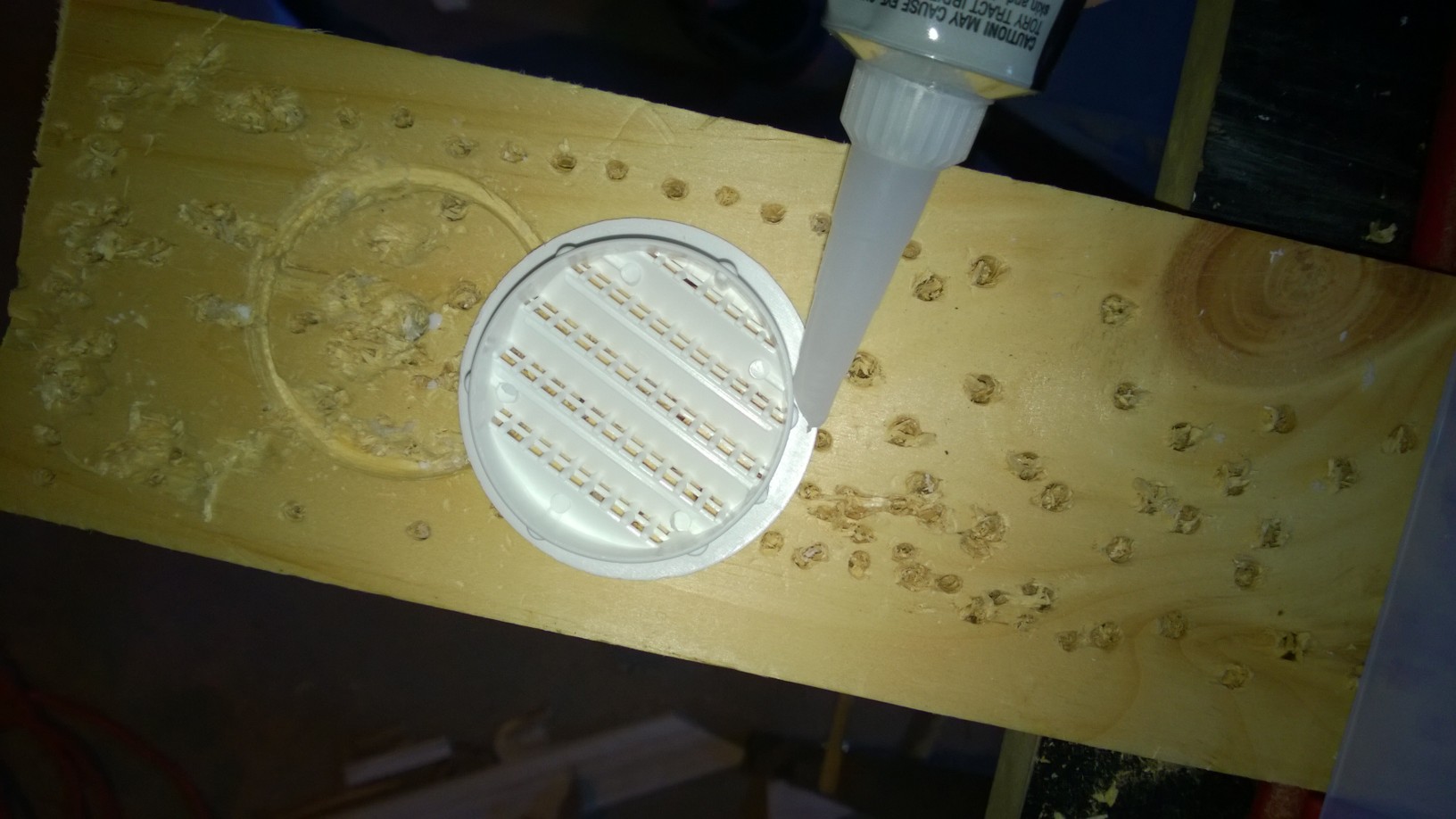
8. Put a thin bead of silicone (or hot glue) around the rim of the vent.

Run a nice, thin bead of aquarium safe silicone around the lip of the the vent. Although the vents sport tabs that help "lock" them in place, the silicone seals it up and makes it permanent.

Run a nice, thin bead of aquarium safe silicone around the lip of the the vent. Although the vents sport tabs that help “lock” them in place, the silicone seals it up and makes it permanent. Hot glue can also be used, meaning the enclosure could be used sooner as you won’t have to wait for the silicone to cure.

8. Line up the vent and carefully pop it in.

Now, line up the vent and carefully pop it in. I like to do one side facing up and one side facing down. Use a moist paper towel to clean up any excess silicone.

Now, line up the vent and carefully pop it in. I like to do one side facing up and one side facing down. Use a moist paper towel to clean up any excess silicone. I put a vent in two opposite sides of the the container to allow for cross ventilation.

9. Newly vented cages stacked in a cluttered garage.

Several of the newly-vented enclosures. The large one on the bottom will be fitted with 4" vents.

Several of the newly-vented enclosures. The large one on the bottom will be fitted with 4″ vents.

 10. Modified cages in use.

A couple of my earlier enclosures, already occupied. The top enclosure does NOT have vents. For that one, I used a nail heated on a burner to melt the holes into it.

A couple of my earlier enclosures, already occupied. The top enclosure does NOT have vents. For that one, I used a nail heated on a burner to melt the holes into it.

A small note about ventilation: I find that the 2″ vents work very well with this size enclosure. However, after noticing some condensation collecting on the lid of one of my cages after moistening the substrate, I added a row of holes in the lid above the sphagnum moss to allow for a bit more airflow. The moss stays moist, but I no longer get the condensation. Still, I’ve only done this to one enclosure that housed a T that required more moisture.


H. incei gold Feeding Video

I recently acquired a trio of juvenile/sub-adult H. incei golds, and I immediately discovered what a truly beautiful and interesting species they are. These lively little dwarfs sport gorgeous gold and orange tones that make them wonderful display spiders. They also like to decorate their enclosures with copious amounts of thick webbing, making them one of the more prolific webbers of the species I keep.

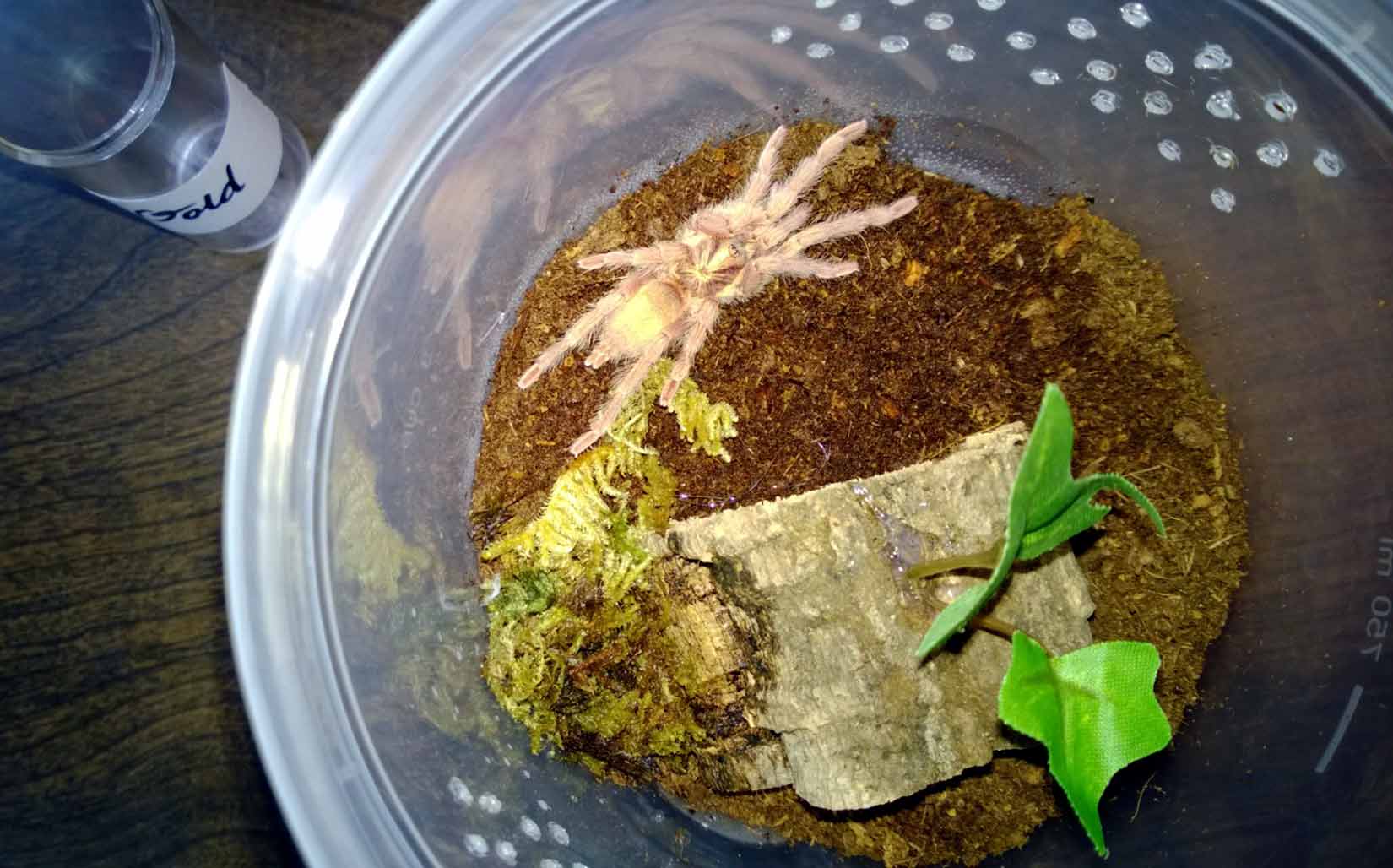
One of my H. incei golds after being housed. Not the best picture, as the flash has washed out it's colors.

One of my H. incei golds after being housed. Not the best picture, as the flash has washed out it’s colors.

All three have been excellent eaters, snatching medium crickets from the mouths of their burrows with lightning speed. Although they were furnished with identical enclosures with cork barks and starter burrow holes dug into the substrate, only two of my H. incei golds adopted these as homes. Both of these two dug deep burrows before lining the opening of their dens in a liberal coating of silk.

The third built what I can best describe as a silken teepee over its cork bark hide. This specimen did not dig, but instead sits on the surface, sometimes beneath its hide, waiting for prey. It makes for a wonderful showcase animal, as it is more often than not visible. It is this T that is featured in the feeding video.

A modified Ziploc container. This H. incei dug a deep burrow; the circle marks the lower chamber.

A modified Ziploc container. This H. incei dug a deep burrow; the circle marks the lower chamber.

I keep my H. incei golds in the same temperatures as my other Ts; high 70s during the day with low 70s at night. I also keep the substrate for these guys on the moist side (not wet), by sprinkling water on the surface twice a week. They are currently eating one medium cricket every three or four days.

While feeding my surface-dwelling incei, I decided to get a bit of video with my cell phone. Below is a brief clip of my little guy snatching up a cricket. My apologies for the raucous soundtrack; it is covering up my daughter telling me a story in the background. 🙂

For lovers of dwarf tarantula species, or even just those who want a gorgeous, heavy-webbing T, the H. incei gold makes a wonderful pet.


DKS Death – A. insubtilis

This is an update to an earlier blog. If you’d like to learn a little more about DKS (and read about the unfortunate T I’m about to reference), please check out my earlier blog HERE.

My first tarantula death.

Although I knew it was coming, it still stinks. I arrived home from work yesterday to discover that my A. insubtilis juvenile had succumbed to whatever had caused its DKS. It was a little over a week since it had first showed signs of the discombobulation and lack of coordination that characterize this malady.

My A. insubtilis tarantula after succumbing to DKS. It's been flipped on its back, but this is the standard tarantula "death curl".

My A. insubtilis tarantula after succumbing to DKS. It’s been flipped on its back, but this is the standard tarantula “death curl”.

Despite being kept in an ICU for the last few days of its life, it was not able to pull through. I will be heading over to Arachnoboards later this week to fill out a death report. As the true cause of the DKS symptoms are still a mystery and could be attributed to many factors, T keepers are encouraged to add details from their cases to a data base on the board.

With any luck, this will be be my first and last experience with DKS. It’s a very unpleasant experience to watch one or your pets die from it.


B. hamorii (Mexican redknee) – A Tarantula Icon

NOTE: This article was published before the genus revision that revealed that the species being sold as B. smithi in the hobby was actually B. hamorii. This article refers to B. hamorii, but husbandry for both species would be identical. 

When I was about six, my father used to take me to a local pet store on occasion so that I could check out the animals for sale. Although I was certainly interested in the puppies, gerbils, guinea pigs, and snakes, the highlight of the trip was always a large Brachypelma smithi, or Mexican redknee tarantula, kept in an aquarium at the back of the store. As a boy who was terrified of spiders, I couldn’t help but to be utterly fascinated by this amazing animal. Although it should have been the stuff of nightmares for me, I couldn’t get enough of it.

Fast-forward a few decades… With my T collection growing, I decided that I had to have a B. smithi. After all, this was arguably the animal that kicked off my fascination with Ts all those years ago, and it was still widely considered to be one of the most popular tarantulas in the hoby. As this species is known for its very slow growth rate, I decided not to pick up a sling and instead searched for a juvenile to young adult female. The B. smithi is thought to be one of the tarantulas with the longest longevity, with some folks suspecting  female could live 40 years or more. I’ll admit, it’s a little mind-blowing to think that a pet could outlive me!

My Brachypelma smithi female shortly after I acquired her in December of 2013.

My Brachypelma smithi female shortly after I acquired her in December of 2013.

I finally located my girl when my favorite tarantula dealer, Jamie’s Tarantulas, had her cyber-Monday sale last year. My 3″ B. smithi female arrived in early December, and she was gorgeous. For her temporary housing, I used a Sterilite 12 quart plastic storage box, filling it with about 2″ of dry coco fiber. Although I normally use cork bark for a hide, this time I bought a much more fancy resin cast log. A small ceramic water dish was supplied for fresh water. This is a tarantula that thrives in a dry environment, so I do not mist or moisten the substrate.

Check out my female B. smithi below!

B. smithis are generally known for being calm and docile (although there are always exceptions to these “rules”), so I was surprised to discover that my new acquisition was actually very skittish and very fast. My first time opening her enclosure, she nearly bolted out; this is why you can never let your guard down with any T. For the first two months I owned her, she was quite reclusive, rarely venturing out from beneath her log. When she did emerge, the slightest disturbance would send her scurrying for cover.

The first cricket offered was still alive and kicking the next morning, and I actually saw her bolt from it at one point. It was obvious she was not yet completely comfortable in her new surroundings. I waited a couple of days, then offered her a dubia roach with its head crushed (Yup… gross, but it keeps them from burrowing and playing dead). I placed on its back in front of the opening to her den in hopes that she would sense it when she ventured out. It was gone the next morning. Although I continued this process for a few months, she now readily takes live and kicking large crickets.

B. Smithis are New World tarantulas and, as such, use urticating hairs for defense. When stressed, they can kick these irritating bristles from their abdomens, causing itching, burning, and discomfort to any potential predator (or well-meaning keeper) mucking with them. I’m fortunate in that my girl doesn’t seem to be prone to kick yet. She also calmed down a great deal from when I first acquired her. Now when her cage is disturbed, she will usually just scurry to her den and perch herself on top of it. She spends the majority of the time out in the open now, which is great, as she really is a beautiful T.

Like my other Ts, my B. smithi is kept at high 70s during the day and low 70s during the night. She generally eats two 1″ dubia or three large crickets a week. By late February, her abdomen was quite plump, and I cut back on the feeding in hopes that premolt would be coming soon. Finally, in mid-April, she molted.

My 3-4" B. smithi female after a molt. The white patches on her abdomen hint that she might have experienced a little trouble.

My 3-4″ B. smithi female after a molt. The white patches on her abdomen hint that she might have experienced a little trouble.

The discarded molt (exuvia) from my female B. smithi.

The discarded molt (exuvia) from my female B. smithi.

As she molted inside of her den, I unfortunately did not get to witness the process. I did, however, notice that when she emerged, she had two shiny white spots on her abdomen that probably signified that she experienced a bit of trouble with the molt. I waited a couple weeks  before offering her a prey item, and was relieved when she snatched up the first cricket I dropped in. Although she seems to be fine, I will definitely be paying extra attention when it comes time for her next premolt.

My 3.5'-4" B. smithi perched atop its log hide after a recent meal.

My 3.5′-4″ B. smithi perched atop its log hide after a recent meal.

It might have taken dozens of years, but I finally have my B. smithi. With their ease of husbandry, generally even dispositions, and undeniable beauty, there is a reason this species has been the face of tarantula keeping for decades.

DKS (Dyskinetic Syndrome) in Tarantulas

In February of this year, I purchased an A. insubtilis which I later had sexed as a male. After being housed in his new enclosure, this gorgeous guy settled right in, eating immediately. He proved to be a voracious eater, quickly stalking medium-sized crickets and violently subduing them before feeding. After a couple months, he stopped eating, signaling the beginning of his premolt.

My 2" male A. insubtilis shortly after being acquired in February.

My 2″ male A. insubtilis shortly after being acquired in February.

Three weeks passed, and I came home to discover that he had molted while I was at work. I noticed that his exuvia was still slightly attached to his abdomen, so I moistened the area and used a cotton swab to gently remove it. After a week, he took down and ate his first pre-molt meal. Despite the slight molting difficulty, the little guy would be fine.

Or so I thought.

My A. insubtilis just moments after I used a Q-tip to remove a stuck patch of Exuvia from its abdomen.

My A. insubtilis just moments after I used a Q-tip to remove a stuck patch of Exuvia from its abdomen.

While feeding some of my other Ts last week, I noticed that my male A. insubtilis was walking a little strangely. As he lifted each leg, he seemed to shake it as if something was stuck to his toes. I watched him for a bit before chalking it up to normal T behavior.

The next day, it was much worse, and I realized that my poor guy was exhibiting signs of DKS, or Dyskinetic Syndrome. DKS is a series of symptoms characterized by jerky motions, loss of coordination, and an inability to eat. It most often ends in the death of the tarantula. Although no one is completely sure what causes DKS, some theories are pesticides (including flea and tick treatments for dogs and cats), micro organisms infecting the T, mold, or other toxins.

I’m not sure if the molt had anything to do with his development of DKS, or whether it was other factors that caused it. I only mention it as it was something abnormal that occurred just before he started exhibiting signs.

Below is a video of my poor A. insubtilis exhibiting signs of DKS. Notice the movements each time I touch the side of the enclosure. Normally, I wouldn’t mess with a T in obvious stress, but in this case, I wanted to get a short video for records and to show others. It’s not fun to watch, and it’s a bit graphic (my wife can’t stand to see it).

My little guy is definitely losing the fight, and although I put him into a tarantula ICU (deli cup with moist paper towels and elevated humidity), he’s starting to slow down and curl up. I fear the “death curl” is not far behind. As I do not like watching anything suffer, I’m considering euthanizing him before it gets worse.

Click HERE for an an update on this T.