Beautiful Tarantulas!

Let’s keep it real … tarantula keeping is not the most respected hobby in the world, and tarantula keepers are generally thought to be a bit eccentric at best and creepy at worst. And believe me … I get it.

With the majority of folks either being terrified of spiders, or thinking that they are disgusting animals to be squished on sight, it’s difficult for them to understand why someone would willingly choose to keep larger, hairier, scarier versions of these creatures as pets.

When asked why I don’t keep “normal” pets, I explain that I have three big rescue dogs who I absolutely adore (I’m petting two in between typing this). I also grew up on a small farm, and I look forward to the day when I will get to keep goats again. I don’t eschew common animals to keep giants spiders; I love them all.

Inevitably, when I’m asked what I could possibly find appealing about these “giant, hairy bugs,” I usually mention my fascination with them from an early age (even when I considered myself arachnophobic), and the fact that they’ve been around for millions of years. I try to explain the thrill of watching them molt and mature from fragile slings to large, bold adults. I talk about how feeding and maintenance time becomes a way for me to relax and unwind.

Then, knowing full well what’s coming, I usually explain how I actually find them to be quite beautiful.

“Beautiful?” the person will ask incredulously, a look of pure disgust smeared over his/her face.

“Beautiful,” I answer again, then take out my phone to show a couple pics of my stunners.

And usually, this is when the non-believer mutters a stunned, “Wow, is that real?” then asks to see more pics. It never gets old.

For some, this glimpse of a few of the more colorful species is enough to help them cross the threshold from fear and disgust to curiosity. What do they eat? How long do they live? How to you house them? These are some of the questions that often follow.

Do I win everyone over? No, of course not. People have a right to their opinions, and I understand my love for tarantulas puts me in the minority. Still, more often than not, the next time I talk to one of these people about my hobby, their questions are more genuine and inquisitive and not as judgmental.

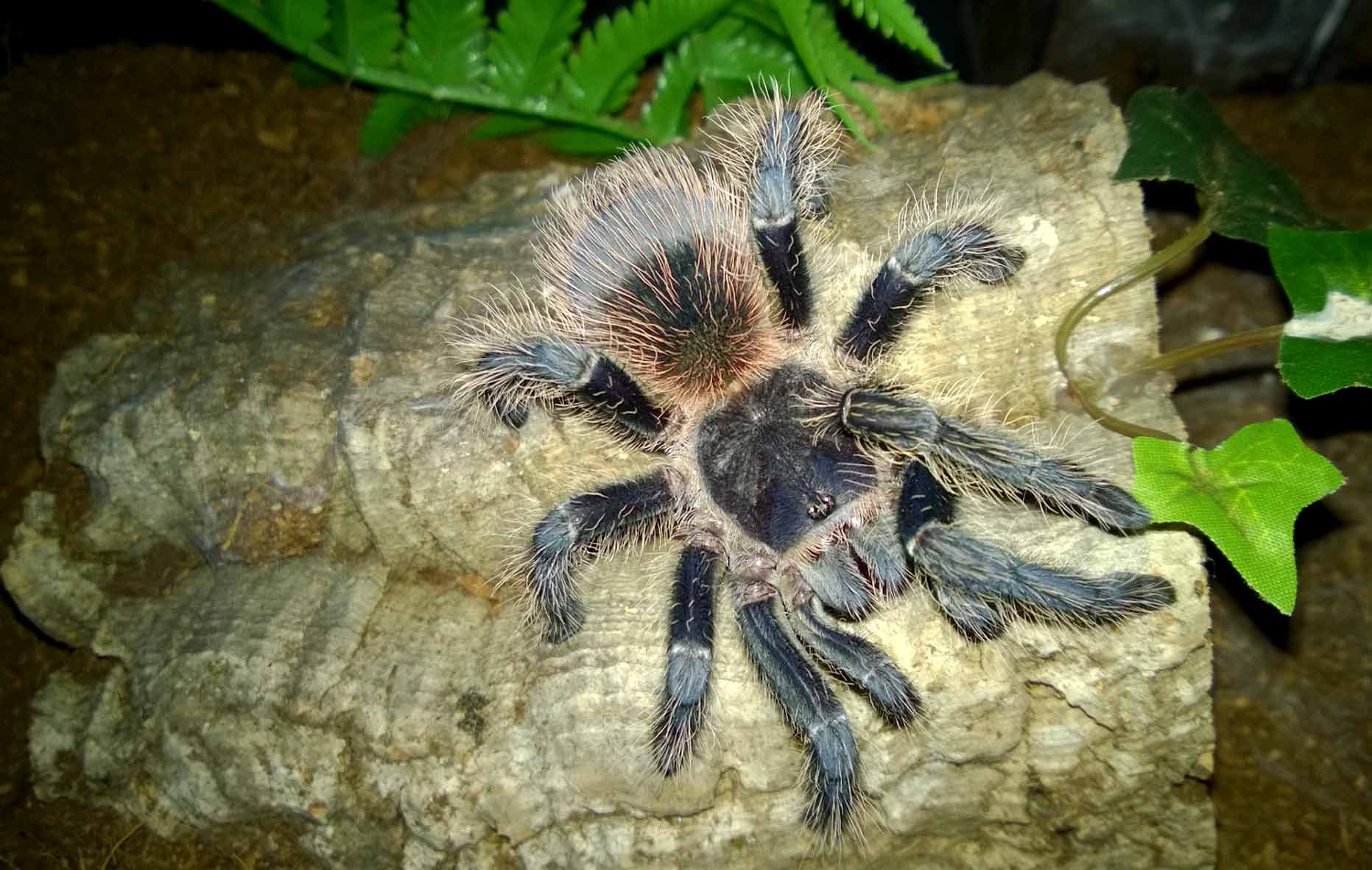
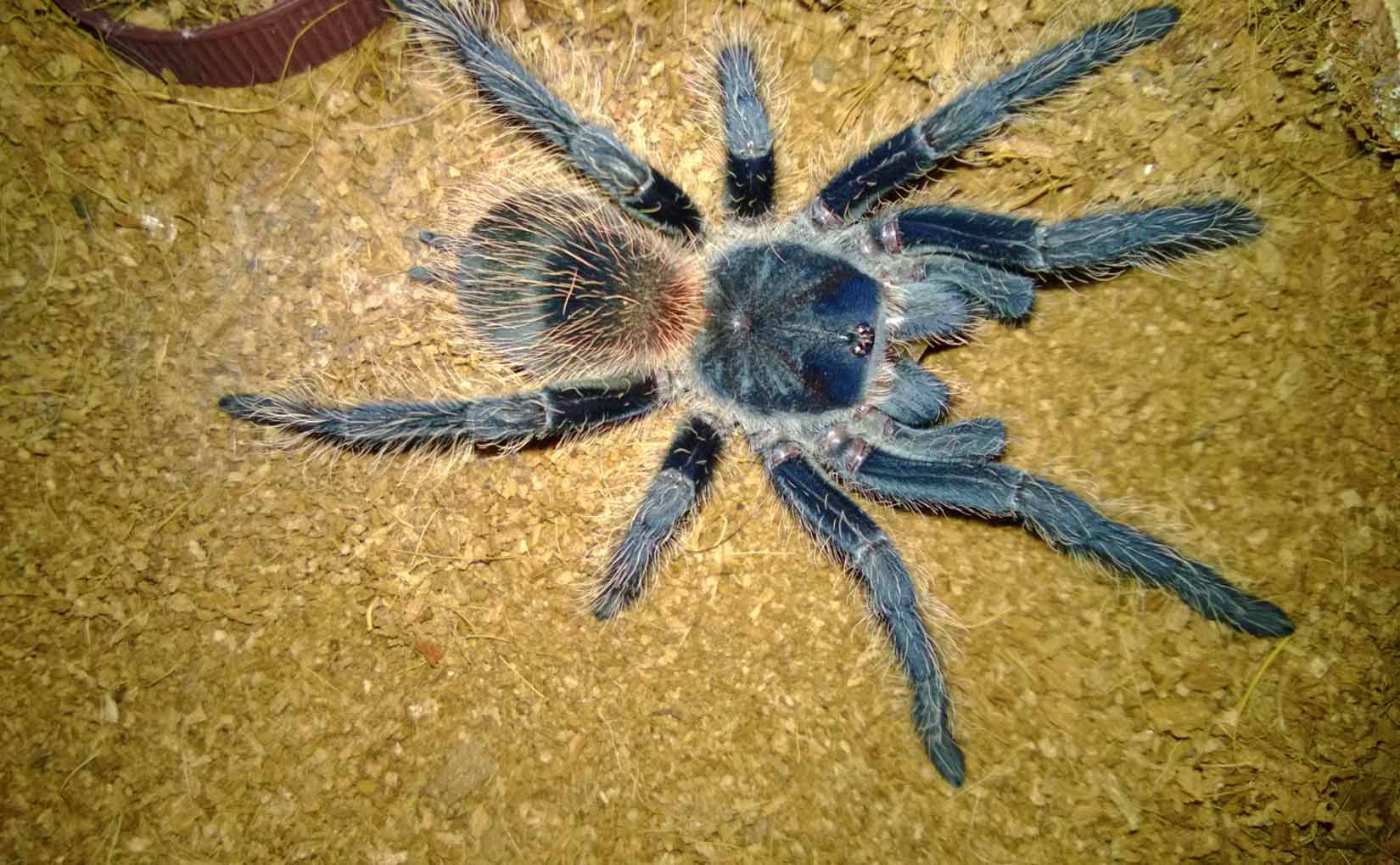
Yes, tarantulas can be beautiful. Want proof?

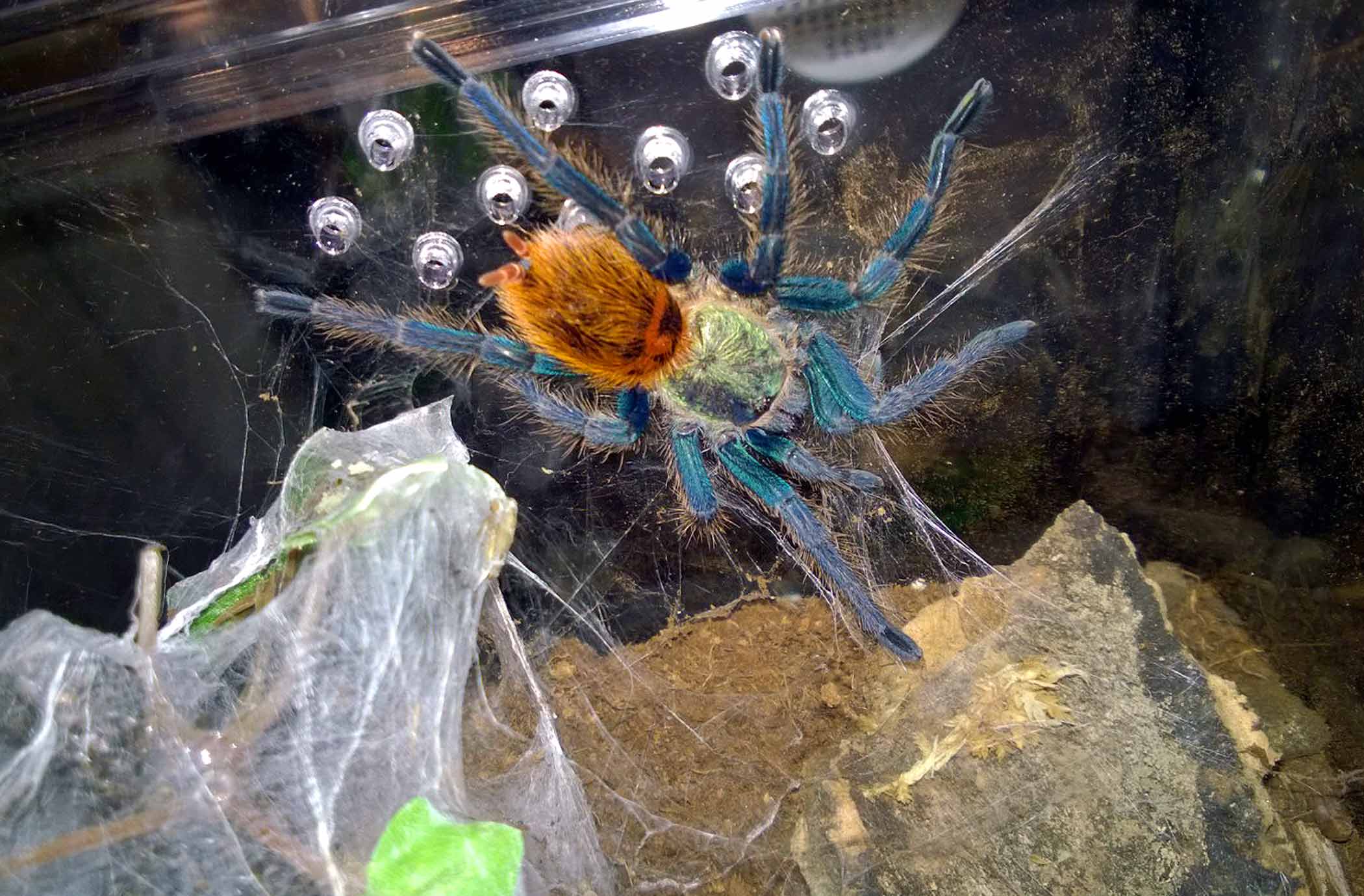
My juvenile O.philippinus.

My juvenile O.philippinus.

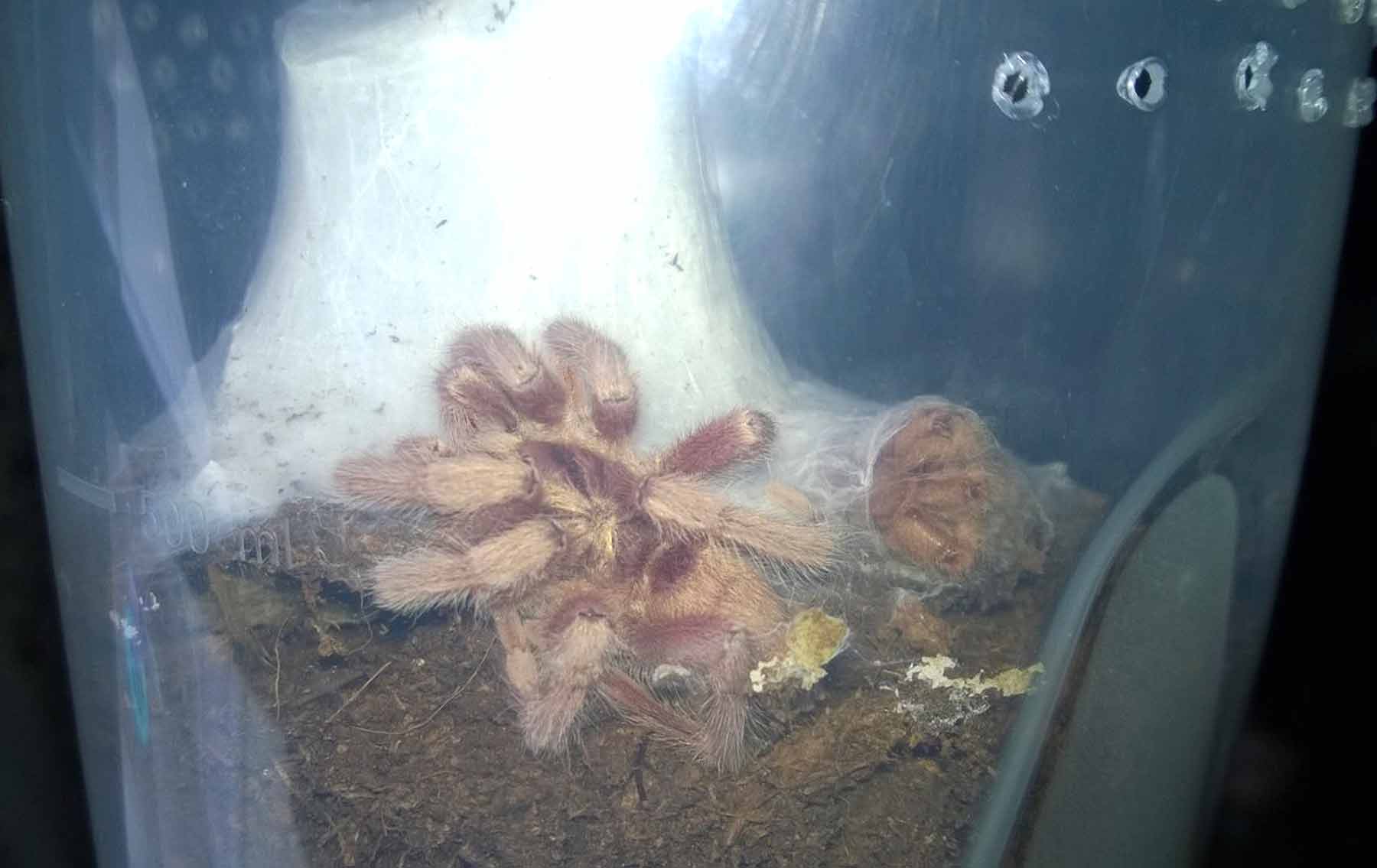
B. boehmei

B. boehmei

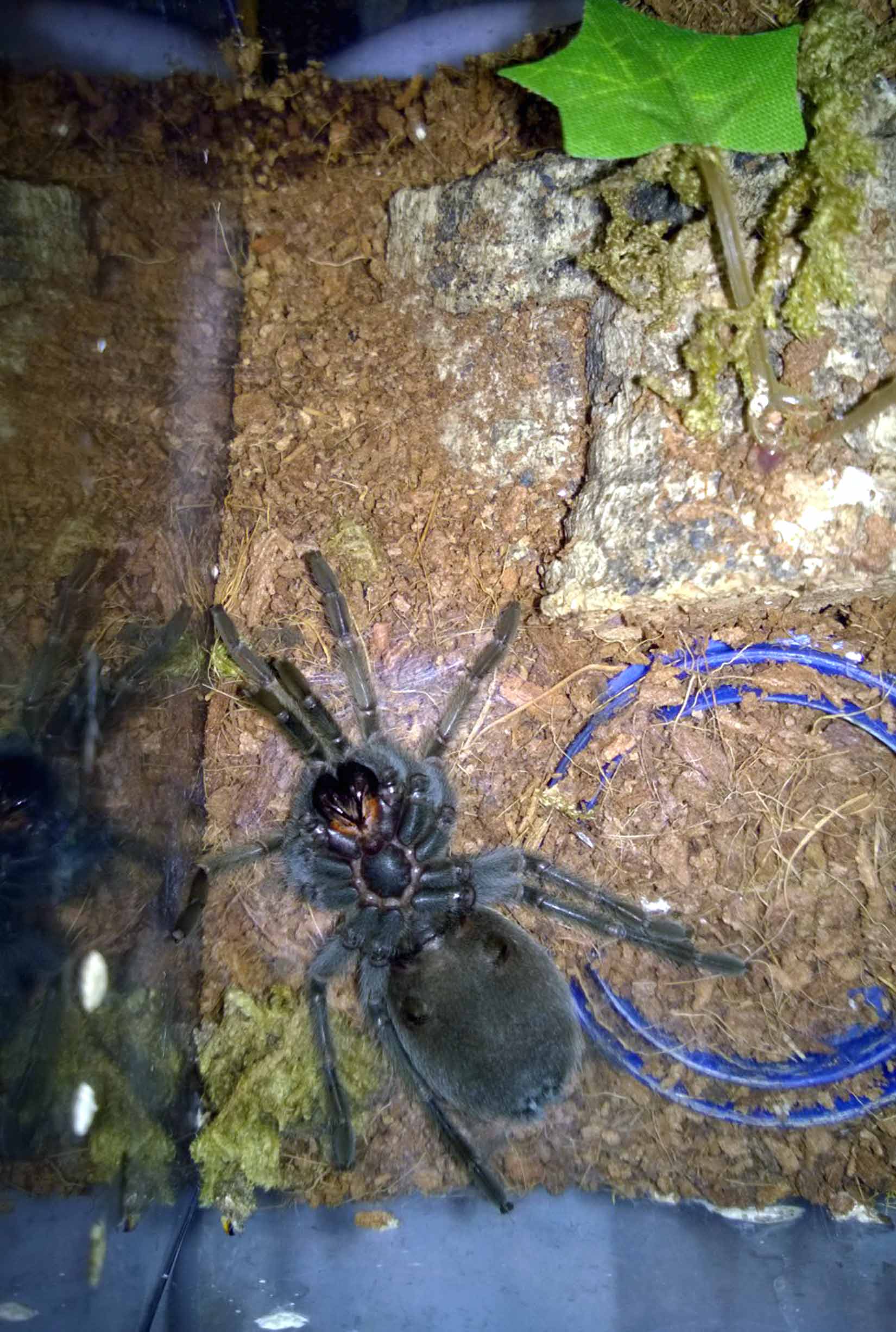
Female B. smithi

Female B. smithi

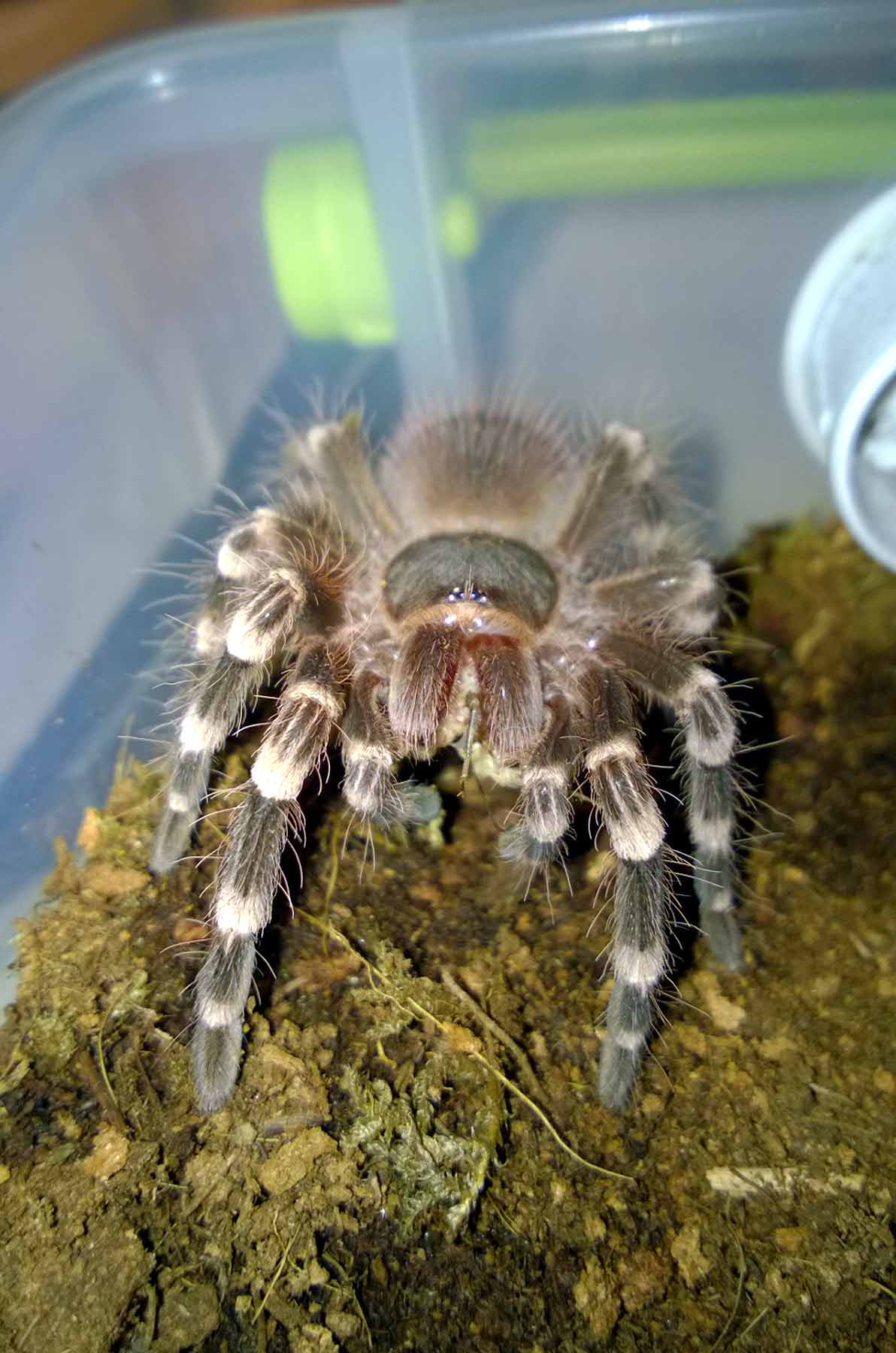
Male P. murinus

Male P. murinus

P. murinus (OBT)

P. murinus (OBT)

Hapalopus sp. Large

Hapalopus sp. Large

GBB-two

GBB-December

C. dyscolus

C. dyscolus

A. versicolor

A. versicolor

VERSICOLOR-MOLT

A.-versi-NEW-1

My 1.75" P. metallica sling a week after its last molt. It is finally displaying some of those gorgeous blues it will sport as an adult.

My 1.75″ P. metallica sling a week after its last molt. It is finally displaying some of those gorgeous blues it will sport as an adult.

P. metallica

P. metallica

M. balfouri

M. balfouri

My young adult female E. pachypus.

My young adult female E. pachypus.

C.-darlingi

C. darlingi

The Tarantula “Death Curl”

My A. insubtilis tarantula after succumbing to DKS. It's been flipped on its back, but this is the standard tarantula

My A. insubtilis tarantula after succumbing to DKS. It’s been flipped on its back, but this is the standard tarantula “death curl”.

The “death curl” … What is it?

Perhaps no phrase causes more fear and confusion for those new to the hobby than that of the dreaded “death curl”. I follow several tarantula message boards and at least once a week, a panicked keeper will come on asking how to save his/her dying pets. In some cases, it’s the real deal, and the animal passes away or is saved by quick intervention. In others, photos of the T reveal that the specimen was never in a “death curl” at all, and that the keeper misidentified an innocuous position as something more deadly.

When most tarantulas die, they don’t flop onto their backs as many believe (this is actually a MOLT!), or just stop what they are doing and die in a normal legs spread position. In the majority of instances, their legs curl beneath them in a very unmistakable position, one that hobbyists refer to as a “death curl”.

To see what this looks like, make a spider with your hand by arching your fingers and putting your fingertips on a hard surface like feet. Now, loosely curl in your fingers until your thumb and fingertips are touching and your hand is resting on your third knuckles. Congrats! Your hand is now doing a “death curl”.

My H. villosella sling in an ICU after I found it in a death curl. Unfortunately, it did not make it.

My H. villosella sling in an ICU after I found it in a death curl. Unfortunately, it did not make it.

Now, tarantulas are known to rest in all sorts of strange and sometime awkward positions, and unfortunately, a few of these normal postures can resemble a curl.  Finding a T in this position can throw those new to the hobby into hysterics as they worry that their prized pet is checking out. For example, a stressed tarantula will often pull all of its legs up close to its body so that its knees cover its face and carapace. This position in particular freaks out many a keeper and, unfortunately, usually leads the concerned owner to takes steps (like moving the animal, spraying it, or poking it) that will only lead to more stress.

This tarantula is not in a "death curl", but is bringing it's knees up over its head because it's stressed after a rehousing. A special thanks to Caroline Dellinger for letting me use her photo!

This tarantula above is NOT in a “death curl”, but is bringing its knees up over its head because it’s stressed after a rehousing. A special thanks to Caroline Dellinger for letting me use her photo!

My mature male H, incei gold after dying of old age. Notice how the legs are curled completely beneath his body.

My mature male H, incei gold after dying of old age. Notice how the legs are curled completely beneath his body.

H. incei gold mature male in a death curl. Notice how the legs are curled beneath the animal.

H. incei gold mature male in a death curl. Notice how the legs are curled beneath the animal.

A side view of a death curl (an H. incei gold mature male). Notice again how the legs curl beneath the specimen's body.

A side view of a death curl (an H. incei gold mature male). Notice again how the legs curl beneath the specimen’s body.

The death curl can occur when the tarantula is either too weak from sickness or old age, has sustained an injury leading to the loss of hemolymph (the tarantula’s “blood”), or is dehydrated. If these instances are severe enough, the spider will have difficulty maintaining the pressure required to keep its legs outstretched, and its limbs will start curling in underneath it.

For a tarantula entering a death curl-like position, all hope may not be lost. Although for some specimens, the curl might signify an irreversible, natural death, for others it could serve as a last chance warning sign that action is needed. If you suspect that your tarantula is in the “death curl”, here are a few a few question you should immediately ask yourself:

  • Is the species old or a mature male? Although many species are long-lived, they all eventually die. Also, mature males of many species generally don’t live for too long after their ultimate molts, and some folks are surprised when a seemingly vibrant and energetic adult T suddenly curls up and dies. Many folks also buy supposed adult “female” tarantulas from local pet stores only to discover later that they are matured males on the last legs of their lives. Always take age and sex into consideration first.
  • Has the T been injured? Accidental loss of a limb or a fall from a large height can lead to injury, bleeding, and death. So can a particularly bad molt. Examine the species to see if there is any milky white fluid (hemolymph) leaking from its joints or its abdomen. If so, you can try clotting the wound using corn starch, then put the animal in an ICU (a smaller container with moist paper towels, access to drinking water, and a little extra warmth if possible).
  • Is the animal possibly dehydrated? This is common one, and one that can be prevented or fixed if caught soon enough. A dehydrated spider will begin to go into a death curl as it lacks the fluids to maintain proper pressure.  Slings are particularly susceptible to dehydration as they are not able to hold their fluids as well as their juvenile and adult counterparts. Those who use heat lamps or other direct heat measures on their T enclosures also run the risk of baking the animal, thus dehydrating it. If you suspect your T is dehydrated, get it into an ICU immediately. Most will bounce back after they get some fluids. And if the animal was dehydrated, then its time to reexamine your husbandry.

There are obviously other ailments that can lead to a tarantula death curling (mites and nematodes are sometimes mentioned), but the three options listed above are the most likely.

And, as a friendly reminder…

IF IT IS ON ITS BACK, IT IS NOT DEAD OR IN A DEATH CURL!

That’s right, this is normal behavior; this is the position they get in to molt.

DO NOT touch a spider in this position.

DO NOT flip over a spider in this position.

DO NOT throw away, flush, or bury a spider in this position.

DO NOT blow on it.

DO NOT spray it with water.

DO leave it alone and let it complete the exhausting task of molting in peace. Molting is a natural occurrence for a tarantula, but it is also a period where they are quite vulnerable. Any fiddling with the animal could prove deadly to the T.

My A. schmidti on her back and ready to molt. Note: this T is NOT dead!

My A. schmidti on her back and ready to molt. Note: this T is NOT dead!

If you have a further question about whether or not your tarantula may be in a death curl, try a Google Image search for “tarantula death curl” and compare. Or, visit Tarantula Forum or Arachnoboards to seek the advise and opinions of other keepers.

Acanthoscurria brocklehursti – Brazilian Black and White

My A. brocklehursti (pet trade)

My A. brocklehursti (pet trade)

Those looking for a large, gorgeous, fast growing display tarantula need look no further.

For my birthday last year, my wonderful wife brought me out to a local exotic pet store to do some tarantula shopping. Among the acquisitions I made that day was an A. brocklehursti, or Brazilian Black and White, sling. At the time, I had been looking for an A. geniculata, and this species, with its similar coloration and thinner leg banding, would fit that spot nicely. Since then, my little guy has quickly become one of my favorites.

From the sunny tropics of Brazil

When I first began looking at A. geniculata and A. brocklehursti as species I might want to acquire, I was worried about whether or not I would be able to suitably provide the heat and humidity a species from Brazil would likely need. However, now that I’ve kept this species for some time, I realize that my apprehensions, although well-intentioned, might have been unwarranted.

This is a species that can benefit from a bit of extra humidity, so I made sure to use an enclosure set up that would allow for me to better control these levels. Until it was about 2.5″, I kept my A. brocklehursti in a 2.5 quart Sterilite stackable container repurposed to serve as a tarantula enclosure (at about 3″ now, I keep it in the 7.2 quart version). These containers are secure and can be custom vented to control the level of airflow and prevent fast evaporation.

For substrate, I use a mixture of coco fiber, peat moss, and a bit of vermiculite to hold some moisture (about 40/40/20). Before I fill the enclosure up with substrate, I put a 1/2 layer of vermiculite on the bottom and pour in some water to make it nice and moist. I then pack my main substrate mixture on top of it. This allows for a moist layer of sub on the bottom that won’t mold and that will provide a bit of extra humidity as it slowly evaporates.

Although my T was provided with deep enough substrate to permit burrowing, mine never constructed a burrow even as a sling. It did do some excavating, moving sub around its enclosure, but it has always been content to sit on the surface in full view.

I provide a water bowl for my specimen, but it loves to fill it full of substrate the first opportunity it gets. Once a month, I will sprinkle water on one side of the substrate (think downpour) and let it percolate down to the bottom. This area usually dries in a couple days, keeping the top dry and the lower levels moist. This keeps the humidity level in the enclosure a bit higher.

I do not, however, obsess over the humidity by any stretch of the imagination. There is no humidity gauge in the enclosure, and I sometimes allow the cage to completely dry out before “making it rain” again. Although I think that they appreciate some extra humidity, the species is quite adaptable and can live comfortably in drier environments if provided with a water dish.

Make no mistake, this is a species that will thrive in higher temperatures. That being said, they are a hearty species that will also do quite well in lower temperature ranges. My A. brocklehursti is kept at 72º-77º in the colder winter months and 76º-84º in the warmer summer months. During this time, it has molted thrice, and I’m guessing that its fourth molt is imminent. Even in the lower temperatures ranges, it has always been active and has continued to eat well. I never let the temps dip below 70, however, and I always keep it in the warmer side of the room.

A fast-growing eating machine

This tarantula is widely recognized for having a fast growth rate, but it’s important to note that lower temps will also mean a lower metabolism. Although my specimen is lively and eating very well, a specimen kept at higher temperatures throughout the year will likely experience faster growth rates. With consistent temps in the 80s, some keepers report this species growing 3-4 inches in a year. This is a larger T, with a max size normally between 7 and 8″ with some individuals reaching 9″, so keepers need to be prepared to correctly house a specimen this size.

This species is known for having a voracious appetite, and My A. brocklehursti is no exception. Prey items last a matter of seconds when dropped into its enclosure, as it snaps them up with amazing speed and ferocity. It also eats a lot; as a 1.5″ sling, it would easily wrestle and subdue medium crickets twice a week (or, quite frankly, as much as I would feed it). This is one of the few Ts I keep that also ate right up to a few days before a molt. That’s impressive.

My A. brocklehursti is about 3″ now, and it eats two or three large crickets a week. It has yet to refuse a meal.

My A. brocklehursti (Pet Trade) munching on a cricket.

My A. brocklehursti (Pet Trade) munching on a cricket.

A bold but not necessarily aggressive T

As a sling, my brock was quite skittish, sprinting around its enclosure at the slightest disturbance. It has become calmer now that it has put on some size and will usually just sit calmly when I open up its cage. It has never shown me a threat pose. However, there are reports out there of this species being feisty, and some are very prone to kicking hairs.

It is important to note that this genus has a reputation for having some of the most potent and irritating urticating hairs of all of the New World tarantulas. Although I have never been haired, I take great care to not get any on me when I perform maintenance. Also, although its venom is not known to be potent, this large T could easily do some serious mechanical damage with its fangs if it should bite. I would not recommend holding this T.

A note about A. brocklehursti and A. geniculata:

These two species look very similar, and there are many instances when one is confused with another. Brocks are generally recognized by thinner leg banding than their cousins, however.

Recently, taxonomists have determined that both the “pet trade” form of A. brocklehursti and A. geniculata are both color varients of the same species, and that the pet trade A. brocklehursti is actually now A. geniculata narrow band. They also contend that the true “A. brocklehursti” is now actually “A. theraphosoides.”

Confused? So are a a lot of people.

It may be a while before this is all sorted out and the change is “official” and widely accepted. However, if you own this species, you’ll want to keep an eye on how the taxonomy, and its scientific name, might change.

A beast of a display tarantula

With a max size of around 8″, this striking and heavy-bodied T is not shy and would make an amazing display tarantula for any collection. A hearty species with an amazing appetite, I would recommend a keeper start with a sling so that she/he can enjoy watching the growth while observing the animal’s temperament as it matures.


Lasiodora itabunae

My sub-adult Lasiodora itabunae (suspected male).

My sub-adult Lasiodora itabunae (suspected male).

A beautiful alternative to the Lasiodora parahybana!

When I first encountered the Lasiodora itabunae, it was while perusing Ken the Bug Guy’s site. Although I had heard of several Lasiodora species, this one was brand new to me. A quick Google search yielded very little information on this species, and I had trouble even coming up with a common name or photo for it. To say that I was intrigued would be an understatement. After finding a couple keeper reports in which they described basic husbandry requirements for this species, I decided that I would add one to my collection.

The 2.5″ juvenile that arrived was a light brown in color and a bit skittish in behavior. It quickly adopted a rounded piece of cork bark for its enclosure, and spent most of its time waiting just inside its makeshift den for me to drop a cricket in. Prey items were snatched up quickly, and it only refused a meal during premolt. During this period I would occasionally catch my little guy out, but if I touched the enclosure, he would quickly dart back into his den.

Although this is a hearty species with no strict humidity requirements, I have made some observations that have lead me to adjust how I keep him. Initially, I kept my itabunae on dry coco fiber substrate and supplied a water dish that I kept filled. However, after noticing that my little guy stood directly over the dish for hours at a time during premolt, I started wetting down a third of the enclosure. This species seems to appreciate a bit of extra moisture at times, so I now give it the option of dry or damp. I do not, however, measure the humidity in the enclosure.

For temperatures, I keep this guy at about 77º during the day with a drop to about 70-72º at night. In the summer, the temperature range is around 74-84º. I did not notice a difference in eating habits between winter and summer; it ate well regardless. It seems to do very well at room temperatures, even if the temps dip briefly into the high 60s.

My L. itabunae young adult just chillin'.

My L. itabunae young adult just chillin’.

Some surprises at around 4″

This is a fast growing species that molts regularly and puts on decent size during each molt. Within two molts, it jumped from about 2.5″ to a much thicker 4″. It was during this second molt in my care that I noticed some impressive physical and behavioral changes. Physically, the overall brown coloration was gone, replaced by a gorgeous deep blue/black overall coloration with reddish hairs peppering its abdomen. This is a very handsome tarantula with a striking appearance.

Behaviorally, gone were the days of this T cowering in its den whenever someone touched its enclosure. After this molt, it stood boldly on top of its cork bark as it waited for prey, never budging when I moved or opened its cage. The crickets I dropped in for it barely had a chance to hit the substrate before they were snatched up, and twice it grabbed the cricket directly from my tongs before I could drop it in.

To be clear, this specimen did NOT become aggressive or defensive. It is just much more bold and has a more ruthless food response. It has never charged at me or kicked a hair when I’ve opened its enclosure to do maintenance or to change the water. Due to its new-found attitude, it has now become one of my best display animals, as it is always out in the open.

This species has a great appetite, and I feed my 5″ specimen 3 crickets or a large dubia roach once a week. This is a large T that can grow to 7-8″ in leg span, so I’ll look forward to watching it put on even more size.

My L. itabunae a week after its most recent molt. It morphed from a light reddish-brown to steely blue with red hairs on its abdomen.

My L. itabunae a week after its most recent molt. It morphed from a light reddish-brown to steely blue with red hairs on its abdomen.

I currently house my 5″ specimen in a 5 gallon acrylic enclosure from Lorex Plastics. The substrate is now a mixture of coco fiber, topsoil, vermiculite, and peat moss, and I’ve provided a cork bark hide (which it has only used to molt). A water dish filled with fresh water is always provided, and I use a plastic bottle with holes burned in the top to sprinkle water on this side of the cage.  I usually let this side dry out before repeating (although I keep it moist during premolt).

My enclosure decorated and now the new home of my L. itabunae.

My enclosure decorated and now the new home of my L. itabunae.

L. itabunae is a hardy, fast-growing, striking tarantula that would compliment any collection.

Those looking for an uncommon and handsome tarantula with simple husbandry would be wise to check out Lasiodora itabunae. I will definitely always have one of these unique spiders in my collection.


Handling Tarantulas – Some Things to Consider

Euathuls sp. red after she crawled out of her enclosure and into my hand. Note: I normally do not handle my Ts

Euathlus sp. red after she crawled out of her enclosure and into my hand. Note: I normally do not handle my Ts

To hold or not to hold … THAT is the question.

For many keepers, one of the highlights of the hobby is getting some hands-on interaction with their animals. Many new keepers feel that holding a tarantula for the first time is a major accomplishment and a benchmark in the hobby. Tell folks that you keep tarantulas as pets, and the first question usually asked is, “do you hold them?” For some folks, they don’t truly feel like they can graduate from the “newbie” stage of T keeping until they can handle one with ease.

Seasoned keepers often enjoy handling their calmer animals (and sometimes, the not so calm ones) as a way to feel more bonded to these amazing creatures and to show others that they are not as scary as they may seem. Some even use handling for utilitarian purposes like rehousings and maintenance, as they feel that it’s easier than prodding and cupping the creatures. For these folks, years of experience has taught them to read subtle behavioral signs and to recognize when a tarantula might be tolerant of handling.

However, bring up the topic of handling on tarantula groups or message boards, and you are likely to wander into a heated, age-old debate between those who endorse handling and those who consider it an unsafe, unnecessary practice. Like politics and religion, handling discussions can often become angry arguments between two sides stubbornly making a gray-area issue into a black and white one.

When I first got into the hobby, it was a major goal of mine to be able to handle a tarantula without fear. In fact, I purchased my first T, a female G. porteri, in part to get me over my arachnophobia. And, after years of studying this creature, my first attempt at handling her almost went horribly awry. After seeing this spider sit in one spot for years and never flick a hair or make an attempt to bite, I decided the time was right to finally hold her. After putting her enclosure on the floor, I opened it up and laid my hand inside. Using a paintbrush, I prepared to use it to prod her into my open hand. To my shock, she latched onto the paintbrush, scraping her fangs against it as she attacked. In retrospect, I believe that her actions were a feeding response, and NOT a malicious or aggressive gesture. However, the point remains that, had the brush been my hand, I would have been bit.

As I learned more over the years and read others’ experiences, I quickly realized there really wasn’t a point in trying to handle my animals. I know my first reaction when I get hurt is to jerk back, so if I were to get bit, I’d likely injure the animal by throwing it through the air. Hairs are also NOT fun, so I wouldn’t want a handful of those either. The benefit for me would be that I could brag that I held a tarantula. The benefit for the tarantula would be, well, nothing. Besides possibly causing stress to the spider (they are not affection seeking animals like dogs or cats), I’d be risking it injuring itself from a fall or making a possible escape.

But again, this is just my opinion on the matter, and other keepers would disagree.

I know some folks handle, and I understand the draw of it. I also realize that for some, it makes them feel closer to their pet. It’s just not for me. I would rather show my affection and love for them by not putting them in unnecessarily dangerous situations. Still, I recognize that many keepers handle often and without incident, so handling is not necessarily wrong, and the issue is not a black and white one.

I’ve also heard many stories of folks who have held tarantulas and the experience has helped them to see these creatures less as scary monsters and more as the beautiful and amazing animals they are. Some are even brought into the hobby after these up-close and personal experiences. You can’t deny that’s a great thing.

I do think that keepers need to be informed and use discretion before making the decision to handle, and that experience is needed before this is attempted. So, if you are a new keeper thinking about handling (or feeling less than worthy of being in this hobby because you have not yet handled) here are some points to consider.

NOTE: This essay is not intended necessarily to dissuade folks from handling, and I am not trying to change the views of any keeper who handles. I am just offering some points to consider before taking this step.

You do NOT need to hold your Ts.

If you’re worried that by not holding your tarantulas you’ll be looked down on as a keeper, think again. Many keepers with years of experience have a hands-off policy with their pets. If you look up the topic of “handling” on the message boards, you will find many keepers who admit to handling at first, but who discontinued the practice as they got more experience in the hobby. Don’t feel like you HAVE to hold your animals to have credibility in the hobby.

When friends ask whether you handle, feel confident in telling them that you treat your pets in much the same way as one would treat a tropical fish…you look, but you don’t touch. You can also explain that the decision not to handle does not mean that you are afraid of tarantulas or that they are dangerous. You might just mention the stress it can cause the animal or the need to avoid potential injury if the T were to bolt or fall.

They do not get “tame”, but only tolerate handling.

Although some will debate this, tarantulas are really not recognized for being “intelligent” creatures. I have seen evidence in my own collection that some can be conditioned to respond a certain way to stimuli (I have a few that will now come out of their burrows to eat when I open the enclosure), but saying that they learn would be arguable. It seems that some tarantulas have better temperaments than others, and some will become more tolerant of handling after repeated interactions.

However, it should be noted that if you hold the animal without incident, all that means is that on that particular day, in that particular moment, the animal was calm enough to tolerate being handled. Instinct tells them that if something big is reaching for them, it’s likely a predator or danger. They will then bite or hair flick to inflict pain and, hopefully, escape. That’s the natural defense response they’ve developed over millions of years. It doesn’t take much, whether it be a breeze or an imperceptible vibration, to kick a calm animal back into instinctual survival mode.

Have you ever accidentally breathed on one? Their reaction is usually immediate and panicked. Keep this in mind if you decide to hold your pet; one minute it may be sitting calmly in your hands, the next it may bolt or bite. Which leads to…

Tarantulas are not domesticated animals and can be very unpredictable.

Can tarantulas become conditioned to “tolerate” handling? I believe that probably can. Do they “like” the handling? I doubt it. Are they still stressed? Some might tolerate it more than others, but it only takes a slight breeze  to set them off, so I would say any perceived “calmness” can be lost in a second. And here’s where we get to predictability.

They are not domesticated animals; they are essentially wild animals (and not ones recognized for higher-order thinking). This makes them VERY unpredictable. The boards are rife with stories of once docile Ts molting into nasty little monsters (and sometimes molting back to docile again). Their temperaments are NOT always predictable, and many will change as they age. That means that the cuddly little G. pulchripes that you handled at 3″ could be a nippy, hair-flicking demon at 4″. Others talk about Ts that tolerate handling one day, but freak out the next. Keep this in mind before sticking you hand in front of your previously “tame” animal.

Old World tarantulas have more potent venom and use their fangs as defense.

Personally, I see no reason whatsoever to ever try to hold an Old World tarantula. Most are quick, defensive, and pack a wallop of a bite. I’ve seen several videos on Youtube of keepers handling species like OBTs and Poecilotheria species (huge arboreals with nasty venom) in either an attempt to disprove temperament myths or, in some cases, to simply show how “brave” (reckless!) they are. It worries me when I see these that someone might watch these videos and think that handling a P. murinus is a common and safe practice. No way.

If you are considering holding an Old World species, take a few moments to read through some of the bite reports on Arachnoboards. Although it’s true that there have been no known cases of a human dying from a tarantula bite, some of the symptoms you may get from a bite are just horrifying. Extreme pain, vomiting, cramping, dizziness, and heart palpitations are just a few of the symptoms. Even worse? Some report symptoms long after the bite. Old World species don’t have hairs as a defense, so if they are startled or threatened, they WILL bite. A mishap with one of these species could end in an emergency room visit.

A bite doesn’t have to be highly venomous to be painful…and getting haired suck is no fun.

Many keepers get hung up on venom potency to the point where they seem to forget that even a bite from a species with weaker venom is going to hurt. A 6″ New World tarantula can still pack a very painful bite, even if the venom isn’t enough to put you in the hospital. Some of the New World species get quite large, and the larger the spider, the larger the fangs. Just the mechanical damage from this alone could be a problem.

And then there is the hair. Many people who haven’t experienced urticating hairs poo-poo them as a weak and negligible defense technique. After all, how bad could some prickly little hairs be? The answer is, VERY bad. Some species have very irritating hair, and people’s reactions to them can prove to be more than just a minor annoyance. The effects can also leave you feeling very uncomfortable for several days, which can be no fun. Catch hair in the eyes or breathe some in, and you will likely be headed to the ER for help.

Also, even though you may not have a bad reaction to a hairing the first time it happens, many keepers complain of increased sensitivity the more times they are exposed. This means that you never get used to the hairs, but instead your body becomes more reactive them. Some keepers report having to get rid of certain species because they find the hairs too irritating to deal with. Just something to consider…

Handling is not necessary for a transfer or maintenance.

Some folks find that it is easier and safer to use their hands to move tarantulas during rehousings. Obviously, if they have the experience and it works for them, who am I to judge. However, I’ve have done dozens of transfers, and I’ve never had a situation where I felt that I needed to handle the animal. In fact, I try to keep my hands and fingers away from them as I work. I am calm and deliberate when transferring, and my goal is always to move the animal with minimal stress and as little risk to me and the T as possible. In my opinion, handling the T could add stress for the animal and put it in harm’s way should it bite or flee up my arm. The key is NOT to rush it and to back off and try again later if the animal starts to show signs of stress or agitation.

One bite is all it can take to end up with you and/or your tarantula injured. You have to ask yourself, if one of your pets decides that it is not in the mood, are you really going to be able to keep from flinching and flicking it into the air? Is it worth the risk? It’s a question that you have to ask yourself…

As with all things tarantulas, the key is being informed and prepared.

Again, many keepers extol  the benefits of handling tarantulas, so if you still decide that handling is for you, you are certainly NOT doing something wrong. However, you do want to keep in mind some of the points above so that you are prepared and are able to keep you and the animal safe. Google “tarantula handling” and read up on techniques and precautions and watch some of the Youtube videos that show proper handling. Be ready to study your pet before hand to make she displays the temperament that would make her a good candidate for handling.

Full disclosure: I HAVE held my Euathlus sp. red a handful of times, but not for fun. That little booger tends to climb right out of her enclosure every time I open it, and I usually use my hand to just gently put her back in. I have not taken her out for the purpose of handling, though.

Great Basin Serpentarium – A Review

A fantastic spider shopping experience!

I recently discovered Great Basin Serpentarium while perusing the For Sale/Trade/Want to Buy section on Arachnoboards. I had been on the lookout for some T. stirmi slings, and GBS was offering 1.5 spiderlings for $90 each. Checking out the rest of the list of Ts for sale, I was excited to discover the they were also offering many other species I had been looking for. The prices were quite good, and I was floored to learn that they offered $20 FedEx next day shipping with any order of totaling $100 or more. 
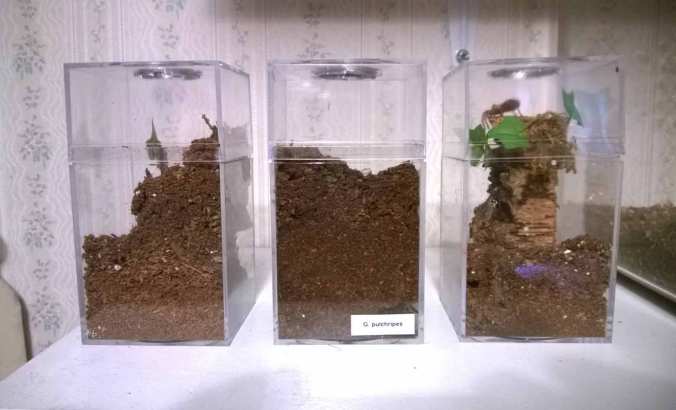
I shot the owner, J Mugleston, an email query about a possible purchase, and he got back to me within the hour. In fact, his communication throughout the entire experience was exemplary with all of my emails being answered promptly and politely. Last Friday, I put my order in for seven slings: 2 T. stirmi, 2 P. muticus, 2 M. cabocla, and 1 B. auratum.

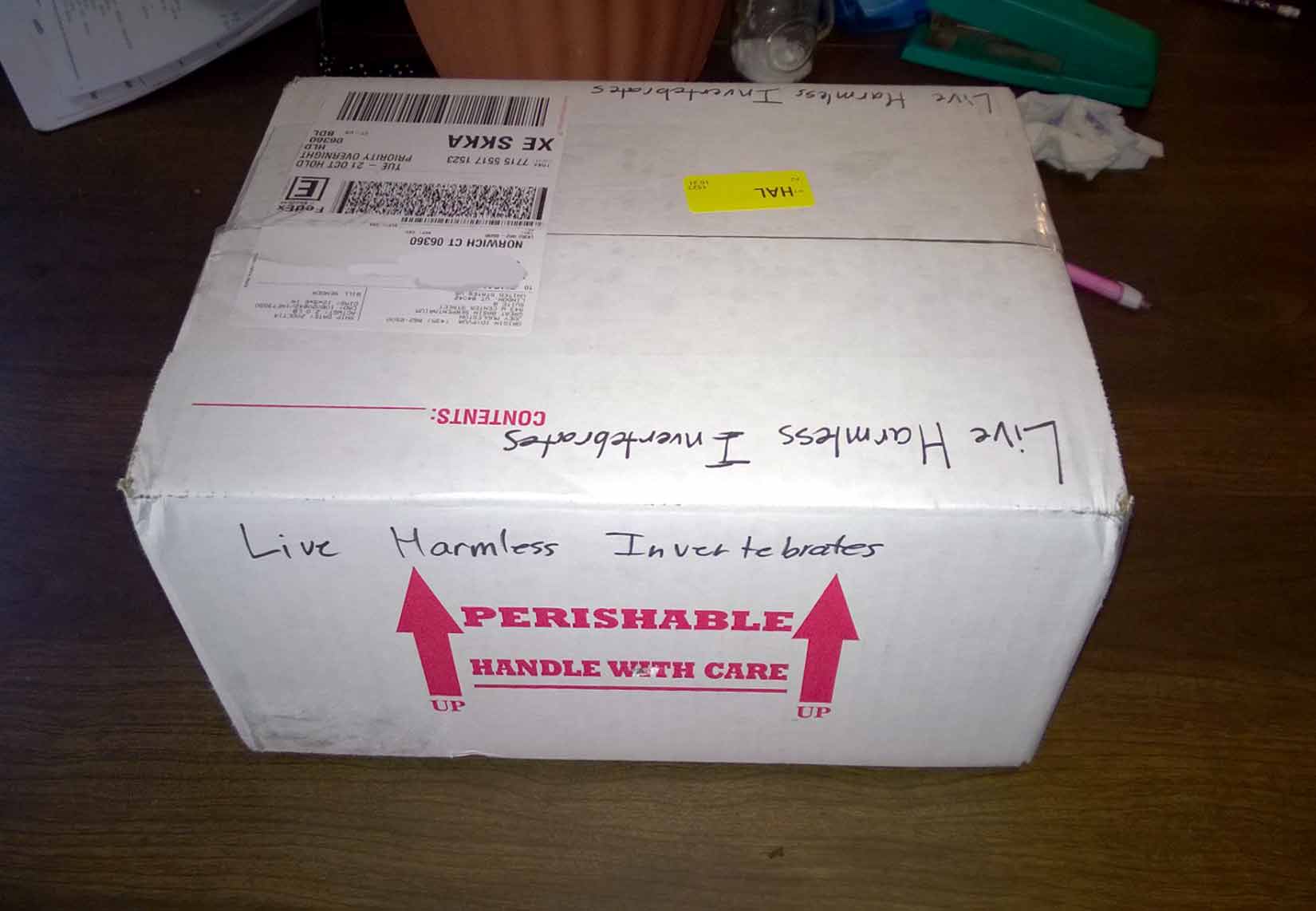
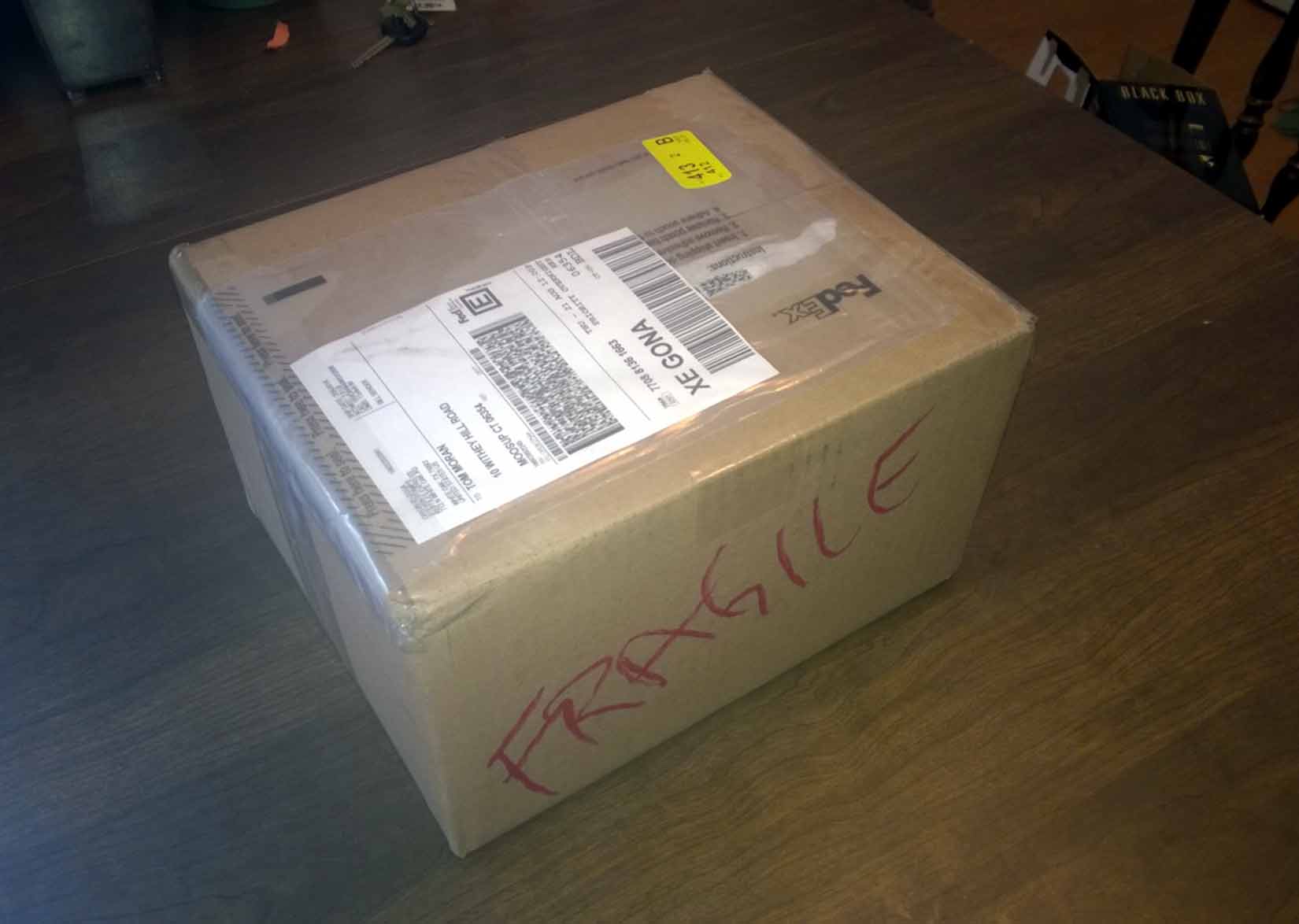
Mr. Mugleston worked with me to ship my items to the local FedEx on a day of my choice, and I picked up my package yesterday. The box was labeled “Harmless Invertebrates”, which I though was a nice touch (the clerk at the counter actually handled my package as if it were dynamite!).

My package for GBS. LOVE the labeling!

My package for GBS. LOVE the labeling!

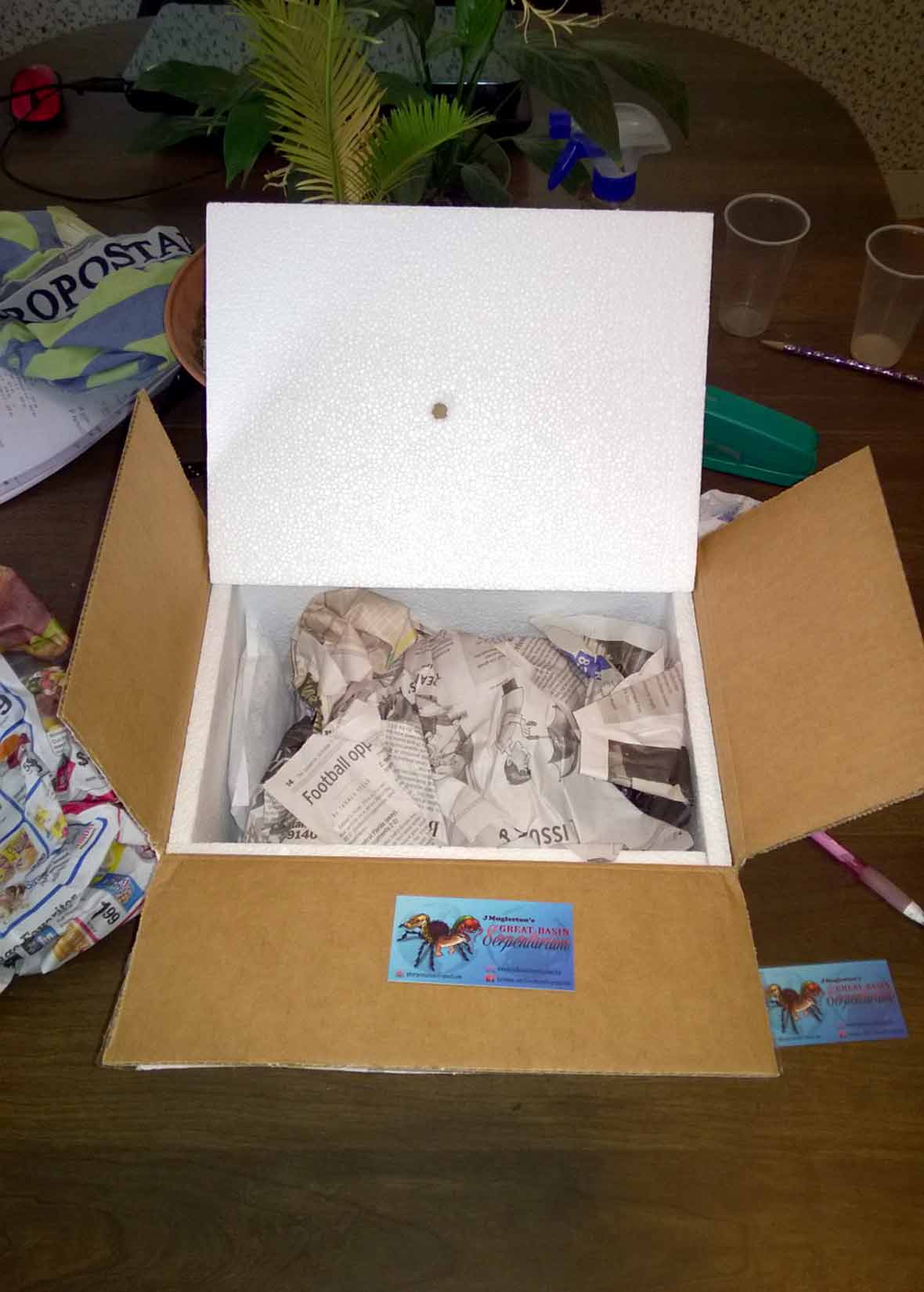
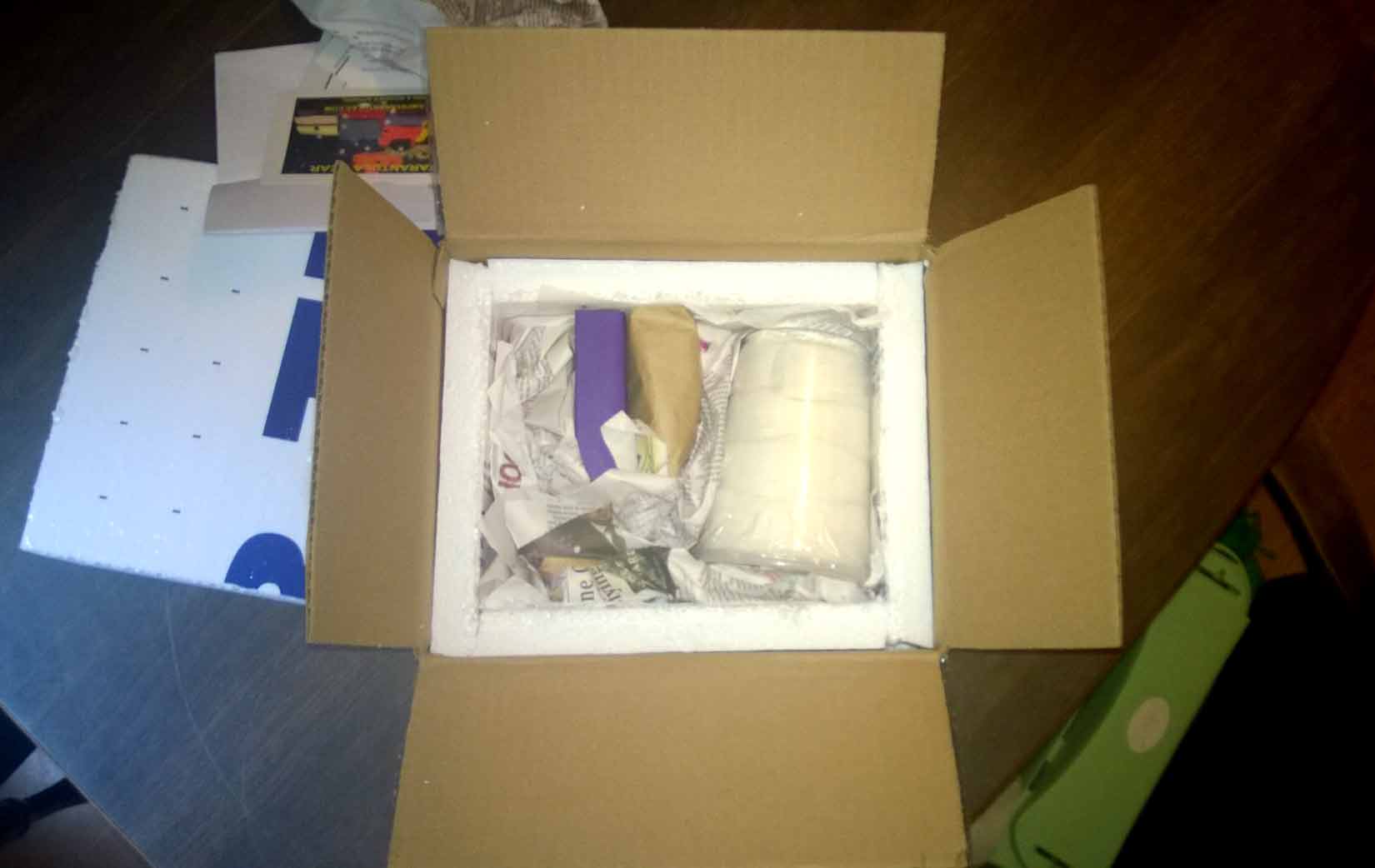
My new acquisitions were very well packed in a box lined with foam insulation and crumpled newspaper as padding. A heat pack was included, which was great due to the unseasonably cold temps we’ve had in my state. Each spider was packed in a plastic dram vial in moistened paper towel, and the bottle lids were taped with electrical tape. These little guys were well-protected during shipping.

My package from Great Basin Serpentarium. My Ts were warm and very well packed.

My package from Great Basin Serpentarium. My Ts were warm and very well packed.

I should mention that the way the tarantulas were packed in the vials made it VERY easy to get them out for rehousing. The paper towels were packed in tightly enough to protect the T, but loose enough that towel could be carefully pulled out of the vial and unrolled to safely free the animal. This made rehousing these little guys a breeze.

The vials holding my new slings from GBS. All were well packed and labeled.

The vials holding my new slings from GBS. All were well packed and labeled.

The slings themselves were in fantastic shape, and it was obvious that they were healthy and well cared for. All were lively during rehousing, and all but one has already eaten (one of my P. muticus slings was a bit too busy burrowing to grab a snack).

Great prices, communication, and shipping costs!

I could not be more pleased with my experience with Great Basin Serpentarium. The prices, especially with the $20 next day shipping, were fantastic, Mr. Mugleston’s communication was outstanding, my order was perfectly packed, and the animals arrived healthy and lively. I would definitely recommend GBS to other tarantula enthusiasts, and I will definitely be shopping there again in the future.

And…a couple pics of my new acquisitions!

My new .75" P. muticus sling.

My new .75″ P. muticus sling.


My new 1/5" T. stirmi sling.

My new 1/5″ T. stirmi sling.


Tarantula Sling Enclosures

Now that I’ve got my new sling, what do I house it in?

When I made the decision to purchase my first tarantula slings, I next needed to choose which enclosures I would use to house my new acquisitions. I had researched many alternatives, from deli cups to dram bottles, and I wanted to be sure to choose something that would allow me to maintain the appropriate environments my spider’s would need. Too much ventilation and I would risk the enclosure, and my T, drying out. Not enough ventilation, and the stuffy, overly-moist conditions could prove a death trap. I also had concerns about security; namely, would my T be able to escape from ventilation holes (or would the design of the home make it easy fro the spider to scoot out when it was opened for feeding or cleaning?).

As luck would have it, my first sling purchase was made at Jamie’s Tarantulas, and I took advantage of a couple deals she was running that included both a sling and one of her wonderful sling enclosures. I still use these enclosures, as they offer many perks that I will get to later. However, since then, I’ve done a lot of experimenting with other types of homes for my slings, and I’ve discovered some “found enclosures” that are also quite useful and versatile. So, if you’re on the lookout for a good sling enclosure, you may consider the following.

Deli Cups

A couple simple deli cups. Note: if using these to house a sling, I would not use the screened top as it would allow for too much airflow.

A couple simple deli cups. Note: if using these to house a sling, I would not use the screened top as it would allow for too much airflow.

Deli cups are an enclosure staple in the hobby, and for good reason. They are inexpensive, versatile, come in many sizes, and are easily-acquired. They are also stack-able, which can allow those with large collections to easily conserve space. Full disclosure: I personally don’t use deli cups to house my Ts; I have always used other alternatives. But to ignore deli cups on a list of suitable alternatives would be ridiculous.

PROS:

  • Inexpensive
  • Come in many sizes
  • Readily available
  • Versatile
  • Easily adapted
  • Stack-able

CONS

  • Not the most attractive (for those looking to display)

Jamie’s Tarantulas Spiderling Enclosures

Three sling enclosures from Jamies tarantulas. I have a dozen of these, and I love them.

Three sling enclosures from Jamies tarantulas. I have a dozen of these, and I love them.

To date, I’ve purchased about a dozen of these, and I still love and use them. For those buying slings from Jamie’s site, picking up one of these little beauties is almost an academic decision. Not only do they look great, but for a very reasonable $7.95, you get all the fixings, too (cork bark, silk plant, coco substrate, and moss), which is SO convenient. They look great on a shelf, and I’ve safely housed over 20 slings in them without incident.

Before using one of these enclosures for the first time, you will want to open and close it several times, as the cover fit can be quite stiff initially. Personally, I like how you can basically “hinge” the top on the bottom when feeding Ts, which keeps the opening small and prevents escapes. She sells these enclosures in both terrestrial and arboreal versions.

PROS:

  • Very convenient when purchasing slings from Jamie’s site
  • Good value with all of the fixings
  • Gorgeous display enclosure
  • Very secure
  • Good visibility
  • No modifications needed
  • Rectangular shape and top vents means you can fit many on a small shelf

CONS:

  • Can be pricey when compared to “found enclosure” alternatives
  • Can’t be stacked on each other.

Plastic Dram Vials

Plastic vials used to house small slings.

Plastic vials used to house small slings.

Like the deli cups, plastic dram vials are used by many keepers to house their slings. They are inexpensive, easily adapted, and fantastic for keeping in precious humidity. Plastic dram vials come in many sizes, including very small sizes perfect for tiny slings. Pictured above are two that are currently housing 1/2″ Hapalopus sp. Columbia slings, and a smaller dram which is home to a 2/5″ B. albopilosum sling. All of these slings started off much too small for my other enclosures, and the smaller sizes of the plastic drams proved the perfect alternative.

PROS:

  • Inexpensive
  • Readily available
  • Come in many sizes (Great for tiny slings)
  • Secure
  • Easily adapted
  • Wonderful for holding in moisture
  • Great visibility

CONS:

  • Not safely stack-able

Ziploc Twist n Lock Storage Containers

Modified Ziploc storage containers. These are very versatile and can be used to house burrowing, terrestrial, and arboreal Ts.

Modified Ziploc storage containers. These are very versatile and can be used to house burrowing, terrestrial, and arboreal Ts.

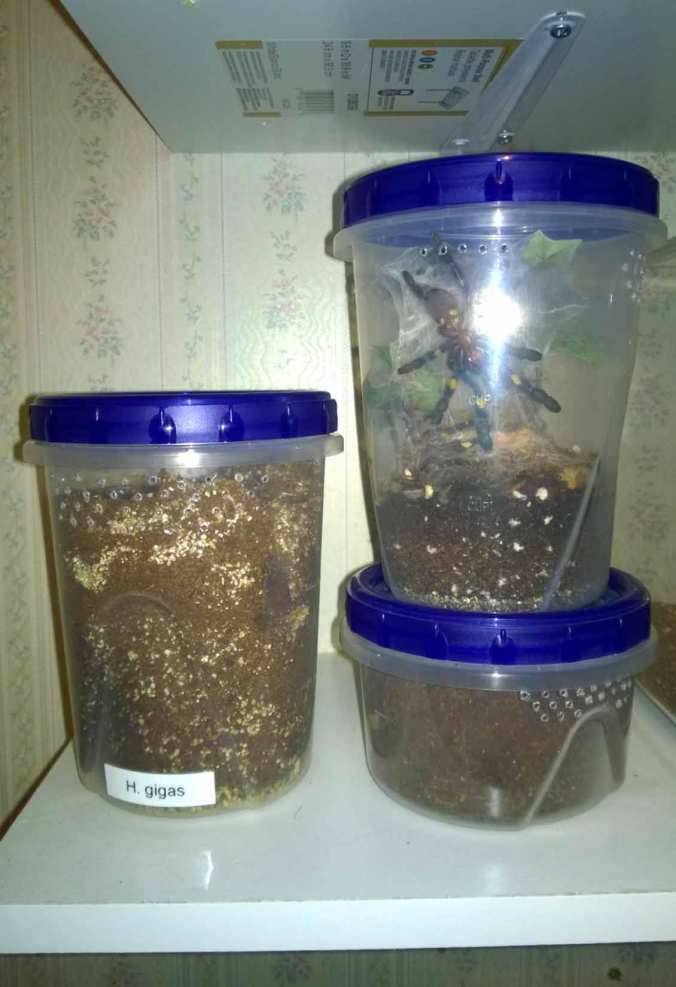
I started using these several months ago after buying a boatload of plastic containers at Walmart to experiment with as enclosures. Since then, they have quickly become my go to enclosure for slings 1″ or larger. Although they come in two sizes, I have switched almost exclusively to the taller size shown above. As you can see, you can fill it with more substrate, meaning burrowing species can dig elaborate burrows (H. gigas), or use less substrate and a piece of cork bark for arboreal species (the P. metallica on the right).

These enclosures are easily modified with a hot nail or soldering iron, and they are wonderful at holding in moisture. They feature secure, twisting lids that offer wonderful security, and they are stack-able, which is great for space-saving. At about $2.50 for two, they are also very inexpensive. I love using these for faster-growing species, like my Phomictopus, as they are roomier than other enclosures and allow more room for growth.

PROS:

  • Inexpensive
  • Very versatile (can work for burrowing or arboreal)
  • Secure
  • Easily adapted
  • Stack-able
  • Attractive

CONS

  • Blue lid makes it tough to see in from the top

Just the tip of the iceberg…

These are, by no means, all of the possiblities out there. Tarantula message boards are rife with other examples of “found enclosures” that keepers have used. It’s fun to experiment with different types of cages, so creativity should definitely be explored. Just keep in mind that a good cage should:

  • Be secure
  • Be appropriately sized
  • Able to maintain the optimal environment inside
  • Appropriately ventilated

I will continue to try to find new and interesting enclosures, and if anything should prove particularly effective, I will definitely add it to this list.

H. villosella Death – Tarantula Impaction?

Not the way I wanted to begin my Friday evening.

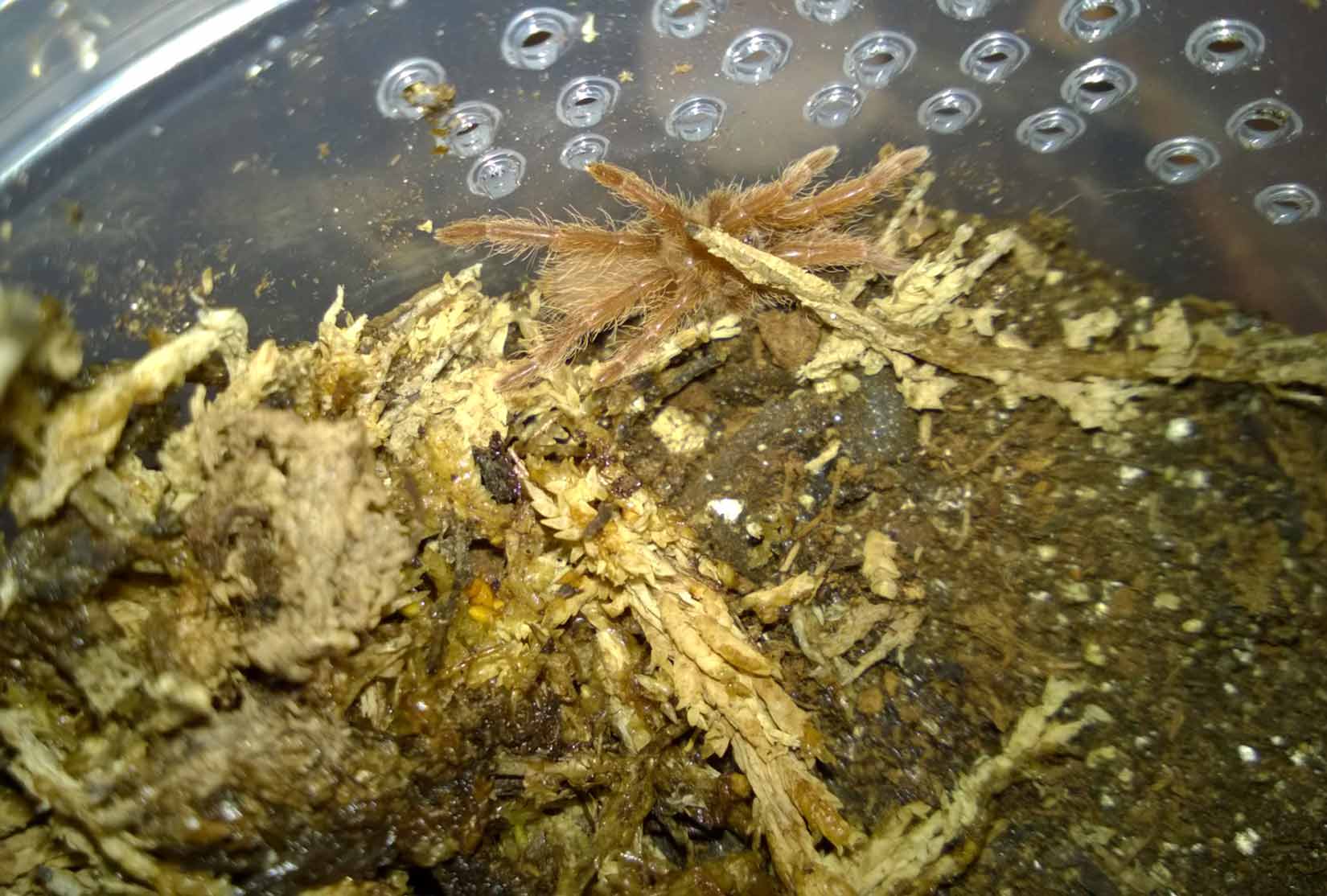
For the past several weeks, I have been keeping an eye on my Heterothele villosella (Tanzanian Chestnut Baboon) sling, as its behavior after a recent molt had become abnormal. I had received this wonderful little tarantula as a freebie several months back, and it immediately impressed me with its vicious appetite and beautiful webbing. Like many of my Ts, this one would only refuse food while in premolt.

My H. villosella, alive and well, after a recent molt. Despite only eating twice, its abdomen was still remarkably plump.

My H. villosella, alive and well, after a recent molt. Despite only eating twice, its abdomen was still remarkably plump.

Well, after this specimen refused a meal about two months ago, I assumed it was in premolt. Sure enough, it emerged after a week of hiding a little bit larger and sporting fresh colors. As this particular sling was usually ravenous after a molt, I offered it a small cricket, which it took no problem. Another cricket was offered a few days later with similar results. She was back to eating well.

I dropped the third cricket in about two weeks after she emerged from her last molt, and I was surprised to find the cricket alive and kicking the next morning.

Hmmm…

I waited a few more days before offering another cricket. This, too, was rejected. Now, I’ve had many tarantulas change their eating habits after a recent molt, so I wasn’t particularly concerned yet. I made sure to wet down part of the substrate in the enclosure to keep the humidity up, and waited another week to try again. Again, no dice. Despite being a great eater in the past, this T had inexplicably stopped eating, and during the warm months of summer when even my most picky specimens were ravenous.

More odd behavior.

About three weeks ago, my H. villosella started spending a lot of time out in the open. For the first six months I had this spider, I rarely saw it out of its heavily-webbed den, and when I did, it was usually in the early morning after I turned the lights on.  The slightest bump would send it scurrying back inside its burrow.

However, this T was now out all the time and wouldn’t flee even when I picked up its enclosure. In many ways, I found this new behavior more alarming than its lack of appetite. I was pleased, however, to see that despite having only eaten twice, its abdomen was actually fairly plump.

I also noticed this T dragging its abdomen on the ground and on the side of the enclosure. I first thought that it was just webbing, but there didn’t seem to be any webbing coming out of it. The H. villosella was also using its back legs to rub its rear, something that didn’t seem particularly worrisome by itself, but proved concerning when added to the other odd behaviors.

With little I could do, I kept sprinkled water on the side of the enclosure daily to give it something to drink and kept it under close observation. It continued to hang out in the open, and this once speedy little spider was much more sluggish and calm.

Unfortunately, it wasn’t able to recover.

When I arrived home from work yesterday, I was saddened to find the little guy in a partial death curl. As a precaution (it is sometimes difficult to determine if they are truly dead), I put it into an ICU to see if it might be “revived”. While moving the T, I noticed something I hadn’t seen before. The area around its anus was caked with bit of white stool. Also, there was a white “plug” partially protruding from it.

My H. villosella sling in an ICU. Unfortunately, it did not make it.

My H. villosella sling in an ICU. Unfortunately, it did not make it.

Suddenly, it seemed more clear as to what probably happened to this unfortunate T. I had read about other keepers losing tarantulas to fecal impactions, but I had never experienced it myself. An impaction occurs when the Ts anus becomes blocked, prohibiting it from evacuating its waste.

In some of these instances, the T will essentially eat itself to death as the waste compounds inside it until it dies. In some instances, the animal stops eating after a molt, yet it’s abdomen remains large and bloated. In this instance, it’s suspected that a complication with the molt causes the issue. Other symptoms reported are sluggishness and unusual grooming of its backside, especially around the anus.

When a tarantula is showing signs of a fecal impaction, there is little a keeper can do. Some recommend using a paper towel or cotton swab moistened with warm water to try to wipe away and loosen up any feces that may be blocking the anus. In my case, I don’t know if this would have worked due to the very small size of the specimen.

I checked on the T this morning to see if its condition had improved over night, but it was in the same position it had been in the night before. Unfortunately, it had passed. Can I be positive that it was a fecal impaction that killed it. No. However, I have made no changes in husbandry in the last six months, and it had been healthy and seemingly thriving until its last molt, so I’m convinced it wasn’t something I did. It also displayed many of the common symptoms of an impaction, which lend more credence to the theory.

A dead H. villosella sling. Notice the white around the anus, and the yellowish spot that formed beneath the corpse (likely feces loosened by the moist towel.

A dead H. villosella sling. Notice the white around the anus, and the yellowish spot that formed beneath the corpse (likely feces loosened by the moist towel).

For those who may fear that they have a tarantula suffering from this malady, I will list the symptoms my T exhibit in hopes that it helps in identification.

Symptoms that indicated fecal compaction:

  • Diminished appetite (food refusal)
  • Plump, hard abdomen (even after not eating much)
  • Dragging abdomen and rubbing it on substrate without laying web
  • Excessive grooming of anus area with back legs
  • Sluggishness and decreased activity
  • White “plug” protruding from anus
  • White stool around anus


Stamps Tarantula – A Review

The first of what will prove to be many purchases.

I had first discovered Steven Stamps several months ago on Arachnoboards  where he had posted several tarantulas for sale on the For Sale/Trade/Want to Buy board.  I was immediately impressed with his prices and the number of species he had available, and a quick look through his review thread revealed pages of glowing testimonials. It wasn’t until last month that I stumbled on his newly-launched web store with a $50 unsexed T. stirmi sub-adult for sale that I would finally make my first purchase from him.

The first, but definitely not the last.

A diverse offering of Ts at awesome prices.

The first thing that struck me about his site was the number of tarantulas he had available and the diversity of his stock. He had everything from rarer Aphonopelma, Avicularia, and Lasiodora species, to the more common Poecilotheria or Brachypelma species. There was definitely something for every type of collector. There were also several females for sale for anyone looking for breeders. His prices were fantastic overall, with many species selling for much less than I’ve seen elsewhere.

Communication was great, and all of my emails to him were answered in a matter of hours. Mr. Stamps was kind enough to hold the T. stirmi for me after paying so that I could add a few more tarantulas to the purchase in a couple weeks to get more out of my shipping costs. I though that was a fantastic gesture. He also worked with me to ship my package on a particular day so that I could be sure I would be home to receive it.

Top notch shipping and packing!

My animals were shipped next day, and the package arrived safe and sound. The Ts were expertly packed in a foam-lined box with plenty of padding and even a cold pack to protect the tarantulas from the high temperatures.  The individual Ts were safely nestled away in either large deli cups (for the T. stirmi) or plastic dram bottles (for the H. lividum, L. difficilis, and G. pulchripes slings) and padded with newspaper. Stamps also included an awesome flashlight as a free gift.

Very cool.

A package from Stamps Tarantulas.

A package from Stamps Tarantulas.

The package from Stamps, obviously well padded and insulated with foam.

The package from Stamps, obviously well padded and insulated with foam.

My package from Stamps. Notice how well-packed the specimens are.

My package from Stamps. Notice how well-packed the specimens are.

The contents of the box removed.

The contents of the box removed.

The animals themselves were in excellent shape, with all four emerging lively and sporting plump abdomens. Three of the Ts ate the first night; the fourth was in premolt, but has since molted and ate. It has been a few weeks, and all are doing fine. I was particularly impressed with the condition of the T. stirmi. I had seen many pictures of larger T. stirmi being sold that looked thin or haggard, and I worried a bit that my new acquistion might need some TLC. This beast, however, was was in AMAZING shape, and has acclimated to his new enclosure smoothly.

My new T. stirmi shortly after being housed.

My new T. stirmi shortly after being housed.

A great new online dealer.

I was 100% satisfied with my first purchase from Stamps Tarantulas, and I’m already planning my next order. Mr. Stamps carries a variety of species at great prices, and his communication, packing, and shipping are all top of the line. He has also proven willing to work with customers, which is always a plus. I highly recommend this vendor!

VISIT STAMPS TARANTULAS

As with most vendors, be sure to sign up for the newsletter to receive information on new stock and awesome promotions.


M. balfouri Feeding Video

Look who stepped out for a bite!

Of all the species I currently keep, my little M. balfouri juveniles have been some of the more quirky and reclusive. After all three buried themselves for several months during the cold of winter, they emerged in the spring with better appetites and slightly less coy dispositions. I now see all three regularly, and I’ve even been afforded the opportunity to see two of them eat. That’s a pretty big deal considering that, from November to March, I didn’t even SEE them at all.

Well, after its recent molt, one of my M. balfouri juveniles has become extra bold, often coming out of his den to hunt, and remaining in the open even when I jostle his cage while feeding him. My first attempt to catch him feeding on film proved to be an epic failure as I ended up catching only the cover of his cage. However, I fared much better with the second attempt, and managed to catch him gently grabbing a cricket I tossed in (sorry, no brutal take-downs in this one). Although it starts off a bit blurry, I do adjust the framing several seconds in.

For anyone who wants to read more about this species, click here!

Now, onto the video…