I will admit, when I first read about the Euathlus sp. red (Chilean Flame), I was immediately turned off by the word “dwarf”. Having kept a G. porteri for over 16 years, I was now learning about the truly amazing varieties of tarantulas available, and I was particularly intrigued by the species that offered impressive sizes. Somehow, a T that would max out around 3.5″ didn’t really appeal to me. My interest in Ts had yet to graduate from the “I want something huge and impressive” stage, and I was consequently overlooking some species due to size alone.
Still, as I frequented Arachnoboards, reading about other keepers’ experiences with these wonderful animals, my interest grew. Although there were some negatives—slings were notorious for refusing food, and their adult counterparts we also prone to fasting—there were many positives. Those who owned them gushed about Euathus sp. red’s gentle and inquisitive nature and its understated beauty.

Euathlus sp. Red adult female 3.5″
Around early December, my wife and I decided that we would get my two middle children (8 and 10) each a tarantula for the holiday. They had been both showing plenty of interest in the hobby, and we thought them capable of caring for them with supervision. As luck would have it Jamie’s Tarantulas was offering sub-adult Euathlus sp. reds for the holiday, and I remembered their reputation for being a wonderful beginner’s species. I bought one for each of the kids then, almost as a after thought, grabbed a third for myself.
Check out my girl in the video below!
It didn’t take long for us to discover why those who kept Euathlus sp. reds gushed about the species. This tarantula can best be described as curious and inquisitive. While almost all of my Ts bolt or hide when I open their enclosures, all three Euathuls sp. reds come calmly up to the breach and try to climb out. It’s not a mad-dash escape, or a fear-induced exodus—no, it’s more like a, “Hey, what’s going on out here?” stroll.
Although I make it a point to not try to handle my Ts, I’ve found myself in an impromptu handling session with mine several times. Whenever I open its enclosure for maintenance or a feeding, mine will calmly crawl out of the hatch and onto my hand. Once there, she normally just cozies up to my thumb and hangs out. The behavior is quite adorable, and dare I say it, this is the one T I keep that I have no reservations about calling “cute”.

Euathlus sp. red after she crawled out of her enclosure and into my hand. Note: I normally do not handle my Ts
A word of caution, however; although they normally present a calm, gentle demeanor, these little guys can really bolt when spooked. Once, when startled, mine scurried down my hand and back into its enclosure in the blink of an eye. It served as a reminder of why great care always needs to be taken to ensure the safety of a the T when attempting to handle.
Speaking of speed, these guys can be amazingly fast and aggressive eaters. Mine have only refused a meal when in premolt, and generally exhibit a strong feeding response. I once saw mine leap at a roach from a few inches away; to say the sudden display of spider athleticism stunned me would be an understatement.
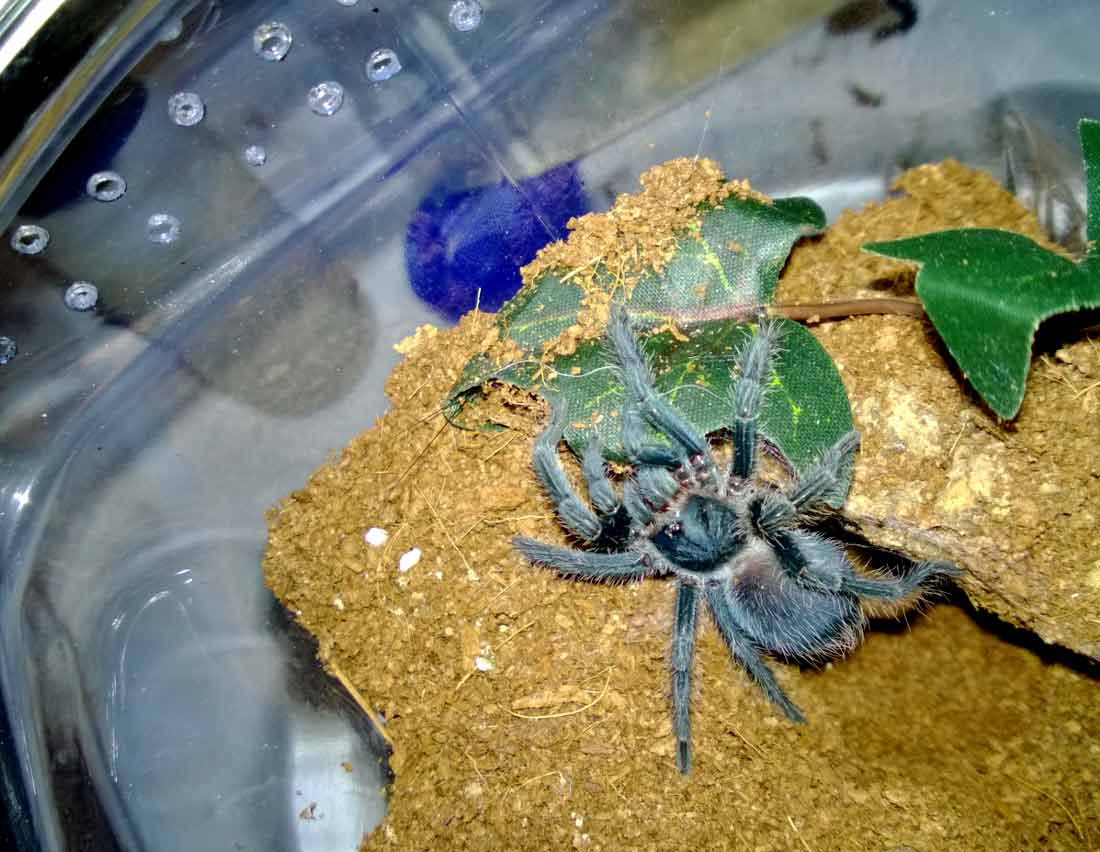
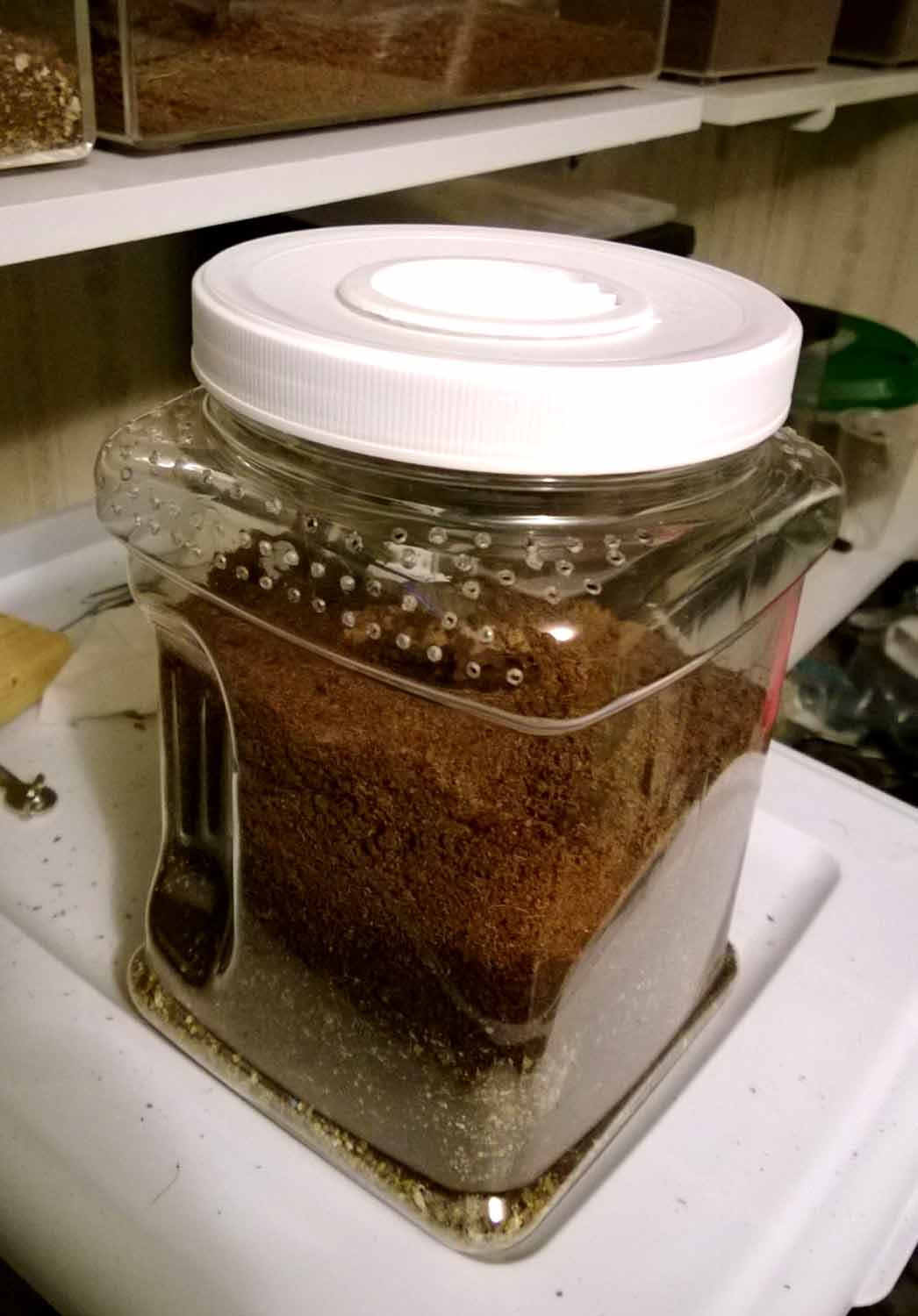
Their husbandry is quite simple; mine are kept in round Kritter Keepers with a diameter of about 1o” and a height of about 4″. These give them a little extra space to explore, which they do quite frequently. I do, however, make sure that there isn’t too much distance between the top of the enclosure and the substrate. These little guys will climb, and you don’t want them injured or killed from a fall. For substrate, I use a dry cocofiber with a bit of vermiculite mixed in. They have a small water bowl, which I overflow a bit, and access to fresh water at all times. This can prove to be a bit challenging, as they just LOVE to bury their bowls. All are also provided with hides, which they have generally used only during premolt. The humidity is kept low, and temperatures range from mid 70s during the day, low 70s at night.
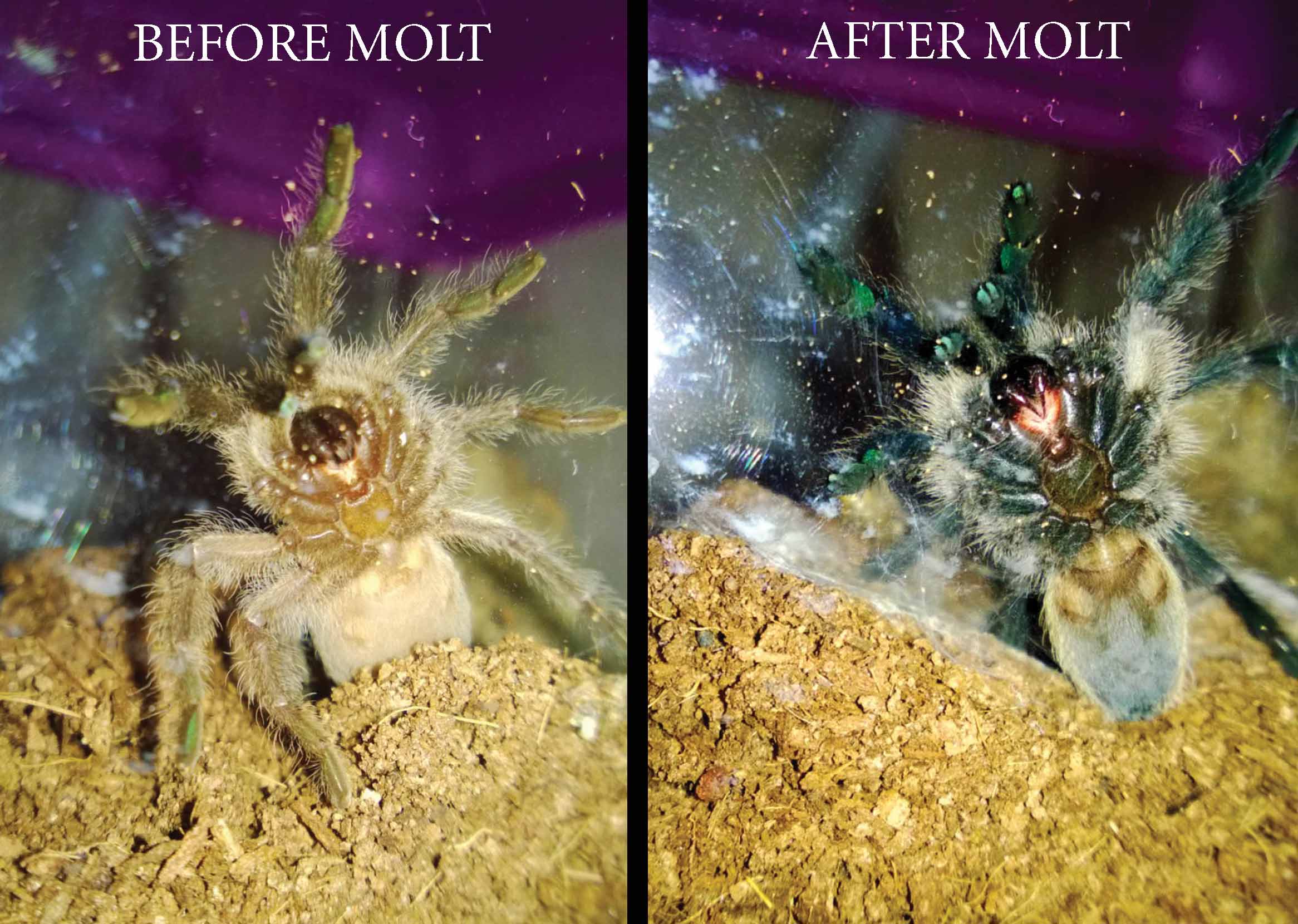
For those looking for an excellent beginner T with a lot of personality and easy care requirements, you can’t do much better than the Euathlus sp. red. They also possess an understated beauty that makes them wonderful showcase pieces; the reds that give them their common name of Chilean Flame really pop after a molt. Their gentle disposition, inquisitive nature, and small stature also make them wonderful ambassadors to folks who fear large spiders.


 Tom's Big Spiders