Pamphobeteus sp. duran – Husbandry Notes Video

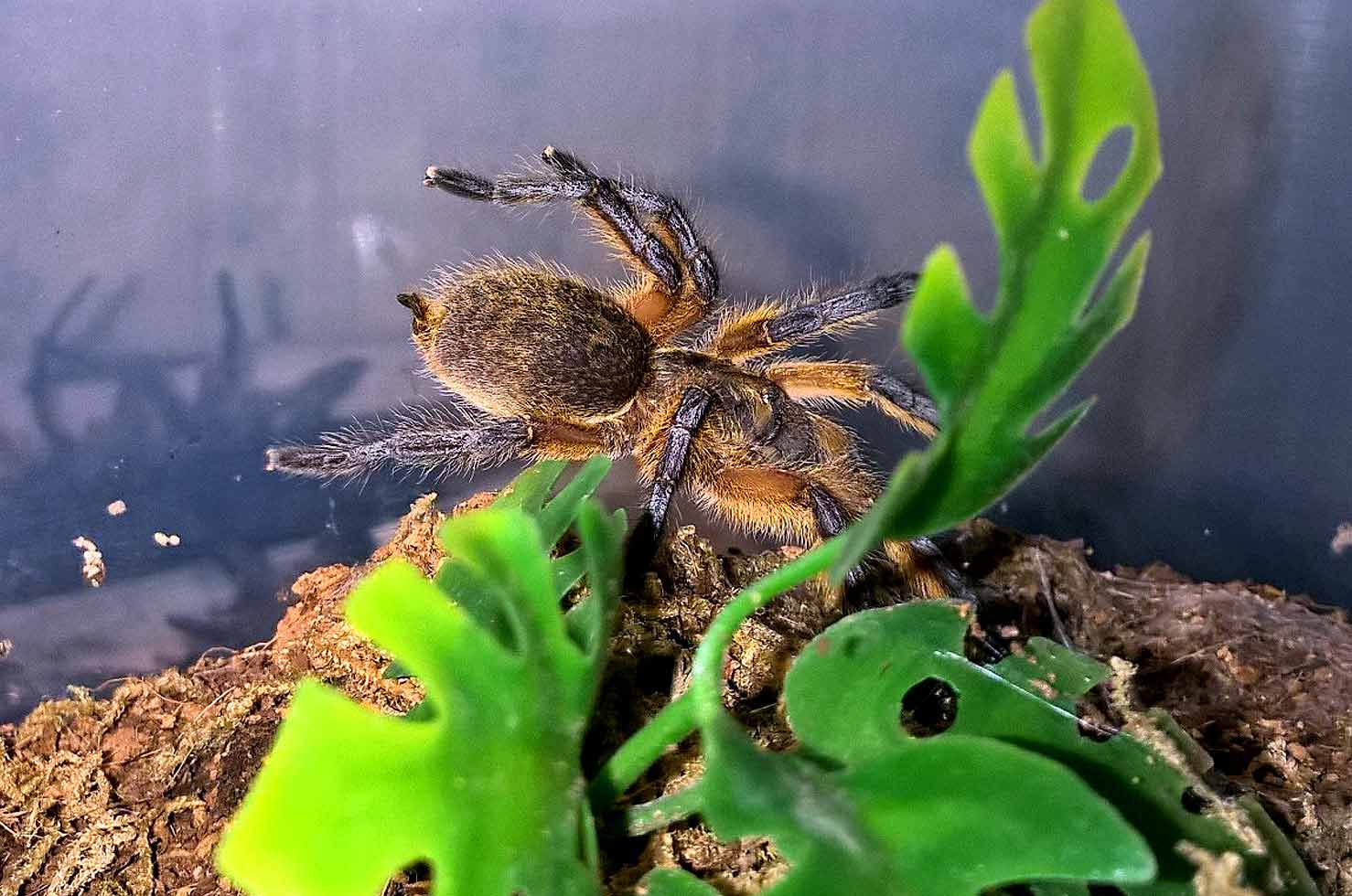
A gorgeous and hardy Pampho!

With some encouragement from my 10-year-old daughter (who’s a bit YouTube obsessed), I’ve decided to post some more videos and work on my channel a bit. I’ve already filmed a couple transfer videos, and I’ll be doing some fun feeding features as well. However, as someone just asked me about how I care for my Pamphobeteus species, I figured it would be cool to start with  a husbandry video about my Pamphobeteus species duran.

Instead of doing a normal husbandry blog, I broke out my Nokia 1520 and filmed the little guy/gal as I spoke. I won’t lie … this was a bit more fun than just sitting in front of the computer and writing about them. Hopefully, this is entertaining and not too irritating…

Enjoy!

Pamphobeteus sp. duran

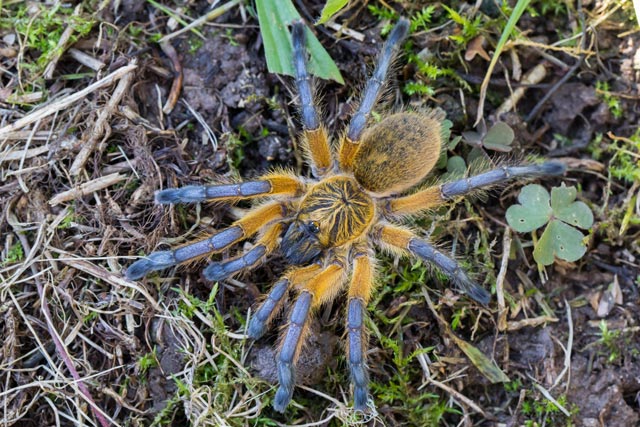
Pamphobeteus sp. duran

Tarantulas – The Application

Tarantulas-The-App-Title-fl

Simply the BEST application for tarantula record keeping!

For those of us who get seriously bit by the hobby and find ourselves keeping dozens of these fuzzy little arachnids, a conundrum soon presents itself.

How do we keep track of data?

Many hobbyists find it necessary to track feedings, molts, enclosure cleanings, temperatures and other observations about their pets. This information can prove very useful in recognizing patterns and behaviors and for noticing when something might be amiss. What is the average time between molts for a certain specimen? What was the feeding schedule during that period? Was there any difference in growth rate when the temps dropped for the winter? These are all some questions I’ve actually posed and answered using data.

When my collection first grew from one specimen to 10, I found it easy to record feeding and molts on the family calendar. However, my Norman Rockwell wall calendar was soon so filled with tarantula names and observations that we didn’t have room for birthdays. It quickly became apparent that I would need a better way of recording and organizing my data.

I would need to do some homework.

I hopped online and Googled “tarantula journal” and “tarantula record keeping”, but my searches really didn’t yield much in the way of results. It looked for a while like I would have to come up with my own system using a notebook to journal. It wasn’t until I signed onto Arachnoboards one day and noticed a simple little post that all of that changed.

“So I made an application…”

The main page displays all of your tarantulas (names are customizable)

The main page displays all of your tarantulas (names are customizable)

That was the thread’s title, and I was immediately intrigued as I clicked on the link to read more. Reading the post that described this app, my excitement built. An app designed specifically to track tarantula data? Unlimited slots for larger collections? To say that I was excited as I quickly clicked the link to download this app would be an understatement. After installing it on my Kindle Fire, my excitement only grew as I played around with the program and familiarized myself with its many outstanding features.

Did it offer the ability to track feedings, molts, and date of acquisition?

Yes.

Could you add photos of your specimens?

Yes!

Were you able to select venom potency and behavior, each with its own handy symbols?

Yes, yes, and Yes.

Customizing listings for all of your tarantulas is simple.

Customizing listings for all of your tarantulas is simple.

And there is just so much more. The app’s creator, Erick Banaag, didn’t just stop there; he continued to tweak, improve, and perfect this tool. Over the last couple years, Erick listened to user feedback and suggestions as he continued to evolve the program to include more and more information and features. The result is the most comprehensive tarantula app ever offered. The amount of data it allows you to track is just staggering, and the number of available components will appeal to both the novice and expert tarantula keeper. Whether you have 10 tarantulas or 100, this amazing little app has something for you.

I’ve been using the app for well over a year, and it’s worked flawlessly for me (and even if I ever did find a bug, Erick has continued to provide support and updates for the program, so a fix is always on the way). I’ve actually made it an integral part of my ritual for receiving new tarantulas. After unpacking and rehousing my latest acquisitions, I take a picture and add the new specimens to my app. 

With the latest version of this stellar application now available, I reached out to Erick to find out a little more about the creation of this wonderful tool and the man behind it.

TBS: Thanks so much for taking the time to chat with us! To start off, I guess the first thing folks are wondering is how did you get the idea for the tarantula app? How did this project come around?

Erick: To be honest, it is not my original idea. When I started with the hobby I found a free app that allows for only a few entries and you’ll have to pay to get more slots. As cheap as I am, I decided to make my own. I wasn’t really planning on releasing the app to the public since it wasn’t my idea and it was around 70 to 80% similar, but I’m happy I did. It has now grown so much and a lot of the features were from user suggestions. Without users’ input/suggestions, the app would not be what it is now.

TBS: How does one go about creating an application? Do you have previous programming experience?

Erick: I’m a software consultant in a small company here so I do have software development experience. 🙂

TBS: Were there any challenges in creating an application with so many features and so much customization? The amount of information it allows you to track is staggering, so I imagine that all of these features didn’t come without a fair share of programming headaches.

Erick: I did have to learn android development, but I already had some background of the programming language used.

Starting was the difficult part since I don’t have a lot of knowledge with the android platform. But after everything was setup, the programming wasn’t really that bad. The only problem that I encountered is the notification for feeding calculation part which has three customizable settings and I think it still has some bugs in it. 😉

TBS:  Something that has really impressed me having downloaded this app early on is just how much work you’ve done to constantly improve upon it. You have your own dedicated thread on Arachnoboards in which you announce new versions and take feedback from the keepers who actually use it. About how many versions have there been, and how many hours do you spend on each version?

Erick: Since the debut, there have already been 55 version releases. I usually spend around 8 to 10 hours, depending on the update; maybe longer if there are big changes to be done. Or even under an hour for really small quick fixes.

TBS:  What type of response have you received from the app? Everyone I’ve encountered has loved it. I’m assuming the response has been quite positive?

Erick: So far the majority are positive responses. I also get emails every once in a while letting me know how happy they are with the app, which also makes me very happy.

TBS: Which devices does the app currently work on? I’m a bit of an iconoclast with my Windows phone, so I use the app on my Kindle Fire (and it works fantastically).

Erick: The list of compatible devices on my website is currently based on user responses and email messages. But based on the three app stores that the app is currently listed in, it should be compatible with the majority, if not all, of the android devices available on the market as long as they are running android 2.1 and up.

TBS: Are there any plans for an ios version in the future?

Erick: I’ve been planning to port the app to iOS, but unfortunately my time and, most importantly, knowledge of the platform is very very limited.

TBS: With all of the revisions you’ve made to this application, I can only imagine that you’re currently working on the latest additions and fixes. Can you tell us or hint at what might be coming next?

Erick: Unfortunately, my to-do list now is mostly bug fixes with only one update, which is a request I got from Arachnoboards. If you use the feeding feature by long pressing an entry in the list, the request is to make it so that if you press on one side, it will update the feeding date. Press on the other side, and it will update the watering date.

I sometimes get emails or even Facebook private messages from users suggesting features but now most are bug reports.

TBS: If I’m not mistaken, you currently live in the Philippines. When I first started my blog, I was surprised to discover that many of my visitors are from the Philippines (third only to views from the United States and UK). In the US, tarantula keeping is still a bit of a niche hobby that is currently gaining more popularity. How popular is the hobby in your country? Where do folks get their tarantulas? Mail order, local pet stores, etc?

Erick: I would say the hobby is still young here in the Philippines though getting more and more popular at a really fast pace.

Tarantulas are easy to find here, if you know where to look for them. There are plenty of selling groups, and finding a seller close by is pretty easy. Some would do mail orders for rare species that only a few big dealers would sell through the mail.

TBS: One of my favorite tarantula species is the Orphnaecus philippinus, a species native to the Philippines. Do you keep any of the indigenous species you can find there?

Erick: I currently don’t own any local species. My focus is shifting to arboreals, and I’ve been searching for local arboreals, which seem to be very difficult to come by.

TBS: I figured that anyone who would spend hours programming an app for tarantula keepers probably had tarantulas himself. What species do you current keep?

What is your favorite species (or genus)?

Erick: I currently own 26 tarantulas, majority are old worlds and about half are arboreals which are mostly Poecilotheria species. So I have to say my favorites are pokies. 🙂

TBS: Again, Erick, thank you so much for your time! I’m sure I speak for many people when I say thank you for all of your hard work on this app. I can’t wait to continue to watch it evolve and, hopefully, reach even more keepers.

Find this application now on the main site , or on Google Play!

For those interested, you can follow the update thread on Arachnoboards.

Supported Devices:

Samsung Galaxy Spica running 2.1
Samsung Galaxy S3
Samsung Galaxy S4
Samsung Galaxy Note
Samsung Galaxy Note 2
Samsung Galaxy Note 3
Samsung Galaxy Tab 3 7.0
Samsung Galaxy Tab 3 8.0
Samsung Galaxy Tab S
Samsung Galaxy Ace Plus S7500
Amazon Fire HDX 7 WAN (3rd Gen)
Amazon Kindle Fire HD 7 (3rd Gen)
Amazon Fire HD 8.9 WAN (2nd Gen)
Amazon Fire HDX 7 WiFi (3rd Gen)
Amazon Fire HD 8.9 Wifi (2nd Gen)
Amazon Fire HDX 8.9 WAN (3rd Gen)
Amazon Fire HDX 8.9 WiFi (3rd Gen)
Amazon Kindle Fire (1st Gen)
Amazon Kindle Fire (2nd Gen)
Amazon Kindle Fire HD 7 (2nd Gen)
HTC One
HTC One Mini
HTC One (M8)
Lenovo IdeaTab A1000
LG Nitro
Motorola DROID RAZR M
Motorola RAZR i
Nexus 4
Nexus 5
Nexus 7
Sony Xperia U
Sony Xperia S
Sony Xperia Z2
Sony Xperia Z3
Verizon LG G3
Wolfgang AT AS45qHD
ZTE Vital N9810

Harpactira pulchripes (Golden Blue Leg Baboon)

H.-pulchripes-NEWEST

The new “jewel” of the hobby.

Over the years, there have been dozens of newly introduced tarantulas species that have caught the eyes of hobbyists with their undeniable beauty and the appeal of being a rarity in the hobby. More recently, the Poecilotheria metallica and Monocentropus balfouri were two spiders that delighted keepers with their gorgeous blues while draining wallets with their steep costs for even the smallest slings. Even today, with both species being readily available in the hobby, they still command high prices.

Today, many keepers consider the Harpactira pulchripes, a striking orange bodied and metallic blue legged beauty, the hobby’s latest crown jewel. This relatively new African species pops up on many keepers’ wish lists, and folks who manage to acquire one proudly share photos like a rich kid showing off his new sports car. And like a status car, these little spiders can come with a shocking price tag that many find ridiculous.

The fact is, new species, especially African ones like the Harpactira pulchripes are first collected and bred by Europeans and exported to the United States in limited quantities. Couple the cost of legally importing tarantulas into the US with their initial limited availability, and you have the makings of one pricey T.

Check out my female in action in the video below!

Early on, the only folks generally interested in paying these prices, often reaching well over $1,000 for a pair, are breeders looking to be the first to breed the species stateside (and make a pretty profit in the process). Other interested hobbyists will often wait a year or two until a new species is successfully bred a couple times, bringing batches of more affordable slings into the marketplace.

When I first saw a photo of a H. pulchripes, I had only been really into the hobby for a short time and I had no idea that I was viewing a newly introduced spider. I was therefore shocked when I saw that .5″ slings were going for about $500. It didn’t take me long to abandon all hope of acquiring this gorgeous spider any time soon.

H. pulchripes adult.

H. pulchripes adult.

In about January of last year, I got a lead that one of the breeders I normally buy from was expecting a shipment of babies, and slings would be available for $300 each or $275 a piece if you bought three. Although I considered making a purchase, that was a still a bit out of my price range. Over the next several months, I watched as prices for .5″ slings decreased from this price point to as low as $225 from one dealer. With a few folks managing to produce slings in the US, prices were already falling.

1" H. pulchripes sling

1″ H. pulchripes sling

Finally, I found an offer that was almost too good to be true. Stamps Tarantulas was offering 2.5″ sexed female juveniles for $300. Even better, he was having a 25% off everything sale. I would be able to get a guaranteed female for less than I almost paid for a single unsexed sling. I jumped at the opportunity and placed my order.

Now, there was a slight mix-up with my order, which lead to me being sent a 1″ sling instead of my female. Steven was quick to rectify the situation, and when all was said and done, I was the proud owner of both a H. pulchripes sling and a sexed juvenile female. To say I was a happy customer would be the understatement of the year (thanks, Steven!).

Enclosures and setup

I used a basic setup for both specimens, a modified 1 quart clear plastic canister for the sling and a 1.5 gallon Sterilite container for the juvenile. I modified both to add ventilation (holes for the canister and round vents for the Sterilite container).

H. pulchripes sling enclosure

H. pulchripes sling enclosure

H. pulchripes sling set up

H. pulchripes sling setup

For substrate, I used a mostly-dry combination of peat and coco fiber. After packing this down in the enclosures, I packed some dry substrate on the top. Both were offered cork bark with some plastic leaves for a hide, and I used my finger to pre-start a burrow for each under the cork bark.

The juvenile has a milk cap for a water bowl, and I keep it filled with fresh water (although my girl has enjoyed filling it with dirt). The sling will be getting a water bottle cap for a dish soon. For the time being, I use a water dropper to add some moisture to the plastic plant and webbing in case it wants a drink.

Both specimens took to their burrows the first night, and they have spent several weeks burrowing a bit and webbing up around the entrances. Although each has constructed a fairly deep burrow in the substrate, they are both out and visible quite often (the sling does move to one of its holes whenever I disturb its enclosure).

H. pulchripes juvenile setup

H. pulchripes juvenile setup

A beauty with a voracious appetite

Both of my pulchripes have been great eaters. I drop a cricket in overnight, and it’s always gone in the morning. When I first got my sling, I didn’t have a cricket small enough for it as I was expecting a 2.5″ juvenile. Therefore, I dropped in a pre-killed cricket for it to scavenge feed on. When I checked in the morning, the sling had dragged the carcass beneath the cork bark and had devoured the entire thing. On average, I feed this specimen three times a week. While the weather is warm, I’ll be taking advantage of its higher metabolism to grow it out of the more fragile sling stage faster.

The juvenile has had no trouble taking down medium-sized crickets; I just drop them in at night, and they’re gone in the morning. She has currently sealed herself up in her burrow for premolt, so I’m eagerly awaiting the impending shed. Before she stopped eating, I was feeding her on a twice a week schedule.

Like most of my baboons, the H. pulchripes  don’t get as fat in the booty as some of my New World terrestrial Ts get when they are about to molt. Despite powering down several crickets, their abdomens never seem to get overly plump.

As I acquired these guys in the summer, temps in my tarantula room have been between high 70s to low 80s. I’m assuming that when the winter comes and temps are in the low to mid 70s, their metabolisms will slow down a bit and molts will come more infrequently.

Not as high-strung as most baboons

So far, both H. pulchripes have been relatively calm when compared to other “baboon” species of tarantulas I keep. The female in particular is fairly low-key, staying out in the open most days and calmly seeking shelter if I disturb her enclosure. The sling is a bit more skittish, but so far she is nowhere near as flighty as my M. balfouri, C. darlingi, or my P. murinus juveniles.

This doesn’t mean that I let my guard down with these spiders as I’ve seen their speed and know what they are capable of. The H. pulchripes is a lightening-fast Old World species capable of delivering a very painful, possibly debilitating bite. Also, tarantulas often change disposition after a molt, so I know that the next shed could bring different or more extreme behaviors. Caution and care always need to be exercised with Old Worlds species.

But, is it worth it?

There’s really no denying that the H. pulchripes is a striking tarantula, but is it really worth the money? I guess the answer to this question would vary from keeper to keeper. Some folks who aren’t particularly enamored with the look of this animal would likely argue “no way.” Even many of those who find this species desirable would likely choose to wait until prices fall considerably before trying to procure one. For breeders who are looking to make an investment in an uncommon species, I would guess it would be an enthusiastic “YES.”

Personally, I love baboon species, and I was enamored with the color of this tarantula the first time I saw it. While researching it, I also learned that there wasn’t a lot of care information out there yet for this species, so I was enticed by the idea of possibly getting to blog about its husbandry for future keepers.  And I know I already have one female, so a breeding project will definitely be in the future… I’m quite pleased with my purchase, and I’m looking forward to growing these two to adulthood.

Power Feeding Tarantulas

Powerfeeding-for-dummies

Or, how to learn to stop worrying and just feed your tarantula when it’s hungry.

Power feeding: The act of accelerating an animal’s growth by increasing temperatures and the amount and/or frequency it is fed.

If you’ve been in the hobby for any amount of time, you’ve likely been privy to a debate between hobbyists about the virtues or dangers of feeding tarantulas too much. Although a less incendiary topic than handling, this subject of “power feeding” still manages to elicit some strong views as folks are seemingly split over whether this is a harmless practice or a detriment to tarantulas’ health and longevity.

I’ve had many new hobbyists contact me over years needlessly worrying about whether or not they are going to overfeed their tarantulas or concerned with this horrible thing called “power feeding” that they’ve heard about and been told to avoid. When I tell folks to feed their slings as often as they want, I often get a response along the lines of, “But isn’t that power feeding? Won’t that shorten the life of my T?” I’ve even be trashed by a concerned hobbyist that told me that feeding my animals more than once a month constituted animal abuse.

Okay then…

In many ways, the term “power feeding” has become a bit of a dirty phrase to some in the hobby … which is ironic, as many informed and experienced hobbyist would argue that it doesn’t even apply to tarantulas. The term actually originated in the herp hobby, particularly when breeding color morphs of ball pythons. While snake breeders have used power feeding for decades in order to quickly get their specimens to breedable size, the practice has been recognized for having adverse effects on the animals’ health. Therefore, the assumption is that the same practice would also be harmful for arachnids.

Unfortunately, comparing snakes to tarantulas, two very different organisms, doesn’t work in this instance. 

The fact is, many expert keepers feel that feeding your tarantulas as much as they will eat has no negative impact on their health and longevity. Although much has been said about the negative impacts it could have on an animal, they point to lack of scientific proof (and point to mounds of keeper anecdotal data that seems to dispel this idea). They argue that the worst that can happen from feeding a spider all it will eat is a fat tarantula that will fast for a while.

Many inexperienced hobbyists will understandably err on the side of caution and avoid this practice for the sake of their animals’ well being. They will unfortunately read about “power feeding” on some website and immediately worry that they might overfeed their pet. Due to this misinformation, they feel strongly that, by allowing their animal to “overindulge”, they are putting its health and lifespan at risk.

However, are they really extending their tarantulas’ lifespans, or is the idea of “power feeding” tarantulas only a myth?

First off, how would one “power feed” tarantulas?

Before we get any further, it’s important to define what supposedly constitutes “power feeding.” Although most folks think power feeding is just increasing the amount of food you give to your tarantula, it’s not quite that simple. To truly power feed, you need to do two things:

  1. Increase the temperature: To get the quick growth “power feeding” is meant to promote, you also need to stimulate the T’s metabolism. This is done by increasing the temperatures to the low 80s for most species. Basically, the warmer the surroundings, the faster your tarantulas will grow. If the temperature in your home is dipping to 68° F (20° C), then your T will not have the fast metabolism required for quick growth. For true “power feeding”, it’s more about speeding up the metabolism than just pumping your T full of food.
  2. Feed the tarantula as much as it will eat:  With its metabolism sped up, it’s now time to increase the frequency food is offered. This can be every day or every couple days, depending on the size of the meal. If you give your .5″ sling a medium cricket to scavenge feed on, it might only be need to be fed a couple more times before it’s ready to molt. If you are feeding smaller, more manageable-sized prey, then it may eat every day to every other day.

It’s really that simple. Unfortunately, many folks will try to feed their Ts more without providing a warmer environment. Doing so will likely result in a fat T who takes its time molting (trust me … I’ve done it). It’s important to remember that higher temperatures have more to do with growth rate than how often you feed.

Now, some folks seem to consider it “power feeding” when you feed a slings multiple times a week. Personally, I think that’s a bit ridiculous. Many tarantulas are at their most voracious when they are slings, and this is a great time to make sure they get as much food as they can take. If the temperatures are high enough, and they are well-fed, this will lead to faster growth (and get your animal out of the delicate sling stage earlier).

Many hobbyists reason that tarantulas know what they are doing; if they want to eat, they’ll eat. If they’re not hungry, they won’t. In the wild, it behooves a sling to grow as fast as possible to outgrow this vulnerable stage. As slings, these animals are at particular risk from predators and the elements. During times when prey is plentiful, they would likely eat as much and as often as possible in order to foster faster growth.

So, why wouldn’t this hold true in captivity?

Even in captivity, tarantulas are most vulnerable during their sling stage. At this time, they are prone to dehydration and extra susceptible to environmental factors like humidity and temperature. Many, if not most, of the sudden deaths reported by keepers are spiderlings. Therefore, many keepers will feed their sling much more often

Personally, I tend to feed my slings as much as they’ll eat in the summer when the temps are around 80 or so for just this reason. Once the sling hits about 1.25-1.5″, I slow the feeding down to one or twice a week (depending on the size of the prey). This has worked very well for me.

Is feeding slings as much as they will eat really “power feeding”? Most experienced keepers would argue NO. Eating while food is available is a natural adaptation that allows for them to quickly grow in the wild.

But what about the adults? Again, many would argue that the “power feeding” really doesn’t apply, at least not in the way it does with snakes. Keepers have discovered that tarantulas will only eat until a certain point, then they stop and prepare to molt. Furthermore, feeding them more often doesn’t make them molt faster; instead they will usually spend quite a bit of time fasting as their bodies have told them they’ve had enough. Therefore, feeding your larger specimen more often isn’t likely to lead to a faster growth rate the way it would with slings.

For example, I have a young adult P. cancerides who I fed large dubia roaches to several times a week. After about a month of living the high life, it stopped eating…and didn’t molt for almost five months. Feeding her as much as she would eat definitely didn’t speed up her growth.

There’s a lot of anecdotal evidence from experienced keepers that seems to indicate that “power feeding” really doesn’t apply to these animals. If that’s the case, then, folks who are choosing to feed their spiders multiple times a week aren’t doing their animals any harm.

Why might a keeper decide to feed her spiders more often?

A new keeper may be thinking, why might someone feed their spiders more often when they can get away with once week? There are a few solid reasons a keeper might partake in this practice.

The keeper is trying to grow a female to maturity faster for breeding purposes. If you’re a breeder with a young female you are hoping to mate, you may not want to wait the several years it could take for her to mature on a normal once a week feeding schedule. Breeders will often jack up the temps and feed females as much as they’ll eat in an attempt to get a breedable specimen faster. This is especially true for folks who pay huge amounts of money to import new species with the hopes of producing some of the first captive bred slings. In this case, the goal is to get a viable sack (and big money for the sought-after spiderlings) as quickly as possible.

The keeper is trying to mature a male faster for breeding purposes. So, you have your female ready, and you’re having a difficult time locating a mature male. Just like in the instance above, the keeper may try to mature a sling or juvenile male more quickly through power feeding to get a mature male faster.

The keeper is trying to grow his/her spiders out of the delicate sling stage faster. Personally, this is something I do. Tarantulas are at their most vulnerable during the sling stage, where they are much more sensitive to environmental conditions and husbandry mistakes. Personally, I want my tiniest guys out of this stage as quickly as possible, so I usually give them as much as they will eat until they reach about 1.25-1.5″ in DLS. At this point, I switch them back to a more normal schedule of about twice a week.

The keeper wants his/her tarantula to grow to adulthood faster for aesthetic reasons.  The fact is, when you tell people that you have tarantulas, they are expecting to see giant hairy spiders. Unfortunately, even the largest of these awesome beasts start off as tiny, fairly unimpressive slings. Some hobbyists opt to power feed in order to get a large display spider faster.

But does feeding your tarantula often shorten its life?

It should be noted that nothing has been done in terms of scientific research as to how power feeding might negatively impact a spider. Most of what we think we know is postulation and guesswork. Until someone does some controlled experiments comparing sac mates that are power fed to those who aren’t, we’ll have to continue with our own observations and anecdotal evidence.

That said, there are keepers that have been in the hobby for decades who seem to find that the idea of overfeeding a tarantula is simply foolish. Their years of collective experience in keeping and breeding has taught them that these animals do not experience the same health issues snakes or mammals would when fed regularly.

So, now that we’ve heard the benefits of feeding spiders whenever they’ll eat, what are some of the perceived issues surrounding this practice. Below is a list of the supposed cons according to folks who are against it.

  • Shortens the lifespan of the tarantula
  • Can cause molting issues
  • Stretched abdominal skin can rupture more easily
  • Some believe it can cause fertility issues in males and females (although this one had been disproved repeatedly)

Now, it must be mentioned that many of these side-effects, like molting and fertility issues, have all been disproved. There are plenty of breeders out there who have fed their Ts often to get them to breeding age, and none have reported issues. As for molting issues, some have argued that in species like Theraphosa stirmi, it can cause bad molts. However, many keepers feed this species as much as it will eat and have no issues whatsoever. Again, this appears to be a myth.

Now, it IS absolutely true that fat spiders are more prone to abdominal ruptures, so this is a very real concern.That said, a properly set up enclosure with the correct amount of substrate and ceiling height would seriously limit the chance of this happening.

But doesn’t “power feeding” reduce lifespans?

The answer is: if it does, it’s usually not enough to worry about. For most species, the only time feeding them more will make a difference on growth rate is when they are slings. As established, they are designed to eat as much as they can during this period, and well fed slings will grow faster than slings fed less often. That said, their growth rates will usually slow down a bit once they put on some size, so the amount of time supposedly sheered off their lifespans would be very short indeed.

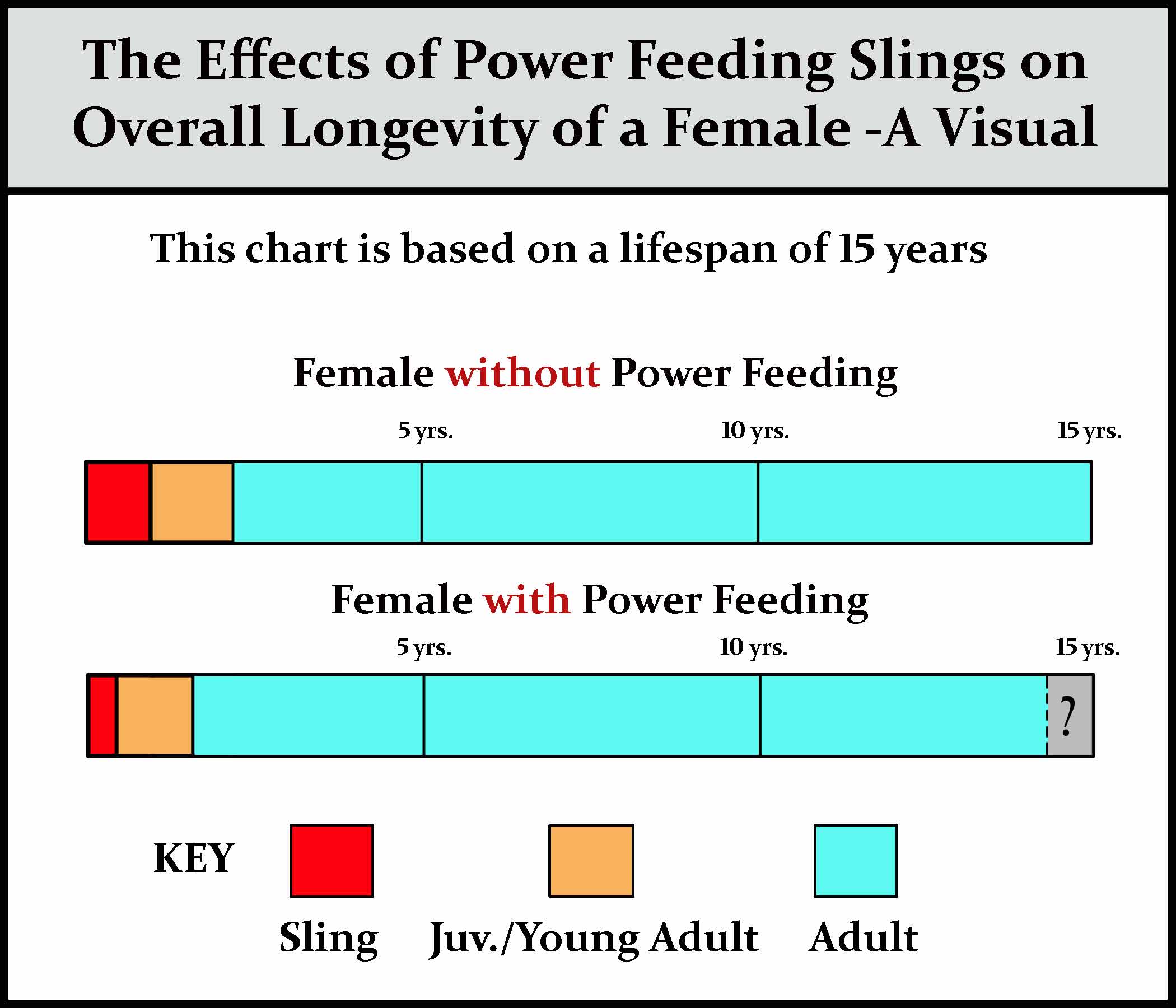
Take a look at the charts below. For the first one, I used a hypothetical female tarantula with an average lifespan of 15 years. Due to the longevity of this species, “power feeding” has a very nominal effect on the overall lifespan (the gray area designated by a “?”) In this instance, the amount of time potentially taken off of its life is a matter of months, not years. This is a very small amount of time in the grand scheme of things.

Now, this would be a female with a medium lifespan. Imagine if we were to use a Brachypelma, Aphonopelma, or Grammostola species female. Because they can live 25 years or more, the time power feeding one would take off of its lifespan would be negligible at best.

Personally, I think this is a worthwhile trade-off to ensure my spider better chances earlier in life.

Power-feeding-females-chart

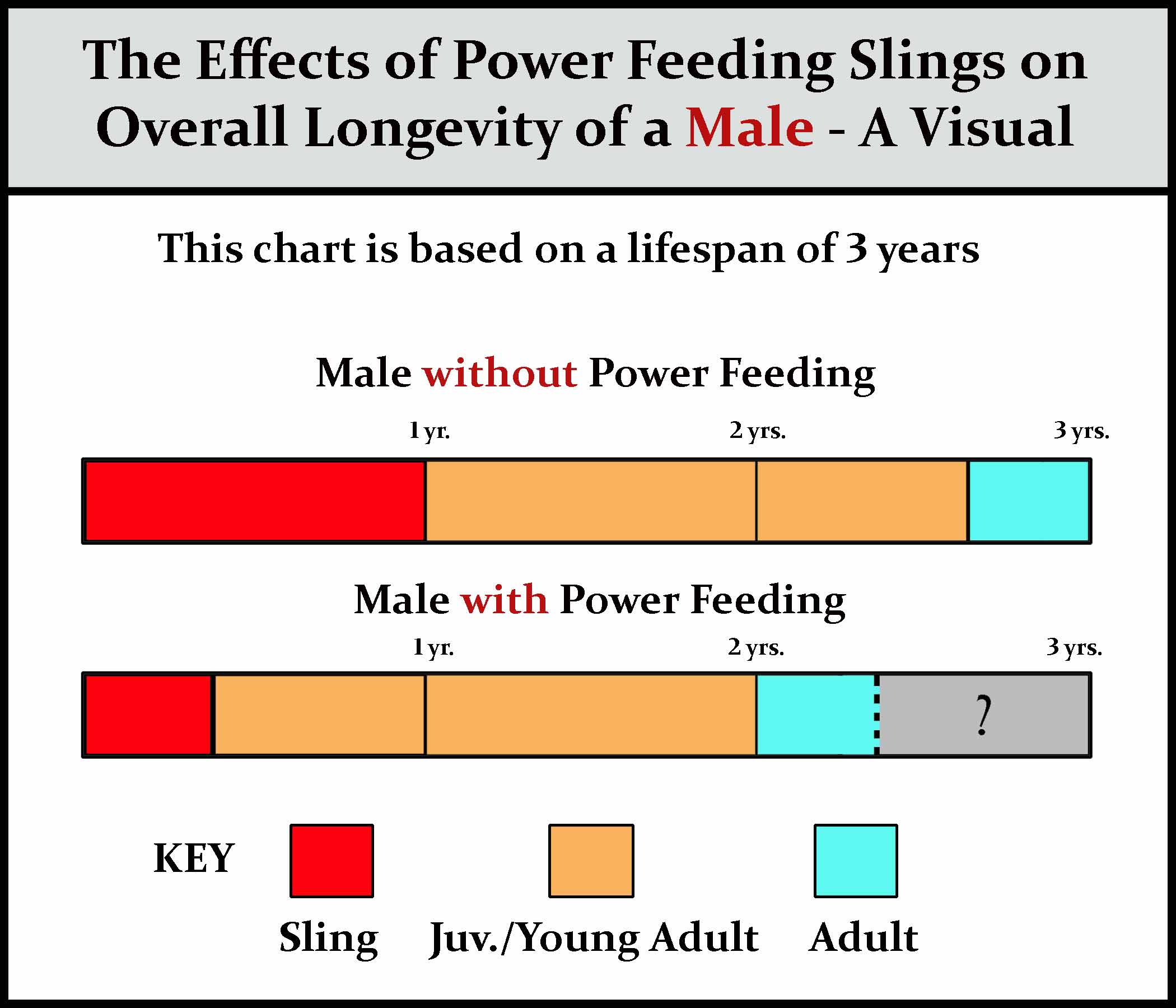
For males, it can be a little bit different. Obviously, males have shorter lifespans as it is, and most will outgrow their female counterparts in the same time span. Therefore, the accelerated growth earlier in the male’s life-cycle may have a more profound effect on its overall lifespan.

In the chart below, we look at a male tarantula with a lifespan of three years. Here, the sped up growth cycle eats away a higher percent of its life. That being said, if you find out that the sling you raised is a male, you don’t have to starve your animal, but a lighter feeding schedule would prolong its life and make up for some of the time lost to power feeding.

Power-feeding-males-chart-w

(Note: The charts above are meant only as approximations, and many factors, including temperature, diet, and the genes of individual species could impact these estimates.)

Either way, these charts illustrate the fact that the sling stage is actually a very small part of a spider’s life cycle, and power feeding a sling at this point in its life really doesn’t impact the tarantula’s lifespan that much at all.

Also, lets not forget that we are still not sure how long some of these spiders can live. So, if the T above were to die in the span of that gray area at the end, we would have no way of knowing if its lifespan had been shortened by early power feeding, or if there were other factors involved.

Just something to think about.

The Verdict

Honestly, I don’t really believe that “power feeding” applies to Tarantulas, and that there is nothing wrong with feeding your pets as much as they will eat. Worst case scenario, you’ll get a fat T that will fast for a bit.

Could it shorten a T’s life? I suppose, but in most cases, if it did shorten the spiders’ lives, it would be by a nominal amount. Personally, I’d rather risk rushing my tarantula through the fragile sling stage than possibly “prolong” its life by withholding food. As long as proper husbandry is followed, and the animals are kept correctly, there really isn’t any harm to the T and its comfort level.

After all, in the wild they exist to eat, mature, and breed.

And, if a keeper wants to savor every minute with their beloved animal as it grows over the years, who’s to judge if she decides not to cut back on the feeding her. These animals are, for many of us, pets, and it would make sense that we would want them with us as long as possible. If this keeper has no interest in breeding, then it would behoove her to not rush its growth.

To each his or her own.

Help … My Tarantula Buried Itself!

Help-topic

It’s probably one of the most common, yet stressful, scenarios for a new tarantula keeper. After months of research and homework, you purchase your first tarantula sling. Your anxiety level is high as you are new to the hobby, and despite all the preparation, you are still worried that you will make a husbandry mistake. You set up what you think is the perfect enclosure, rehouse your new little guy without incident, and take a moment to admire your new pet. Satisfied that you’ve done everything right, you head off to bed.

However, when you awake the next morning and check on your T, you find the enclosure empty … or at least it first appears to be empty. Closer examination reveals that your little guy has been busy, and he has now burrowed deep beneath the substrate. Not finding any hole or passageway, no way for your spider to resurface again, you begin to freak out. You did your research, and you read that this species is terrestrial, not fossorial …  why has it buried itself? Fearing for your new acquisition’s safety, questions swirl through your brain.

Is he in danger?

Is he trapped?

Is he dead?

Should I dig him out?

In most instances, the answer to all of these questions is a resounding NO.

But what should I do?

And the short answer to this oft-asked question is: Do NOTHING.

Burrowing is normal behavior with many species of slings, including some arboreals.

Although this is a topic I’ve touched upon in a few different blogs, the question is asked often enough that I felt it deserved its own topic. After all, if you begin keeping tarantulas as a hobby, you are likely to experience this behavior at some point or another.

One of my P. sazimai slings sealed in its burrow. I'm expecting a molt from this one soon.

One of my P. sazimai slings sealed in its burrow. I’m expecting a molt from this one soon.

When I first got heavy into the hobby, I experienced this scenario with my L. parahybana sling. After a couple weeks of it sitting out in the open, greedily snatching prey and using a piece of cork bark for a hide, I awoke one morning to find that it had buried itself. Now, at first I didn’t panic because I could see the little webbed-over hole that marked the mouth of its den. However, when I discovered that this hole had been filled in a couple days later, panic set in. As weeks passed, I became thoroughly convinced that my little guy had buried himself alive. He wasn’t visible, he wasn’t eating, and the tunnel looked as if it might have collapsed. I was ready to dig him up to “save” him when I decided to first do a bit of research first.

It was a good thing I did, too.

I discovered that it is perfectly natural behavior for slings to bury themselves. Because we are keeping these animals as “pets”,  behaviors that are perfectly normal and essential for a wild spider’s survival can seem perplexing in captivity. Although a T burying itself seems like a dire sign to us, it is in fact very normal.

My little LP opened its burrow again after a few weeks, and although I never saw it out, the prey I dropped in soon disappeared. It lived like this, hidden in its hole, for another year before finally growing large enough to feel confident living outside of its burrow. It’s been out in the open ever since.

Let’s consider some very important facts:

1. Tarantulas bury themselves for security. Tarantula slings are especially vulnerable in the wild. As a result, it behooves them to stay out of sight where larger predators like birds can easily gobble them up, or where they could easily dehydrate beneath the sun’s heat. In the wild, a sling’s burrow protects it from predators and the elements and provides it a safe home-base from which to hunt when night comes.

Sure, we keep the temperatures optimal in their enclosures, and there are not threats from predators in the safety of our homes, but they don’t know that. Their evolutionary programming is telling them that they need to burrow for security.

This behavior isn’t limited to only terrestrial Ts, either. I keep several arboreals, including eight species of Poecilotheria and L. violoceopes, and all have burrowed as slings. I could see this causing a bit of stress for a keeper expecting these spiders to be up on a branch or piece of cork bark.

2. Many tarantulas will bury themselves during the molt process. Even larger specimens may disappear into burrows when it comes time for a shed. Again, it comes down to the tarantula feeling safe and secure. The molting process is incredibly taxing and leaves the spider exhausted and very vulnerable. Not only is the spider physically taxed, but its new fangs and exoskeleton are soft and need time to harden. Therefore, many Ts will secret themselves away in their burrows when premolt approaches to wait out the process.

In these instances, the tarantula might cover over the entrance to its burrow with dirt or webbing.  If your spider suddenly buries itself after previously being out in the open and eating well, chances are it’s just in premolt. It will emerge again eventually, a bit larger and sporting a brand new exoskeleton.

3. Tarantulas normally don’t die in burrow collapses. Many new keepers fear that if their tarantula buries itself, it could perish from a cave in. I have heard of exactly ONE instance where this happened, and it was because the spider managed to burrow under a heavy rock the keeper was using as a decoration. This instance was a freak accident and nothing more.

The fact is, tarantulas will line their burrows with webbing, and that helps hold the walls together. If you’ve ever had to dig a tarantula out for rehousing, you’ll understand how tough and put-together these web-lined tunnels can be. Also, tarantulas are quite strong and very good diggers. Even if a tunnel was to collapse, as long as there was nothing heavy above it, the T would just dig its way out.

4. Your tarantula will not suffocate beneath the ground. Another misconception is that if a T closes off its den, it can suffocate to death. Again, not true. Tarantulas need much less oxygen than other animals, and most would naturally spend their lives in tight burrows dug far into the earth. As long as there is proper ventilation in the enclosure, they won’t suffocate.

When in doubt, always remember the golden rule of tarantula keeping: the tarantula always knows best.

In our quests to be the best tarantula keepers possible, we often forget a very important detail: tarantulas have evolved over millions of years and know how to survive. Unlike their human keepers, they are not prone to “irrational” decision-making. In most situations, they know what they are doing and what’s good for them. If your T suddenly buries itself, it’s not arachnid suicide. It’s only doing what it’s been programmed to do. Although you may have to wait a while to see your favorite pet again, understand that it’s not in any danger.

On of my P. atrichomatus slings buried at the bottom of its enclosure. This one spent almost a month sealed in.

On of my P. atrichomatus slings buried at the bottom of its enclosure. This one spent almost a month sealed in.

So, to review, if your tarantula suddenly buries itself, there is only one thing to do…

…NOTHING! 

Resist the urge to dig it up to “check on it.” If you succumb to the urge, you risk needlessly stressing it or, if it’s in the process of molting, KILLING it.

Also, do NOT try to open up the mouth of the burrow to “give it some air” or to allow for its escape. Again, just leave the animal be. It may be a week, it may be a couple months, but your spider will emerge eventually.

And finally, NEVER shove live prey down the hole if it’s not eating. Not only will this stress the animal out, but the prey item could kill the spider if it’s in the middle of a molt. Also, if the spider dispatches but doesn’t eat the intruder, you may now have a rotting bug corpse stuck in the burrow with your T.

At what point should I worry and dig up my specimen to check on it?

In 99% of the instances, it will be entirely unnecessary to dig up a tarantula. However, I’ve had folks ask how long they should wait before worrying. I would say if you have a small sling that has been buried for six to eight months without taking any food or making an appearance, it might be time to worry. The fact is, some slings will die; it’s an unfortunate part of nature that all specimens aren’t healthy enough to live.

If it’s a small specimen and more than a half-year has gone by, it might be time to do some investigating. After all, you don’t want to be keeping a dead T as a pet. Still, be sure to be very careful when digging the animal up, and keep in mind that you could harm it if it’s molting. Also, larger spiders can spend more time safely in their burrows as they are not fragile and prone to dehydration or starvation. For larger specimens, I would wait even longer.

That being said, I offer this anecdote for anyone considering digging up one of their tarantulas. I had a 3/8″ Maraca cabocla that burrowed deep in its enclosure last year and completely covered the entrance to its burrow. From late October until almost April, it did not eat and I saw no sign of it. At first, I thought it was just staying in its den for the winter. I’ve had many Ts do this, and it had never caused me any alarm. However, as more time passed, and I saw no movement within the vial, I assumed the worst.

Finally, I convinced myself that the small T had probably died over the winter, so I set to digging it out. I spent almost a half hour carefully removing the substrate and spreading it out on a white dinner plate so that I could hopefully find the tiny body. At one point my heart sank as I pulled out a masticated form I mistook as the spider’s corpse.

Nope … only a molt.

Finally, as I was removing the last bit of dirt, my little guy scurried out and stood upon the heaped contents of its enclosure as if to say, “dude…what the heck?” Needless to say, I felt silly (as well as a bit bad for the spider). Yup, I had jumped the gun; my tarantula was quite healthy and in no danger. By digging out its substrate, I had jeopardized its health and caused it needless stress.

I won’t make that mistake again.  

Your tarantula has buried itself? Just relax!

Like many aspects of this hobby, patience and experience are key. As you experience this situation more and more, it becomes much easier to recognize it as the normal behavior it is. The next time your precious little one decides to play hide-and-seek on you, don’t let it be cause of worry.

And if you find yourself getting impatient, do what many of us do … just buy more tarantulas!

For more on MOLTING and signs of a molt, check out the article below!

MOLTING

Tarantula Care Sheets – An (Un)necessary Evil

No-care-sheets


We’ve all done it.

While perusing a tarantula site, you come across a new species that totally catches your eye, but whose care and husbandry you are unfamiliar with. Eager to learn about this specimen, you hop onto Google (or bing, if you’re an iconoclast) and frantically type in the scientific name of species as well as the following words…

CARE SHEET

As you start clicking on the results, one-by-one, your excitement inevitably turns into confusion … and later frustration.

You see, each of the care sheets you read seems to contradict the one you read before it. One says the species enjoys low humidity while a second says they’ll die if not kept moist. One lists an ideal temperature range of 68-80° while another explains that temps below 80° can be deadly. A fourth sheet says the species can reach a maximum size of 9″ while a fifth states the size taps out at around 5″.

Now what?

Most of us learned years ago that the internet can be a literal sewer of misinformation and lies spoken as irrefutable truth. It takes a bit of patience, internet savvy, and general common sense to wade through the knee-high piles of internet detritus to find those useful and accurate nuggets of information.

Never is this principle more clear than when searching for information on tarantulas.. The amount of misinformation online is staggering, and it often feels like the bad information far outnumbers the good.

Care-sheet-nightmares-final

The fact is, many of tarantula care sheets are just plain WRONG.

For the sake of this argument, let’s define “care sheets” as those brief, usually single-page basic care instructions for specific pets or animals. These sheets usually offer the basics like what and when to feed, ideal temperatures, humidity, and set-up. They are basically distilled, stripped-down instruction manuals for your exotic pet.

There’s a reason experienced keepers abhor care sheets, and that’s because most offer incomplete or incorrect information. Many present outdated information that, if used, could lead to the death of your beloved spider. Others are written by folks who have little to no experience in the hobby who, in their misguided attempts to share their love for the arachnoculture, simply regurgitate earlier information they read on another inaccurate site or blog (or, even better, cut and paste from a Wikipedia page). Although I can appreciate wanting to write about an activity you love, doing so with no valid experience is a bit irresponsible.

Look at some care sheets for common species and you’ll soon see it; several different pages offering the EXACT same information, word for incorrect word. In some of the more comical examples, they even share the same typos and grammatical mistakes.

GBB-DEATH-FINAL

Personally, when I look for information, I’m looking to hear from folks who have successfully kept the species I’m researching. I don’t want some generic and random temperature ranges and bogus humidity requirements from some self-professed tarantula expert whose only experience comes from incorrectly keeping a G. rosea for ten years. In the very least, I want notes from someone who has proven they have kept this species alive and thriving for a reasonable amount of time.

The problem for many is that to correctly research a specimen, it takes time and patience, and those are two things that many of us lack. Care sheets offer a quick and easy read; something we can glance over in less than five minutes and feel that we’ve been adequately informed. However, as many in the hobby will point out, tarantula keeping is NOT something you want to take a haphazard approach to.

If you really want to learn about that new species, here’s how to go about it.

Tips for finding accurate information

1. Check the message boards for information and to speak to other keepers.

Arachnoboards and The British Tarantula Society forums are both amazing places to get current and relevant information about tarantulas. Start by using the forums’ search functions to find archived info about these animals. Look specifically for posts made by those who actually keep the species you’re looking for. If you still have questions, make a post and ask folks for their opinions on how they keep these species.

2. Speak to reputable dealers and breeders and ask for advice.

Many of the tarantula vendors online are very experienced and willing to help with your questions. In my personal experience, Jamie from Jamie’s Tarantulas and Paul from Pet Center USA are both incredibly approachable and eager to help. If you have a question about a species and are having no luck finding information, don’t forget to use the dealer as a resource.

3. Check the dates of the information you find.

The hobby is constantly evolving, with new species being introduced often. When searching for specific care notes, whether it be on a website or, even better, a dedicated forum, check to make sure that the information was posted recently. That’s not to say that older information can’t be correct; however, you’ll want to cross-reference it with a more current source to be certain.

4. Check the credentials of those offering advice.

If you’re on a reputable forum like Arachnoboards, or getting advice directly from a breeder, you’re likely in good shape. However, if you stumble on a tarantula site purporting to proffer expert advice, be sure to research the credentials and experience of the folks running it. Anyone can set up an intuitive and professional site these days, and a slickly-designed web presence does not necessarily equal quality information. When in doubt, don’t hesitate to toss the person an email inquiring about what species they currently keep. If they don’t or haven’t kept the species you are researching, move on.

5. Compare, compare, compare…

If you stumble across what you think is a good source, don’t stop there. Take the time to look at what some other keepers say. Then, when you’ve got a few sources, take a moment to compare and contrast them. What are the commonalities? Where do they differ? Are there questions that aren’t yet answered? If not, continue to research (or see numbers 1 and 2 of this list).

Take your time and do it right…your Ts will appreciate it.

In the early days of tarantula keeping, before Google became the go-to research tool, the only way T keepers could find information was to read often outdated books or speak with other dealers and keepers. Back then, photocopied care sheets detailing rudimentary animal care were commonly handed out at pet expos or in pet stores so that the customer had an idea of how to care for his/her new pet.

Back then, this was a necessary evil.

However, the hobby has grown immensely in the past twenty years, and advent of this little thing called “the internet” has made it simple to locate accurate and appropriate information for just about any species. Static, archaic, and often just plain inaccurate care sheets should be allowed to go the way of aquarium gravel for substrate.

It might take a little extra effort, but the next time you want to learn about a new species, take some time to do some research and to reach out to those who have experience. You’ll not only receive richer, more useful information than any care sheet could provide, you might just also make a new friend in the hobby.

Quick and Easy DIY Tarantula Enclosure – Arboreal

A simple, attractive, and stackable arboreal enclosure.

Having spent the last year burying and repurposing just about every conceivable container for use as tarantula cages, I’ve finally settled on a few sizes and styles that I plan to use from this point on.

Enclosure-sterilite

I’ve found the large Sterilite Show Off containers, which are designed to hold hanging files, are very versatile and perfect for both fossorial (burrowing) and arboreal enclosures. Measuring 15.25″L x 9.75″ W x 11.5H, they leave plenty of depth for deep substrate or height needed when housing an arboreal.

If I’d planned ahead, I might have ordered some 3″ plastic vents from roundvents.com, However, this would have been a more aesthetic choice; holes work just as well.

To put together one of these enclosures, all you’ll need is:

  • Sterilite container
  • Soldering iron (for burning holes)
  • Glue gun
  • Substrate (I’m using a mixture of top soil, coco fiber, peat, and a bit of vermiculite).
  • Sphagnum moss
  • Cork bark flat
  • Water dish
  • Fake plants (optional)

1. Ventilating the enclosure

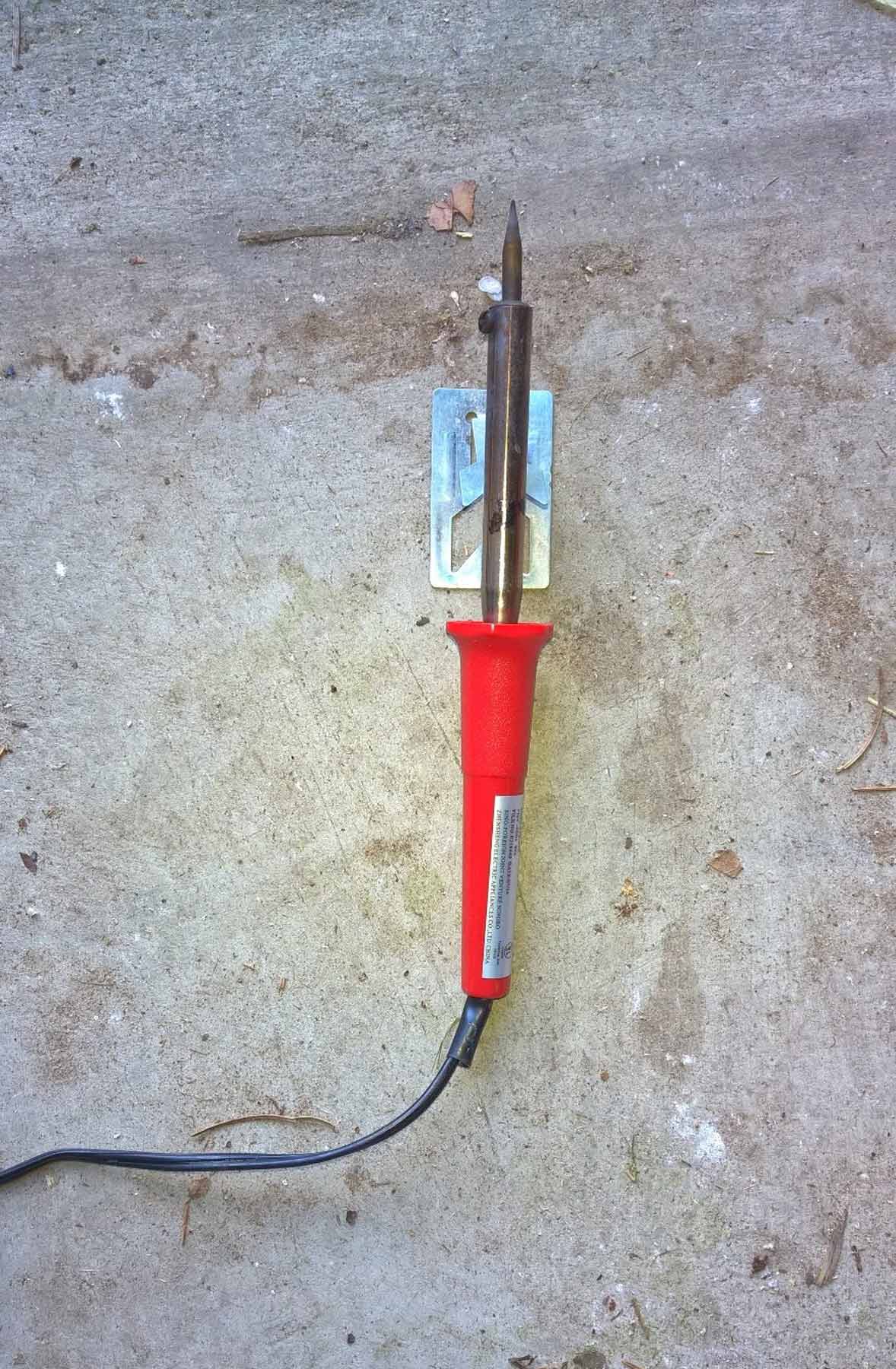
First off, if you find yourself making a lot of DIY tarantula cages, then immediately head over to Amazon and invest in a soldering iron. The one I use is manufactured by J&L, and it costs just over $10 (money VERY well spent).

Enclosure-iron

Using the soldering iron, I make a series of holes horizontally starting about an inch below the lip of the container. As you’ll be housing large juveniles to adults in this setup, you can use a bit more pressure on the iron to make larger holes. I will do about five to six rows of these on each side, spacing the holes about 1/4″ apart or so. For the arboreal enclosure, you are going to have more vertical space, so it’s okay to put holes lower on the side of the enclosure. However, for a fossorial species, you’ll want to keep the holes toward the top to allow for adequate substrate depth.

You can add holes to the other sides as well if you prefer, but keep in mind that if you’re trying to create a micro-climate, too much ventilation will make it very difficult for you to maintain optimum conditions. I do not add holes on the lid, as this just allows moisture to evaporate faster.

2. Add the substrate.

This one is pretty self-explanatory. For an arboreal enclosure, you want to add 2-3″ of packed-down substrate. Appropriate substrate can be coco fiber (Eco-earth), peat, organic (no animal products added) top soil, or any mixture of the those. For more on substrates, feel free to check out this link.

3. Arrange the water bowl and cork bark

Because we’re setting up an arboreal enclosure, we’re going to be using a cork bark flat set at an angle. Now, cork bark can be quite pricey when purchased at a pet store, so I’ve been buying mine from New England Herpetoculture (NE Herp). Not only do they carry an amazing supply of everything you would need to decorate an enclosure (fake plants, bamboo, cork bark, etc.), but their prices are fantastic. A 13-16″ long slab costs about $10 and yields you enough bark for about three enclosures if you section it.

You want to lay your piece of cork bark at an angle, wedging the bottom of it into the substrate so that it doesn’t slip down. When positioning it, try to ensure that it doesn’t cover up your air holes as well.

Enclosure-top-down

I will usually put the water dish at the base of the cork bark, just off to the side. You don’t have to get fancy with what you use for your dish, either. Some folks use souffle cups or other “found” items. I like to use these small, white ceramic water dishes that I found at Petco. I know Petco has a rep for being over-priced, and the items sold in their brick and mortar stores usually are. However, if you sign up for their online newsletter, you’ll discover that they are constantly having 25-40% sales, often with free shipping after a certain amount. I usually end up paying only about $1 per water bowl, which I think is pretty darned good. I’ve also managed to score some gorgeous fake plants there for 50% off.

4. Add some sphagnum moss.

I generally buy long fiber sphagnum moss from my local Home Depot. It’s about $5 a bag, and it is enough to set up several enclosures. I add the moss behind the cork bark (my poecilotheria species like to use it to build “curtains”) and around the water bowl. For species that require a little more humidity, you can moisten down the moss to help keep the moisture levels up.

5. Decorate!

Now, if I’m being honest, the majority of my enclosure setups are rather spartan. However, for some of my big arboreals, I like to go the extra mile. Not only does it make for a beautiful display enclosure, but by adding some faux foliage, I give my spider more places to hide.

For this enclosure, I used my glue gun to glue some plastic leaves to my piece of cork bark. I also added an artificial plant next to the cork bark to give the animal more security (and, it looks darn pretty). I purchased both of these on sale at Petco during a 40% off sale. For the leaves, I buy the plastic vines then just pop the leaves off to use as needed.

6. Finally … add your spider!

It takes me about an hour to set up three or four of these enclosures, and most of that time is spent melting the ventilation holes in the plastic. As for cost, the Sterilite container retails for $5.99, the water dish was $0.99, the cork bark was about $3, and the plant (which is optional) was $5.99. So, this enclosure cost me about $16. Considering that it will housing my gorgeous, and pricey, female P. metallica, I think it’s well worth it.

Enclosure-stacked

Grammostola iheringi (Entre Rios)

A gorgeous “grammy” with plenty of spunk.

G.-iheringi

About a year ago, I was perusing various topics on a tarantula message board when I came across a spider I had never seen or heard of before. The lucky keeper was posting photos of his newest acquisition, a 4″ female “Entre Rios.” With its bluish-gray body and bright red rump, it was a truly amazing-looking spider. I would later learn that the scientific name of this beautiful specimen was Grammostola iheringi, and it was a much sought after tarantula for many enthusiasts. After reading up on the species, including many accounts from those who actually kept this marvelous spider, I decided that I had to have one.

Fast-forward to just a couple of months ago. I place an order with my favorite vendor, Jamie’s Tarantulas, and due to unfortunate circumstances, one of the animals I ordered couldn’t be shipped. Being the amazing dealer that she is, she offered me a replacement that easily trumped my original purchase…a 2.75″ female G. iheringi. Since receiving her in early May, she has become one of my favorite specimens.

GWA … Grammostola with Attitude!

The first thing that impressed me about this species was its temperament. Those used to other slow-n-steady Grammostola species (porteri, pulchripes, pulchra, etc.) might be taken off guard with the much more high-strung iheringi. This species is quite leggy and seemingly much faster than its cousins, and many keepers have commented on its speed. Upon opening her shipping container to rehouse her, she bolted from deli cup and took two laps around her container before I could blink. This is definitely not a slow, calm spider.

Also, those used to other Grammostola species with more tractable natures should be aware that iheringis are quite skittish and can be defensive. While cleaning out a bolus in my spider’s enclosure, I was startled when she burst from her den, slapped at my tongs, then bolted back to her hole. Although I’m pretty sure that she was rushing what she hoped to be a food item, the experience was still quite eye-opening. This is definitely not a species I would risk holding, and care should be taken for feeding and maintenance.

The G. iheringi has a voracious appetite and will charge at prey with impressive speed and ferocity. Unlike my other Grammostolas, who will generally wait and ambush prey when it gets close, my iheringi will stalk and charge the crickets. I feed my 3+” female two large crickets a week, and she has no trouble taking down the larger prey. The only time she has refused food was shortly before a molt.

Although most Grammostola species are painfully slow growers, the iheringi grows at a medium pace. Mine has already molted once in my care, and because of her amazing appetite, she is quickly packing on the weight. During her last molt, she grew from about 2.75″ to just over 3″. Some consider this species to be one of the largest Grammostolas with a max leg span reaching up to 8″. However, most keepers report their reaching about 7″ in size. Still, that’s a fairly good-sized specimen.

A gorgeous spider with simple husbandry.

Care for this species is quite simple. I keep my female in a repurposed Sterilite plastic shoe box that has been well ventilated to allow for a cross current of air. For substrate, she has about 3″ of coco fiber and peat, and I provided a piece of black PVC pipe for a hide. I keep the substrate dry, but I do provide her with a large water dish for drinking and for keeping the humidity up a bit.

Like most of my tarantulas, she is kept between 70 and about 78° during the winter and 74-84° during the summer months. As with most species, higher temps will usually allow for a faster metabolism and growth rate. This is a long-living species, with females expected to live 20+ years.

My juvenile G. iheringi enclosure made from a re-purposed Sterilite container.

My juvenile G. iheringi enclosure made from a re-purposed Sterilite container.

G. iheringi enclosure set up. I used a piece of black pvc pipe with cork bark for the hide.

G. iheringi enclosure set up. I used a piece of black pvc pipe with cork bark for the hide.

A must for any New World aficionado

The most common complaint I hear about Grammostola species is that their sedentary lifestyles render them “boring” species to keep. This is definitely not an issue with the iheringi; this tarantula has plenty of spunk and personality. For a keeper accustomed to keeping more lively tarantulas, the G. iheringi is fantastic specimen and a must for the collection.

My female G. iheringi after a recent molt. Notice her tiny abdomen.

My female G. iheringi after a recent molt. Notice her tiny abdomen.


Aphonopelma chalcodes – The Desert Blonde

A-chaldodes-NEW

An Underrated North American Beauty

When I first began expanding my collection, I was so enamored with the hundreds of exotic species available from far away locales that I all but ignored some of wonderful tarantulas that could be found in my own county. As much as I hate to admit it, I paid little attention to the Aphonopelma genus, subconsciously designating  the species it contained as a bit mundane. After all, why keep a tarantula that I could essentially find in my back yard (well, give or take several thousand miles!) when I could have something found across the world?

Now that I’ve established a pretty good-sized and diverse collection, I’ve turned my attention to some of the species I might have previously overlooked. Although I’ve kept an Aphonopelma schmidti for over a year, it was only recently that I had a change of heart about this genus. While looking at a fellow collector’s photos, I was taken by the gorgeous earthy grays, browns, and blonds of these spiders, something I had long admired in my schmidti. Having already added an A. anax sling to my collection, I was keeping my eyes open for a A. chalcodes. When I found a young adult for sale, I jumped at it.

Temperatures and set up

The A. chalcodes’ natural range is in the Sonoran deserts of southern Arizona and northern Mexico, which experience two major rainy seasons in the summer and winter. Although this animal flourishes in dry conditions, it can definitely tolerate more humid climes. In the wild, this animal experiences high temps in the mid 80s in the summer, and lows of 52º F in the winters. A burrowing species in the wild, the A. chalcodes would avoid both of these extremes by retreating to its den.

With this in mind, I set my chalcodes up on four inches of dry substrate made up of a 50/50 mixture of coco fiber and peat. To stimulate its natural burrowing tendencies, I included a short section of black PVC pipe as a starter burrow. I also supplied a water dish and some sphagnum moss. I do not overflow the water dish. Currently, it does not use its burrow, but instead chooses to sit out in the open. This is perfectly fine by me, as this little blonde ball of fluff is quite the looker.

This is a species that does very well at room temperature. Mine is currently kept between 70 and 75º F; in the summer, this range will be between 75 and 85º F. For folks who have colder temps in their homes during the winter, this would be a good spider to consider keeping.

Species in the Aphonopelma genus are notoriously slow-growing, and the chalcodes is not an exception. Although keeping this animal at higher temps will stimulate its metabolism, leading to faster growth rates, you can still expect this spider to take many years before it reaches maturity. Males of this species are expected to live 5-8 years, dying a year or two after reaching sexual maturity. It is estimated that a female could live 25+ years.

Size, feeding, and temperament

The A. chalcodes is a medium-sized tarantula reaching a max size of about 6″. So far, mine has proven to be an excellent eater, and I’m currently feeding her 2 large crickets a week. However, I have noticed that my other Aphonopelmas seem to pick up on environmental factors during the late fall months, and they will forgo eating for most of the winter. In the wild, this species will spend the winter fasting in its burrow, so I wouldn’t be surprised if mine did the same once the temps drop again.

This spider is often recommended as a great beginners species due to ease of husbandry and a tractable disposition, and for the most part, this is a good tarantula for novices. However, behavior varies wildly between individual specimens. Many folks report their chalcodes being a bit more feisty and prone to biting; others keep specimens that are quick to kick hairs. This information is important to keep in mind when performing maintenance or interacting with your animal. My A. chalcodes can be a bit skittish, but she has yet to show me a threat pose or any defensive behaviors. Still, her bald abdomen is an indication that she may kick.

A-chalcodes-WEB

The A. chalcodes is a beautiful, relatively calm spider with easy husbandry requirements that make it a wonderful addition to any collection. If you’re a collector in the States, don’t make the mistake I did and pass up this little gem.

Chilobrachys guangxiensis – “The Chinese Faun”

Not just another big brown tarantula

C.-guangxiensis-new

I generally put a lot of thought into the each species of tarantula I buy. Like many hobbyists, I have a long wish list of animals that I have thoroughly researched with the anticipation that I will one day acquire them. There are never impulse buys, and when I pull the trigger, it’s usually on something I’ve been eyeing for months. Every so often, however, I take a chance on a species that I’m not as familiar with and that might not have been in Tom’s Top Ten to Be Acquired list.

My C. guangxiensis was one of these species.

My first exposure to this tarantula came when I found a small juvenile female listed for sale at Jamie’s Tarantulas. Although I was familiar with this tarantula’s cousins, Chilobrachys fimbriatus and dyscolus, I had never heard of this Asian terrestrial with the seemingly unpronounceable scientific name.

I quickly Googled this spider and found that, although it didn’t sport the beautiful blues of a C. dyscolus blue, or the amazing tones and patterning of the fimbriatus, there was still something undeniably beautiful about this T.  When I discovered that the care of this species was the same as others from the genus, I decided to grab her up.

A gorgeous, sleek, velvety-brown species from southern China.

Like other species from this genus, the C. guangxiensis is a fast, slightly defensive obligate burrower that requires a bit of extra humidity and deep moist substrate to thrive. As this faster growing species, I afforded her a bit of extra room to grow and gave her a larger enclosure than I normally would for a spider that size. This also allow me more room for maintenance.

Her first home was repurposed 7.2 quart Sterilite plastic storage container that measured about 11″L x 7.5″W x 8″H. Both ends of the container are vented to allow for good cross-ventilation and adequate air flow. Although this species appreciates a bit of extra humidity, I’m always careful to avoid creating the stuffy, stagnant conditions that could harm or kill a T. I provide a water dish at all times for drinking and for added humidity.

When I received my female, she was about 2″, so I gave her an enclosure with about 5″ of substrate depth in which to construct a burrow. For substrate, I use a mixture of 40% coco fiber, 40% peat, and 20% vermiculite. I find that this blend not only holds moisture well, but it also absorbs water more readily when it comes time to moisten it back up. The sub is damp, but not wet; if you squeeze it in your hand, it will hold its form, but no water will drip out. Once a month or so, I will use a bottle modified to be a watering can to make it “rain” and moisten down half of the substrate.

A hide really isn’t necessary for this species, as if it is given enough substrate, it will quickly dig its own burrow. Before I added it to it’s enclosure, I just created a small hole/starter burrow in the corner. It quickly adapted this hole and used it to create its home. It now has two entrance holes and a large open den at the bottom of the enclosure.

I’ve observed no specific temperature requirements for this species. Mine is kept at 70-77° F during the winter and 75-84° F during the warmer summer months. She has eaten well in both ranges, although higher temps usually lead to higher metabolisms and faster growth.

Just add crickets and watch it grow!

The C. guangxiensis is a medium /fast growing species that can reach 7″ in size. My female has molted three times in the eight months that I’ve kept her, and she has gone from 2″ to about 3.5″. She is a voracious eater, taking down prey with lightning speed before quickly dragging it down into her den for consumption. As a juvenile, she was eating 3 medium crickets a week. Now that she is a bit larger, I’ve been feeding her two large crickets a week.

If there will be any knock on this species, it might be that it can be a bit of a pet hole. Of all of my obligate burrowers, this one might be my most secretive. I sometimes catch it out after the lights go out for the night, or early in the morning, but she will bolt back into her den at the slightest disturbance. This has made it very tricky to photograph. Still, when I see her out an about, it is a true thrill.

This one can throw down the silk.

It should be noted that some keepers have been successful keeping their Chilobrachys species on more shallow substrate with a hide. These species can be prolific webbers, festooning their enclosures with copious amounts of thick webbing. Specimens denied the opportunity to dig will build elaborate homes out of their webbing.

Personally, I like to let them burrow as the deeper depths of the substrate can provide them with a secure and more humid place to retreat to when frightened or when they need more moisture.

My C. guangxiensis has webbed up her entire enclosure with thick web. Even though she has a den, she will come out at night to lay down more silk, and she will often web the top of her enclosure shut. As a result, I open her cage several times a week to remove the webbing on the lid.

My C. guangxiensis' enclosure. I have to open this one quite often, even when not performing maintenance, as she will often web the top shut.

My C. guangxiensis’ enclosure. I have to open this one quite often, even when not performing maintenance, as she will often web the top shut.

A beautiful addition to an intermediate collection.

Unfortunately, with so many more colorful and easier to keep tarantulas available, including other members of the Chilobrachys genus, I worry that the C. guangxiensis sometimes gets overlooked. Pictures just don’t do this specimen justice, as its slick, shimmering coat and lithe, athletic build make it a stunning specimen in its own right.

And although I’ve seen many photographs that make it appear to be a simple, plain shade of brown, its true tones are difficult to describe and must be seen to be appreciated. For those used to Asian terrestrials, including their attitudes, speed, and care requirements, the C. guangxiensis would make a great addition to the collection.