Nothing gets the old heart pumping quite like a rehousing!
With many of my tarantulas outgrowing their current enclosures, I’ve been doing a lot of rehousing as of late. In the last two weeks, I’ve moved about a dozen of my spiders into new homes, and I still have several more to go. When I first got heavily into the hobby, rehousing were something that I used to stress about. After all, the thought of one of these large, fast, sometimes defensive spiders possibly escaping during a botched transfer is enough to the get your adrenaline flowing.
Now that I’ve rehoused dozens of Ts, I actually look forward to this activity. Don’t get me wrong, I still remain cautious and very focused whenever moving spiders, but with experience has come some degree of comfort. I used to fear the tarantula getting out of its enclosure; now I recognize that if the spider doesn’t make it directly into its new home, it’s not the end of the world. I’ve also found that I’m able to stay much more calm, which leads to slower, more deliberate movements (and more relaxed animals).
When rehousing Ts, there are a few different methods to consider. I have tried all the techniques listed below, and I find that they are all quite good depending on the situation. Experience and experimentation will help you to determine which ones work for you and in which circumstances.
The cup method entails simply placing a clear plastic cup over the tarantula, sliding a piece of cardboard beneath the opening, then moving the animal to its new home. You can also tip the cup on its side and use a long instrument like a paintbrush to guide the T into it. Some folks will use deli cups for this procedure, then put the cap on for a safe, secure transfer. This method is particularly useful for larger Ts.
The plastic bottle method is also a fantastic and easy way to transfer slings and juvies. Creating your transfer tool is simple; just take a small plastic bottle (I use a 1 liter seltzer bottle) and cut the bottom off. Like the cup method, place the open end of the bottle over your T. Once the spider is inside, either cover the bottom with cardboard or coax it up the side with a paintbrush. With the spider contained, put the bottle in the new enclosure, unscrew the cap, tilt the neck toward where you want the spider to go, and use a paint brush to guide it out the hole. In most cases, the spider will freely move toward the tapered end of the bottle. This is great for directing a spider directly into a pre-dug den or hide.
The bag method is a wonderful way to transfer fast or defensive slings and juveniles. It entails placing a clear plastic back over the mouth of your original enclosure and affixing it with a rubber band. After poking a small hole in the bag, you use a paintbrush to coax the critter out of the enclosure and into the bag. Once it’s safely inside, you remove the rubber band and carefully pinch closed the bag, being careful to keep your hand away from the spider (they can bite through the plastic). Finally, just put the end of the bag in the new enclosure and carefully maneuver the spider out of the back and into its new home.
Tips for safe transfers
Like most aspects of this hobby, reading about transfers and rehousings only gets you so far. To get comfortable with them, it really takes experience. Keeping that in mind, here are some tips to think about before rehousing.
When rehousing, make sure that you have a clear, clutter-free area in which to work. I use my dinner table and try to clean as much off of it as possible.
Make sure that pets or small children are safely out of the way. I have three dogs and a younger child, and I always make sure that they are all out of the room when I work.
Many keepers also recommend attempting transfers on colder mornings, as the spiders will be a bit less lively and likely to bolt.
If you try a transfer, and the T demonstrates its agitation by running around or displaying aggressive behavior, STOP and try again later. There is no need to make the experience more difficult for yourself (and more stressful for the T).
You should assume the spider will get out, and prepare accordingly. Negotiating your hands and tools into small enclosures can put you more at risk for a bite. Sometimes it’s simpler to gently coax the spider out onto a table so that you can easily and safely cup it. I’ve found that assuming the spider will get out makes the transfer much less stressful.
When possible, you can always leave an older enclosure in the new one if it will fit inside. This way, the tarantula can come out when it is ready. Be warned, though, that some never want to leave!
And, above all, stay calm and move slowly. Yes, I know that it’s difficult to stay cool when a large T is attacking your paintbrush, but you don’t want to lose your composure. If something doesn’t go as plan, take a deep breath, try to relax, and keep your eye on the tarantula at all times.
Tools of the trade
It’s very important to be totally prepared when performing a transfer. I like to keep the following tools and materials on hand.
Several clear plastic cups, various sizes – I always have multiple “catch cups” on hand, ready to go if a T should try to bolt.
A plastic bottle with the bottom cut off – These are GREAT for smaller Ts.
Long tongs and paintbrushes – I always have a pair of 8″ and 12″ tongs on hand to help in the process. They can be used to move hides, dishes, and substrates. Paintbrushes are also excellent tools to use to coax Ts out.
Small dish towels – These work wonderfully as hiding spots for a bolting T. I like to spread them around my work area so that if a spider bolts, it will likely take refuge under one of these “spider traps”.
Pieces of cardboard – Cut some cardboard to size so that you can use the pieces to cover up the bottom of the cup or bottle to hold the T inside.
Spoons – These can be handy when you have to dig a species out. Just be careful not to injure the T, and be prepared for an agitated tarantula to burst from its den.
Large, shallow Sterilite container – This one is optional, but I like to put the enclosures I’ll be using inside a large plastic storage bin. The bin I use is shallow, allowing for me to easily work. This gives me an added barrier if a T should happen to get out. You can see the one I used in the videos below.
Four transfers, four very different experiences.
Today, I planned to move four different tarantulas: my juvenile A. brocklehursti and my three juvenile Phormictopus sp. purple juveniles. My brock has traditionally been a bit skittish, but has never been defensive. My purples, on the other hand, can be little terrors. I’ve seen more threat postures from this trio than any of my other species. They are quite feisty, and it doesn’t take too much to rile them up.
With the potential for some exciting and unpredictable action, I decided that it would be a good time to break out the camera. My 1o-year-old daughter, Sidney was kind enough to man the camera for me so that we could catch all of the action. Although I’ve done many “easy” transfers, where the spider is quickly moved without incident, I wanted to possibly capture a rehousing that didn’t quite go so smoothly. After all, switching enclosures can be quite tricky, and spiders can act unpredictably. You need to be prepared for anything.
My A. brocklehursti transfer went about as smoothly as a transfer can go. I mean, this little guy didn’t even need to be prodded out of the bottle; he just plopped down on his own!
As my Phormictopus sp. purple juveniles are quite feisty, I expected that rehousing these guys could be a bit of an adventure. Well, the first transfer went quite smoothly, and the little guy cooperated for the most part.
How do you set off a defensive species? Well, just drop a little dirt on it. This rehousing doesn’t quite go as planned as a bit of stray dirt riles up my second purple juvenile. Despite the inauspicious beginning (and some spider on paintbrush violence), he makes it into his new home.
This stubborn little guy does NOT want to cooperate at first, and it takes a bit of patience and finagling to finally get him into his new home. Of course, he first has to get a piece of that paintbrush. If you watch closely when he attacks, you’ll see why I NEVER hold my tarantulas. Had that been my hand, I would have flicked him into the air.
For those looking to rehouse a fast and feisty arboreal, here is a video featuring my P. hanumavilasumica.
Transferring Fossorial (Burrowing) Species
As I’ve received several questions about how I go about rehousing fast-and-feisty fossorial species, I’m adding a couple movies to this tutorial. What follows are rehousing videos for my H. Gigas and O. philippinus, both species that built dens deep in the substrate.
Now that I’ve got a tarantula, how do I go about feeding it?
Whether you have a dog, a cat, a hamster, or a pot-bellied pig, if you’re a pet owner, you’ve become accustomed to certain standards of care for your wards. For those of us who have kept these more domesticated pets, we are very used to feeding and providing fresh water to our pets daily, often more than once, and having a variety of conveniently-packaged foods available for their consumption. Most of these pet foods come with handy instructions on just how much to feed your pet, dependent upon the size of the animal. When our furry little friend doesn’t eat for a couple days, we take it as an immediate sign that something is very wrong and seek veterinary care.
Well, now you own a tarantula, and suddenly, all of the rules you’ve learned about pet care go right out the window.
No one sells “Tarantula Chow”, and there are a plethora of feeder insect that would make a good meal for your new pet. There are no “portions”, and determining what size item to drop in with your hungry spider can be cause for stress. As for a feeding schedule, some healthy adult species only need to be fed once a week. And if your T doesn’t eat for a while, it is no cause for immediately alarm. This is an animal that can go months at a time without eating and still stay healthy.
Tarantulas don’t come with instructions, and learning some of the rules and tricks around feeding them can be a stressful and tricky endeavor that involves experience and research. The message boards are often full of posts by newbies asking feeding-related questions like, “How often should I feed?” or “What size item should I offer?” Here, I hope to answer some of the most asked questions and give those new to the hobby one less thing to stress about.
I. Frequency of feedings:
There are a few important points to consider when coming up with a feeding schedule. The life stage of the tarantula, the size of the prey you are feeding it, and the species you are feeding should all be carefully considered when devising any sort of feeding schedule.
Sling? Juvenile? Adult?
Younger tarantulas, like slings and juveniles, are doing a lot of growing and are much more vulnerable than their adult counterparts. Slings are particularly fragile, and keepers report more sudden and unexplained deaths in the sling stage than in adults. In the wild, a spiderling is particularly vulnerable to predators early in life, so it behooves the young T to eat as much as possible as often as possible so it can quickly grow out of this precarious stage. Therefore, most keepers choose to feed their slings as often as they’ll eat. For many, a feeding schedule of every two or three days for slings is perfect. However, if they are being offered a large prey item, once a week will certainly work.
A lot of folks express concern that they can overfeed a sling. Although some have insisted that a tarantula can become too fat, resulting in organ failure and molting issues, there has been no scientific proof of this, and most keepers believe it to be a myth. Most slings will chow down until they are ready to enter premolt, then they will stop. They will NOT eat until they explode. The only danger posed to a fat T is a possible abdomen rupture from a fall.
Once the tarantula reaches the “juvenile” stage at around 1.5-2″ or so, most keepers ease off on the feeding a bit. A spider of this size is usually out of its fragile sling stage, and growth at this point will slow down a bit. Although you can certainly continue with a more aggressive feeding schedule at this point (see “power feeding” below), it is no longer necessary. At this stage, I usually feed my animals a larger prey item once or twice a week.
For adult tarantulas, you need to also consider the species before settling on frequency. An adult Grammostola porterie/rosea needs only four or five crickets a month to be healthy. Conversely, an adult Therophosa or Pamphobeteus species would eat that in a single meal a couple times a week. Generally, the feisty tropical genera (Therophosa, Phormictopus, Pamphobeteus, Acanthoscurria, Nhandu, etc.) will need larger and more frequent meals.
As an example, my 6″ Pamphobeteus antinous female eats five crickets and one 1.5″ dubia roach in a single week. My 6″ female G. porteri, on the other hand, eats four crickets a month. Both species are healthy and plump, but the feeding schedule for one would definitely not work for the other.
Know the species of T you keep and listen to other keepers about its appetite. If you have questions, ask. Observe the feeding responses and growth rates to determine if more or less is needed.
A word about “power feeding”.
If you’re around the hobby long enough, you’ll hear folks talk about “power feeding” their tarantulas. Power feeding is when the keeper jacks up the heat and feeds his tarantulas as much as they will eat in order to grow them to maturity faster. This is usually done in an effort to get breedable adults as quickly as possible. Although this could shorten a tarantula’s lifespan as it is rushed through various instars (some males may mature in less than a year), there is no proof that this is harmful for the T.
II. What size feeders to use?
The size of the feeder being given to the tarantula can certainly impact the frequency that you feed the animal. Some keepers choose to feed their specimens smaller prey items more often. Others will offer their Ts much larger insects, then feed them only once a week or so. There is really not any right or wrong way, and the size and schedule comes down to the keeper’s discretion. Personally, I tend to feed medium-sized items a couple times a week.
Many keepers stress about the size of prey they should offer to their spiders. A rule of thumb many keepers use is that the prey item should be no larger than the abdomen of the tarantula. So, a juvenile with a abdomen length of about 5 mm would likely be comfortable with a pinhead cricket. Personally, I feed my slings and juveniles prey items slightly smaller than the total length of their bodies, and adults I feed items no larger than their abdomens. I’ve found that this works very well for me, although it is by no means law. Again, it comes down to the personal preference of the keeper. When in doubt, it makes sense to err on the side of caution and give your T smaller, more manageable prey.
Use your discretion.
Now, these are just guidelines, and it is okay for keepers to deviate from them. Case in point, some species of Ts will actually only attack smaller prey items. My M. balfouri and H. incei gold juveniles, for example, would only take much smaller prey for the longest time. Even when my balfouri juvies were about 1.75 inches, they would only attack small crickets. Conversely, my P. cancerides juveniles would easily take down sub-adult crickets at that size. Observe your Ts and their feeding habits, and feel free to go up or down a prey size as needed.
What to do for tiny slings?
For very small slings (1/4-3/8″ or so) small food can be very difficult to come by. Although B. lateralis roach nymphs can be a good alternative due to their small size, they are not always easy to come by. In these instances, it may be necessary to pre-kill and cut up a larger prey item into a more appropriate size. Spiderlings will scavenge feed, so this is a great way to make sure that they can eat as much as they want while not putting them in danger by dropping in an overly-large prey item.
Although this may sound a bit gross (and, well, it really is!), cutting the leg off of a larger cricket, or cutting a meal worm into smaller pieces is a perfect way to feed your tiny sling. Just carefully place the food chunk in the enclosure and, if the sling is hungry, it will find it. Just be sure to remove any excess the next day, as they may not consume the whole piece. If they don’t finish the item, you might want to wait several days before offering another item.
III. How many items should I feed at a time?
In the cases of slings and juveniles, I would say one prey item per feeding is completely appropriate. At this size, they usually have their hands full with an appropriately-sized food item, and adding a second would only serve to stress the animal.
For some adults, dropping in a more than one item can be an appropriate option. Personally, I tend to use larger insects, like dubia roaches, rather than bombard my tarantulas with a half-dozen spastic crickets. I’ve also seen animals become visibly agitated when more than one item is dropped in.
If you do drop in multiples, be sure anything that isn’t eaten is removed in a timely manner and that animal seems comfortable with taking down multiple feeders.
IV. What are my feeder options?
There are many possibilities when deciding what to feed your Ts. Personally, I find the many inverts available as feeders to be quite convenient, and I will often mix up what I feed my spiders to create a more diverse diet. Here are some of the more common feeder insects available as well as some pros and cons for each.
NOTE: Some folks supplement their larger tarantulas’ diets with vertebrates such as mice, geckos, and snakes. Personally, I’m not a fan of this. Besides being a rough death for the vertebrates, the mess left behind after the tarantula feeds can be a perfect breeding ground for bacteria and pests.
Crickets: Crickets have long been the go-to feeder insect in the hobby. They are sold at most pet stores in several sizes that make them a convenient feeder insect for almost any size T, and they can be purchased in bulk for those with large collections. They can also be relatively inexpensive if purchased in large quantities. TIP: To keep extras alive, use a large critter keeper or modified plastic storage container, provide egg cartons for a hide, and feed dry oats or fish food. Humidity kills them, so I supply slices of potato for moisture.
PROS:
Available in every pet store
Convenient pinhead, small, medium, large sizes
Non-invasive if they escape
CONS:
They can smell quite horrible
Can be difficult to keep alive
Can eat a molting T
Can be pricey when purchased in small quantities
Mealworms: Another readily-available food source for tarantulas. Not only can mealworms be purchased in many different sizes, but they can also be raised rather easily. Unlike other prey items on this list, they can be kept in a refrigerator, meaning you can keep some on hand for when you need them. They are also very easy to reproduce and raise (for a tutorial on how to start a colony, click away!). TIP: These are a prey item that will dig (often to return later as a black beetle that the T won’t eat), so I will often crush the heads before dropping them in to keep them from burrowing.
PROS:
Sold at most pet stores
Can be stored in a refrigerator for future use
No odor
Very easy to raise
CONS:
A bit small for some of the larger Ts
Can burrow and disappear if given the chance.
Superworms: Like mealworms, superworms are another beetle larvae that can make for a good tarantula feeder. They are relatively inexpensive, and their larger sizes make them a better choice for larger Ts. They can also be raised and bred in colonies for those interested in always keeping some on hand. However, it needs to be mentioned that these worms WILL bite and eat a tarantula. TIP: To prevent a superworm from injuring or killing a T, either cut off or crush its head before offering it.
PROS:
Sold at many pet stores
Larger sizes are great for large Ts
Can be bred in colonies
CONS:
Not all pet stores carry them
They bite and injure/kill a T
Are a little more involved to raise
Can’t be refrigerated for storage
B. lateralis roaches: Also known as “rusty reds” or “red racers”, these roaches make a wonderful alternative to crickets. They are fast moving, bold little bugs that will stay out in the open rather than dig. Their propensity to explore and move around when dropped into an enclosure makes them a very attractive prey item for Ts. Adults are also a bit larger than crickets, making them a little better for larger Ts. These can be purchased online in bulk, or kept in colonies. TIP: These are fast little roaches who are quite good at escaping when given the chance. Unlike the next roach on this list, given the right conditions, this one could thrive and be a pest in the home.
PROS:
Readily available online
Don’t burrow
Fast movements seem to attract Ts
Can be raised in colonies
Nymphs are great for small slings
CONS:
Not normally available in pet stores
If they escape, they can breed in the home
Fast and tricky to catch
B. dubia roaches: This tropic roach species can hit sizes of 1.5-2″ making them a great feeder choice for larger tarantulas (I feed most of my large tropical species with B. dubia). They can be purchased as colonies (about $30 shipped), which will produce nymphs of many sizes, providing a food source for slings, juvies, and adults. The one main drawback to this species is that some tarantulas won’t take them. TIP: This roach will freeze and “play dead” when a tarantula approaches, often leading to the T passing it up. They can also dig and hide (I’ve had ones I thought were eaten reappear months later). To prevent either of these scenarios, crush their heads before dropping them in. This will cause them to wander aimlessly keep them from burrowing and playing dead.
PROS:
Easy and cheap to raise
Adults are large and great for big Ts
No odors
Won’t breed in most homes if they escape
CONS:
Some tarantulas won’t eat them
They can burrow and hide
They play dead when a T approaches
Not usually found in pet stores
These are just a handful of the feeder options available, and some ones that I have experience with. I know hobbyists in the UK often use locusts, which sound like a fantastic food source. There are also waxworms, earthworms, Madagascar hissing cockroaches, and lobster roaches. Feel free to experiment with any or all of the available feeders; a diverse diet is always a good thing.
For a wonderful article about some pros and cons of crickets, B. dubia, and B. lateralis roaches, check out A Roach in a Coach is Still … Food !
V. How to feed your tarantula in three easy steps!
I often read about the strange, complicated, and often totally unnecessary rituals some keepers go through when they feed their Ts. Now, I’m not judging, and if it works for you, great. However, I do think that some folks make this process a lot more complicated then it needs to be. In most situations, a tarantula can be feed in three easy steps…
OPEN the enclosure – Be sure to know where your T is when you take this step, and only open the enclosure as much as you have to.
Drop in the prey item – You don’t have to hold it in front of the T or make it dance with tongs. Just drop it in!
CLOSE the enclosure – Make sure the cage in securely latched and closed.
Congratulations, your tarantula has been fed!
All joking aside, there is no need to do anything other than what is described above. This is an animal that has evolved over millions of years; they wouldn’t have made it this far if they couldn’t figure out how to eat. Tarantulas are excellent hunters and, in most circumstances, they will have no problems detecting and snatching prey. Don’t worry about dropping the feeder right next to the spider either, as you will chance startling the T. I like to drop it across the enclosure from the tarantula to give it a chance to detect the prey animal and to get a chance to hunt. It is quite fascinating to see how the different species go about capturing their food.
It worth it to note that many tarantulas are nocturnal, so you may want to do your feedings at night before bed. If the feeder hasn’t been consumed by the next morning, remove it. That being said, I feed the majority of mine in the afternoon, and I’ve seen the majority of them, even the “pet holes”, eat.
VI. But what if it doesn’t eat?
If your specimen starts refusing meals, don’t panic. Tarantulas will often refuse food during premolt (read about premolt here), and some species will fast for long periods of time. This is an animal that can go months without eating and still remain healthy, so missed meals are no reason to freak out.
When a T isn’t eating, don’t keep dropping bugs in with it every day. Instead, wait a week or two, drop in a prey item, and watch to see if there is any interest. If the T doesn’t eat, take the item out and try again in another week. Always make sure that fresh water is available.
VII. Tongs are for maintenance!
Finally, in most instances, there is no need to tong-feed your tarantula. I hear so many people new to the hobby using tongs to essentially hand-feed their animals. In most cases, this is completely unnecessary and serves only to put the keeper and the T in danger. Not only can a spider injure a fang if it attacks the tongs, but they’ve been known to run up tongs to escape or bite their owners. And, as someone who keeps feisty and fast Old World tarantulas, trust me when I tell you that you don’t want to try tong feeding an OBT or a pokie!
When in doubt, ask!
This is a hobby in which research and, more importantly, experience brings confidence. Although many of the issues one might encounter when feeding have been addressed above, there are always situations that pop up that might be unusual or rare. Luckily, there are forums and sites like this one that you can go to for help and guidance. Before you panic, though, always remember that tarantulas are tough, adaptive animals that have survived millions of years of evolution and, sometimes, questionable husbandry.
Although there are hundreds of species of tarantulas currently available in the hobby, nothing seems to get folks more interested (or horrified) than talk about 12″ spiders. We’ve all seen the garish news reports and sensationalized nature shows that seek to disgust and shock rather than educate with reports of ferocious arachnids with leg spans the size of “dinner plates.” For the majority of “normal” people out there, a giant spider of this size is a thing of nightmares…
For the tarantula keeper, however, it is something to be coveted; an enormous spider that could easily become the jewel of a collection.
Years ago, the Theraphosa blondi, or the true “Goliath Bird Eating Spider” was the holy grail for many collectors. Pursued for its supposed legendary size (some folks bragged of specimens reaching 14″!), this giant spider became the Humvee of tarantula collecting. Sure, they were large, beefy, and came with certain bragging rights, but their difficult husbandry requirements made them a bit impractical. Specimens had to be kept in warm, moist conditions that made proper husbandry a nightmare. Kept too moist, the animals would die from the fetid conditions. Kept too dry, and they would perish during bad molts. For many enthusiasts, keeping this exotic T became more bother than it was worth.
With the introduction of Theraphosa stimi into the hobby, keepers were given a more practical and forgiving alternative to the T. blondi. Easier to breed than its cousin, the T. stirmi not only became more widely available, but captive-bred offspring have proven to be quite hardy in captive conditions. With a max size and appearance almost identical to a blondi, this species has eclipsed its more difficult relative in the hobby.
Several months ago, I was able to purchase a sub-adult, likely wild-caught specimen, and I was immediately in awe of its size and appetite. Since then, I’ve procured two T. stirmi slings, which have each molted once in my care. Although requiring a bit more attention to husbandry than some of my other Ts, this species is quickly becoming one of my favorites.
Moist substrate + good ventilation = Happy Stirmi
Ziploc 60-qt storage bin modified to house a T. stirmi sub-adult.
Before purchasing my T. stirmi sub-adult, I spent months reading all the notes I could find by those who have been successfully keeping this tarantula. Although most report that this species is much more hardy and less moisture and heat dependent than the T. blondi, there are still some requirements that make this giant a bit more difficult to keep. The key to keeping this spider thriving is to supply moist substrate and adequate cross-ventilation.
Check out my T. stirmi husbandry video below!
Although many use 15-20 gallon long aquariums to house their stirmis, I didn’t feel that the glass sides would provide the cross ventilation that I would need. Also, the screen tops that one might normally use on a glass aquarium would allow too much vital moisture to quickly evaporate, meaning that I would either have to cover some of the screen, or replace it with vented Plexiglas. Instead, I kept a lookout for a plastic container that I could repurpose.
A tarantula this large needs a BIG home.
For housing, I chose a 60-quart Ziploc plastic storage box. Although more shallow than a 20-gallon long aquarium, it offered about the same amount of floor space. With six locking clips, it was also wonderfully secure, even for a T this large. I modified the container using 3″ plastic vents and strategically drilled holes (to see how I made this custom enclosure, click away!)
To make sure that my substrate would retain moisture (and allow for moisture to soak in when I needed to wet it down), I used a combination of top soil, peat moss, and vermiculite in about a 60/30/10 mixture. Before adding the main substrate, I also put about 1″ layer of vermiculite on the bottom of the enclosure and soaked it down. I then packed down about 6″ of moist substrate on top of that. This helps keep the lower levels of the substrate moist as the top layers dry out. The spider than can then retreat to its den if it needs more humidity.
For a hide, I used a 3″ pvc elbow that I angled deep down into the substrate as a starter burrow (which my specimen adopted after entering pre-molt). Although I originally started with one medium water bowl, I soon added another to keep the humidity up a bit within the enclosure. Finally, I added some plastic vines for cover and some long fiber sphagnum moss to help with moisture retention.
For my slings, I used a 2-quart clear plastic canister with ventilation holes burned on all sides. Both were provided with about 4″ of substrate, as well as cork bark hides and small water dishes . When I first acquired my little ones, they were about 1.5″ long, and these containers were the perfect size for them. However, after only one molt, they’ve put on so much size that I will have to rehouse them after they next shed. Right now, my two are about 2.25″, and both are getting ready to molt again. This is a fast-growing species, so it may make sense to provide enclosures for slings and juveniles that allow room for growth.
A note about temperature and humidity.
Because it was mid-summer and temps were high when I set this cage up, and the conditions inside were a bit more moist than I usually have, I decided to monitor it for a week or so before getting my spider. Twice, I added more ventilation after I noticed tiny mold spots. I wanted the humidity to be high enough to support the animal, but not so high as to foster mold, mildew, and other undesirable conditions. The combination of heat and humidity can easily create an overly stuffy and ultimately dangerous living environment for even moisture-loving Ts.
To keep conditions favorable, I usually wet down one side of the substrate once a week or so using a bottle I modified into a watering can. This allows me to simulate a downpour and adds more water than simply spraying. Because of the vermiculite, the water percolates down into the lower levels, keeping them damp while the top eventually dries out.
I don’t really monitor the humidity inside the enclosure (I soon pulled the useless Petco hydrometer in the photo above out), but I would estimate that it stays about 65% to 75% most of the year, with the humidity being even higher in the burrow.
As for temperatures, my specimens are kept at about 72-77º during the winter, and about 75-84º during the summer. They have eaten well in both seasons, and I’ve observed no differences in behavior. However, it’s important to note that warmer temps mean faster metabolisms and faster growth.
I have read accounts of some folks raising captive-bread stirmis from sling in temps that hit as low as 68º and with mostly dry substrate with a water dish. Although I don’t know if these are ideal conditions, it’s worth noting that this species can adapt to different micro climates.
It should also be mentioned that keepers have observed that wild-caught specimens are not quite as forgiving as their captive-bred counterparts when it comes to adaptability to low temperature and humidity levels. If you suspect that you have a wild-caught spider, exercise a bit more caution when controlling the environment.
A gigantic T with a gigantic appetite!
This is a species with an amazing appetite, and it must be kept well fed. My adult is around 7-8″, and in its first month with me, it was constantly hungry. During this time, I would feed it twice a week, usually offering 5 or so large crickets one day and a 1.5″ dubia roach the next. To say its feeding response was enthusiastic would be an understatement. Once, when dropping in a roach, I could only watch in awe as this spider leaped from about 7″ away to snatch up its prey. It was an impressive display and a good reminder of just how quickly this big tarantula could move.
My slings are also voracious eaters, consuming two or three medium crickets a week. Once a prey item is dropped into their enclosures, they don’t take long to quickly snatch it up and pull it into their burrows. They definitely possess impressive speed at this size.
It’s important to remember that the stirmi has an amazing appetite, so you are going to want to make sure that you are easily and consistently able to procure larger prey items for it once it reaches its adult size. I’m already looking to procure some Madagascar hissing cockroaches to fatten it up after its upcoming molt.
As always, caution is a must!
As mentioned earlier, both sling and adult stirmis can REALLY move. Despite being a large and heavy-bodied tarantula, this species is deceptively fast. And although mine would rather retreat to their burrows when disturbed, there are many examples of feisty and defensive specimens out there that will stand their ground when they feel threatened.
Now, I’ve heard some folks ask about venom potency as if this species mild venom somehow makes a bite from this spider less threatening. That notion, of course, is just foolish. These Ts are known to sport fangs 1″ long or more. Just the mechanical damage from a stirmi bite could cause huge amounts of physical trauma. Couple that with the fact that they would be delivering deep puncture wounds with large fangs covered in bacteria and other contaminants, and the venom level becomes irrelevant. Make no mistake, a bite from this animal would be a nightmare.
Also, what it lacks in strong venom, it surely makes up for with some of the most potent and irritating urticating hairs of any species. Folks have described excruciating levels of burning and itching from T. stirmi hairs, and I’ve seen photos of the many raw, oozing blisters these hairs can cause. Several folks have found these hairs to be so bothersome, that they no longer keep this species. Getting haired by a stirmi is NO joke, and this threat should be taken very seriously.
Whenever working with your stirmi, wearing long sleeves, gloves, and eye-protection is definitely encouraged. Even if your specimen seems calm, all it takes is one good hairing to ruin your week. Some folks even wear face shields to protect their eyes and nasal passages from hairs. It’s also important to remember that tarantulas will often kick hairs around their enclosures, even if you don’t see them do it. That means you should always wear gloves when dealing with old substrate or cleaning dishes.
A gorgeous display tarantula for the conscientious keeper.
There is no denying the awe-inspiring size of this amazing T; it just has to be seen to be appreciated. However, although this is a species on many keepers’ wish lists, this is not an animal to be trifled with. Along with this Ts amazing size comes quite a bit of attitude and the potential for nasty bites and an incredibly painful hairing. Couple that with larger space requirements and trickier husbandry, and you have a spider that is definitely not a good match for an inexperienced keeper.
As always, don’t just take my word for it. If you are considering purchasing a T. stirmi, do your homework, search the forums, and read what other keepers have to say!
After hours of exhaustive research in which we read about a tarantula’s natural habitat and peruse a plethora of care sheets (many of them with conflicting information), we set up what we hope will be the “ideal” habitat for our new pet. We add the appropriate substrate, a cork hide, a water dish, maybe a plant or two, before introducing our new pet to his “perfect” home. All is well for a night or two..
And then the stress begins, as we obsess about keeping temperatures and humidity at the optimal level for this species. The care sheet said 75% humidity, but the $8 ZooMed hydrometer I picked up at Petco says it’s only 60%. Time to spray down the substrate until it’s a muddy slurry, right? Or, the temperature in my house just dipped to 68º, so I’d better put a heat lamp or mat on my critter, correct?
The short answer to both of these questions, in most instances, is a very emphatic NO.
Tarantulas are not as fragile as we make them out to be.
One very important thing to keep in mind when working with tarantulas; they are very adaptive animals. You don’t survive millions of years of evolution and climate change without being able to tolerate a dip in temperature or a bit less humidity. It’s true that some species have evolved over the centuries to adapt to different ends of the climate spectrum. Sure, a T. strimi is accustomed to living in humid conditions that would likely kill an arid species like a P. murinus. However, in between these two extremes, there is a lot of gray area and quite a large margin for error when correctly controlling the environment of your tarantula.
Now, I’m not saying that we want to keep our pets in less than comfortable conditions just to make it easier for the keepers. It’s still important to acknowledge the difference between “comfortable” and “tolerable.” It’s just very important to keep in mind that the high and low temps present in a tarantula’s natural habitat may not not represent the ideal temps for the T.
For example, consider the M. balfouri. On the island of Socotra, high temps can be in the high 90s with low temps around the low 60s. That’s a huge range, about 30º, and neither the high nor low temperatures there would make for a particularly comfortable spider. Therefore, a keeper trying to keep these exact highs and lows would be seriously missing the mark. Yet, some keepers will still obsess over keeping these highs and lows in their home setups.
Burrows = The “X” factor.
We also tend to forget that many tarantula species live in burrows and some dig them deep into the earth. This allows the spiders to escape hostile environments and to seek more humidity (or less) when needed. Temperature and humidity measurements from within tarantula burrows in the wild reveal the climates inside are much different than the outside climates. Considering that many species spend the majority of their time inside their burrows, this would mean that we actually have NO idea what the ideal humidity and temperature levels are for many of these species.
So, what do we take from this? Well, first off, it means that the temperature and humidity “requirements” included on many care sheets are next to useless andthat the stress you get from not matching these numbers in your setup is also unnecessary. If you are obsessing over either, you are making the hobby more stressful than it should be.
Normal “room temperature” is okay for most species.
I hear this said on the forums all of the time, and it is a good, if slightly too vague, rule of thumb. For most folks, their normal room temperatures will be sufficient for the majority of species of tarantulas. Generally, if you’re comfortable, then your tarantula will be comfortable, too.
My all-purpose thermometer/hygrometer.
That being said, this rule causes confusion as normal “room temperatures” may vary from home to home. For example, in my house, we like it a bit cooler than most, so my living room at the moment is about 64º. My grandmother, on the other hand, likes it toasty, and her home is around 88º this time of year. Both of these temperatures represent extremes, and some species of Ts kept for long at either end could experience distress.
Therefore, a modicum of common sense is needed when applying this rule. If you’re cuddled up in several sweatshirts and a blanket to watch TV, then this is not a comfortable room temperature for your animals. Conversely, if it’s summer and the 89º heat in your home has your sweaty clothes sticking your body like blistered layers of skin, your Ts are not going to be happy.
The majority of the species will do well in a temperature range between high 60s and mid 80s, and will tolerate temps slightly higher and lower than these for shorter durations. If your home is 67-70º throughout the winter, you don’t have to worry about procuring some sort of alternative heat source or else risk your tarantulas dying. They may not eat as much or grow as fast (warmer temps lead to faster metabolisms) but they will be just fine.
If you should decide that you need supplementary heat…
I’ve read posts by hobbyist who live in drafty houses where the temps consistently get lower than would be appropriate. Or, there are folks like myself who have a room dedicated to raising these animals, and they purposely want to keep temperatures higher to promote growth or breeding. In these instances, it is always best to control the overall temperature of the room and not the individual enclosures.
The space heater I use in my tarantula room.
The best heating option for situations like these is a space heater. There are many types available on the market, including oscillating heating fans and oil-filled electric space heaters. Most also come with built in digital thermostats and timers, allowing for you to create an optimal day/night cycle. If you do go this route, be sure to do your research and look up reviews to get the best, safest heater for your money.
And if you do decide to go with supplementary heating, please remember the following:
No heat mats!
No heat pads!
No heat rocks!
Absolutely NO Heat lamps!
Most pet store heat mats, heat pads, and heat rocks are not appropriate heating sources for tarantulas. All three can create hot spots that can injure, dehydrate, and kill a T.
That said, there are some folks that use heat mats combined with rheostats to heat their collections, but doing so takes some experimentation and finesse. If you absolutely can’t use a space heater and feel that heat mats might be a better fit, do some research and speak to keepers who have experience with these setups. Most who use them heat larger areas, like tanks or cabinets, then put the T enclosures into these. Heating individual tanks is much more tricky and risky.
Heat lamps are very dangerous and can dry out and kill a tarantula very quickly. I don’t care how many thermostats and temperature-regulating gadgets the pet industry sells, these heating sources are likely to do more harm than good.
Humidity … Stop Worrying!
The anxiety created by dreaded “H” word is likely a leading cause of stress-induced hypertension in new hobbyists. All joking aside, the humidity “requirements” listed in many care sheets have created a massive issue where none should exist. Too many times, a new hobbyist will read some arbitrary humidity level on a care sheet, rush to Petco to pick up one of their cheap, inaccurate (read: USELESS) humidity gauges, then panic when they can’t hit that magic moisture number. This is a waste of time, energy, and stress that can better be spent on sports teams, money, and taxes.
It’s important to keep a few things in mind before obsessing about humidity.
Accurate humidity levels are almost impossible to measure with cheap, over-the-counter humidity gauges. In other words, if you’re obsessing over the number on your Zoo Med hygrometer, you are likely stressing over an inaccurate measurement.
Humidity requirements listed on care sheets often don’t take into account that humidity levels differ from region to region. If you live in an area with high-humidity naturally, like Florida, and you are misting down your avic, you are likely doing much more harm than good. Always take into account local climate conditions when setting up your enclosures.
Most species are able to thrive at many different humidity levels. Even genera like Avicularia, Poecilotheria, and Lasiodora, once thought to need much higher humidity levels, have demonstrated the ability to do very well at lower humidity levels when supplied with water dishes. In fact, some keepers now attribute many Avicularia deaths to overly-humid, stuffy enclosures.
Humidity levels in properly vented enclosures are often much different from those in the homes they are in. The humidity gauge in your home may read 45% humidity, but the moisture level in your enclosure may be much higher. If you go spraying the cage down, you might be raising the humidity to dangerous levels. Overly moist enclosures are a death trap.
The fact is, most species do very well in a cage that allows for proper cross ventilation (holes in the sides, not the top) and a water dish. That’s it. For Asian species, using deep, moist substrate and supplying a water dish is all that they need. They will construct burrows beneath the sub which will provide the correct humidity level for them.
Now, are there situations where you should keep an eye on moisture and humidity? Certainly. I live in New England where the winters can be cold and my home’s furnace may be running for weeks at a time. This dries the air in my home, often resulting in humidity levels in the teens. In these instances, it makes sense to run a humidifier to keep levels at a safer level (I usually opt for about 40-50%).
Slings are also more susceptible to dehydration, so many folks choose to keep all spiderlings on moist substrate with good ventilation. Slings around .75″ can also be given water bowls, which also aids in preventing them from drying out. For my tiniest slings, I keep the substrate slightly moist on the bottom, then offer sphagnum moss on the top, which I keep moist for drinking.
With proper enclosures and husbandry, humidity level should never be a factor, even if outside conditions seem less than optimal. Here are some husbandry tips that will keep you from every having to fret about humidity.
1. Keep a water dish filled with fresh water at all times.
The easiest way to keep the humidity up in an enclosure is to add a water dish. A large, open dish will allow water to slowly evaporate, raising the humidity inside the enclosure as long as it isn’t overly vented. It will also, obviously, serve as a drinking source for a parched T. For some species, like my T. stirmi, I will even include two dishes.
2. Provide Good ventilation.
A stuffy, dank enclosure can be more of a threat to a tarantula than a dry one. It’s always important to ensure that your enclosures are properly ventilated to keep the air from becoming stale and fetid. Most keepers prefer cross ventilation, or ventilation holes on the sides of the enclosure. Personally, I like to put them on all four sides to increase airflow. Cages that offer top ventilation can work, but the moisture will evaporate much more quickly. This requires that the keeper be much more diligent to keep things from drying out. .
3. Use moist soil for tropical or Asian species.
For species that appreciate a little extra moisture, I use moist, not wet, substrate. My go-to mixture for these enclosures is topsoil combined with a bit of peat moss with some vermiculite mixed in for moisture retention. It’s moist enough that it will stay together when squeezed without water wringing out of it. My O. philippinus, P. cancerides, C. discolus, P. antinous, H. gigas, and T. stirmi are all kept on topsoil mixed with some vermiculite to maintain moisture. When the levels in my room are too low, they can retreat to their dens for a more humid environment.
4. Provide enough substrate depth for burrowing.
Many keepers opt to keep Ts on shallow substrate so that they can see them out more. Although this is obviously up to the keeper’s discretion, and most species will easily adapt, it will prevent some animals from burrowing to find more suitable conditions. When in doubt, it doesn’t hurt to give the T extra depth in which to dig. Even for species that don’t dig, the extra depth will allow the bottom levels to remain moist while the top remains dry. As this trapped moisture slowly evaporates, it will elevate the humidity in the enclosure.
5. Don’t spray … make it rain.
An old juice bottle modified with some holes to be a watering bottle.
Many hobbyists talk about spraying water into their enclosures to increase humidity. This technique only raises levels for a short period as the surface liquid quickly evaporates. When I want to add moisture to an enclosure, I like to “make it rain.” Using a soldering iron, I put several holes in the top of a large juice bottle and turned it into a handy watering pot. Instead of spraying water into the enclosure, I simulate a downpour and soak down one side. The moisture eventually sinks in, keeping the sub moist as the top dries up.
6. Use a humidifier.
If you live in a region with cold winters, necessitating that you use a furnace, chimney, or wood stove to heat your home, chances are that the humidity levels will get dangerously low. In these instances, even properly set up cages can dry out quickly. The best solution to this is to purchase a humidifier. You don’t need to overdo it if you go this route; a humidity level between 40 and 50% will suffice.
Don’t let needlessly worrying about temperature and humidity add stress to the hobby.
For the majority of the species available, and for all of the tarantulas I named in my Beginner Tarantula guide, room temperature and humidity will be fine. In my opinion, there is NO need to purchase a humidity gauge, as they are woefully inaccurate, and in most instances, supplementary heat is also unwarranted (and sometimes dangerous).
Is there a time where more careful, species-specific micro-climates are necessary? Yes, as those looking to breed species, especially some of the more difficult ones, will look to recreate natural environmental triggers, like high temps, winter lows, or wet seasons to stimulate a mating response. In these cases, some careful management of their tarantulas’ micro-climates will be warranted. However, for the casual keeper or for one new to the hobby, this should never be an issue.
So toss those humidity gauges and heat mats in the closet, leave the spray bottle for the plants, and stop worrying about temperature an humidity. Your Ts will appreciate it.
About a year ago, I stumbled onto an article about good “beginner baboon” species for hobbyists not currently keeping Old Worlds. One of the species mentioned was the Eucratoscelus Pachypus or “Stout Leg Baboon” tarantula. I immediately Googled some pics and was floored by the unique look of this species. With a sleek and golden overall body and overly-large, thick brown back legs, I was favorably reminded of the satyr from Greek Mythology. When I saw that Ken the Bug Guy had some of these Tanzanian beauties in stock, I had to have a couple.
A good “starter” Old World with simple husbandry.
The E. pachypus is an obligate burrower, meaning that any enclosure setup should provide deep substrate to allow for it to construct a burrow. My 2.5″ young adults are in enclosures that offer about 4-5″ of depth in which to dig. As this species comes from arid climates, I use a combination of dry coco fiber and peat for the substrate. A water dish is also provided at all times. I initially supplied each with a piece of cork bark over a small “starter burrow” (a hole made with my finger), and both of my specimens quickly utilized these starter dens to construct their own homes.
The custom enclosure for my juvenile E. pachypus.
Unlike some of my other burrowers that angle their entrances , this species digs a deep vertical tunnel that leads to a large burrow at the bottom. When a prey item wanders nearby, they use those large back legs to explode out of the hole with amazing quickness. It really is fascinating to watch. And, because the entrance is vertical, you are afforded many more glimpses of this species than you’d normally get from a “pet hole.” So far, mine have proven to be excellent eaters. I feed them two adult crickets a week, and so far neither has refused a meal.
When it comes time to rehouse my two, I will likely look to create an enclosure that offers even more depth than I usually allow for my burrowers. I’ve been impressed by how they construct their homes, and I’m eager to see what they will do when given even more room to dig.
A look down my E. pachypus’ vertical den. You can see my specimen sitting at the bottom.
E. pachypus hails from arid regions, so there are no strict humidity requirements. A water dish will supply all of the moisture it will need. As for temperatures, I keep my specimens in a the warmer corner of my tarantula room, which ranges from 72-77º in the winter, and 76-84º in the warm summer months. Although these are the temps I keep mine at, the species would also do well at temps in the high 70s to low 80s.
A small, relatively calm baboon.
This is a smaller species, with full-grown specimens obtaining a max size of about 4-4.5″ DSL. They are also reportedly a slow-growing tarantula, with some folks comparing their growth rates to the glacial pace of the P. muticus. I will be looking forward to the first molts from mine, and I will be sure to document the amount of time that passes in between each molt and the size gained.
Although a baboon tarantula, the E. pachypus is generally recognized for having a less-aggressive temperament than some of the other African spiders. My two specimens seem very content to flee into their burrows if I disturb them, and I’ve yet to see a threat pose. That said, they can show a bit of spunk, and some report specimens that have quite a feisty attitude. They are also very fast and, being an Old World species, can pack a heck of a bite. Despite their reputation for being more calm, it’s important to remember that this is not a T to handle, and respect should always be shown when interacting with it.
Where are the boys at?
This is a sexually dimorphic species, with only the females getting the large dark fluffy back legs. Unfortunately, this is a notoriously difficult species to breed, and a strong captive bred population has yet to be established in the States. Further complicating things is that most of the specimens available in the states are wild caught females. Males are rare and very difficult to come by. Some believe that those capturing the sub adults for the pet trade don’t recognize the males as being the same species, and therefore don’t collect them. Whatever the reason, keepers trying to breed this species have a heck of a time finding mature males. Hopefully, someone in the US has luck with breeding this species soon so we can start seeing some captive bred stock.
My young adult female E. pachypus.
A unique, beautiful, and easy to care for tarantula.
For those interested in acquiring their first Old World species, or for established keepers looking for an interesting tarantula, the E. pachypus deserves your attention. With simple husbandry, a manageable attitude, and truly unique look, it’s an excellent addition to any collection.
Those looking for a large, gorgeous, fast growing display tarantula need look no further.
For my birthday last year, my wonderful wife brought me out to a local exotic pet store to do some tarantula shopping. Among the acquisitions I made that day was an A. brocklehursti, or Brazilian Black and White, sling. At the time, I had been looking for an A. geniculata, and this species, with its similar coloration and thinner leg banding, would fit that spot nicely. Since then, my little guy has quickly become one of my favorites.
From the sunny tropics of Brazil
When I first began looking at A. geniculata and A. brocklehursti as species I might want to acquire, I was worried about whether or not I would be able to suitably provide the heat and humidity a species from Brazil would likely need. However, now that I’ve kept this species for some time, I realize that my apprehensions, although well-intentioned, might have been unwarranted.
This is a species that can benefit from a bit of extra humidity, so I made sure to use an enclosure set up that would allow for me to better control these levels. Until it was about 2.5″, I kept my A. brocklehursti in a 2.5 quart Sterilite stackable container repurposed to serve as a tarantula enclosure (at about 3″ now, I keep it in the 7.2 quart version). These containers are secure and can be custom vented to control the level of airflow and prevent fast evaporation.
For substrate, I use a mixture of coco fiber, peat moss, and a bit of vermiculite to hold some moisture (about 40/40/20). Before I fill the enclosure up with substrate, I put a 1/2 layer of vermiculite on the bottom and pour in some water to make it nice and moist. I then pack my main substrate mixture on top of it. This allows for a moist layer of sub on the bottom that won’t mold and that will provide a bit of extra humidity as it slowly evaporates.
Although my T was provided with deep enough substrate to permit burrowing, mine never constructed a burrow even as a sling. It did do some excavating, moving sub around its enclosure, but it has always been content to sit on the surface in full view.
I provide a water bowl for my specimen, but it loves to fill it full of substrate the first opportunity it gets. Once a month, I will sprinkle water on one side of the substrate (think downpour) and let it percolate down to the bottom. This area usually dries in a couple days, keeping the top dry and the lower levels moist. This keeps the humidity level in the enclosure a bit higher.
I do not, however, obsess over the humidity by any stretch of the imagination. There is no humidity gauge in the enclosure, and I sometimes allow the cage to completely dry out before “making it rain” again. Although I think that they appreciate some extra humidity, the species is quite adaptable and can live comfortably in drier environments if provided with a water dish.
Make no mistake, this is a species that will thrive in higher temperatures. That being said, they are a hearty species that will also do quite well in lower temperature ranges. My A. brocklehursti is kept at 72º-77º in the colder winter months and 76º-84º in the warmer summer months. During this time, it has molted thrice, and I’m guessing that its fourth molt is imminent. Even in the lower temperatures ranges, it has always been active and has continued to eat well. I never let the temps dip below 70, however, and I always keep it in the warmer side of the room.
A fast-growing eating machine
This tarantula is widely recognized for having a fast growth rate, but it’s important to note that lower temps will also mean a lower metabolism. Although my specimen is lively and eating very well, a specimen kept at higher temperatures throughout the year will likely experience faster growth rates. With consistent temps in the 80s, some keepers report this species growing 3-4 inches in a year. This is a larger T, with a max size normally between 7 and 8″ with some individuals reaching 9″, so keepers need to be prepared to correctly house a specimen this size.
This species is known for having a voracious appetite, and My A. brocklehursti is no exception. Prey items last a matter of seconds when dropped into its enclosure, as it snaps them up with amazing speed and ferocity. It also eats a lot; as a 1.5″ sling, it would easily wrestle and subdue medium crickets twice a week (or, quite frankly, as much as I would feed it). This is one of the few Ts I keep that also ate right up to a few days before a molt. That’s impressive.
My A. brocklehursti is about 3″ now, and it eats two or three large crickets a week. It has yet to refuse a meal.
My A. brocklehursti (Pet Trade) munching on a cricket.
A bold but not necessarily aggressive T
As a sling, my brock was quite skittish, sprinting around its enclosure at the slightest disturbance. It has become calmer now that it has put on some size and will usually just sit calmly when I open up its cage. It has never shown me a threat pose. However, there are reports out there of this species being feisty, and some are very prone to kicking hairs.
It is important to note that this genus has a reputation for having some of the most potent and irritating urticating hairs of all of the New World tarantulas. Although I have never been haired, I take great care to not get any on me when I perform maintenance. Also, although its venom is not known to be potent, this large T could easily do some serious mechanical damage with its fangs if it should bite. I would not recommend holding this T.
A note about A. brocklehursti and A. geniculata:
These two species look very similar, and there are many instances when one is confused with another. Brocks are generally recognized by thinner leg banding than their cousins, however.
Recently, taxonomists have determined that both the “pet trade” form of A. brocklehursti and A. geniculata are both color varients of the same species, and that the pet trade A. brocklehursti is actually now A. geniculata narrow band. They also contend that the true “A. brocklehursti” is now actually “A. theraphosoides.”
Confused? So are a a lot of people.
It may be a while before this is all sorted out and the change is “official” and widely accepted. However, if you own this species, you’ll want to keep an eye on how the taxonomy, and its scientific name, might change.
A beast of a display tarantula
With a max size of around 8″, this striking and heavy-bodied T is not shy and would make an amazing display tarantula for any collection. A hearty species with an amazing appetite, I would recommend a keeper start with a sling so that she/he can enjoy watching the growth while observing the animal’s temperament as it matures.
A beautiful alternative to the Lasiodora parahybana!
When I first encountered the Lasiodora itabunae, it was while perusing Ken the Bug Guy’s site. Although I had heard of several Lasiodora species, this one was brand new to me. A quick Google search yielded very little information on this species, and I had trouble even coming up with a common name or photo for it. To say that I was intrigued would be an understatement. After finding a couple keeper reports in which they described basic husbandry requirements for this species, I decided that I would add one to my collection.
The 2.5″ juvenile that arrived was a light brown in color and a bit skittish in behavior. It quickly adopted a rounded piece of cork bark for its enclosure, and spent most of its time waiting just inside its makeshift den for me to drop a cricket in. Prey items were snatched up quickly, and it only refused a meal during premolt. During this period I would occasionally catch my little guy out, but if I touched the enclosure, he would quickly dart back into his den.
Although this is a hearty species with no strict humidity requirements, I have made some observations that have lead me to adjust how I keep him. Initially, I kept my itabunae on dry coco fiber substrate and supplied a water dish that I kept filled. However, after noticing that my little guy stood directly over the dish for hours at a time during premolt, I started wetting down a third of the enclosure. This species seems to appreciate a bit of extra moisture at times, so I now give it the option of dry or damp. I do not, however, measure the humidity in the enclosure.
For temperatures, I keep this guy at about 77º during the day with a drop to about 70-72º at night. In the summer, the temperature range is around 74-84º. I did not notice a difference in eating habits between winter and summer; it ate well regardless. It seems to do very well at room temperatures, even if the temps dip briefly into the high 60s.
My L. itabunae young adult just chillin’.
Some surprises at around 4″
This is a fast growing species that molts regularly and puts on decent size during each molt. Within two molts, it jumped from about 2.5″ to a much thicker 4″. It was during this second molt in my care that I noticed some impressive physical and behavioral changes. Physically, the overall brown coloration was gone, replaced by a gorgeous deep blue/black overall coloration with reddish hairs peppering its abdomen. This is a very handsome tarantula with a striking appearance.
Behaviorally, gone were the days of this T cowering in its den whenever someone touched its enclosure. After this molt, it stood boldly on top of its cork bark as it waited for prey, never budging when I moved or opened its cage. The crickets I dropped in for it barely had a chance to hit the substrate before they were snatched up, and twice it grabbed the cricket directly from my tongs before I could drop it in.
To be clear, this specimen did NOT become aggressive or defensive. It is just much more bold and has a more ruthless food response. It has never charged at me or kicked a hair when I’ve opened its enclosure to do maintenance or to change the water. Due to its new-found attitude, it has now become one of my best display animals, as it is always out in the open.
This species has a great appetite, and I feed my 5″ specimen 3 crickets or a large dubia roach once a week. This is a large T that can grow to 7-8″ in leg span, so I’ll look forward to watching it put on even more size.
My L. itabunae a week after its most recent molt. It morphed from a light reddish-brown to steely blue with red hairs on its abdomen.
I currently house my 5″ specimen in a 5 gallon acrylic enclosure from Lorex Plastics. The substrate is now a mixture of coco fiber, topsoil, vermiculite, and peat moss, and I’ve provided a cork bark hide (which it has only used to molt). A water dish filled with fresh water is always provided, and I use a plastic bottle with holes burned in the top to sprinkle water on this side of the cage. I usually let this side dry out before repeating (although I keep it moist during premolt).
My enclosure decorated and now the new home of my L. itabunae.
L. itabunae is a hardy, fast-growing, striking tarantula that would compliment any collection.
Those looking for an uncommon and handsome tarantula with simple husbandry would be wise to check out Lasiodora itabunae. I will definitely always have one of these unique spiders in my collection.
Euathlus sp. red after she crawled out of her enclosure and into my hand. Note: I normally do not handle my Ts
To hold or not to hold … THAT is the question.
For many keepers, one of the highlights of the hobby is getting some hands-on interaction with their animals. Many new keepers feel that holding a tarantula for the first time is a major accomplishment and a benchmark in the hobby. Tell folks that you keep tarantulas as pets, and the first question usually asked is, “do you hold them?” For some folks, they don’t truly feel like they can graduate from the “newbie” stage of T keeping until they can handle one with ease.
Seasoned keepers often enjoy handling their calmer animals (and sometimes, the not so calm ones) as a way to feel more bonded to these amazing creatures and to show others that they are not as scary as they may seem. Some even use handling for utilitarian purposes like rehousings and maintenance, as they feel that it’s easier than prodding and cupping the creatures. For these folks, years of experience has taught them to read subtle behavioral signs and to recognize when a tarantula might be tolerant of handling.
However, bring up the topic of handling on tarantula groups or message boards, and you are likely to wander into a heated, age-old debate between those who endorse handling and those who consider it an unsafe, unnecessary practice. Like politics and religion, handling discussions can often become angry arguments between two sides stubbornly making a gray-area issue into a black and white one.
When I first got into the hobby, it was a major goal of mine to be able to handle a tarantula without fear. In fact, I purchased my first T, a female G. porteri, in part to get me over my arachnophobia. And, after years of studying this creature, my first attempt at handling her almost went horribly awry. After seeing this spider sit in one spot for years and never flick a hair or make an attempt to bite, I decided the time was right to finally hold her. After putting her enclosure on the floor, I opened it up and laid my hand inside. Using a paintbrush, I prepared to use it to prod her into my open hand. To my shock, she latched onto the paintbrush, scraping her fangs against it as she attacked. In retrospect, I believe that her actions were a feeding response, and NOT a malicious or aggressive gesture. However, the point remains that, had the brush been my hand, I would have been bit.
As I learned more over the years and read others’ experiences, I quickly realized there really wasn’t a point in trying to handle my animals. I know my first reaction when I get hurt is to jerk back, so if I were to get bit, I’d likely injure the animal by throwing it through the air. Hairs are also NOT fun, so I wouldn’t want a handful of those either. The benefit for me would be that I could brag that I held a tarantula. The benefit for the tarantula would be, well, nothing. Besides possibly causing stress to the spider (they are not affection seeking animals like dogs or cats), I’d be risking it injuring itself from a fall or making a possible escape.
But again, this is just my opinion on the matter, and other keepers would disagree.
I know some folks handle, and I understand the draw of it. I also realize that for some, it makes them feel closer to their pet. It’s just not for me. I would rather show my affection and love for them by not putting them in unnecessarily dangerous situations. Still, I recognize that many keepers handle often and without incident, so handling is not necessarily wrong, and the issue is not a black and white one.
I’ve also heard many stories of folks who have held tarantulas and the experience has helped them to see these creatures less as scary monsters and more as the beautiful and amazing animals they are. Some are even brought into the hobby after these up-close and personal experiences. You can’t deny that’s a great thing.
I do think that keepers need to be informed and use discretion before making the decision to handle, and that experience is needed before this is attempted. So, if you are a new keeper thinking about handling (or feeling less than worthy of being in this hobby because you have not yet handled) here are some points to consider.
NOTE: This essay is not intended necessarily to dissuade folks from handling, and I am not trying to change the views of any keeper who handles. I am just offering some points to consider before taking this step.
You do NOT need to hold your Ts.
If you’re worried that by not holding your tarantulas you’ll be looked down on as a keeper, think again. Many keepers with years of experience have a hands-off policy with their pets. If you look up the topic of “handling” on the message boards, you will find many keepers who admit to handling at first, but who discontinued the practice as they got more experience in the hobby. Don’t feel like you HAVE to hold your animals to have credibility in the hobby.
When friends ask whether you handle, feel confident in telling them that you treat your pets in much the same way as one would treat a tropical fish…you look, but you don’t touch. You can also explain that the decision not to handle does not mean that you are afraid of tarantulas or that they are dangerous. You might just mention the stress it can cause the animal or the need to avoid potential injury if the T were to bolt or fall.
They do not get “tame”, but only tolerate handling.
Although some will debate this, tarantulas are really not recognized for being “intelligent” creatures. I have seen evidence in my own collection that some can be conditioned to respond a certain way to stimuli (I have a few that will now come out of their burrows to eat when I open the enclosure), but saying that they learn would be arguable. It seems that some tarantulas have better temperaments than others, and some will become more tolerant of handling after repeated interactions.
However, it should be noted that if you hold the animal without incident, all that means is that on that particular day, in that particular moment, the animal was calm enough to tolerate being handled. Instinct tells them that if something big is reaching for them, it’s likely a predator or danger. They will then bite or hair flick to inflict pain and, hopefully, escape. That’s the natural defense response they’ve developed over millions of years. It doesn’t take much, whether it be a breeze or an imperceptible vibration, to kick a calm animal back into instinctual survival mode.
Have you ever accidentally breathed on one? Their reaction is usually immediate and panicked. Keep this in mind if you decide to hold your pet; one minute it may be sitting calmly in your hands, the next it may bolt or bite. Which leads to…
Tarantulas are not domesticated animals and can be very unpredictable.
Can tarantulas become conditioned to “tolerate” handling? I believe that probably can. Do they “like” the handling? I doubt it. Are they still stressed? Some might tolerate it more than others, but it only takes a slight breeze to set them off, so I would say any perceived “calmness” can be lost in a second. And here’s where we get to predictability.
They are not domesticated animals; they are essentially wild animals (and not ones recognized for higher-order thinking). This makes them VERY unpredictable. The boards are rife with stories of once docile Ts molting into nasty little monsters (and sometimes molting back to docile again). Their temperaments are NOT always predictable, and many will change as they age. That means that the cuddly little G. pulchripes that you handled at 3″ could be a nippy, hair-flicking demon at 4″. Others talk about Ts that tolerate handling one day, but freak out the next. Keep this in mind before sticking you hand in front of your previously “tame” animal.
Old World tarantulas have more potent venom and use their fangs as defense.
Personally, I see no reason whatsoever to ever try to hold an Old World tarantula. Most are quick, defensive, and pack a wallop of a bite. I’ve seen several videos on Youtube of keepers handling species like OBTs and Poecilotheria species (huge arboreals with nasty venom) in either an attempt to disprove temperament myths or, in some cases, to simply show how “brave” (reckless!) they are. It worries me when I see these that someone might watch these videos and think that handling a P. murinus is a common and safe practice. No way.
If you are considering holding an Old World species, take a few moments to read through some of the bite reports on Arachnoboards. Although it’s true that there have been no known cases of a human dying from a tarantula bite, some of the symptoms you may get from a bite are just horrifying. Extreme pain, vomiting, cramping, dizziness, and heart palpitations are just a few of the symptoms. Even worse? Some report symptoms long after the bite. Old World species don’t have hairs as a defense, so if they are startled or threatened, they WILL bite. A mishap with one of these species could end in an emergency room visit.
A bite doesn’t have to be highly venomous to be painful…and getting haired suck is no fun.
Many keepers get hung up on venom potency to the point where they seem to forget that even a bite from a species with weaker venom is going to hurt. A 6″ New World tarantula can still pack a very painful bite, even if the venom isn’t enough to put you in the hospital. Some of the New World species get quite large, and the larger the spider, the larger the fangs. Just the mechanical damage from this alone could be a problem.
And then there is the hair. Many people who haven’t experienced urticating hairs poo-poo them as a weak and negligible defense technique. After all, how bad could some prickly little hairs be? The answer is, VERY bad. Some species have very irritating hair, and people’s reactions to them can prove to be more than just a minor annoyance. The effects can also leave you feeling very uncomfortable for several days, which can be no fun. Catch hair in the eyes or breathe some in, and you will likely be headed to the ER for help.
Also, even though you may not have a bad reaction to a hairing the first time it happens, many keepers complain of increased sensitivity the more times they are exposed. This means that you never get used to the hairs, but instead your body becomes more reactive them. Some keepers report having to get rid of certain species because they find the hairs too irritating to deal with. Just something to consider…
Handling is not necessary for a transfer or maintenance.
Some folks find that it is easier and safer to use their hands to move tarantulas during rehousings. Obviously, if they have the experience and it works for them, who am I to judge. However, I’ve have done dozens of transfers, and I’ve never had a situation where I felt that I needed to handle the animal. In fact, I try to keep my hands and fingers away from them as I work. I am calm and deliberate when transferring, and my goal is always to move the animal with minimal stress and as little risk to me and the T as possible. In my opinion, handling the T could add stress for the animal and put it in harm’s way should it bite or flee up my arm. The key is NOT to rush it and to back off and try again later if the animal starts to show signs of stress or agitation.
One bite is all it can take to end up with you and/or your tarantula injured. You have to ask yourself, if one of your pets decides that it is not in the mood, are you really going to be able to keep from flinching and flicking it into the air? Is it worth the risk? It’s a question that you have to ask yourself…
As with all things tarantulas, the key is being informed and prepared.
Again, many keepers extol the benefits of handling tarantulas, so if you still decide that handling is for you, you are certainly NOT doing something wrong. However, you do want to keep in mind some of the points above so that you are prepared and are able to keep you and the animal safe. Google “tarantula handling” and read up on techniques and precautions and watch some of the Youtube videos that show proper handling. Be ready to study your pet before hand to make she displays the temperament that would make her a good candidate for handling.
Full disclosure: I HAVE held my Euathlus sp. red a handful of times, but not for fun. That little booger tends to climb right out of her enclosure every time I open it, and I usually use my hand to just gently put her back in. I have not taken her out for the purpose of handling, though.
When I went searching for my first tarantula back in the late ’90s, the only information I could find on them was in exotic pet magazines and outdated books. Although there was plenty of information to be found on common species like G. rosea and B. smithi, many of the species I encountered at shows, some labeled with nonsensical common names, were enigmas. Back then, if you saw something that looked “cool”, you bought it with little concern to whether or not the species might be a bit too much for someone new to the hobby to handle. I’m sure several folks went home with animals that they they were ill-equipped to care for (or that they became terrified of).
For more information on this topic, check out the updated article and video version by clicking on the link. This new version not only includes a YouTube video with all of the species listed, but I’ve added a few to the list. There is also a poll for folks to choose their top choice for best beginner tarantula. Check it out!
Today with internet, any information you need is just a mouse click away. With hundreds of websites, blogs, and forums devoted to tarantula keeping, it is much easier for the novice keeper to interact with other enthusiasts and access current information on the hobby. Nowadays, there is no excuse for ignorance, and it is the responsibility of the newbie to do his or her homework BEFORE acquiring a new animal.
Perhaps the first question one new to tarantulas should be asking is, “What is a good beginner tarantula species for me to start with?” There are a staggering number of species currently available in the hobby, and many of them have dispositions or husbandry requirements that render them unsuitable to novice keepers. Conversely, there are several species that make for excellent “gateway” pets into this addictive hobby.
To create the following list, I first drew from my own experience and observations. I then reviewed several forum threads on good beginner Ts from three different message boards and recorded the species that came up the most. Species have been selected on temperament, ease of husbandry and care, and cost and availability. There are certainly other species that would make good pets for the first-timer. If you feel that I missed your favorite, feel free to comment.
Now…onto the list.
1. Brachypelma albopilosum
Photo by Kelly Swift from Swift’s Invertebrates, and amazing tarantula dealer.
Whenever one asks on the boards what the best beginner T is, the B. albopilosum is mentioned early and often. A gentle terrestrial with a medium growth rate, the “Honduran Curly Hair” is renowned for its calm disposition and ease of care. Reports of hair-kicking or threat postures are almost non-existent, and many report handling this T frequently and without incident. This species is very readily available in the hobby, with slings often given as freebies, so this is not an expensive species to acquire. Plus, their little curly hairs just make them so darned cute (they are always having a bad hair day).
Check out my B. albopilosum in the video below!
I keep my little guy with mostly dry substrate and moisten one corner. It is kept at room temps (70º to 84º) and it has been growing at a slow pace. Slings like to dig, so be sure to give them a few inches of substrate when they are smaller. Adults will normally remain out in the open, but a hide should be provided.
2. Euathlus sp. red
Euathlus sp. red
This dwarf species is the only one I can confidently refer to as “adorable”. Maxing out at about 3.5-3.75″, the Euathlus sp red is a calm, gentle, inquisitive species and a wonderful beginner T. Although I don’t normally handle my animals, this is a species I find myself making an exception for. Whenever I open their enclosures for maintenance, these curious little guys will calmly climb out of their cages and into my hand. Many times, they will curl up next to my thumb and just sit there. For one looking to ease into the hobby, there is no better ambassador. This is the tarantula I introduce to folks who have a fear of the animal.
So cute.
Husbandry for these little guys is easy. Dry substrate with a water bowl is sufficient; I overflow the bowl a bit, and I’ve observed that they will sometimes stand over the moist patch. They do fine at room temperature (my temps range from 70º to 84º throughout the year). I supply hides, but my girls rarely use them.
See this little gal in action in the video below!
Things to consider: If there is a downside to this species, it can be its propensity to fast during the cooler months. For someone new to the hobby, this could be cause for stress. Also, as slings they are VERY small. Finally, with Chili closing its borders to exporting tarantulas, the wild caught young adults that used to be readily available on the market will be drying up. As not many folks are breeding these in the US, the Euathlus sp. red is becoming very difficult to come by.
3. Eupalaestrus campestratus
Photo by Anastasia Haroldson from Net-Bug, a wonderful vendor.
Long overdue on this list, the E. campestratus (or “Pink zebra beauty”) has long been sought after by hobbyist for its pretty appearance and its consistently gentle temperament. Folks who keep this species gush about about its laid back personality and willingness to be handled. In researching this animal, I couldn’t find a single incident of one biting or kicking hair (although, they are certainly capable of both).
Like the other species on this list, the care for E. campestratus is quite elementary. As this species endures temps in the mid 60s in the wild, it’s a wonderful “room temperature” specimen. It should be provided with a terrestrial enclosure with mostly dry substrate. As this species does come from an area where it rains heavily for part of the year, a water dish should be provided for a bit of extra humidity. That being said, the E. campestratus is a very hardy and would be fine in most conditions.
Things to consider: This is another slow growing species, so a sling is likely to take quite some time to mature. Also, these haven’t been as readily available in the hobby lately, making it a bit difficult to find one.
4. Grammostola pulchra
Photo from Wikipedia (Unfortunately, my juvenile isn’t showing it’s colors yet!)
Sometimes referred to as “The Black Lab of Tarantulas”, the G. pulchra is a jet black gentle giant. Reaching sizes of 8″, this heavy-bodied T is recognized for its very calm nature and is usually a species that is reluctant to flick hair and tolerates handling well. A very slow growing species, females can live for decades while even the males can make it to 8 years. This means that if you purchase one as a sling, you will enjoy many years with this animal regardless of the sex.
Like the previous species mentioned, this species does well on dry substrate with a water dish. I like to keep one corner of the enclosure a bit damp. Slings will dig, so provide them with several inches of sub to allow for burrowing. Older specimens should be provided with a hide. I keep this species between 68º and 80º.
Check out my G. pulchra below!
Things to consider: Slings of this species can be a little more on the expensive side, with $40-$50 being common. It is also a very slow grower, so if you buy a sling, it will be quite a few years before this T hits its adult size. Adult specimens are also very expensive, with large females fetching $200 or more.
5. Brachypelma Smithi
4″ B. smithi female
One of the most gorgeous and long-lived species (at least in my opinion) is also one of the best starter tarantulas. With its fiery red/yellow/orange leg markings set against the dark brown/black base color, this is one awesome showcase animal. The B. smithi is also known to mature into a calm, even-tempered adult, which makes it a wonderful starter tarantula. With an estimated life-expectancy of 40-plus years for females, you will also have decades with your new pet.
Again, there are no special care requirements with this species. An enclosure with more floor space than height, dry substrate, a water dish, and a hide will suffice. Slings will want to burrow, so provide them with a few inches of sub to tunnel in. I keep mine at temps between 68º and 84º, and there are no humidity requirements.
Check out my girl in the video below!
Things to consider: Younger B. smithi can be skittish, kicking hair or even threatening to bite when disturbed. Most will outgrow this behavior. As this is a long-living species, adult females can be quite pricey.
6. Grammostola pulchripes
Photo copyright Snakecollector.
The G. pulchripes or “Chaco Golden Knee” is a beautiful terrestrial species that can reach an impressive size of 8″. Like other Grammostolas, this one is a slow grower, taking many years to reach maturity. However, the G. pulchripes is generally recognized as having a very calm disposition, which makes it a wonderful candidate as a first tarantula. Many point to this species as one of the ones most tolerable of handling. And, for those looking for a display T, this golden-striped beauty loves to sit out in the open, meaning you’ll always see your new pet. Even better, the G. pulchripes is readily available, and slings can be procured for as little as $10.
Check out my G. pulchripes in the video below!
As slings, these guys are little bulldozers, constantly digging an rearranging their substrate. Be sure to give slings plenty of mostly dry substrate in which to play. I keep mine in containers allowing for about 4″ of sub, and I moisten down one corner. Adults should be kept in an enclosure allowing for more floor space than height with a water dish and hide provided. These guys can be kept at room temps (I keep mine between 70º and 84º) and there are no specific humidity requirements.
Things to consider: Although this T has a reputation for tolerating handling, individuals may vary in temperament. This is also a large T, so a bite could be quite painful and could cause mechanical damage. Always exercise caution if handling and make the safety of your animal your first priority.
7. Grammostola rosea/porteri
Notice the coloration on the carapace.
For years, the G. rosea (or “Rosie”, as it’s often referred to) was the most recommended beginner species. This readily available, inexpensive tarantula is recognized for its extreme hardiness and a supposedly tractable disposition. Although other species have emerged over the years that have proven to be better first Ts, the G. rosea shouldn’t be overlooked. For someone looking to get their first T, this slow-growing, long-living species can be a great choice. With the porteri reaching a max size of about 6″, it is a fairly good sized display T as well. G. rosea/porteri slings can usually be purchased for under $10, and adult females can be acquired for around $30, making this species VERY affordable.
The G. rosea/porteri are very simple to care for. Supply them with dry substrate, a hide, and a water dish. I do NOT moisten overflow the dish as this species abhors wet sub. This species will tolerate temps in the mid-60s, so for folks with cooler home temps, this species could be ideal.
Check out my G. porteri female below!
Things to consider: Despite its rep for being a “handling friendly” spider, this species can be quite unpredictable in temperament. Many keepers admit to having “Psycho Rosies” that can be quite defensive and bitey. The G. porteri is also known to fast for long periods of time, which can be quite disconcerting for new keepers. Finally, this species is the quintessential “Pet Rock”, spending the majority of its time sitting in one spot.
8. Euathlus parvulus
The E. parvulus or “Chilean gold burst” is a wonderful beginner species that is often overlooked by new hobbyists. This medium-sized tarantula (females get about 4-4.5″ or so) has a slow growth rate, meaning it’ll be with you for a long time. This is a docile species that can be a bit skittish, but is generally calm overall. Mine has never flicked a hair or given me a threat posture, and it usually just sits calmly when I perform maintenance. The E. parvulus also a bit more active than some of the “pet rock” species, although it will spend much of its time just sitting out in the open.
Care is simple: a standard terrestrial set-up with dry substrate, a cork bark hide, and a water dish is all they will need to thrive. Mine does well in temperatures 70-76 in the winter and 74-80 in the summer time, but adults would be perfectly comfortable in temps down to the mid-60s. For folks with cooler home temps in the winter, this would be a tarantula you could keep without needing supplementary heat. This species likes it dry, so their is no need to moisten the substrate or spray the enclosure. Dry substrate with a water dish is all it will need.
My Euathlus is a good eater and has only refused food before a molt. Currently, she gets one large (or two if they are a bit smaller) crickets once a week or so. As a slow-growing species, this one doesn’t need a ton of food to be happy and healthy.
Check out my E. parvulus in the video below!
I’ve heard this species referred to as “just another big brown spider”, and that couldn’t be further from the truth. From its dark metallic green carapace to the red patch on its abdomen, this is a beautiful little tarantula. Although it may appear brown at first glance, sunlight (or a flashlight) reveals a myriad of striking colors. Plus, it’s got some adorable raised patches of hairs on it’s abdomen that are quite unique.
Things to consider: With Chili banning the export of its tarantulas, this species might become more difficult to come by in the future. Many of the specimens being sold were wild caught sub-adults and adults, so larger specimens will most likely become scarce.
*Note: The following species are still beginner level due to cost and ease of husbandry, but their behaviors can make them a just a little trickier than the those of the tarantulas named earlier. Also, I would not endorse attempting to hold any of these next two.
9. Chromatapelma cyaneopubescens
Many first time keepers are immediately enticed by some of the more colorful species available on the market. Unfortunately, if they do their research, they will soon discover that the P. metallica, M. balfouri, and H. lividum are advanced Ts that would normally prove overwhelming for the new keeper. Enter C. cyaneopubescens, or the GBB. This stunning species sports amazing colors, and its easy husbandry makes it a wonderful entry-level tarantula. GBBs are voracious eaters, only refusing food when they are in premolt, and they have a reasonably fast growth rate, which is great for the impatient keeper. They are also prolific webbers, making for a beautiful display animal.
See my girl in action in the husbandry video below!
This is a species that likes it dry. For slings, I keep one corner a little damp and use and eye dropper to put a little drinking water on the webbing. If supplied with a little extra height and something to anchor to, this species will produce copious amounts of webbing. I keep this species between 70º to 84º; it has no specific humidity requirements. They eat like machines, often snatching prey before it hits the ground, so keep them well fed.
Things to consider: I have seen this species described as an “intermediate” level tarantula due to its speed and skittishness. That said, this was one of the first tarantulas I acquired, and I had no problems with it. As long as the keeper is respectful of its speed, there should be little issue. This might be one you get as a sling so that you can get used to the animal and its personality as it grows.
10. Lasiodora parahybana
4″ L. parahybana female. This specimen doesn’t sport its darker adult coloration yet.
Bigger is always better…that can often be the mantra of someone new to the hobby. Many keepers become fascinated with large tarantulas after learning some of these beasts get to 9″ + in size. Unfortunately, some of the larger genera like Pamphobeteus and Theraphosa have husbandry requirements and temperaments that can make them too advanced for many keepers. However, for those new to the hobby who are looking for something BIG, the L. parahybana is the perfect choice. This large terrestrial has been said to reach sizes of 10″, although 8″ is probably more common. Although slings and juveniles can be a bit skittish, flicking hair when disturbed, most adults are calmer and make great display Ts.
Check out two of my LPs in the husbandry video below!
Husbandry is simple: provide this species with more floor space than height, and keep the substrate on the dry side. I do moisten approximately 1/3 of the sub and allow it to dry out in between. A water bowl with fresh water should be provided at all times, as should a hide (although my larger specimen never uses hers). They are tolerant of lower temps, but this is a species that will grow like a weed if kept a little warmer. Mine are kept between 70º to 84º. Although there are no stringent humidity requirements, mine seem to appreciate a moist area. Smaller slings like to burrow, so give them an enclosure that allows for a few inches of substrate.
Things to consider: This is a large species, and should be treated with care. A bite from this animal could do serious mechanical damage. Also, as this spider can get very large, space may be an issue as it reaches adulthood. Be prepared to procure larger housing.
Did I miss one?
There are obviously many other species out there that can make for good beginner pets. Do you think I missed an obvious one? Let me know in the comments section, and perhaps I’ll add it to the list.
Despite being very common and established in the hobby, there is perhaps no tarantula available right now, save maybe the T. blondi, that causes owners more stress over the husbandry than the A. versicolor. When I first got into the hobby, I was immediately amazed by this gorgeous arboreal, which starts as a stunningly-blue sling and morphs into a fuzzy, multi-colored adult.
However, my research into its husbandry proved to be frustratingly confusing and contradictory. On one side were the keepers that said this species was difficult to keep due to strict humidity requirements. On the other side were folks who argued that humidity was not as important as good cross ventilation, and that a stuffy, humid cage would prove to be a death sentence for this animal.
Then, there was also the constant mention of SADS, or “Sudden Avic Death Syndrome”, the name of the phenomena where a seemingly healthy Avicularia (often a versicolor) suddenly dies for no apparent reason. The message boards were rife with stories of these little blue spiders curling and dying suddenly and without an obvious cause.
Although these reports made me a bit gun-shy to try this species, I eventually caved and picked up a .75″ sling from Jamie’s Tarantulas. It’s been almost two years since I acquired my Versi, and I’ve found her to be a very rewarding tarantula to keep.
Avicularia versicolor
It’s all about the ventilation
When I first received my little blue versicolor, I was convinced that this fragile little girl would inevitably perish in my care. As Jamie had listed this species as her favorites (and had experience with them), I chose to house this specimen in one of Jamie’s Arboreal spiderling enclosures. These clear rectangular cages sported a round 1″ vent in the front and offered good ventilation (although, no cross ventilation). I used about an inch of moist coco fiber substrate in the bottom and a tall piece of cork bark to encourage webbing. My little versicolor was quick to create a web funnel between the cork and the side of the enclosure, and she spent most of her time in this hide.
Now, about that humidity… Although the substrate started off moist, it soon dried out. As time went on, I would moisten one corner of the enclosure by dribbling water on the web and the coco fiber about twice a week (I did not mist). Occasionally, I would see this specimen drink from water on the web. Although I was still very concerned that the humidity wouldn’t be high enough, the little girl seemed to be thriving in these conditions. She ate very well and was molting every two months like clockwork. Even during the winter months when my furnace was bringing humidity down to the teens, she still ate and molted regularly.
In my experience, high humidity is NOT necessary for older specimens. In fact, many now believe that stuffy, overly-moist enclosures are a death sentence for this species. Instead, good ventilation seems to be key. Once my avic reached about 1.5″ or so, I added a water dish and stopped moistening the substrate. Now that this specimen is about 3.75″, she is kept on dry substrate with the only humidity provided by her water dish.
For temperatures, my A. versicolor was kept between 70 and 76 degrees during the winter and between 72 and 84 during the summer. I did not notice a large difference in growth rate between these two periods. In these temperatures, this species grows at a medium pace, going from .75″ to about 2.5″ in 11 months time. She is now about 3.75-4″ or so, and it was about five months between the latest molts.
A modified Ziploc container that I use to house my A. vesicolor juvenile. Holes have been melted into both sides to provide cross ventilation. A piece of cork park has also been provided for a hide.
A gorgeous spider with a healthy appetite.
From day one, this tarantula has been an awesome eater. As a sling, I would usually use tweezers to load a tiny red racer roach into the bottom of its funnel web to make it easier to find prey (a couple times, I dropped a prey item in on the substrate only to find it alive a few days later). After several months, this cute little girl would come right to the edge of the funnel web whenever I opened her enclosure and take the item right from my tongs. Learned behavior? It sure seemed like it…
As she put on some size, I needed only to drop the item in, and she would eventually locate it. This T has proven to be a veracious eater, taking down larger prey items with ease. Like many of my Ts, this one only refuses a meal when in promolt. She currently feeds on smaller large crickets, and it’s always fun to watch this cute little beauty stalk and take them down.
A stunning tarantula and a must for any collection.
Although she was quite skittish as a sling, my little versicolor is definitely calming down with age. Instead of bolting into her web when I open her enclosure, she now waits patiently as I drop a prey item in or perform maintenance. It has also been very rewarding watching the color changes on this specimen as she has molted, and I eagerly await her adult colors. The A. versicolor is a lovely little gem of a species that, with the right care (ventilation!) will thrive and delight for many years.
These pics were literally snapped about 12 hours apart. Obviously, there was a molt in between.


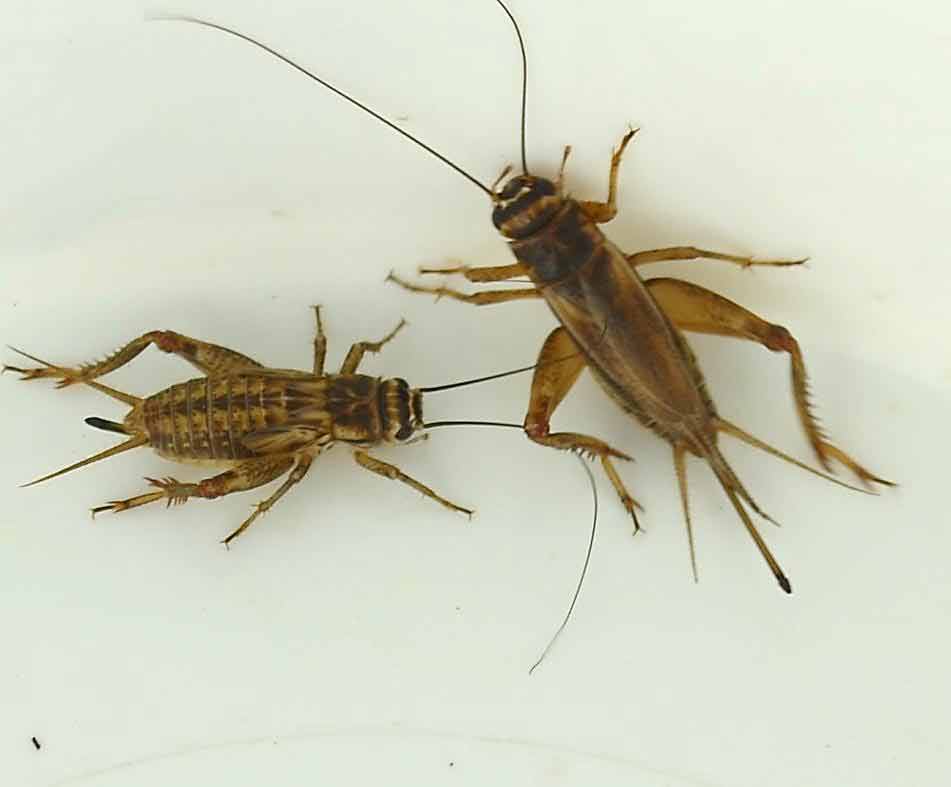
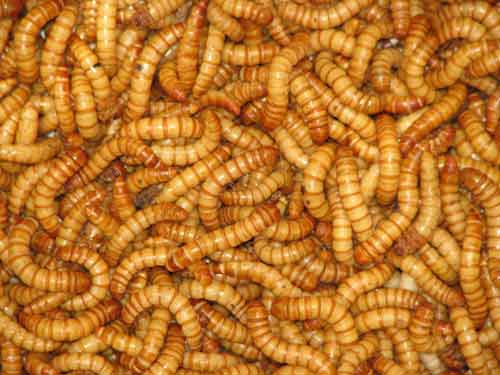
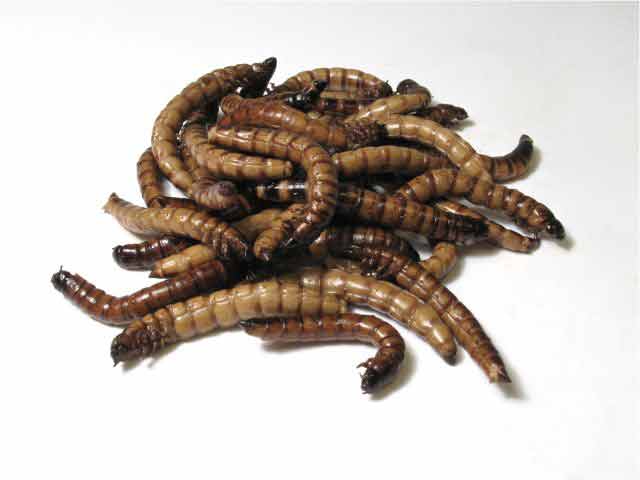


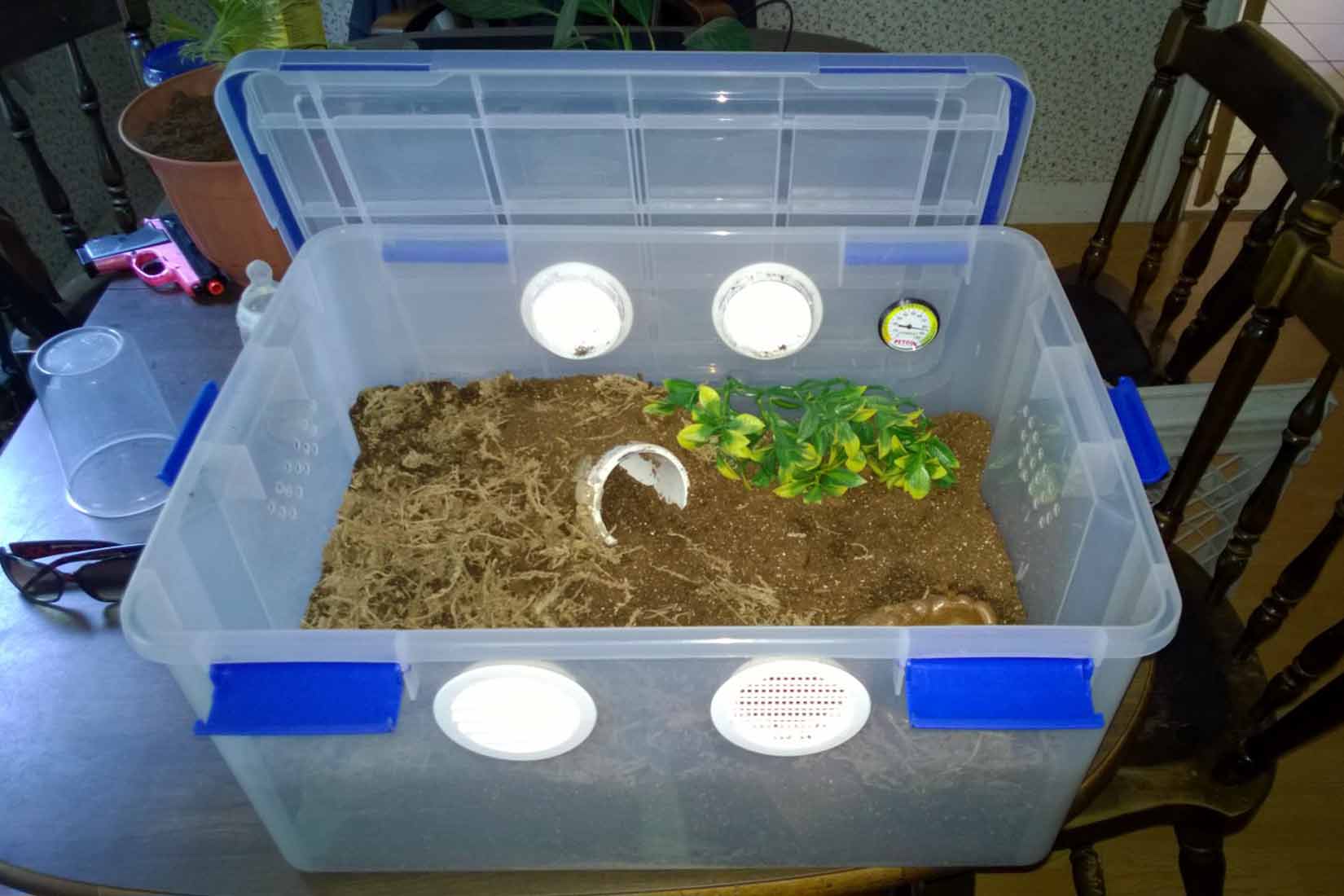


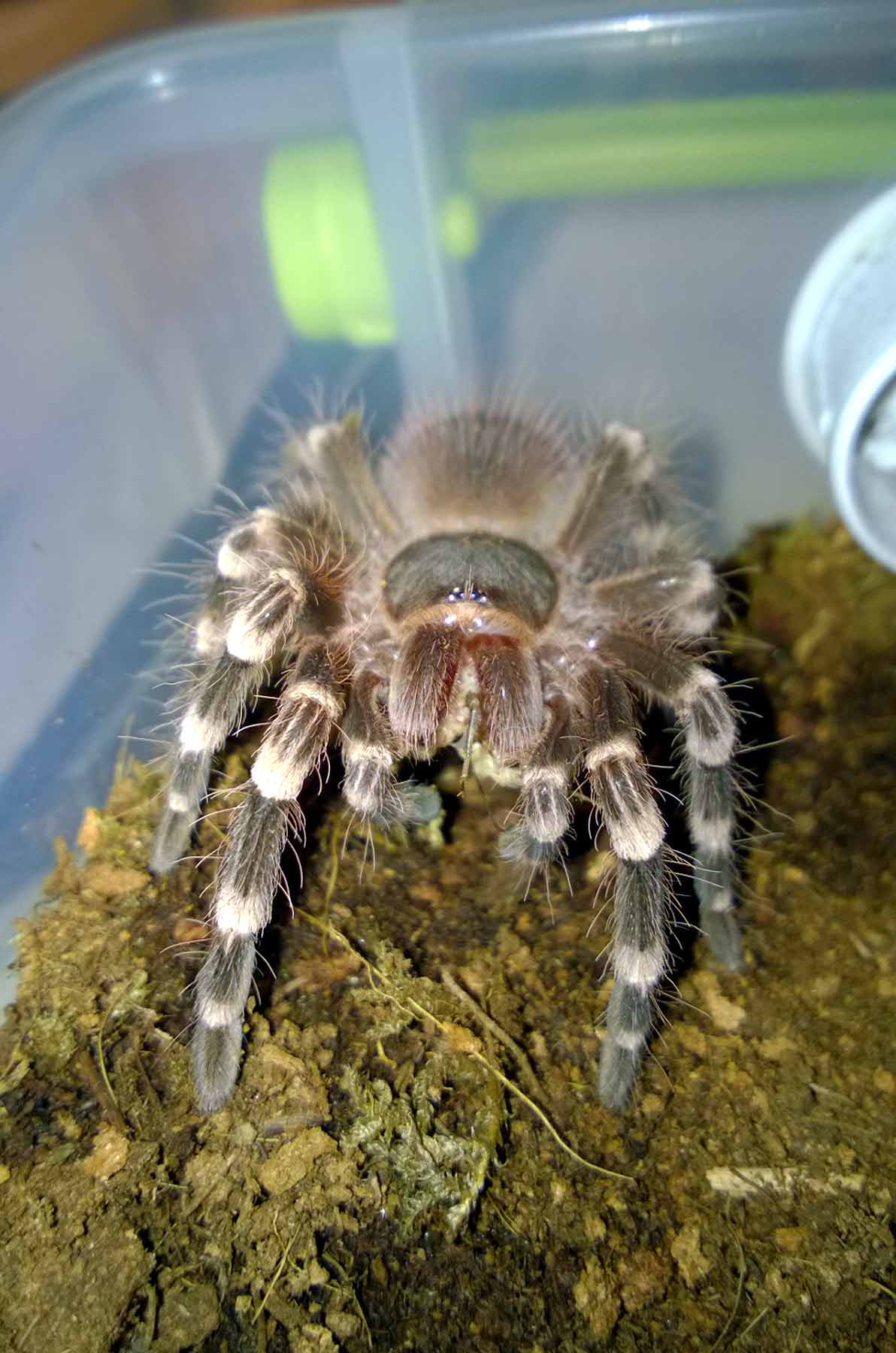
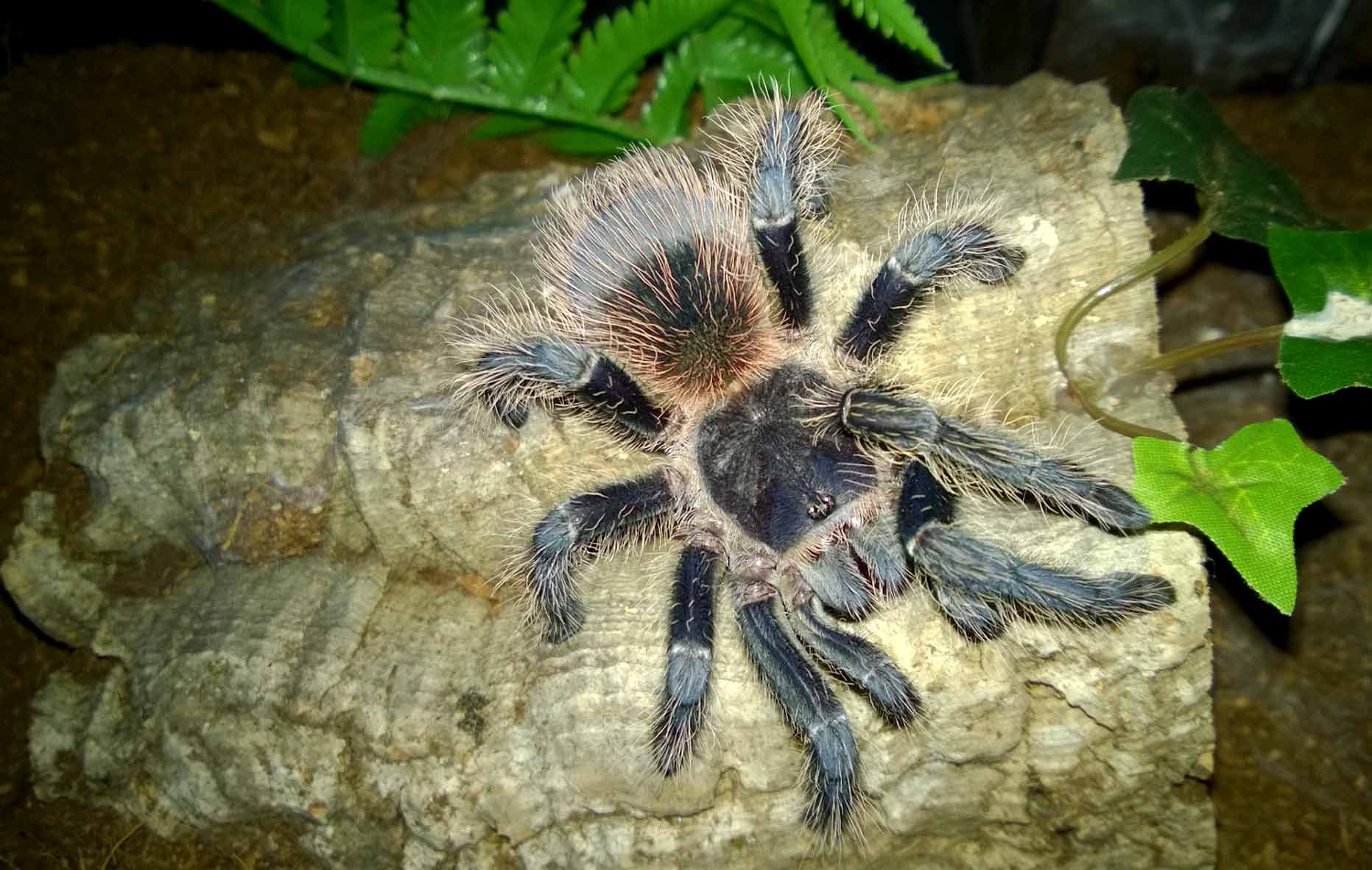

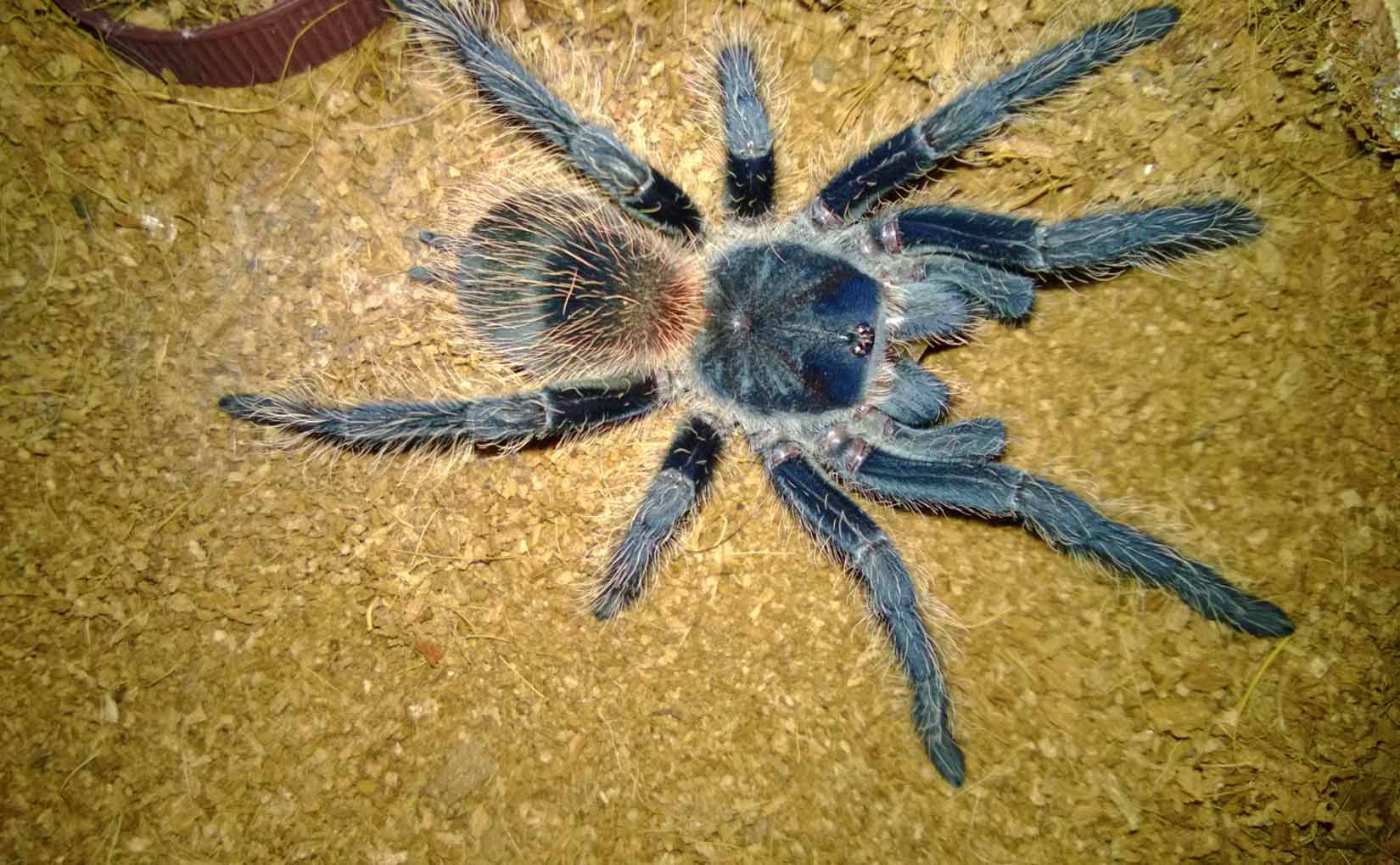


 Tom's Big Spiders